“The physician can bury his mistakes, but the architect can only advise his client to plant vines.”
Frank Lloyd Wright · New York Times Magazine, 1953
 quolira
.com
quolira
quolira.com
This observation suggests that real humor and the honest search for truth share a common root. Comedy that endures tends to expose something genuine about human nature, social behavior, or the gap between how things appear and how they actually are. When a joke rings true, the laughter it produces is not just amusement but a kind of recognition, a small moment of clarity about something real.
Robertson Davies was a Canadian writer whose work moved freely between fiction, essays, and drama, and he returned often to questions of how people deceive themselves and each other. This line reflects a concern that runs throughout his writing: the idea that genuine wit requires intellectual honesty, and that shallow or merely fashionable humor lacks staying power because it has no truth underneath it. The observation would have felt natural coming from a writer who used comedy and irony as tools for examining character and society rather than as ends in themselves.
Robertson Davies was one of Canada's most celebrated literary figures of the twentieth century, known for novels, plays, and essays that blended learning, humor, and sharp psychological observation. He spent much of his professional life connected to the University of Toronto, and his fiction often drew on his deep interest in Jungian psychology, myth, and the quirks of Canadian cultural life. His writing earned him an international readership and a reputation as a wit whose comedy was always in service of something more serious.
“The physician can bury his mistakes, but the architect can only advise his client to plant vines.”
Frank Lloyd Wright · New York Times Magazine, 1953
“Make no little plans; they have no magic to stir men's blood.”
Daniel Burnham · attributed, c. 1907
“Never discourage anyone who continually makes progress, no matter how slow.”
Plato
“You don't build a wall all at once. You lay one brick, as perfectly as a brick can be laid.”
Will Smith · Interview, c. 2005
“It is quality rather than quantity that matters.”
Seneca · Letters to Lucilius, c. 65 AD
“The end of art is peace.”
Seamus Heaney · "The Harvest Bow," Field Work, 1979
“We are all apprentices in a craft where no one ever becomes a master.”
Ernest Hemingway · The Wild Years, 1962
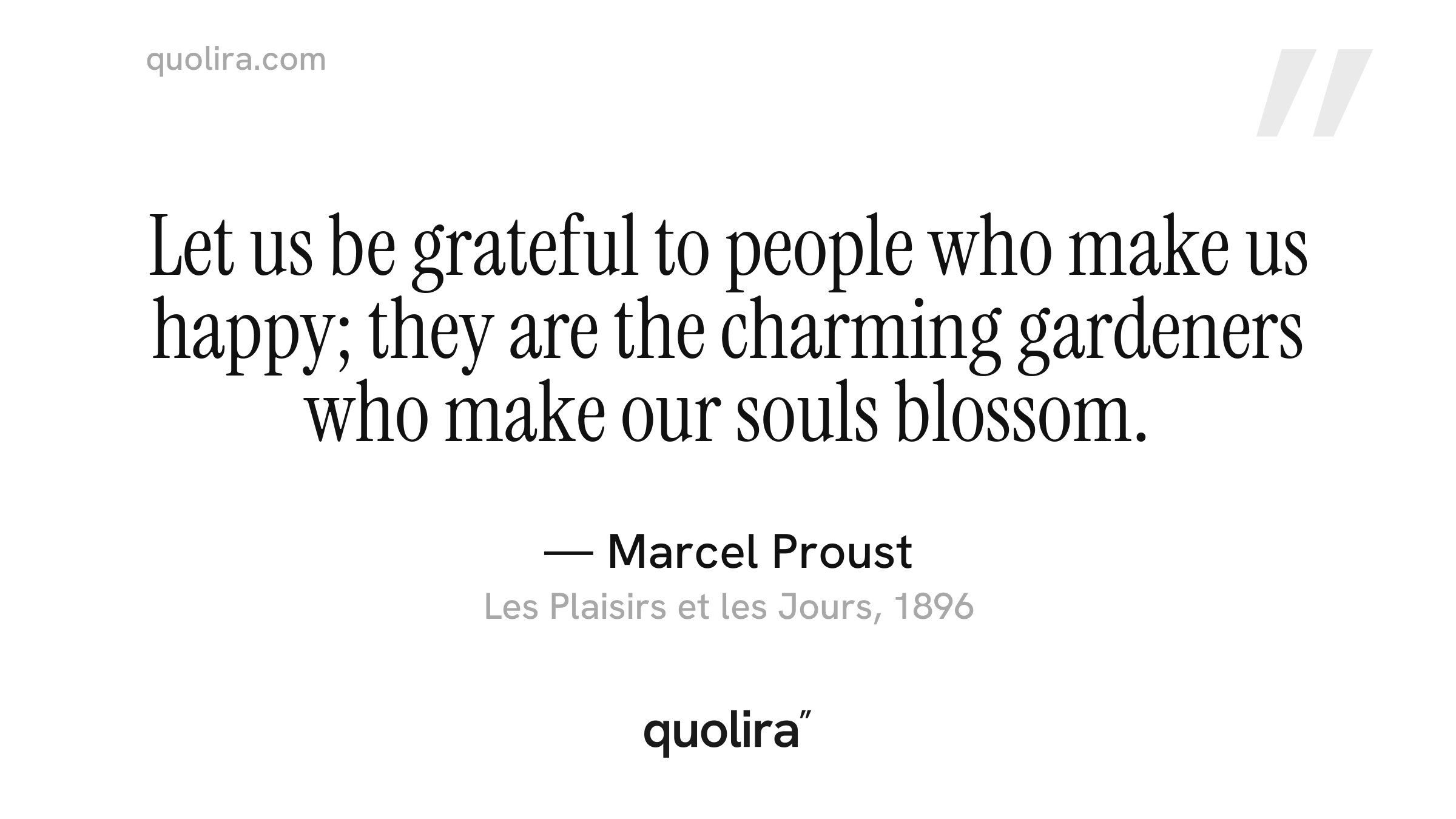
“Let us be grateful to people who make us happy; they are the charming gardeners who make our souls blossom.”
Marcel Proust · Les Plaisirs et les Jours, 1896
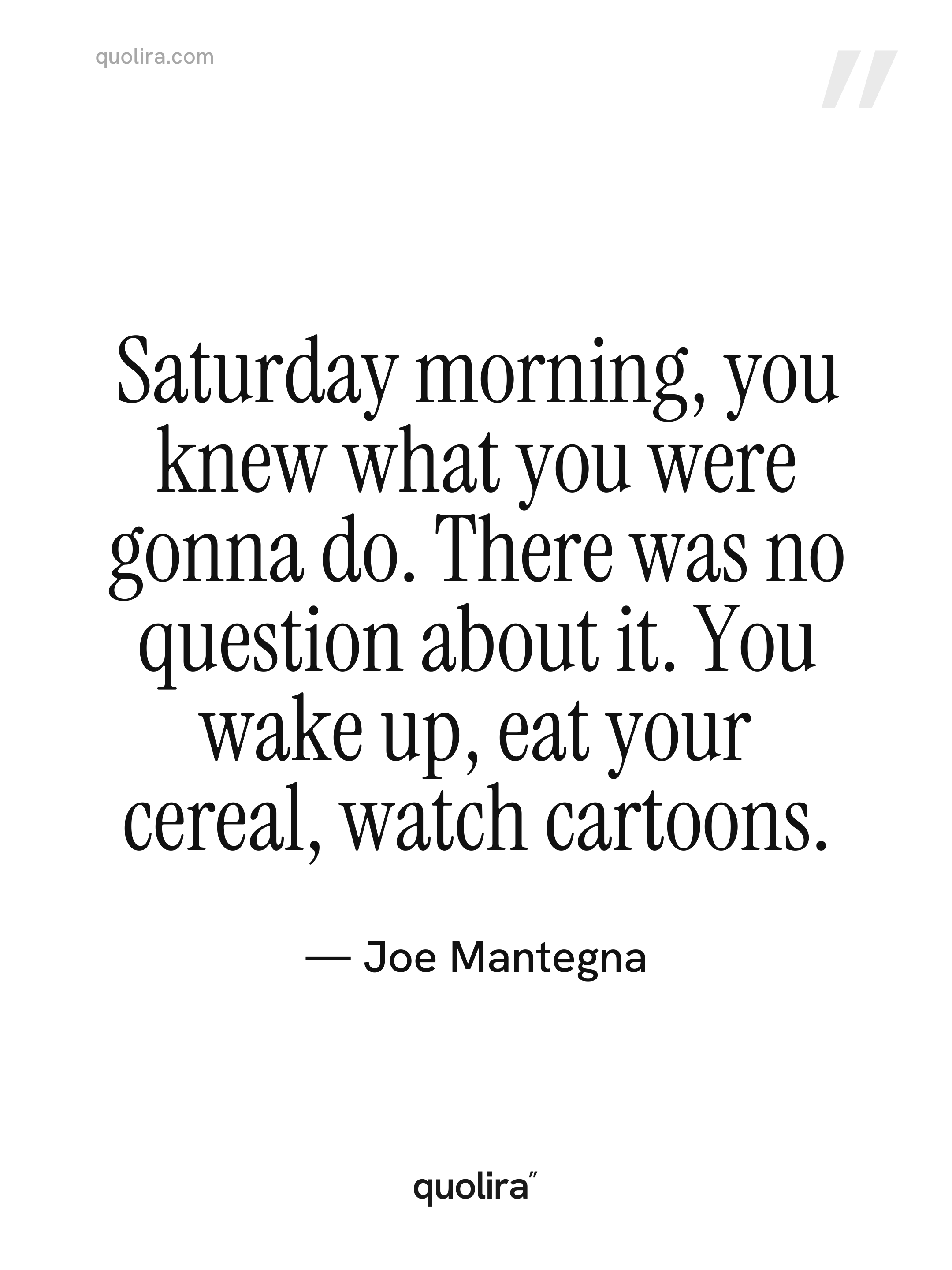
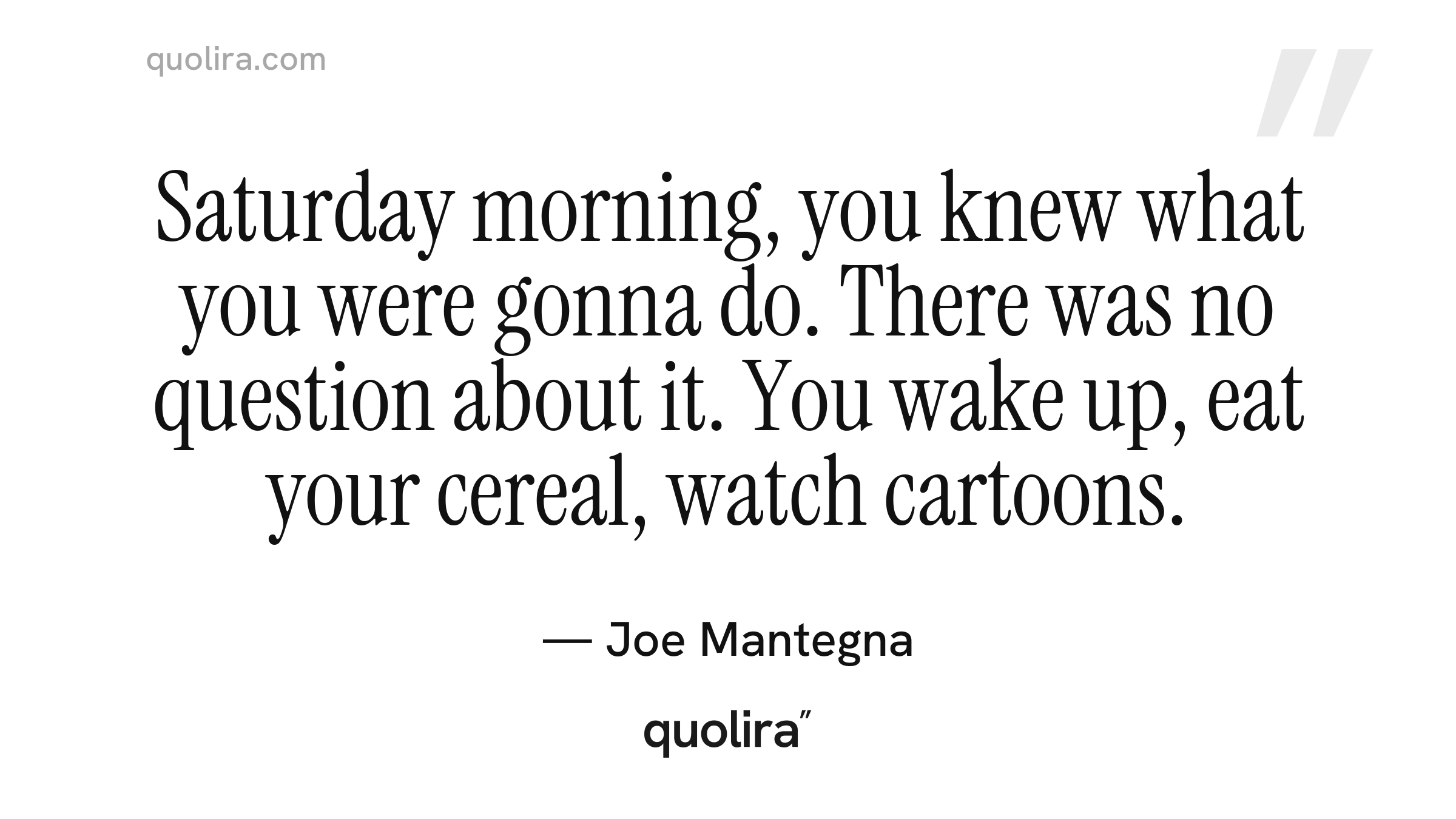
“Saturday morning, you knew what you were gonna do. There was no question about it. You wake up, eat your cereal, watch cartoons.”
Joe Mantegna
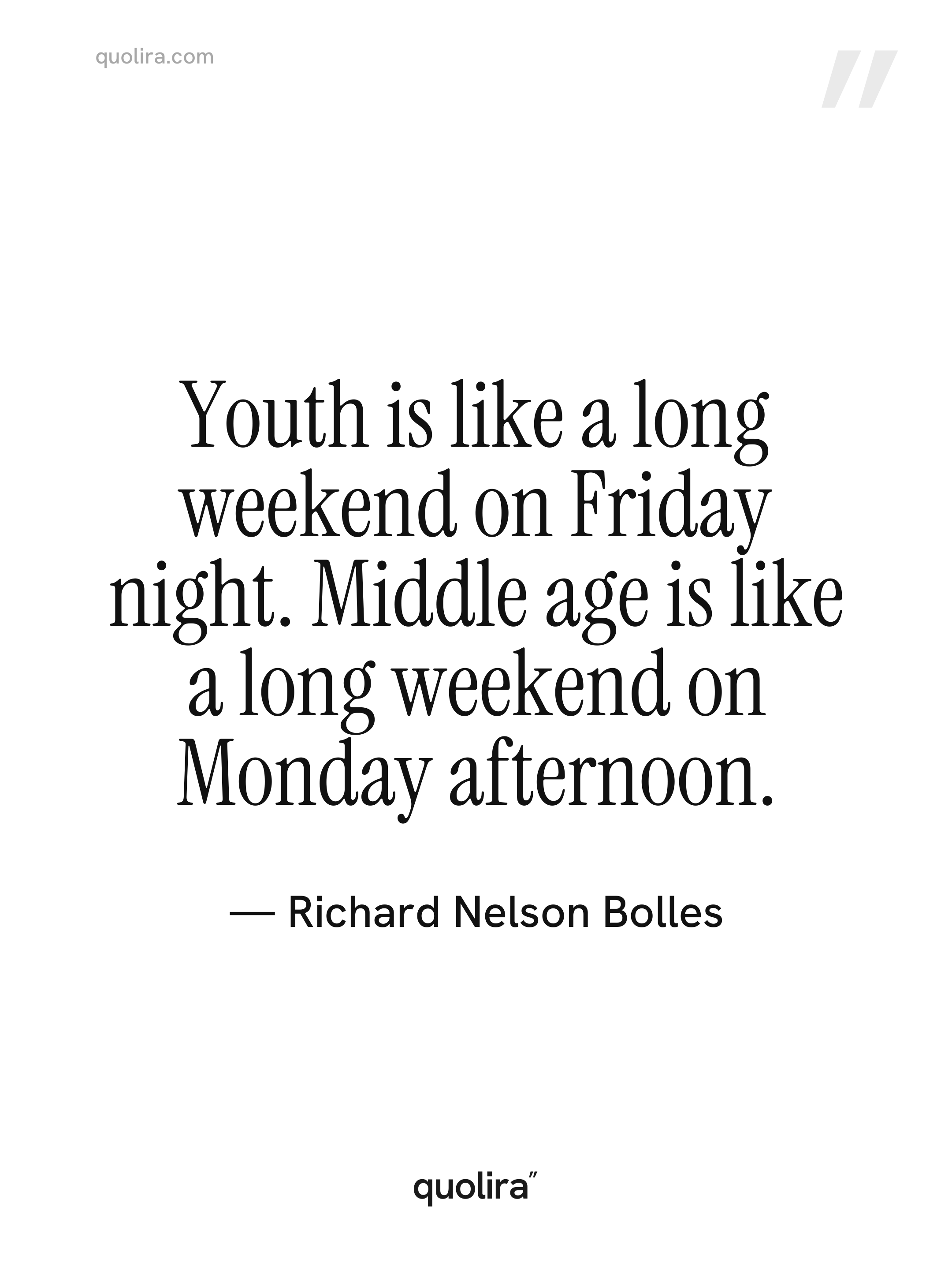
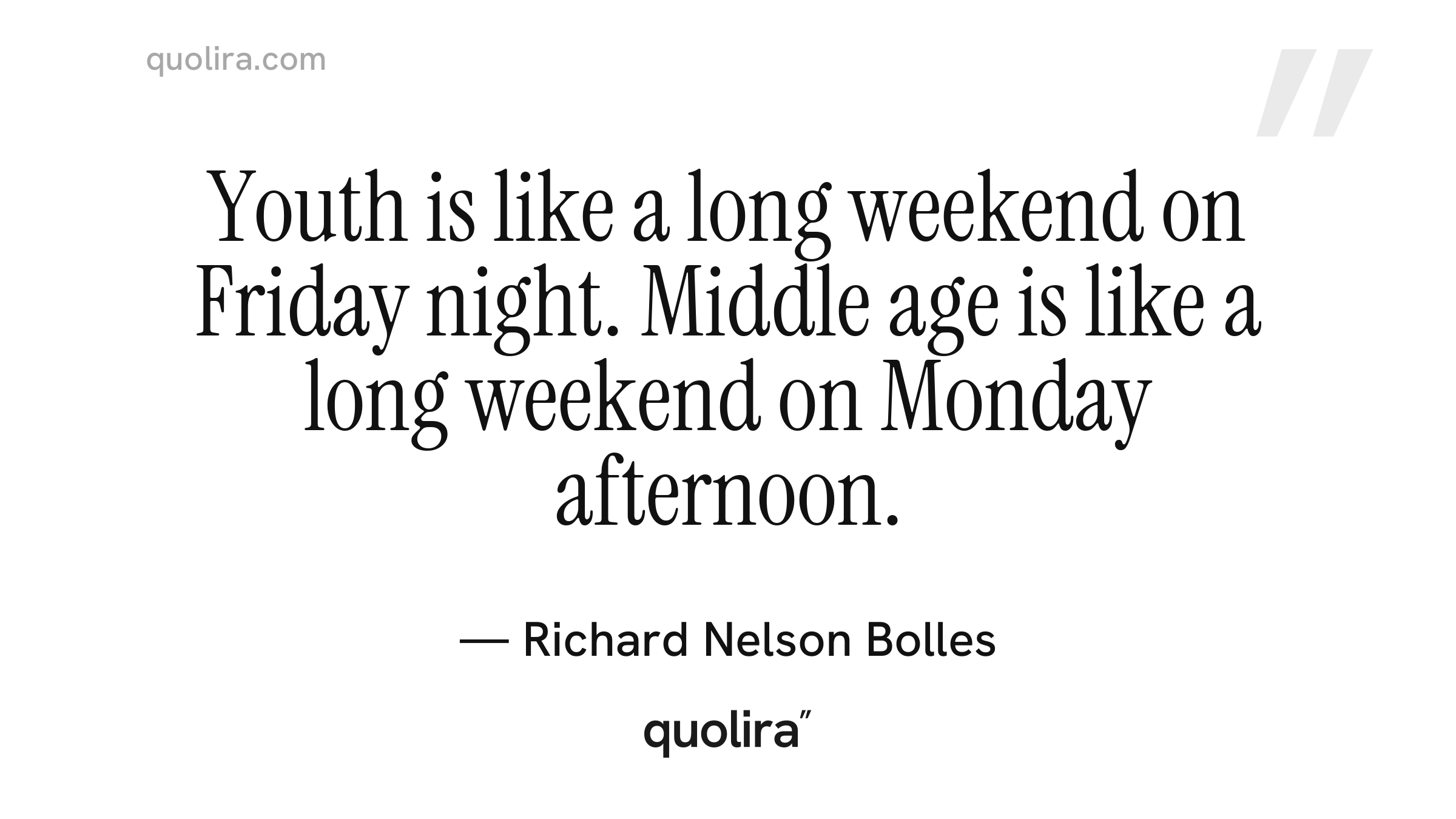
“Youth is like a long weekend on Friday night. Middle age is like a long weekend on Monday afternoon.”
Richard Nelson Bolles
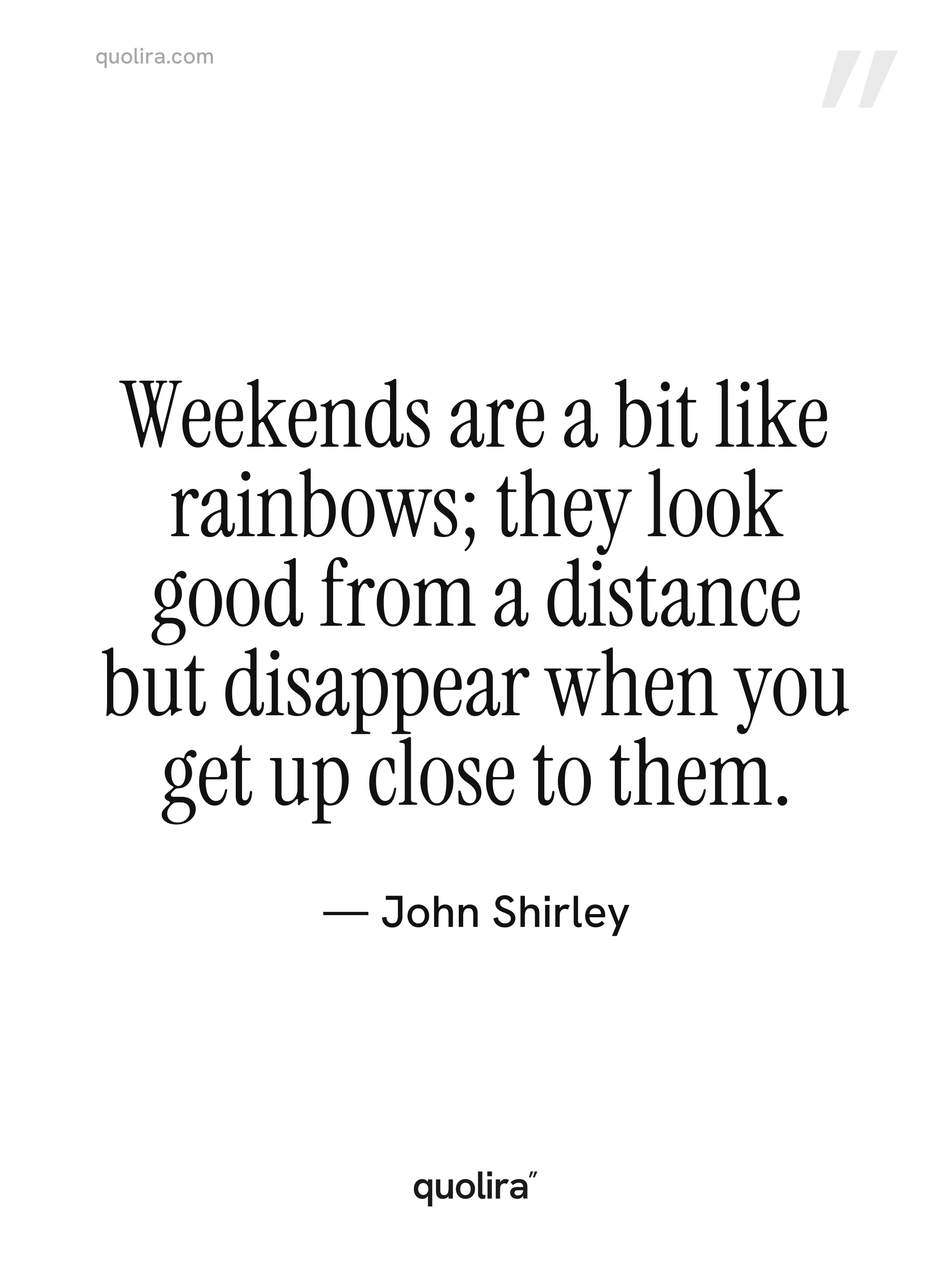
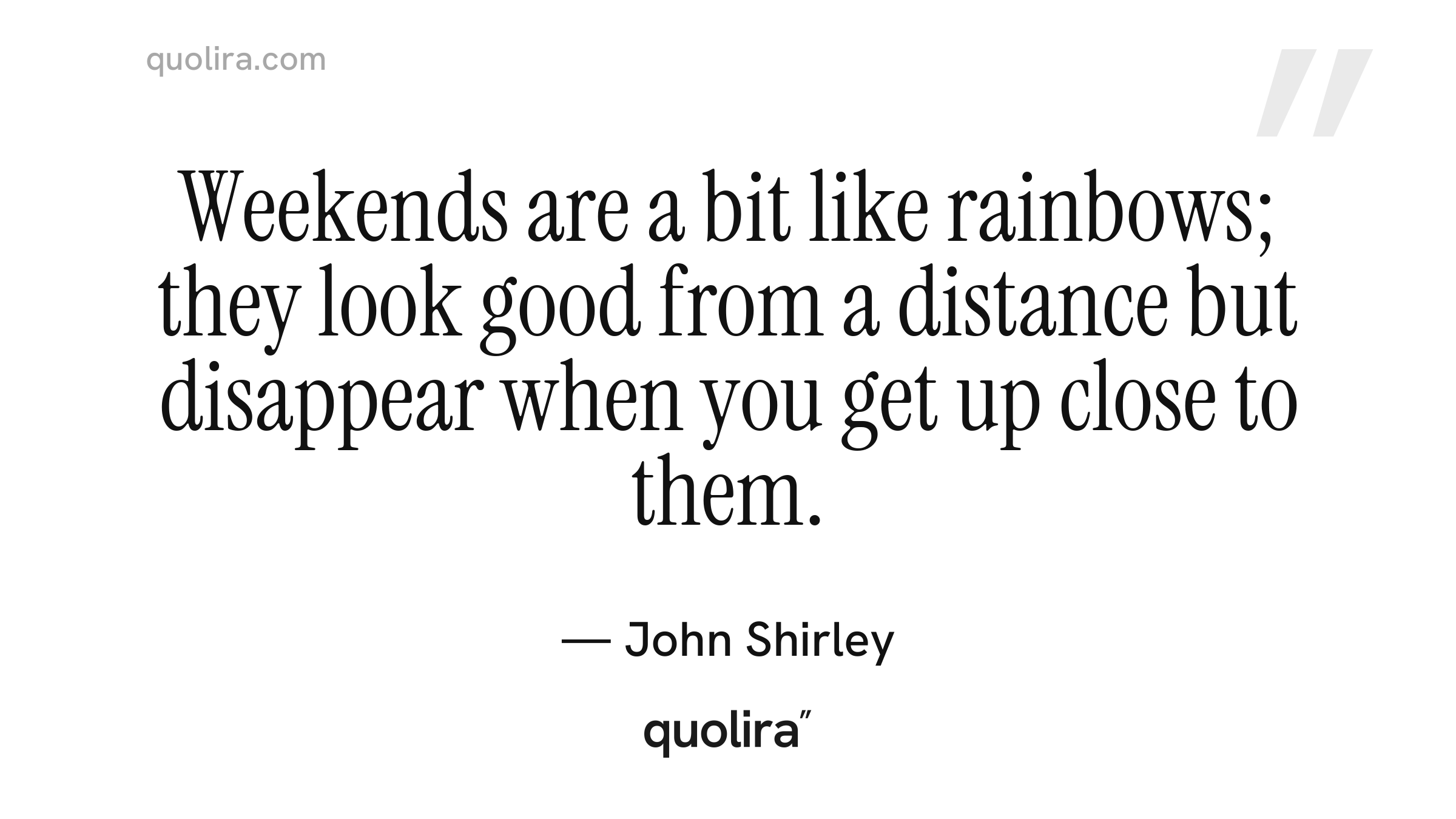
“Weekends are a bit like rainbows; they look good from a distance but disappear when you get up close to them.”
John Shirley
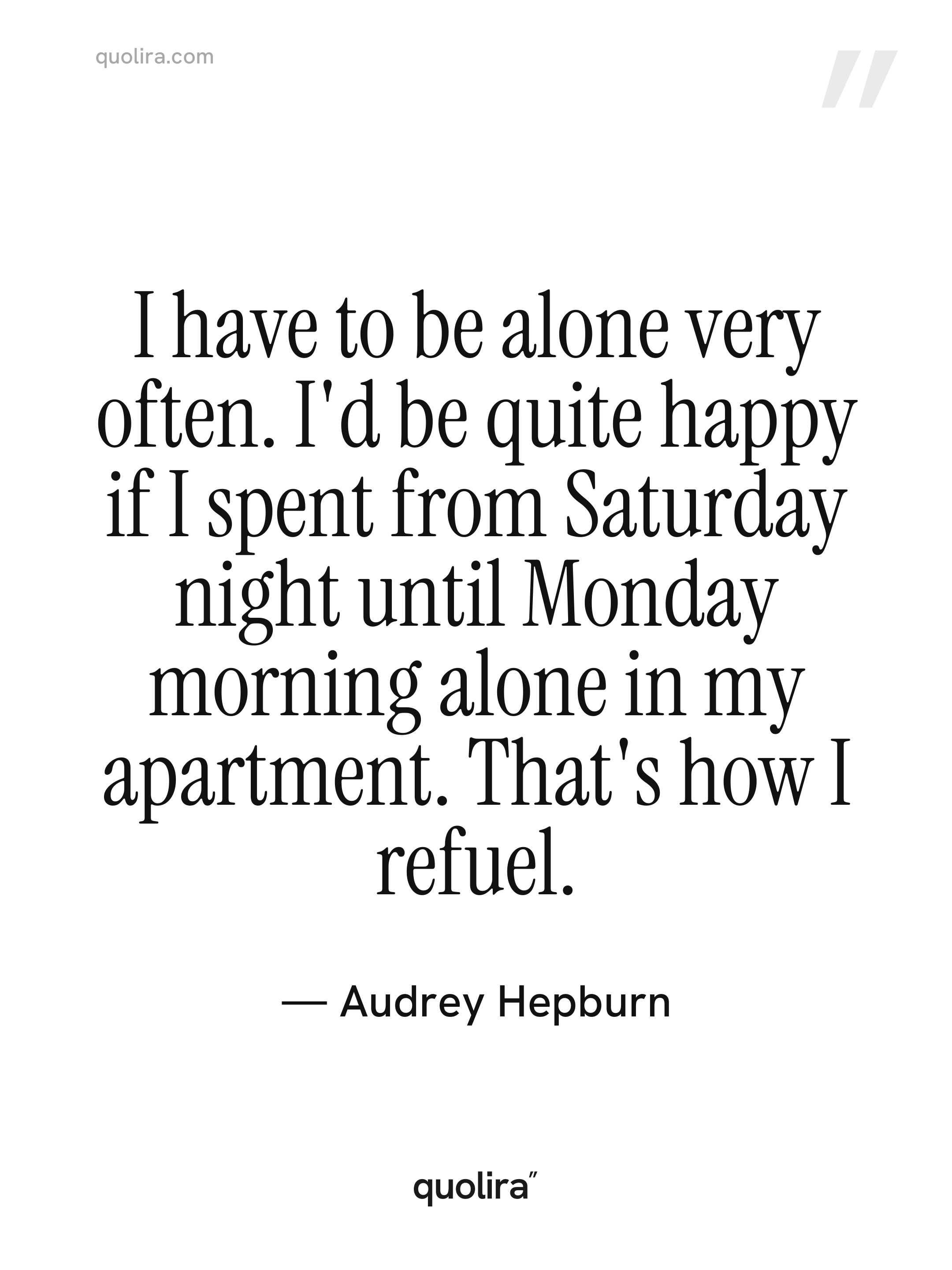
“I have to be alone very often. I'd be quite happy if I spent from Saturday night until Monday morning alone in my apartment. That's how I refuel.”
Audrey Hepburn