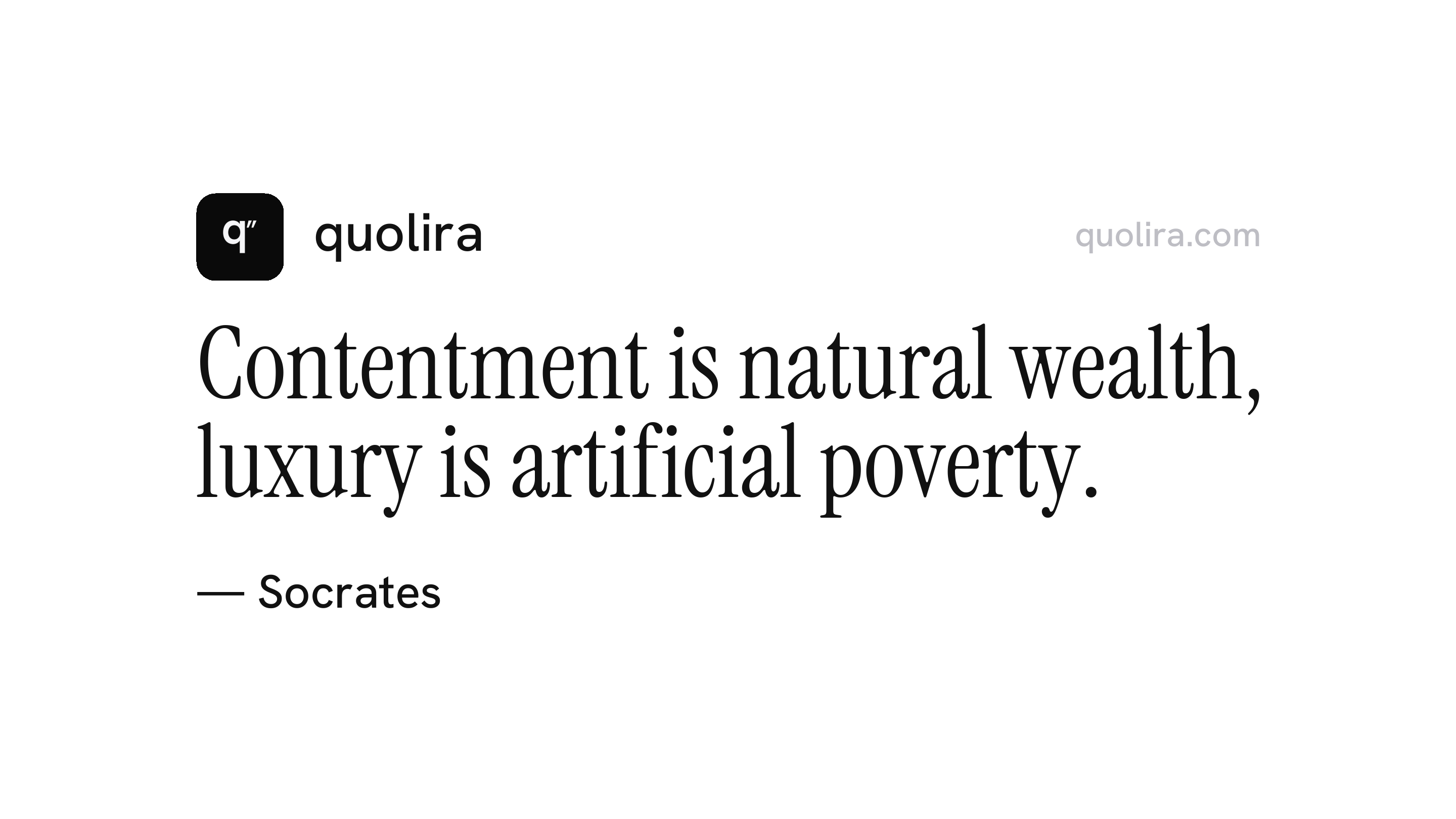
“Contentment is natural wealth, luxury is artificial poverty.”
Socrates · attributed
 quolira
.com
quolira
quolira.com
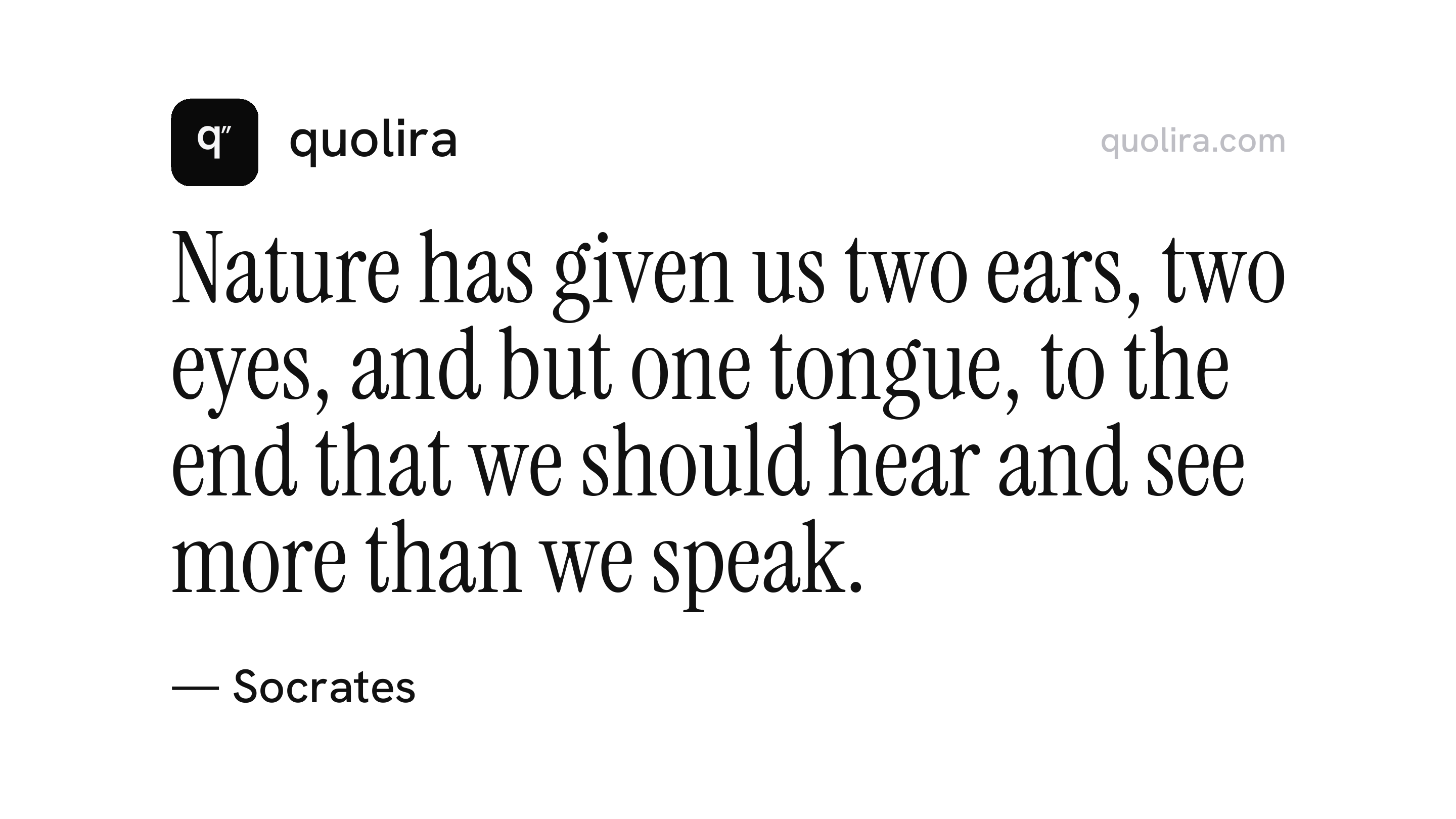
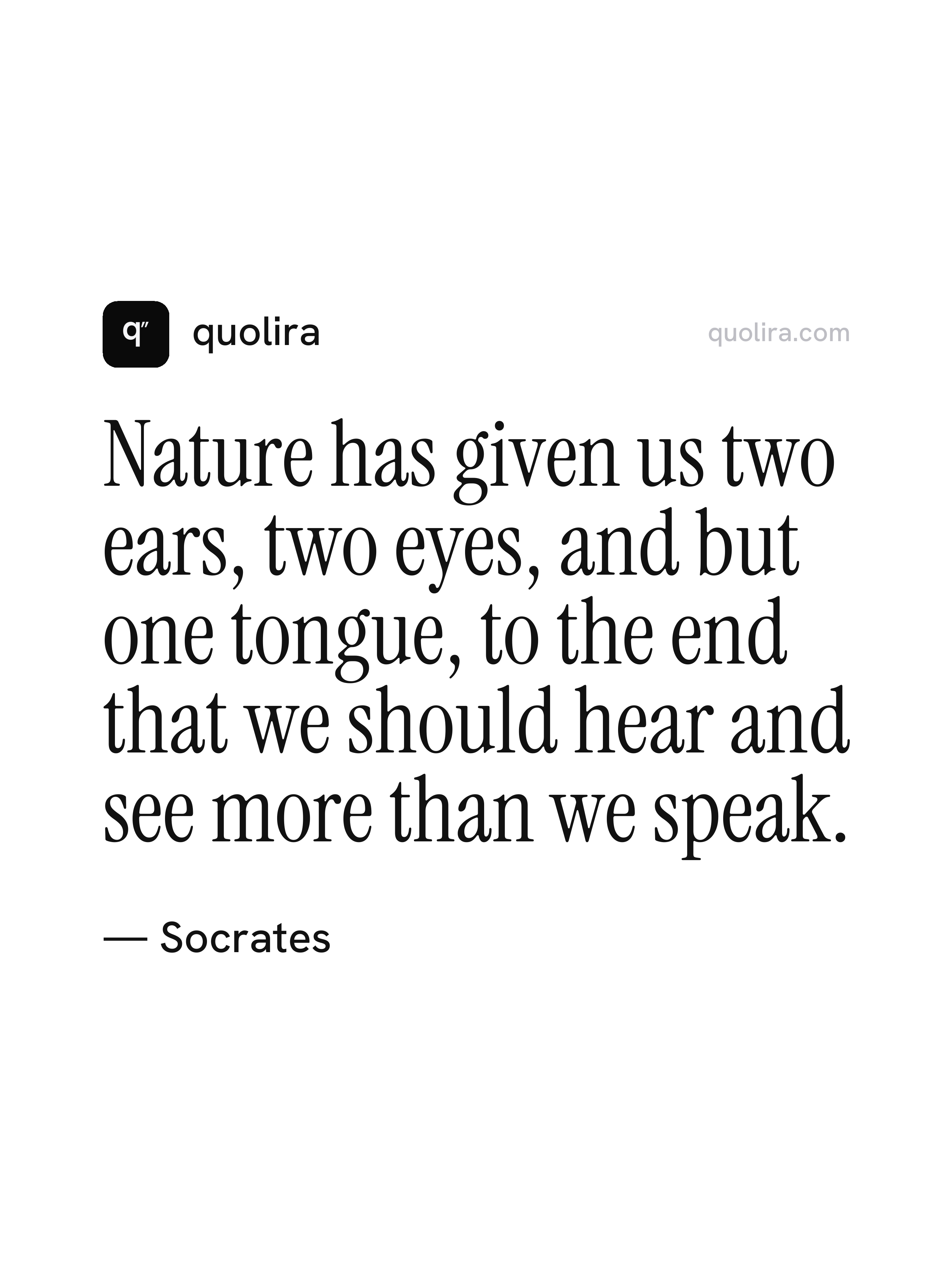
This saying points to a simple but powerful idea: we are built, in a physical sense, for listening and observing far more than for talking. The ratio of two ears and two eyes to one mouth is taken as a hint from nature itself that wisdom begins with taking in the world rather than broadcasting our own opinions. Restraint in speech is presented not as timidity but as a sign of good judgment.
The saying is widely attributed to Socrates, though no precise ancient source pins it to a specific dialogue or occasion. It belongs to a long tradition of aphoristic wisdom that circulated under his name, and its spirit is consistent with the Socratic method, which relied on careful questioning and attentive listening rather than lecturing. Similar ideas about the virtue of silence appear across many ancient cultures, suggesting the thought was common in philosophical and moral teaching of the era.
Socrates was an Athenian philosopher of the fifth century BCE who is regarded as one of the founding figures of Western philosophy. He left no writings of his own, so what we know of his ideas comes primarily through the dialogues written by his student Plato and other contemporaries. He was tried and executed by the city of Athens on charges of impiety and corrupting the youth, and his willingness to face death rather than abandon his principles made him an enduring symbol of intellectual courage.
“Contentment is natural wealth, luxury is artificial poverty.”
Socrates · attributed
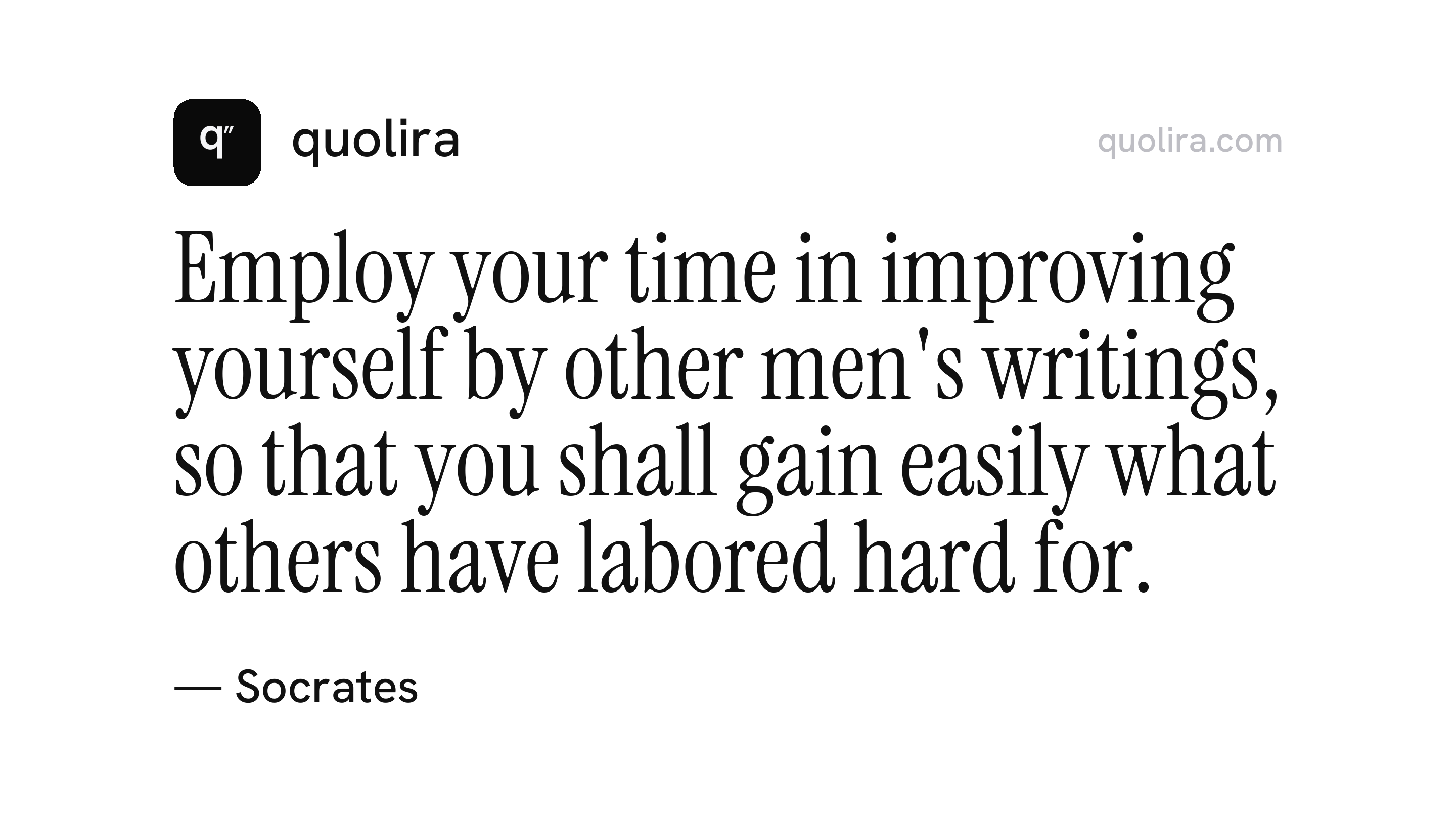
“Employ your time in improving yourself by other men's writings, so that you shall gain easily what others have labored hard for.”
Socrates · attributed
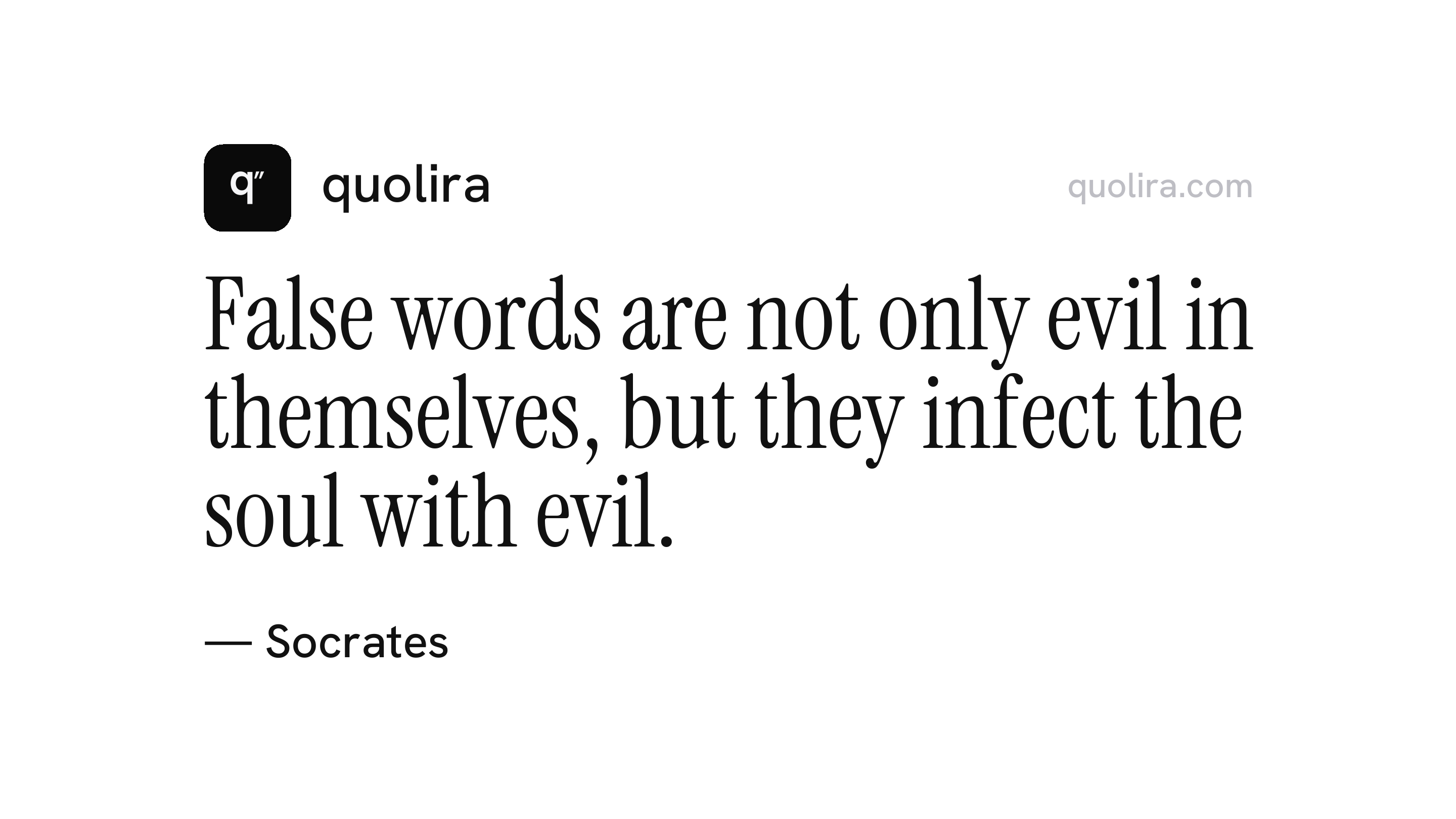
“False words are not only evil in themselves, but they infect the soul with evil.”
Socrates · Plato, Phaedo
“The hour of departure has arrived, and we go our ways; I to die, and you to live. Which is better God only knows.”
Socrates · Plato, Apology
“Worthless people live only to eat and drink; people of worth eat and drink only to live.”
Socrates · attributed
“Once made equal to man, woman becomes his superior.”
Socrates · attributed
“Know thyself.”
Socrates · adopted from the Delphic maxim
“Death may be the greatest of all human blessings.”
Socrates · Plato, Apology
“Beware the barrenness of a busy life.”
Socrates · attributed
“I cannot teach anybody anything. I can only make them think.”
Socrates · attributed
“An honest man is always a child.”
Socrates · attributed
“Education is the kindling of a flame, not the filling of a vessel.”
Socrates · attributed