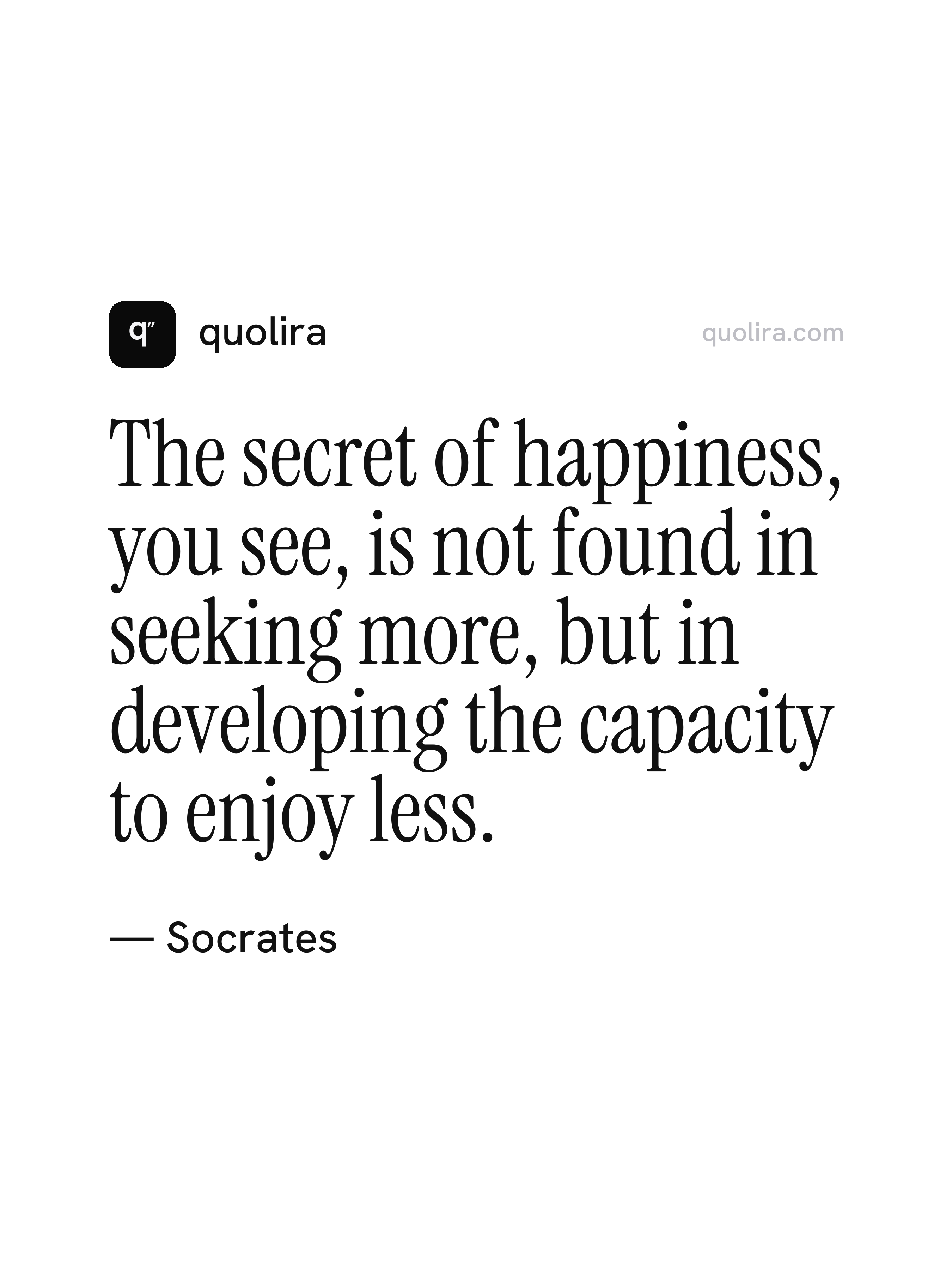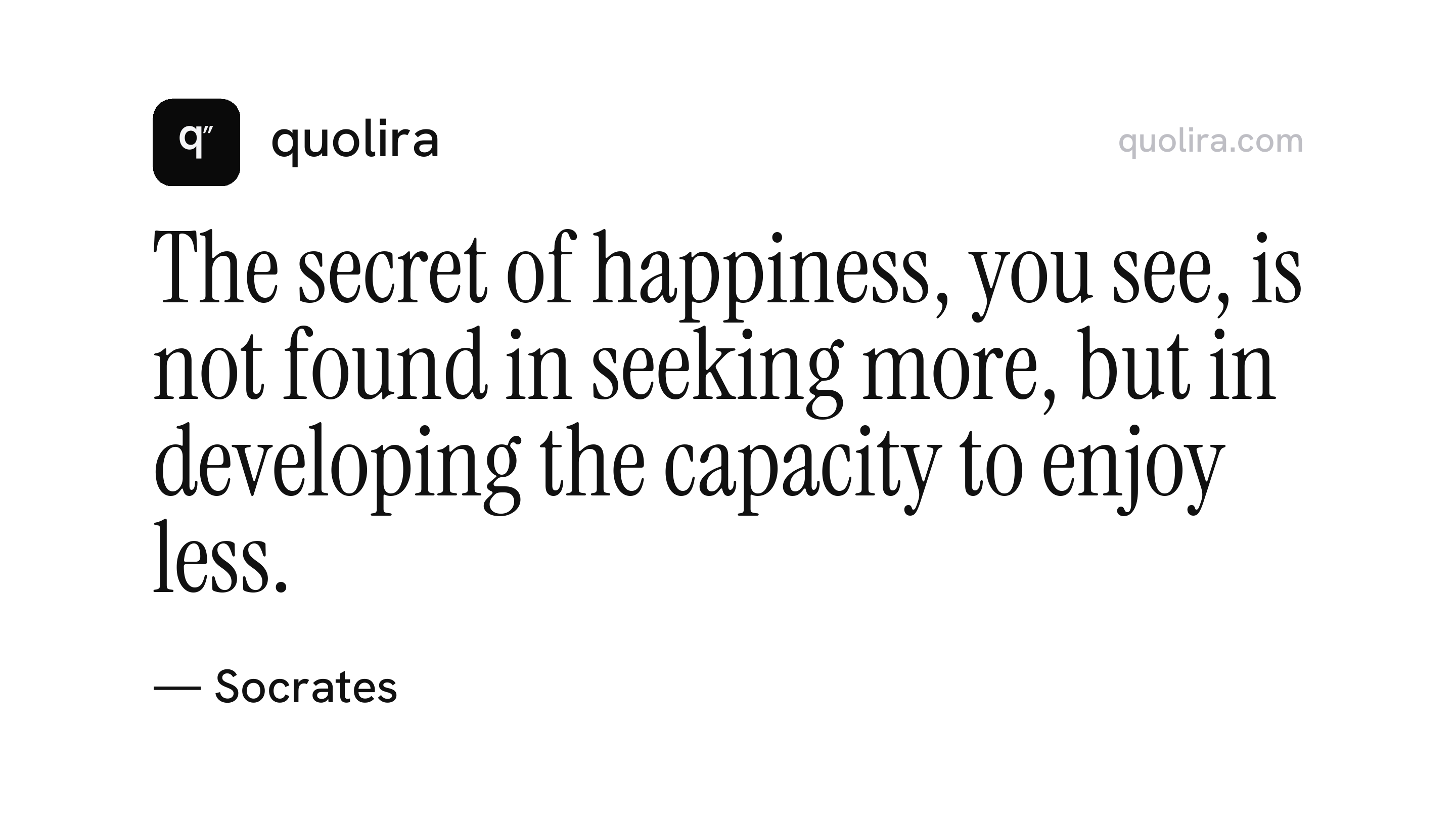
“The secret of happiness, you see, is not found in seeking more, but in developing the capacity to enjoy less.”
Socrates · attributed
 quolira
.com
quolira
quolira.com
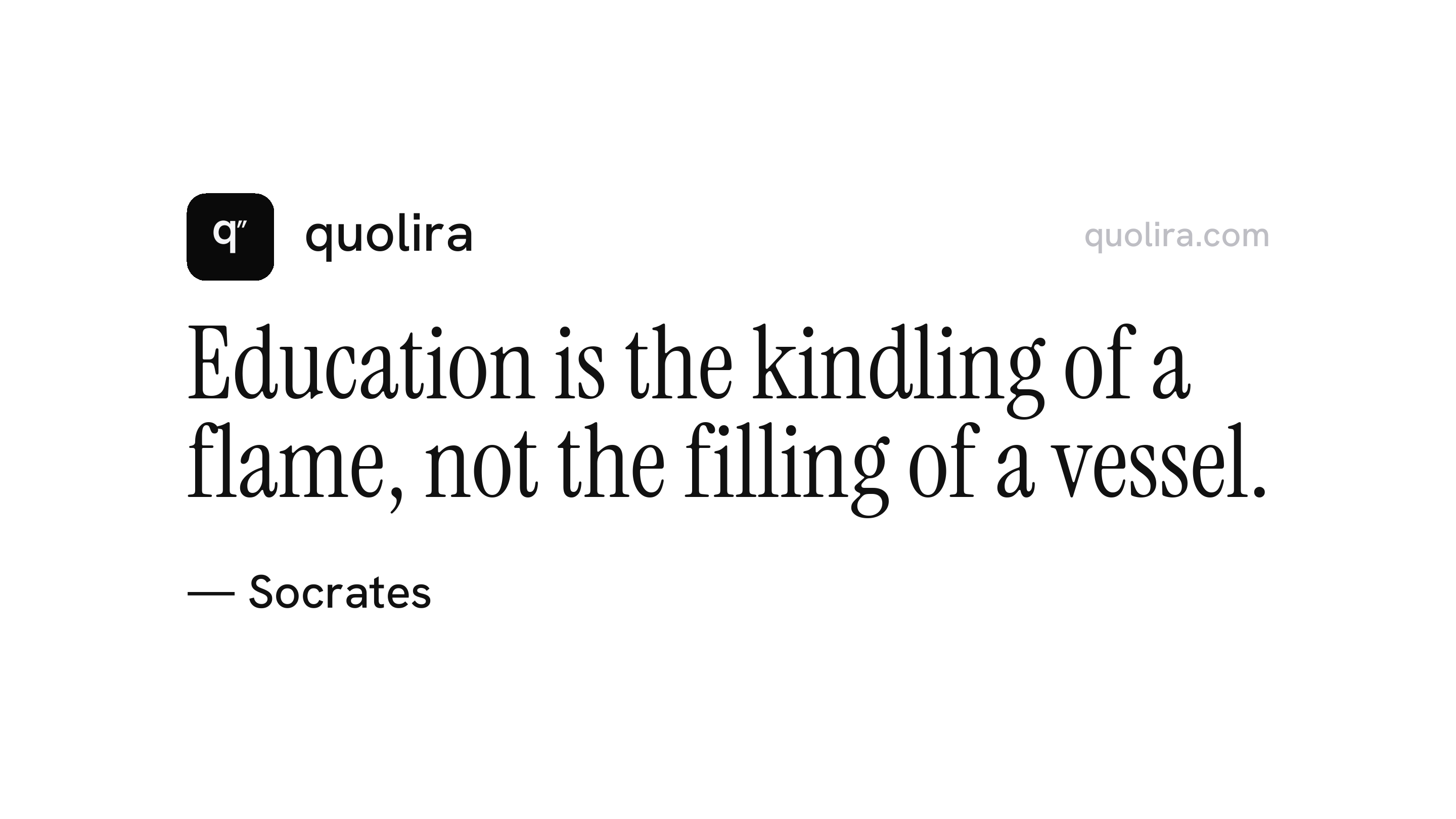
This quote draws a vivid contrast between two models of education. Filling a vessel suggests that a student is simply an empty container waiting to receive facts deposited by a teacher. Kindling a flame suggests something far more dynamic: the goal is to ignite curiosity, enthusiasm, and the desire to keep learning independently. A flame, once lit, can spread and sustain itself, which is exactly what genuine education aims to produce.
The image is widely attributed to Socrates, though scholars note it may derive from a line found in the writings of Plutarch, the Greek-Roman biographer and essayist, who expressed a similar idea when discussing proper education. Whether the exact phrasing originates with Socrates or was later associated with him, the sentiment is entirely consistent with his philosophy. His method of teaching through questioning was designed precisely to awaken the learner's own capacity to reason, rather than simply deliver conclusions for memorization.
Socrates was a philosopher in ancient Athens who lived from roughly 470 to 399 BCE. He wrote nothing himself, and his ideas are known primarily through the dialogues of his student Plato and the accounts of other contemporaries. He spent his life engaging ordinary Athenians in conversation about ethics, knowledge, and the good life. Condemned by an Athenian court and executed in 399 BCE, he remains one of the foundational figures of Western philosophical thought.
“The secret of happiness, you see, is not found in seeking more, but in developing the capacity to enjoy less.”
Socrates · attributed
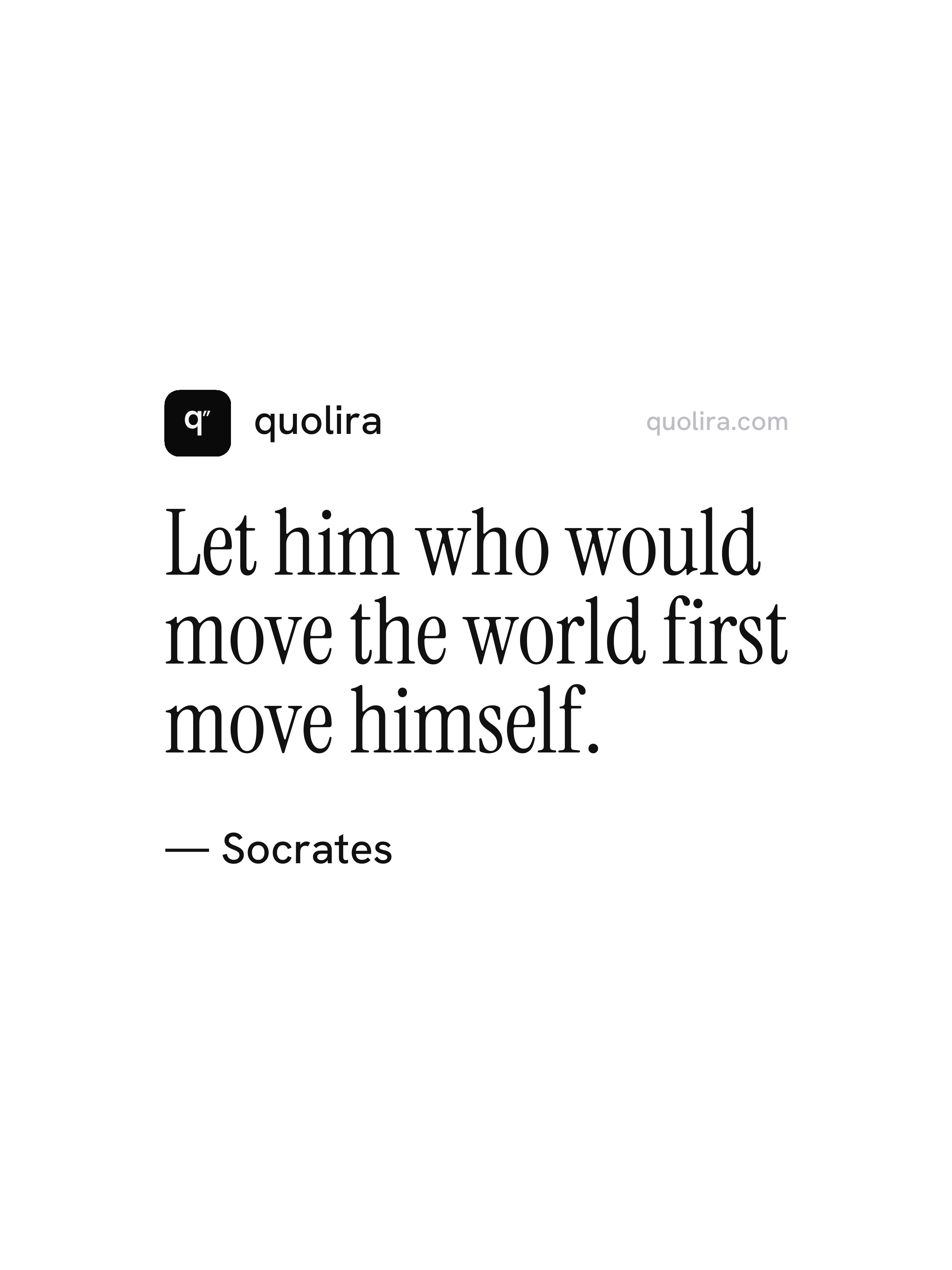
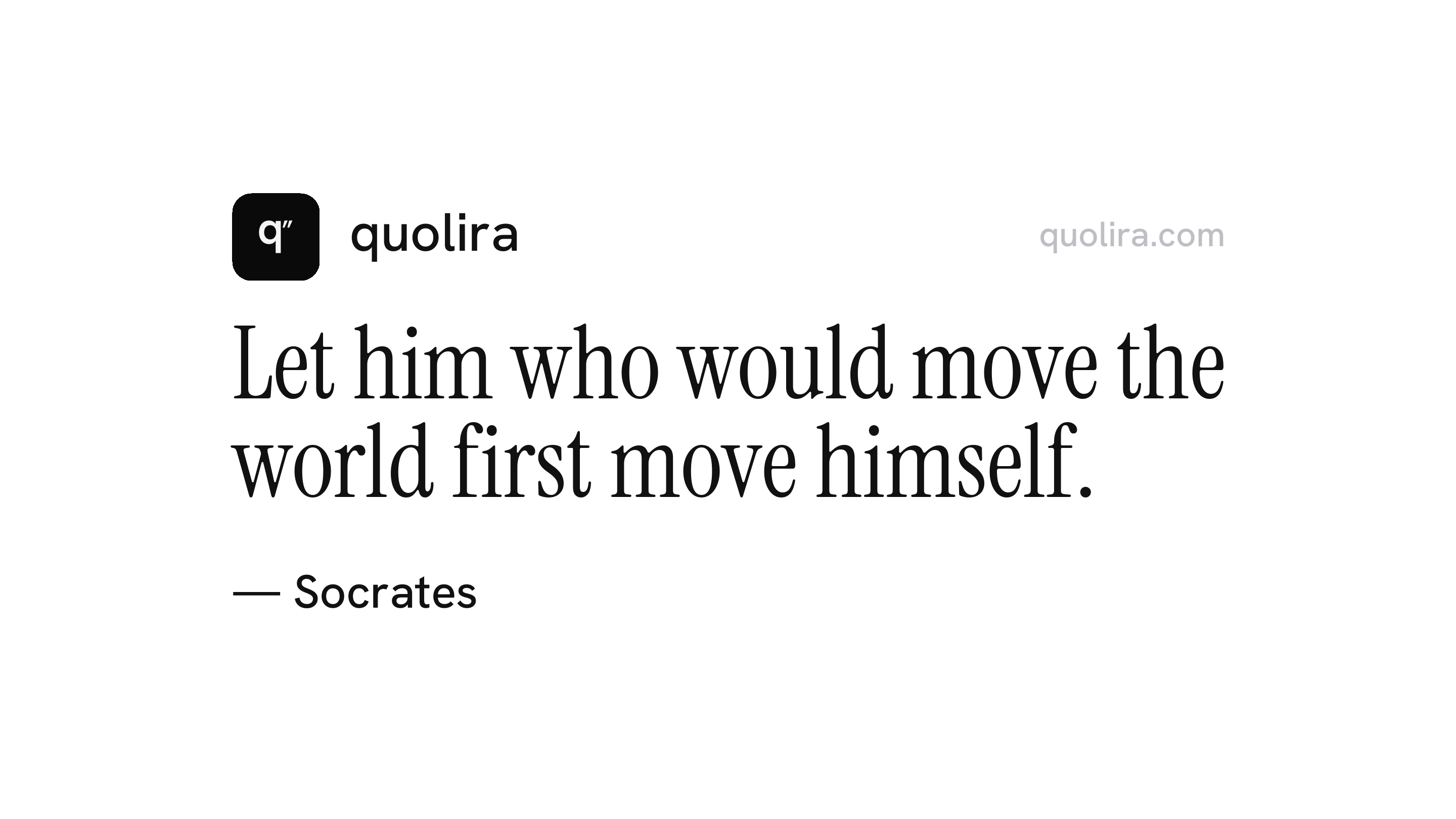
“Let him who would move the world first move himself.”
Socrates · attributed
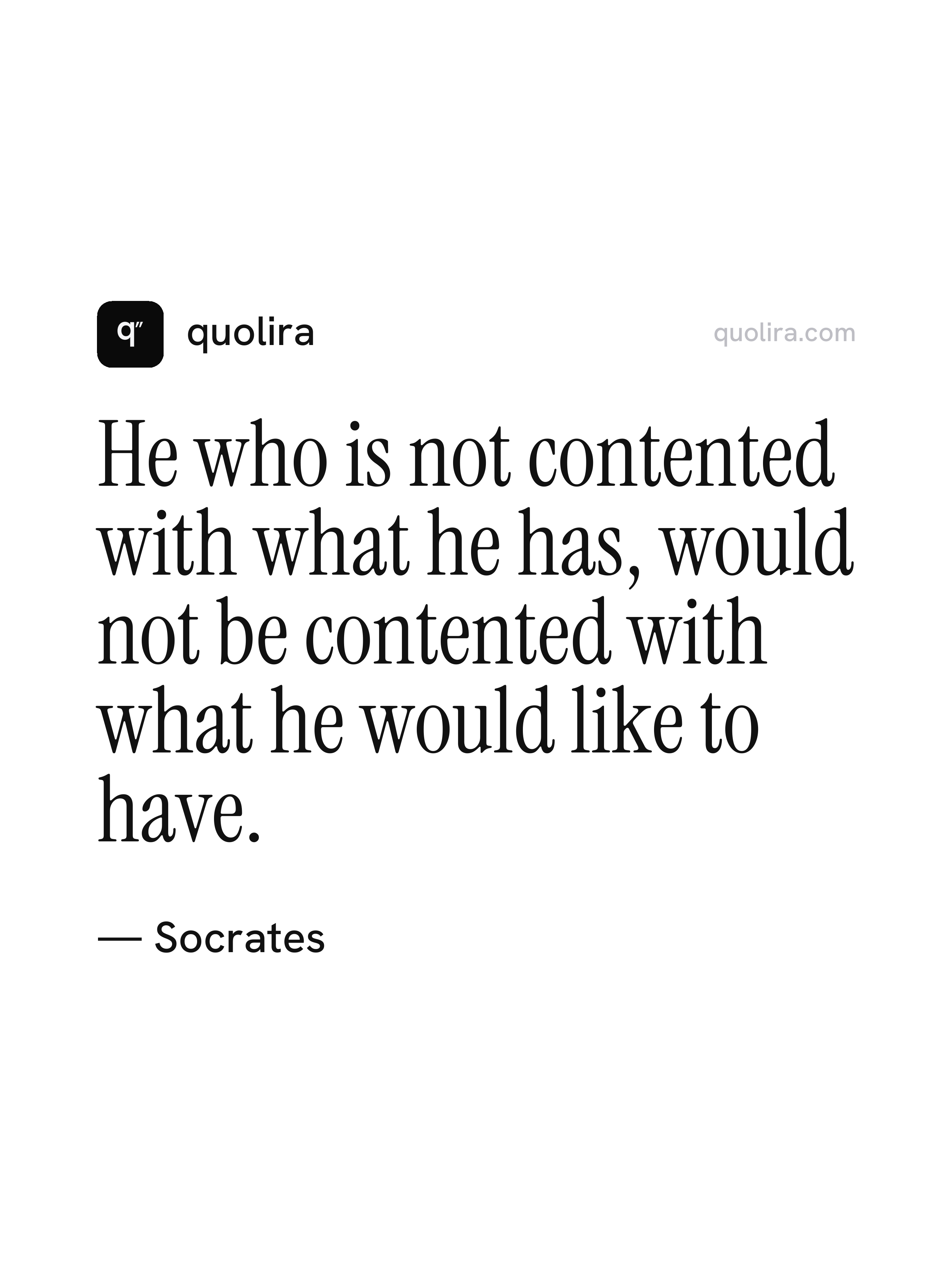
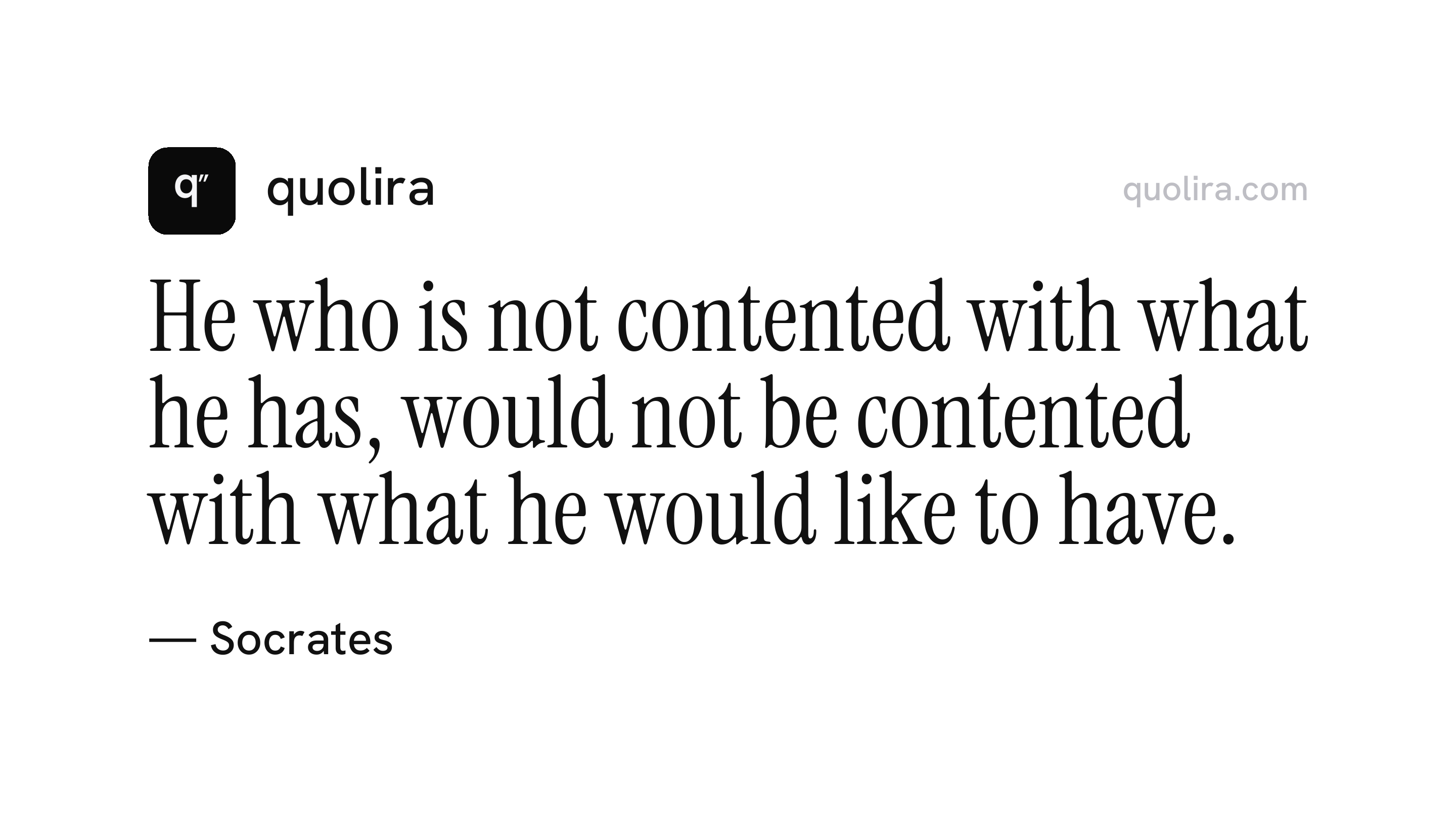
“He who is not contented with what he has, would not be contented with what he would like to have.”
Socrates · attributed
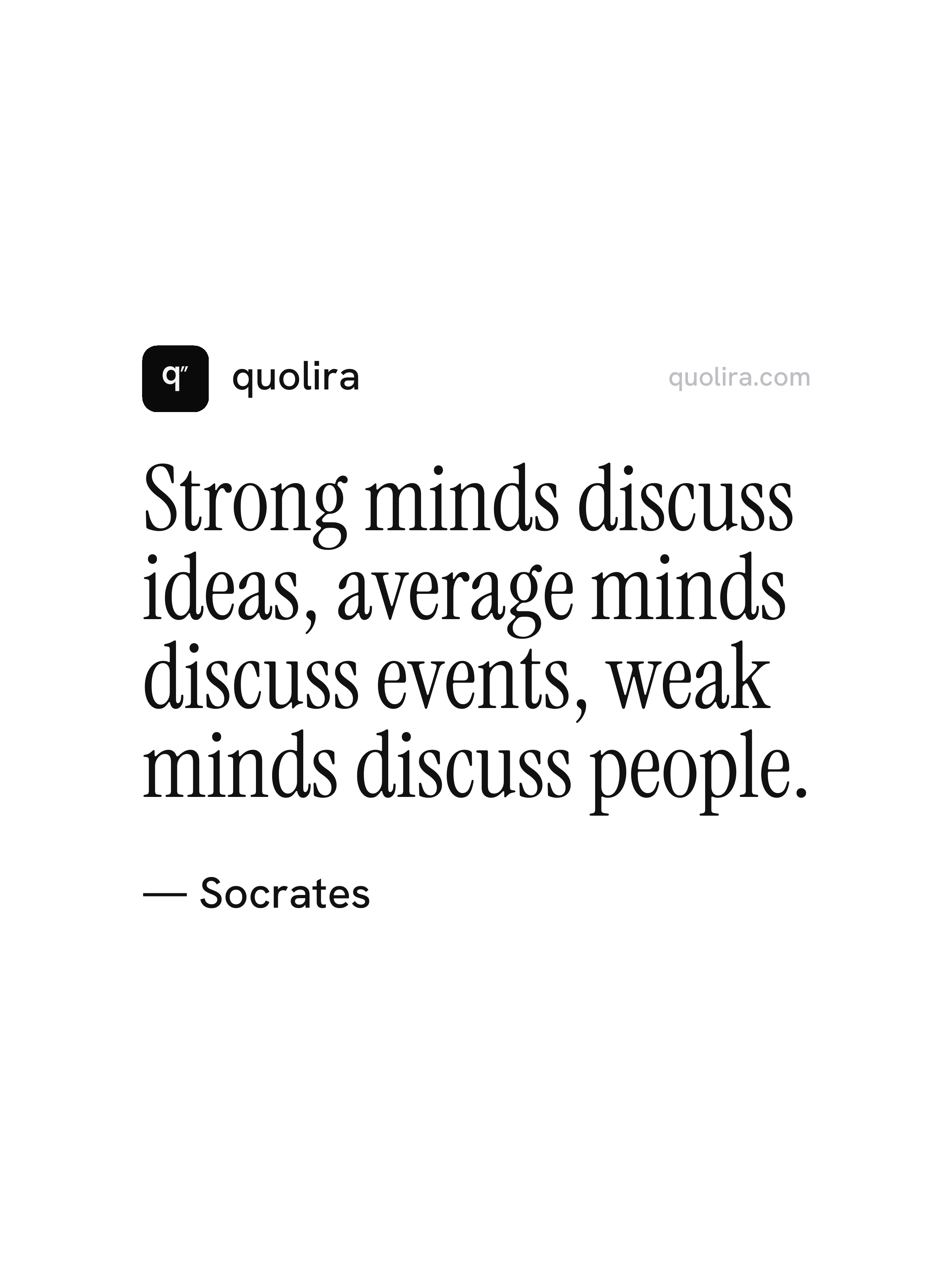
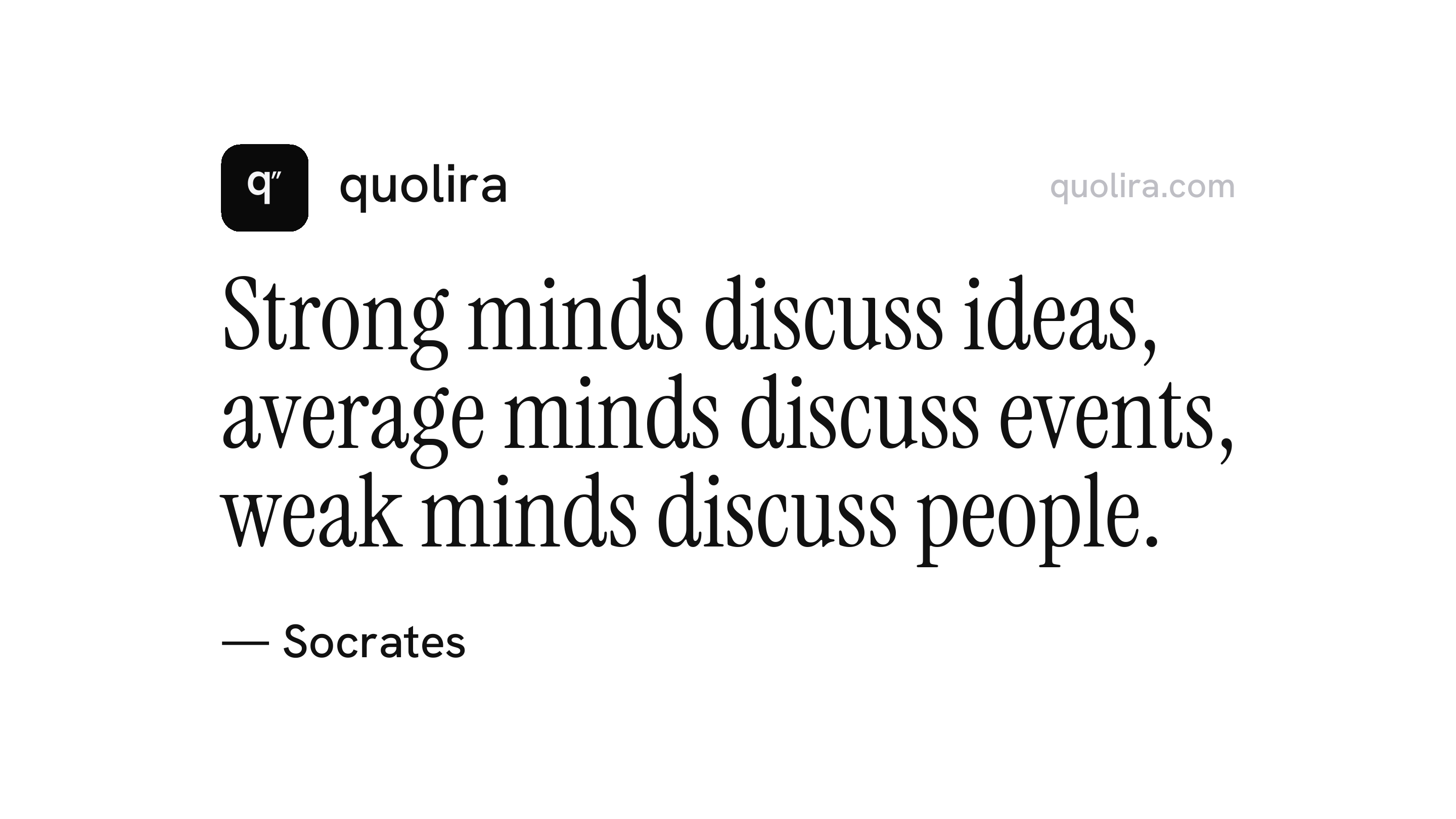
“Strong minds discuss ideas, average minds discuss events, weak minds discuss people.”
Socrates · attributed
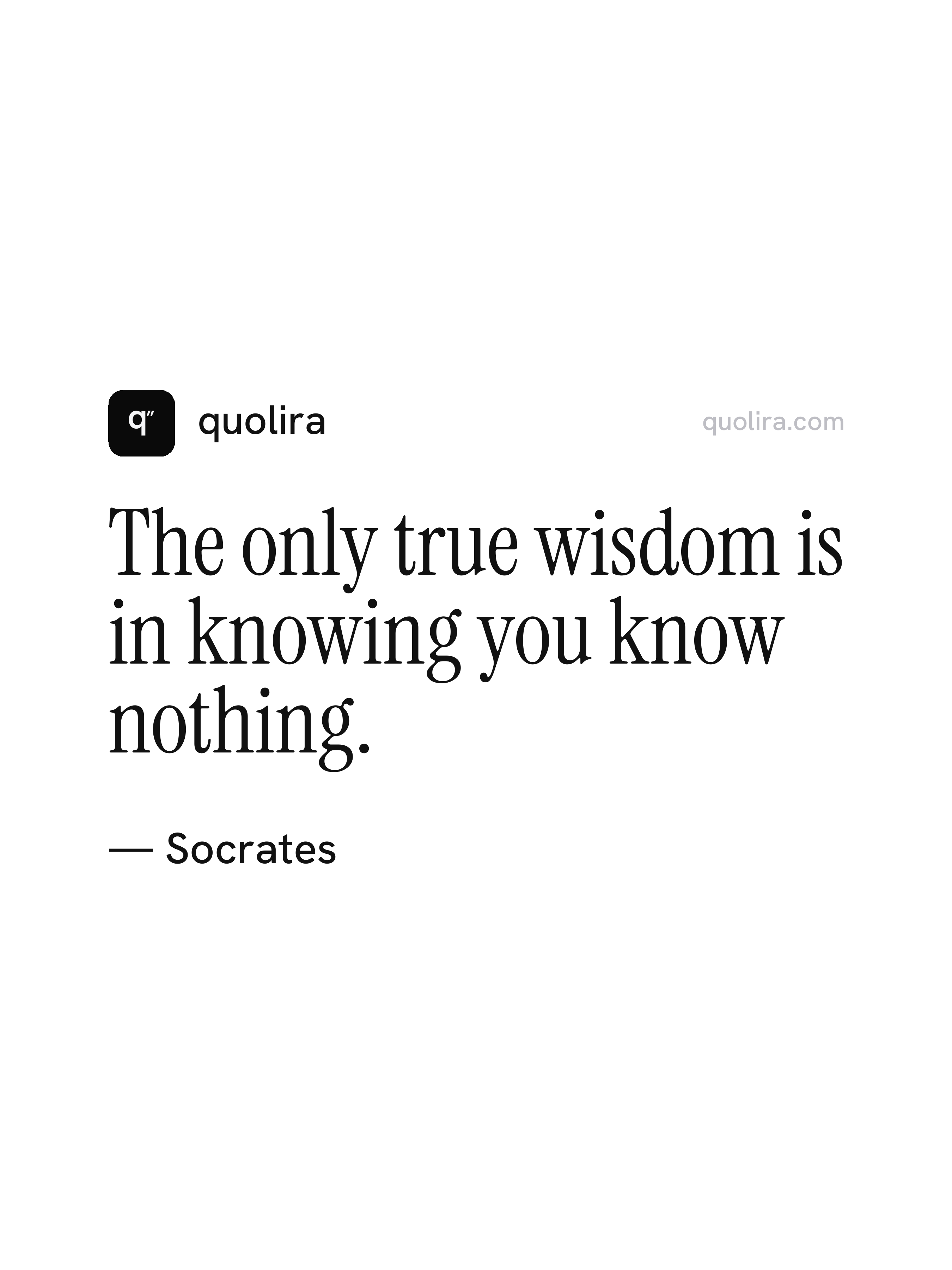
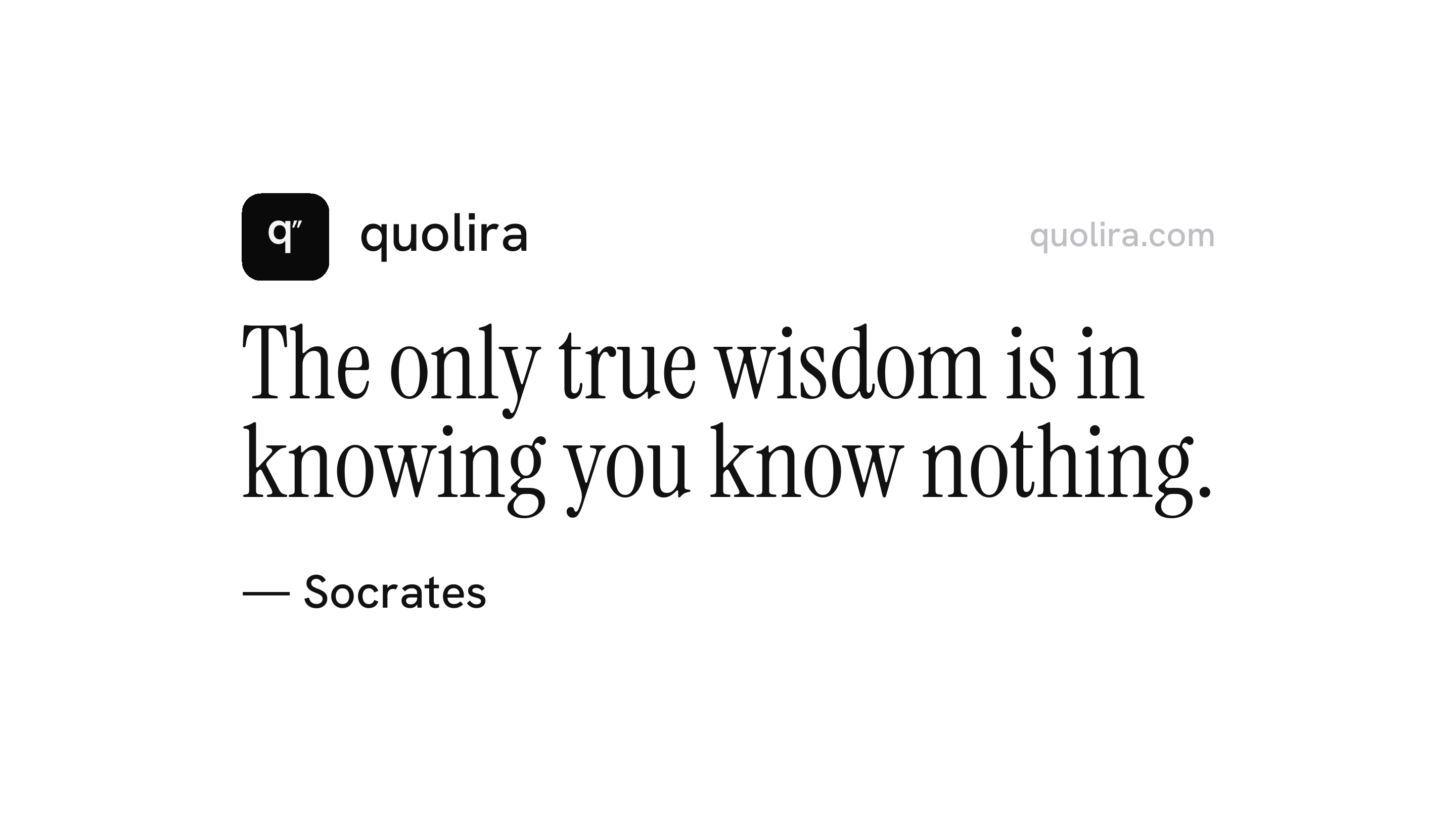
“The only true wisdom is in knowing you know nothing.”
Socrates · paraphrase from Plato, Apology
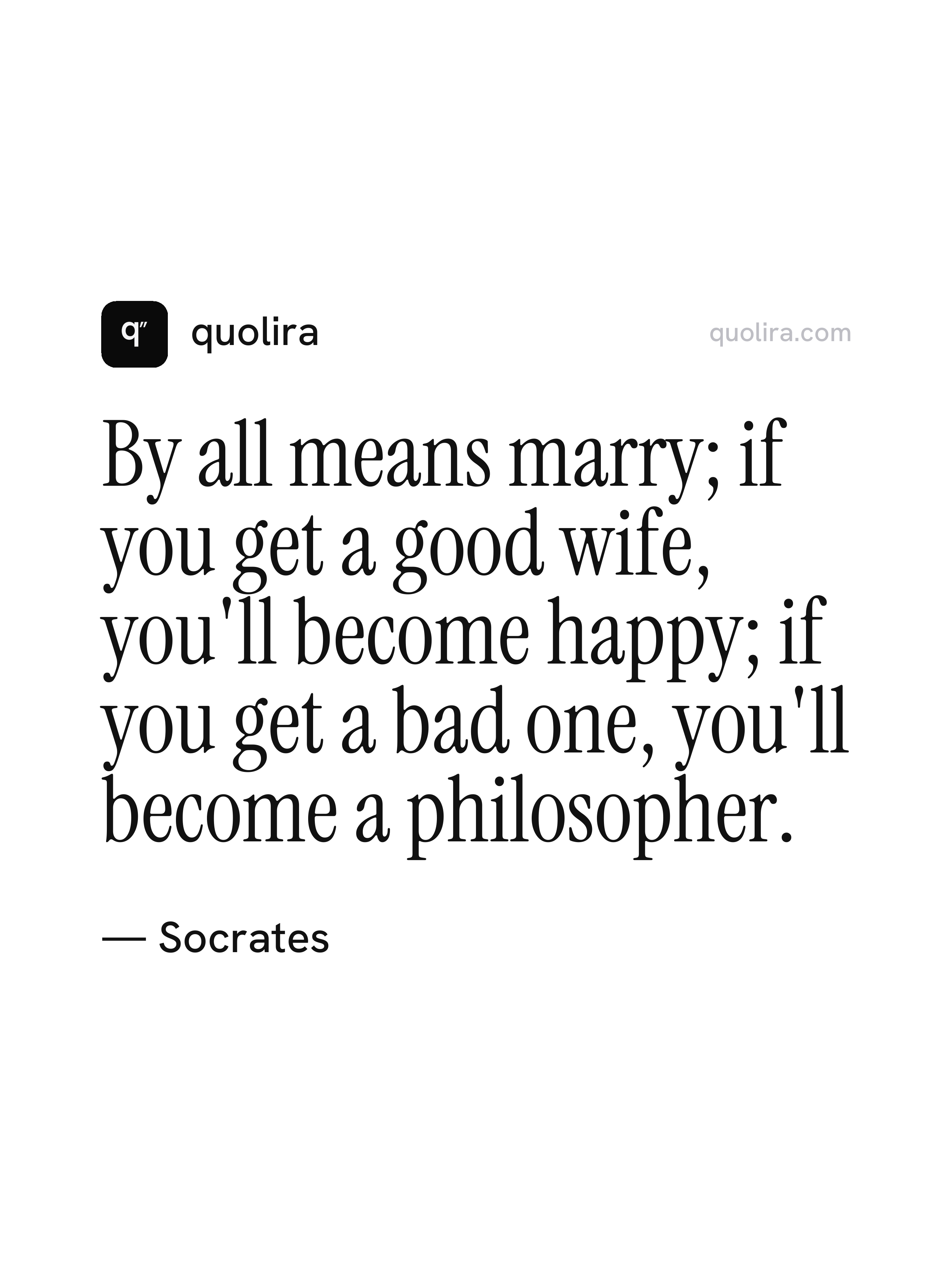
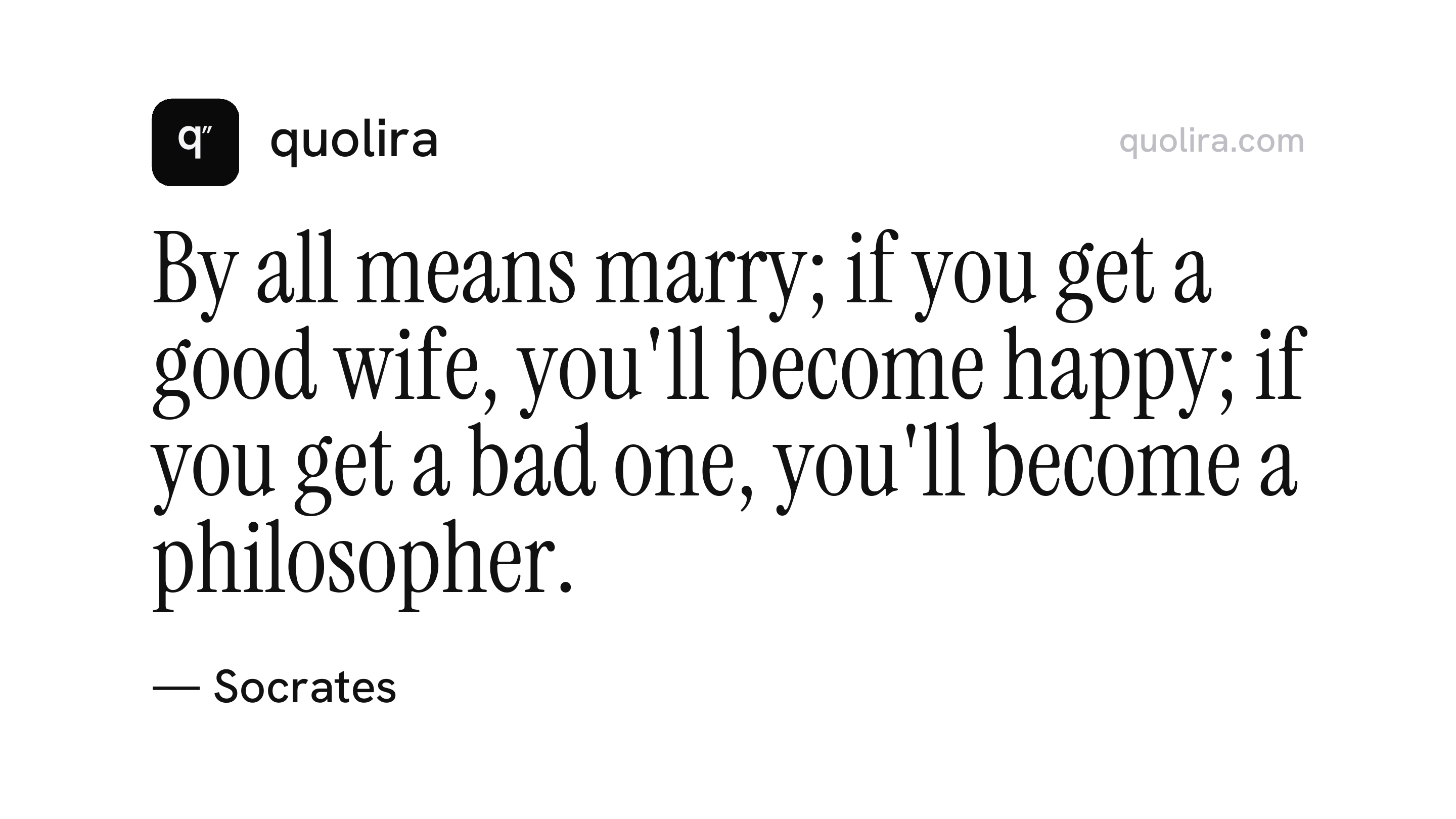
“By all means marry; if you get a good wife, you'll become happy; if you get a bad one, you'll become a philosopher.”
Socrates · attributed via Diogenes Laertius
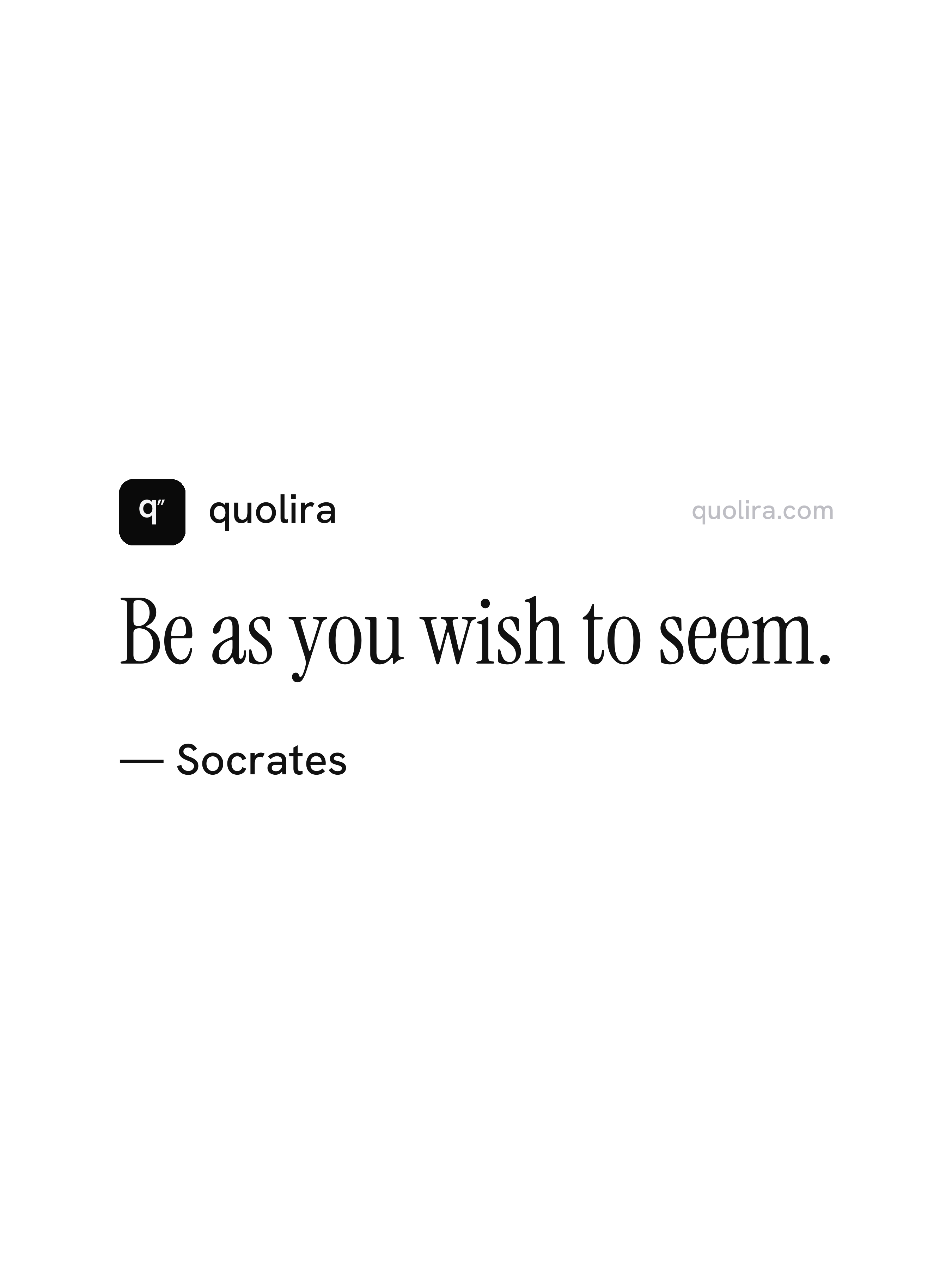
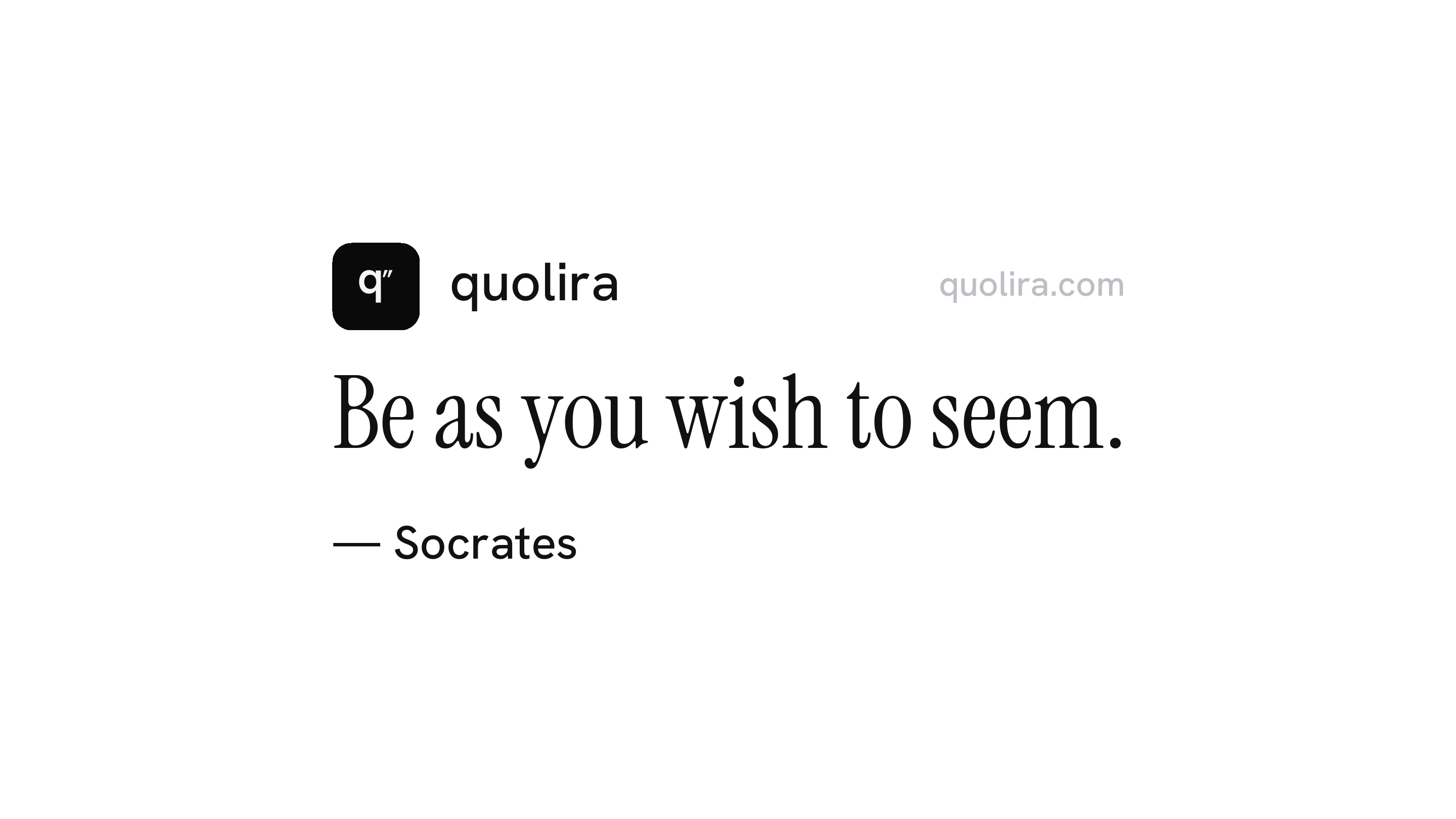
“Be as you wish to seem.”
Socrates · attributed
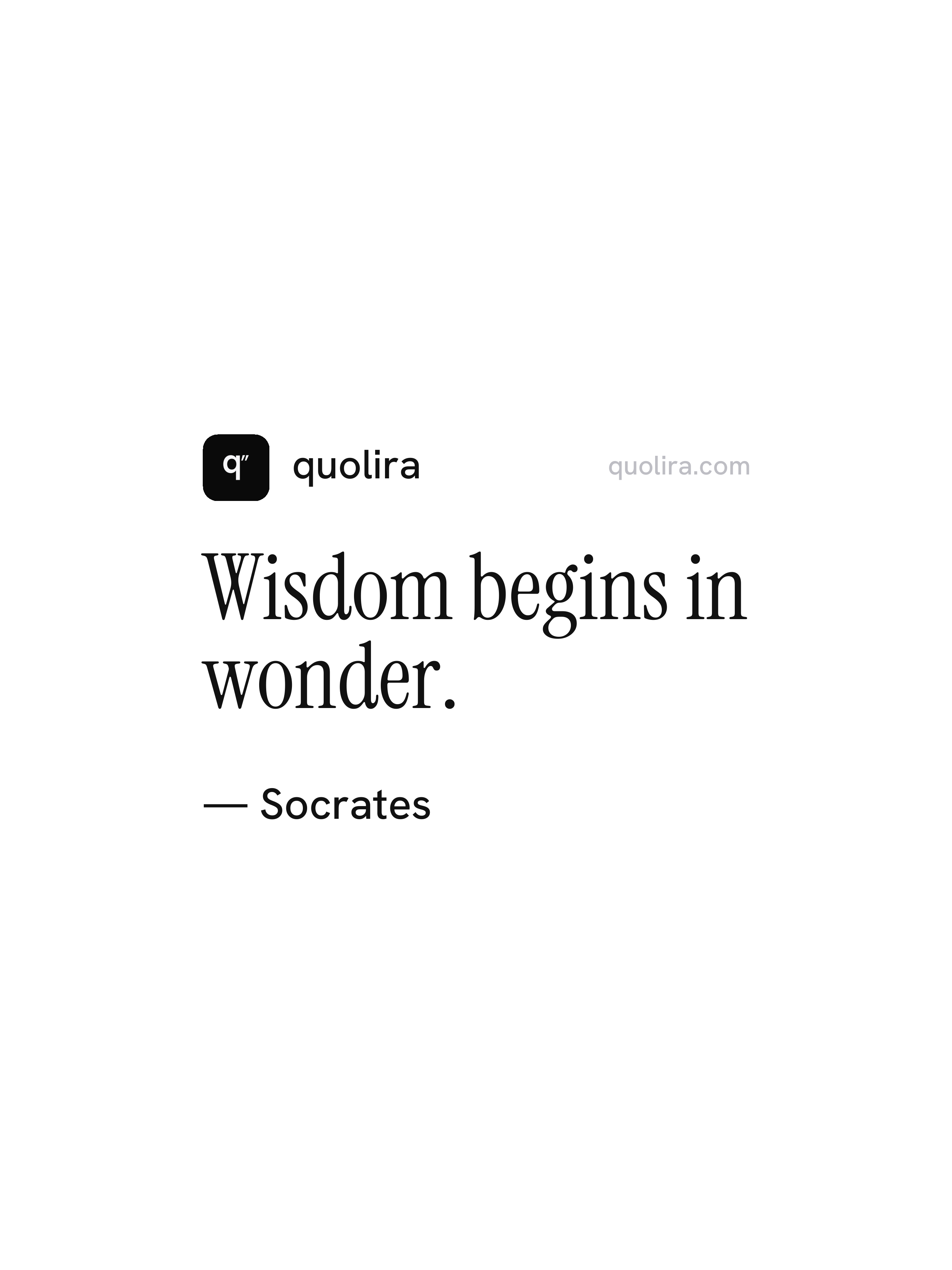
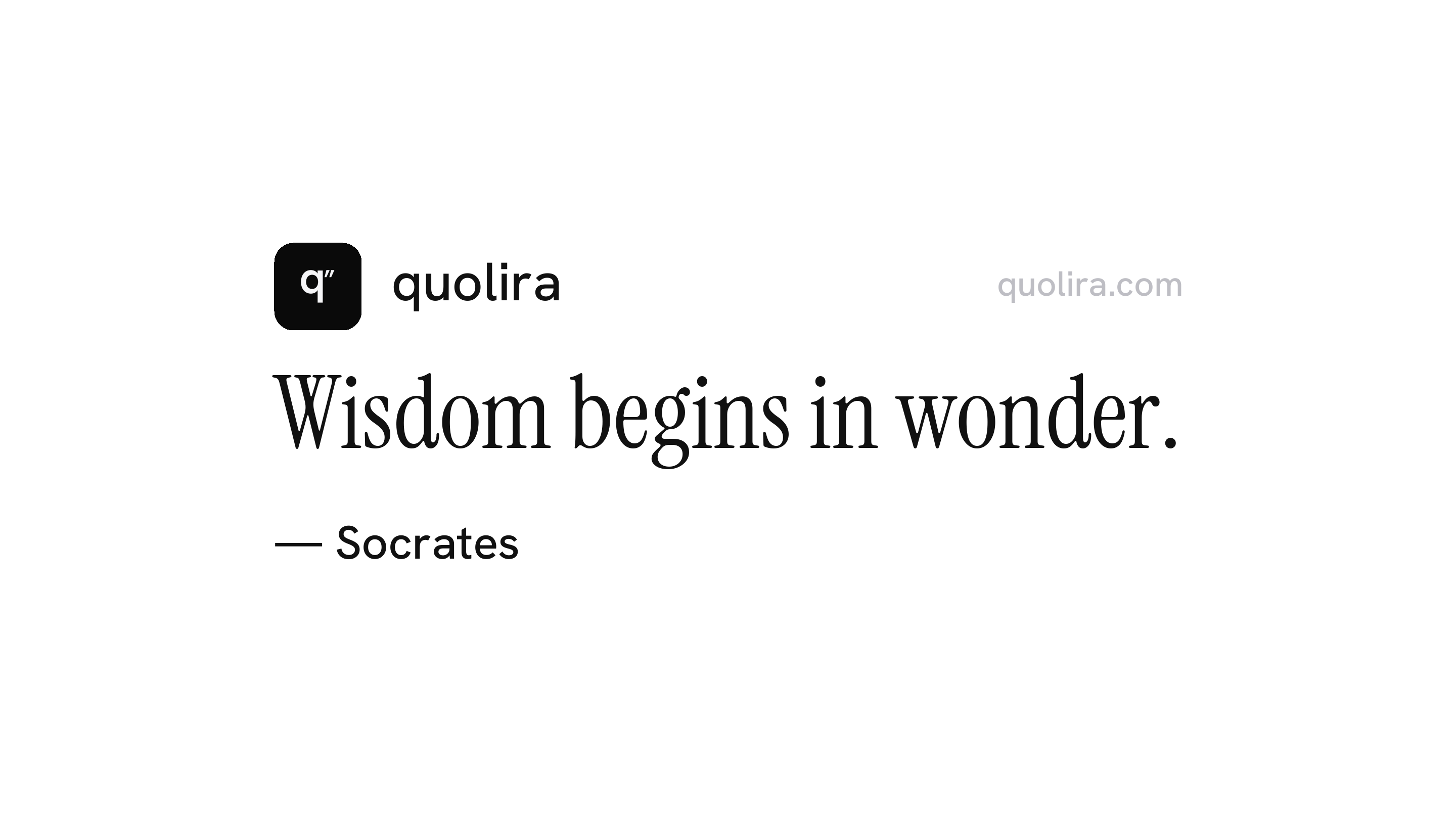
“Wisdom begins in wonder.”
Socrates · attributed
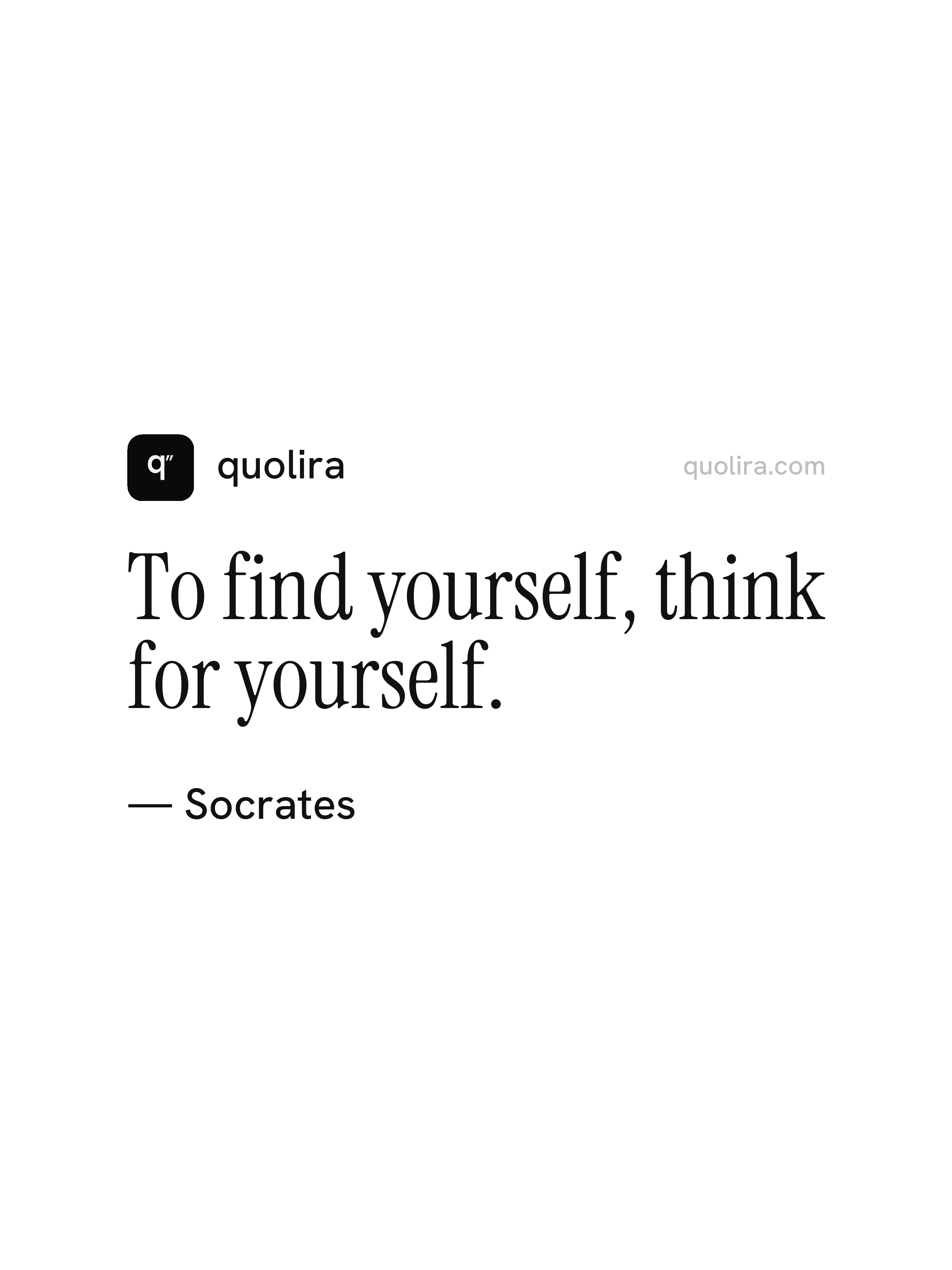
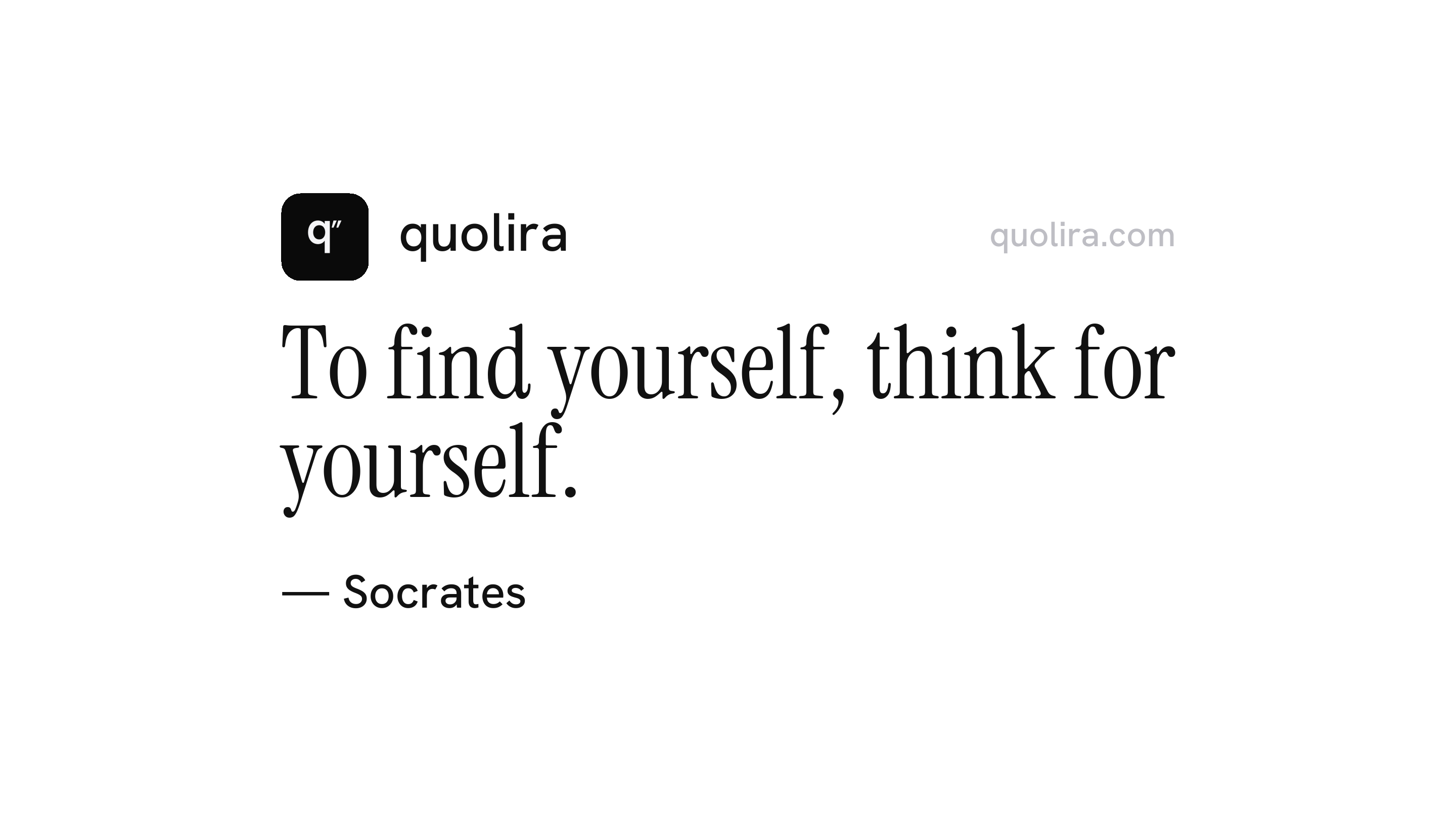
“To find yourself, think for yourself.”
Socrates · attributed
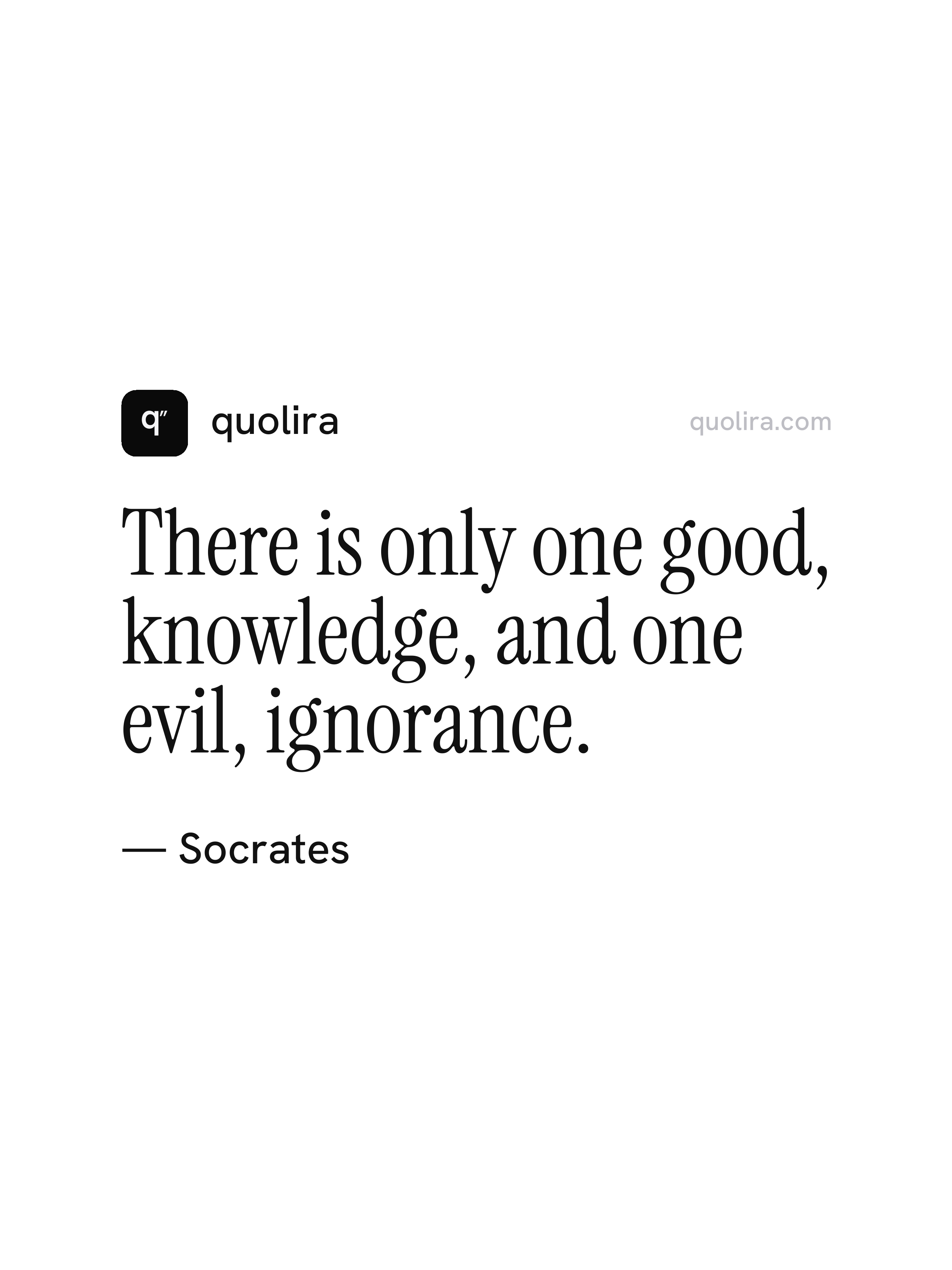
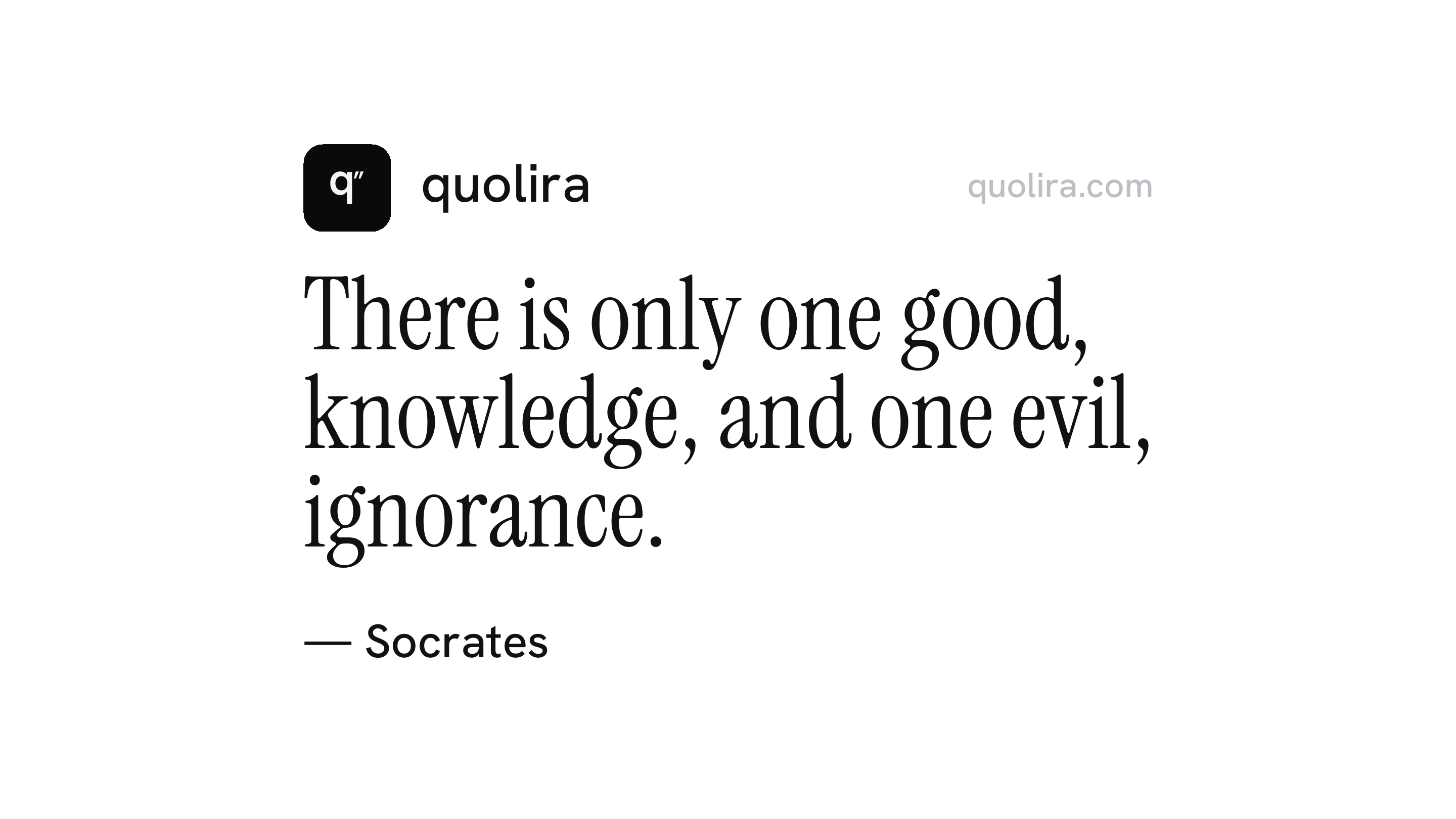
“There is only one good, knowledge, and one evil, ignorance.”
Socrates · reported by Diogenes Laertius
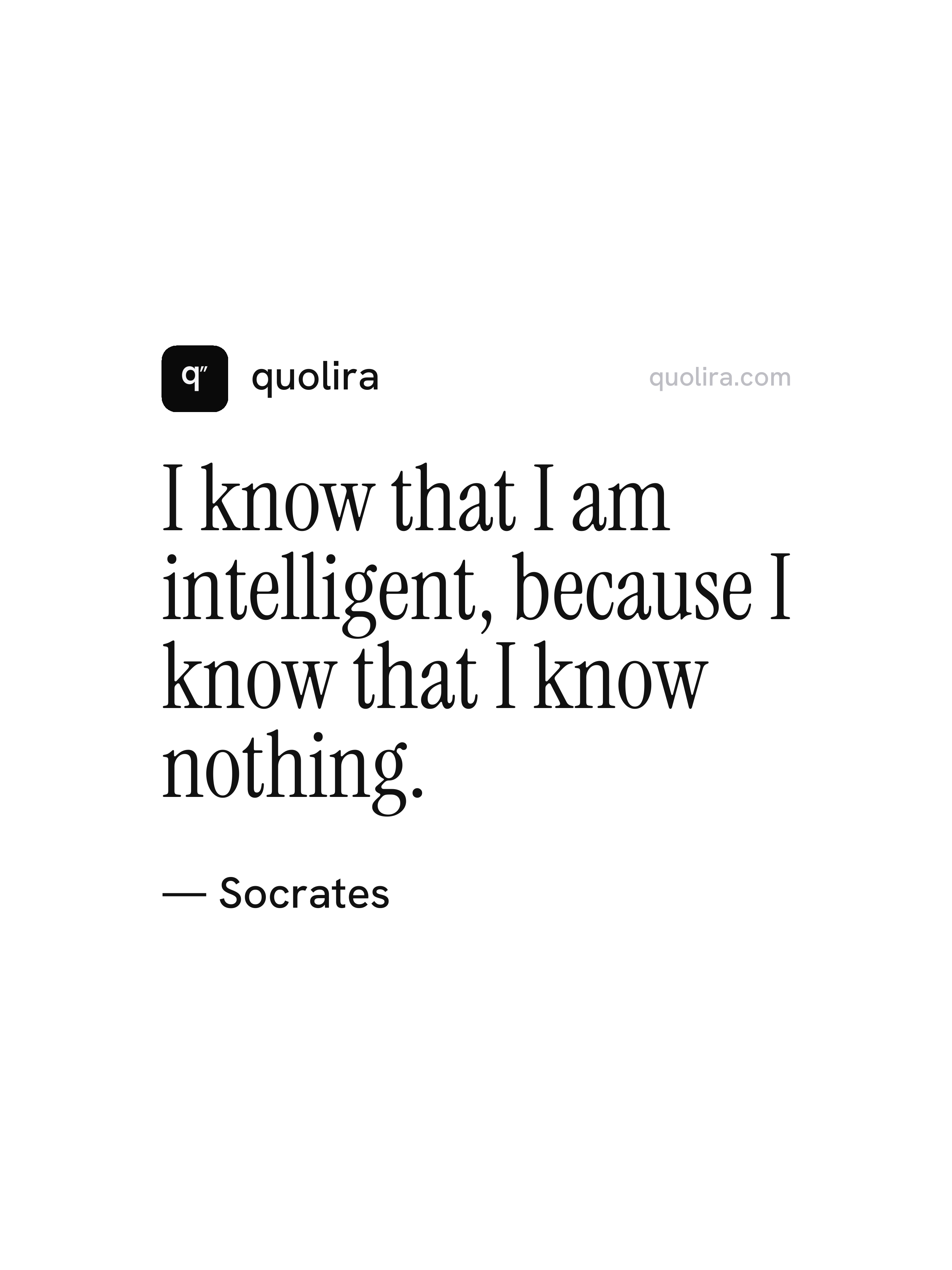
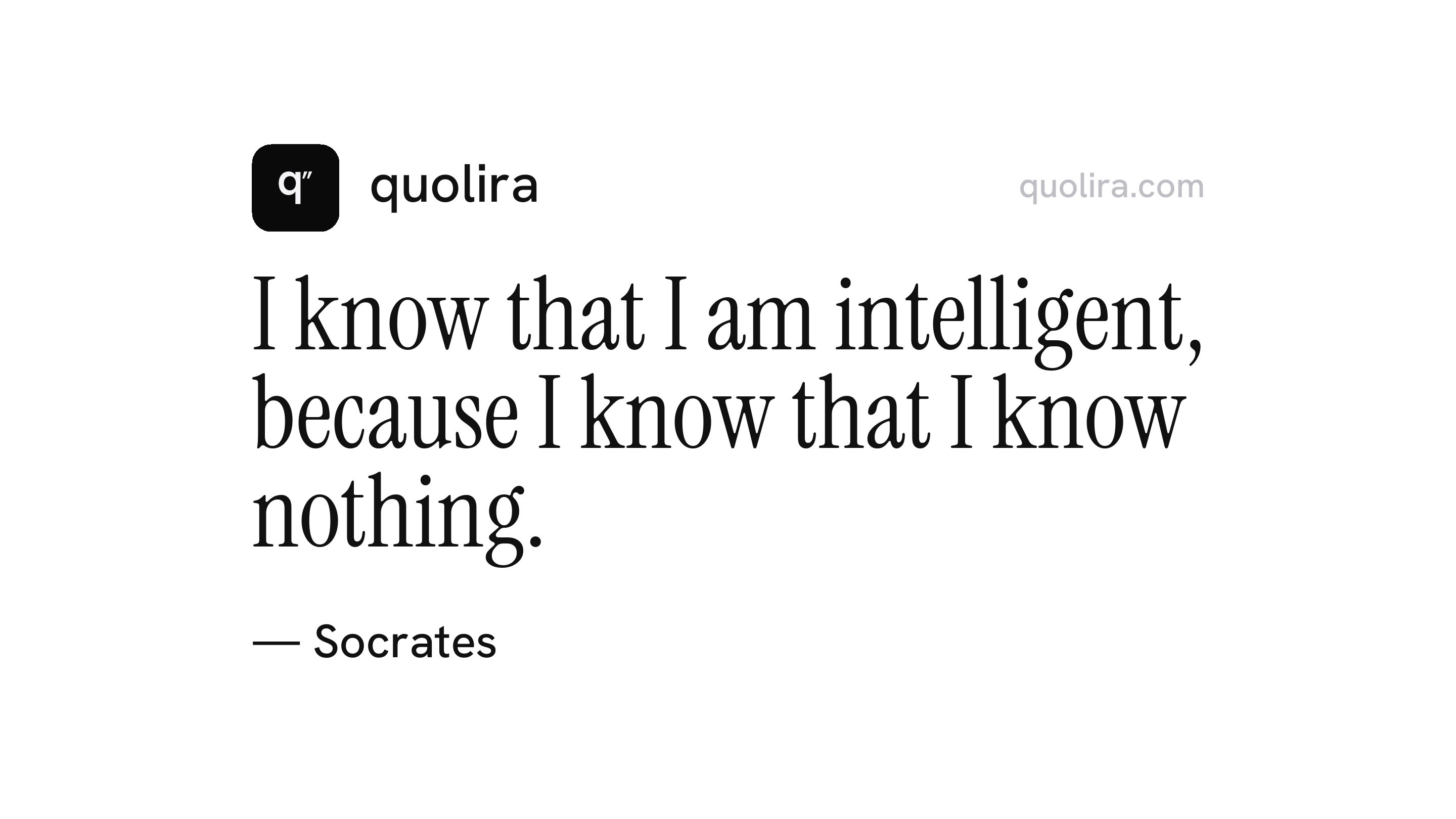
“I know that I am intelligent, because I know that I know nothing.”
Socrates · attributed via Plato, Apology
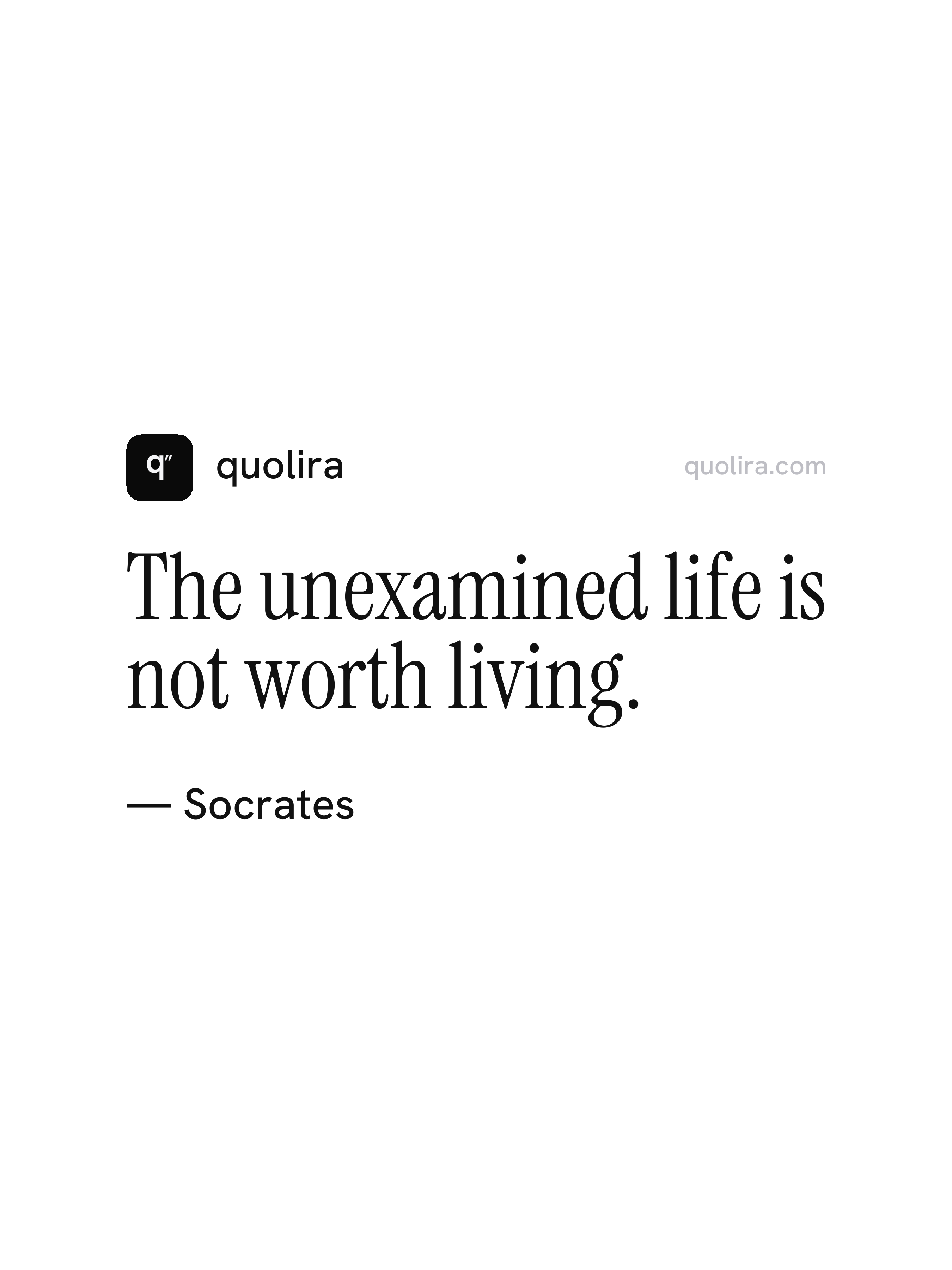
“The unexamined life is not worth living.”
Socrates · Plato, Apology