“Guide them by example, subdue them by courtesy; they will learn shame, and come to be good.”
Confucius · The Analects, Book II, Chapter III
 quolira
.com
Brianna Wiest said it, in The Mountain Is You, Chapter 1: The Mountain Is You.
Wiest opens chapter one with this line, and the rest of the book builds on it. If your efforts keep running into your own resistance, this is the first place I'd look.
From the collection: 20 The Mountain Is You Quotes That Expose Self-Sabotage and Make You Act · More Brianna Wiest quotes
This quote means that the biggest obstacle standing between a person and their goals is often their own thinking, habits, and choices rather than outside circumstances. It asks the reader to consider whether the real barrier is internal. The point is not that external problems do not exist, but that self-created limits tend to be the most persistent.
The line comes from Chapter 1 of The Mountain Is You, the opening chapter of the book. In that chapter, Brianna Wiest sets up the central idea of the book: that many of the obstacles people face are patterns they unknowingly maintain themselves. The sentence works as a turning point, moving the reader's attention from blaming the world to examining their own behavior and beliefs.
Brianna Wiest is a writer known for essays on psychology, relationships, emotional growth, and personal development. Her work gained a wide readership online before she published books. The Mountain Is You, released in 2020, is her best known book and focuses on self-sabotage, self-awareness, and the habits that keep people from changing. Her writing is generally accessible and reflective, aimed at general readers interested in self-understanding.
“Guide them by example, subdue them by courtesy; they will learn shame, and come to be good.”
Confucius · The Analects, Book II, Chapter III
“The wise find pleasure in water; the virtuous find pleasure in hills.”
Confucius · The Analects, Book VI, Chapter XXIII
“Only after Winter comes do we know that the pine and the cypress are the last to fade.”
Confucius · The Analects, Book IX, Chapter XXVIII
“When the archer misses the center of the target, he turns round and seeks for the cause of his failure in himself.”
Confucius · The Doctrine of the Mean, Chapter XIV
“When we see men of worth, we should think of equaling them; when we see men of a contrary character, we should turn inwards and examine ourselves.”
Confucius · The Analects, Book IV, Chapter XVII
“I am not bothered by the fact that I am not understood. I am bothered when I do not know others.”
Confucius · The Analects, Book I, Chapter XVI
“When making a mistake, do not be afraid to correct it.”
Confucius · The Analects, Book I, Chapter VIII
“If names be not correct, language is not in accordance with the truth of things.”
Confucius · The Analects, Book XIII, Chapter III
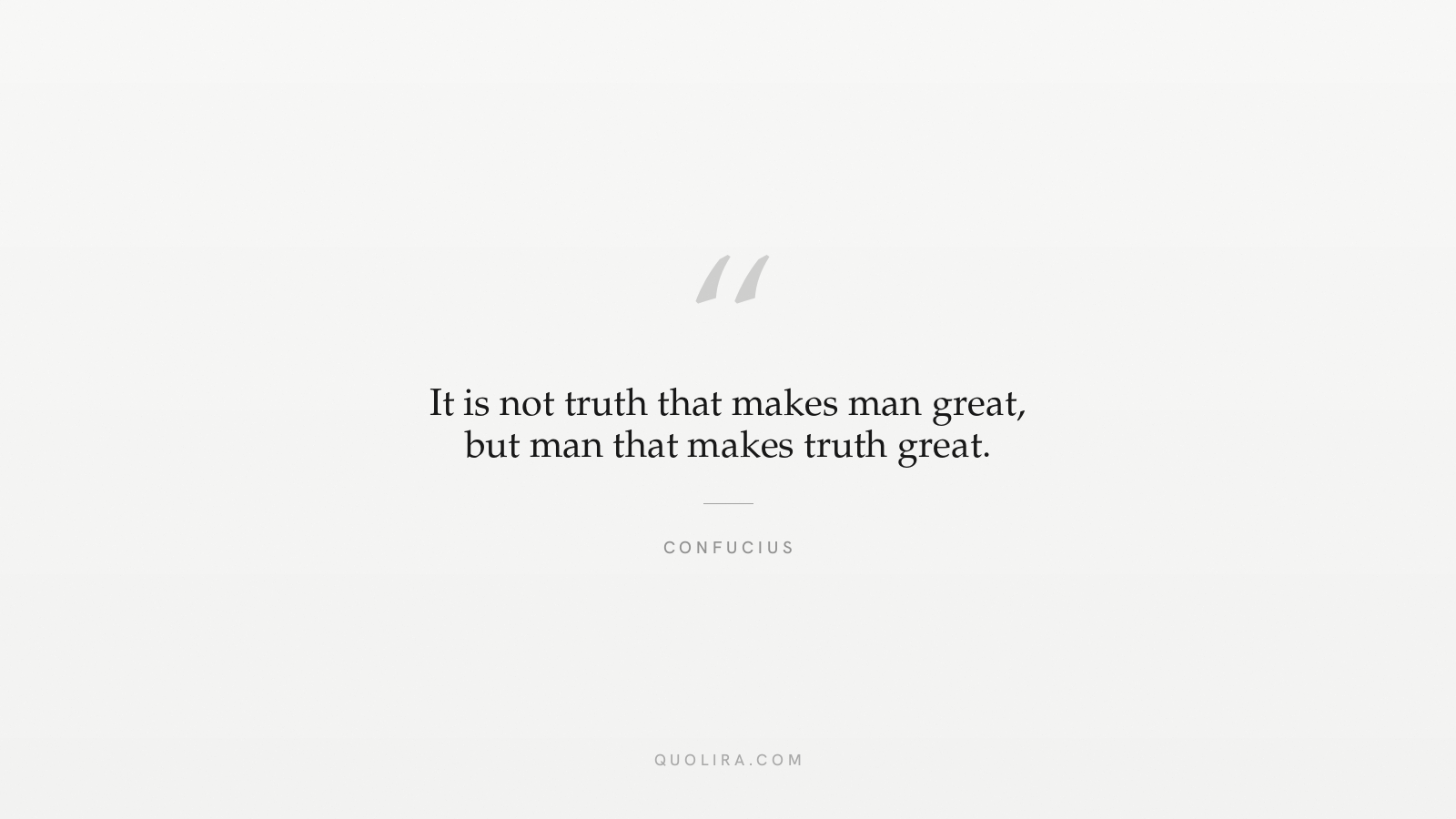
“It is not truth that makes man great, but man that makes truth great.”
Confucius · The Importance of Living (1937), as quoted by Lin Yutang
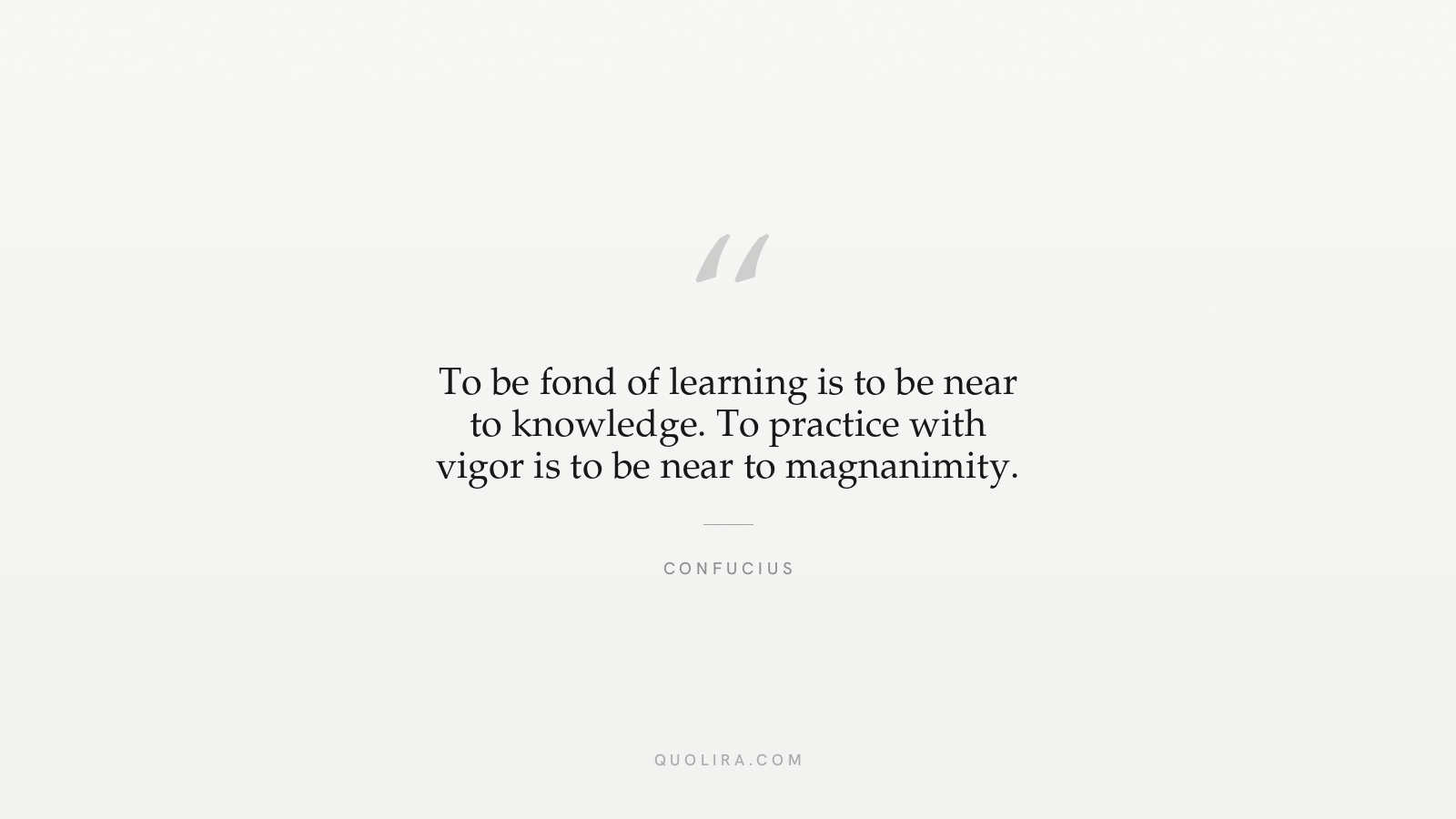
“To be fond of learning is to be near to knowledge. To practice with vigor is to be near to magnanimity.”
Confucius · The Doctrine of the Mean, Chapter XX
“The man of virtue makes the difficulty to be overcome his first business, and success only a subsequent consideration.”
Confucius · The Analects, Book VI
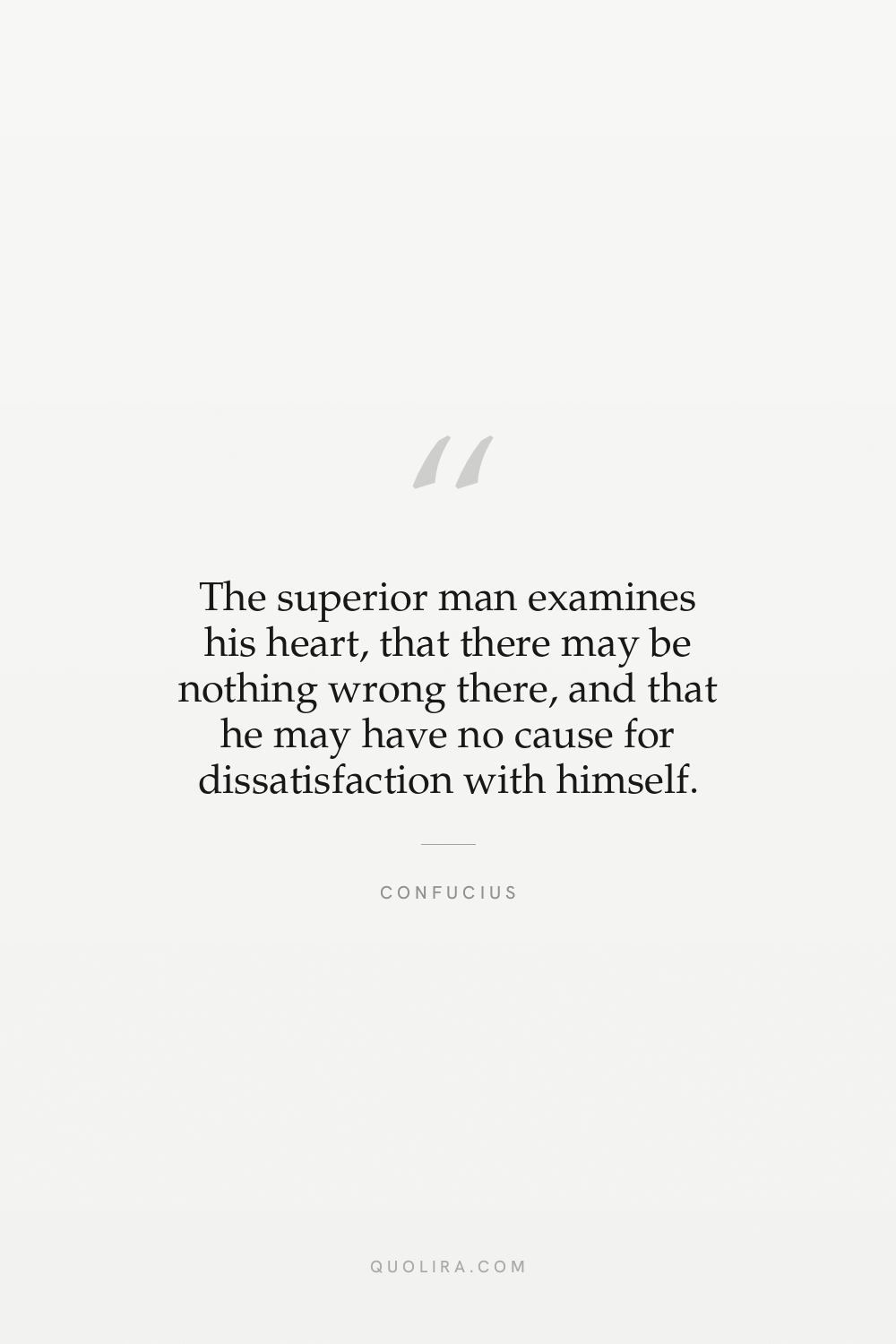
“The superior man examines his heart, that there may be nothing wrong there, and that he may have no cause for dissatisfaction with himself.”
Confucius · The Doctrine of the Mean