“When we see men of worth, we should think of equaling them; when we see men of a contrary character, we should turn inwards and examine ourselves.”
Confucius · The Analects, Book IV, Chapter XVII
 quolira
.com
Confucius said it, in The Doctrine of the Mean, Chapter XIV.
Archery is the Doctrine of the Mean's go-to image for the superior man. When you miss, the first place to look is your own form, not the wind. It's an uncomfortable habit, and a useful one.
From the collection: 23 Famous Confucius Quotes on Learning, Virtue, and Self-Reflection · More Confucius quotes
This quote means that when we fail to reach a goal, the most useful response is to look at our own preparation and method instead of blaming circumstances or other people. The archer image makes the point concrete: a miss is a signal about one's own skill and attention. The lesson applies widely, to study, work, relationships, and character. It asks for honest responsibility without self-contempt, since the purpose of the inquiry is correction.
The passage appears in The Doctrine of the Mean, Chapter XIV, a short philosophical text traditionally included among the Confucian classics. The text explores how a person can live in balance and sincerity, and it often uses everyday skills and analogies to explain moral ideals. Archery was a respected discipline in ancient China and was associated with personal rectitude, so the comparison would have been familiar to its original readers. The chapter links success in archery to the broader way of the superior person, who examines the source of any shortfall.
Confucius, known in Chinese as Kongzi or Kong Fuzi, lived in the state of Lu during the late Spring and Autumn period, traditionally dated to roughly 551 to 479 BCE. He taught that education and self-cultivation were the basis of a well-ordered society, and he gathered students who went on to serve in government and teaching. The Doctrine of the Mean is traditionally associated with his teaching and with his grandson Zisi, and it was later given prominence in the Four Books of Neo-Confucian education. Confucius himself wrote little that survives directly, so his views are generally known through his students' records and later texts.
“When we see men of worth, we should think of equaling them; when we see men of a contrary character, we should turn inwards and examine ourselves.”
Confucius · The Analects, Book IV, Chapter XVII
“I am not bothered by the fact that I am not understood. I am bothered when I do not know others.”
Confucius · The Analects, Book I, Chapter XVI
“When making a mistake, do not be afraid to correct it.”
Confucius · The Analects, Book I, Chapter VIII
“If names be not correct, language is not in accordance with the truth of things.”
Confucius · The Analects, Book XIII, Chapter III
“It is not truth that makes man great, but man that makes truth great.”
Confucius · The Importance of Living (1937), as quoted by Lin Yutang
“To be fond of learning is to be near to knowledge. To practice with vigor is to be near to magnanimity.”
Confucius · The Doctrine of the Mean, Chapter XX
“The man of virtue makes the difficulty to be overcome his first business, and success only a subsequent consideration.”
Confucius · The Analects, Book VI
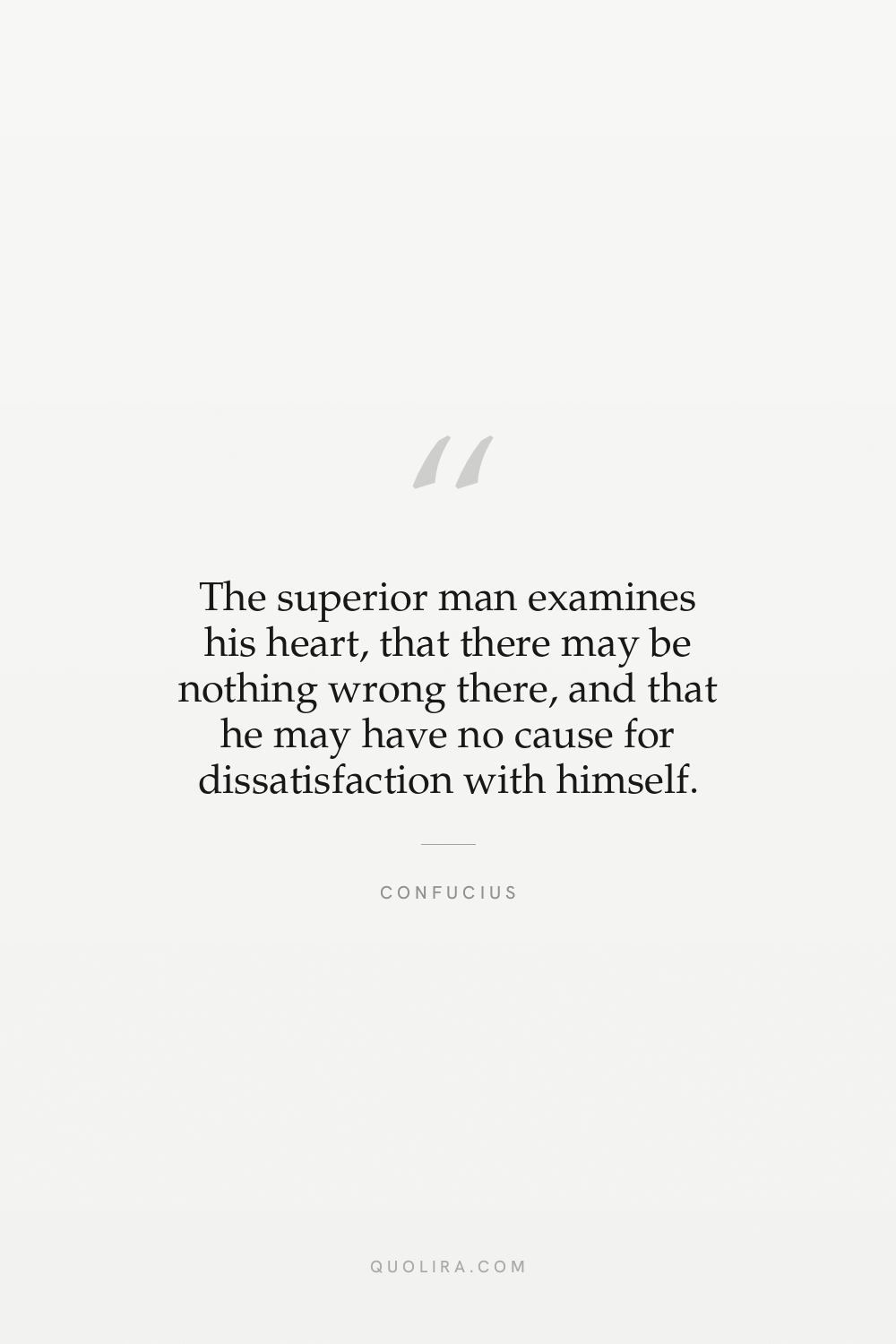
“The superior man examines his heart, that there may be nothing wrong there, and that he may have no cause for dissatisfaction with himself.”
Confucius · The Doctrine of the Mean
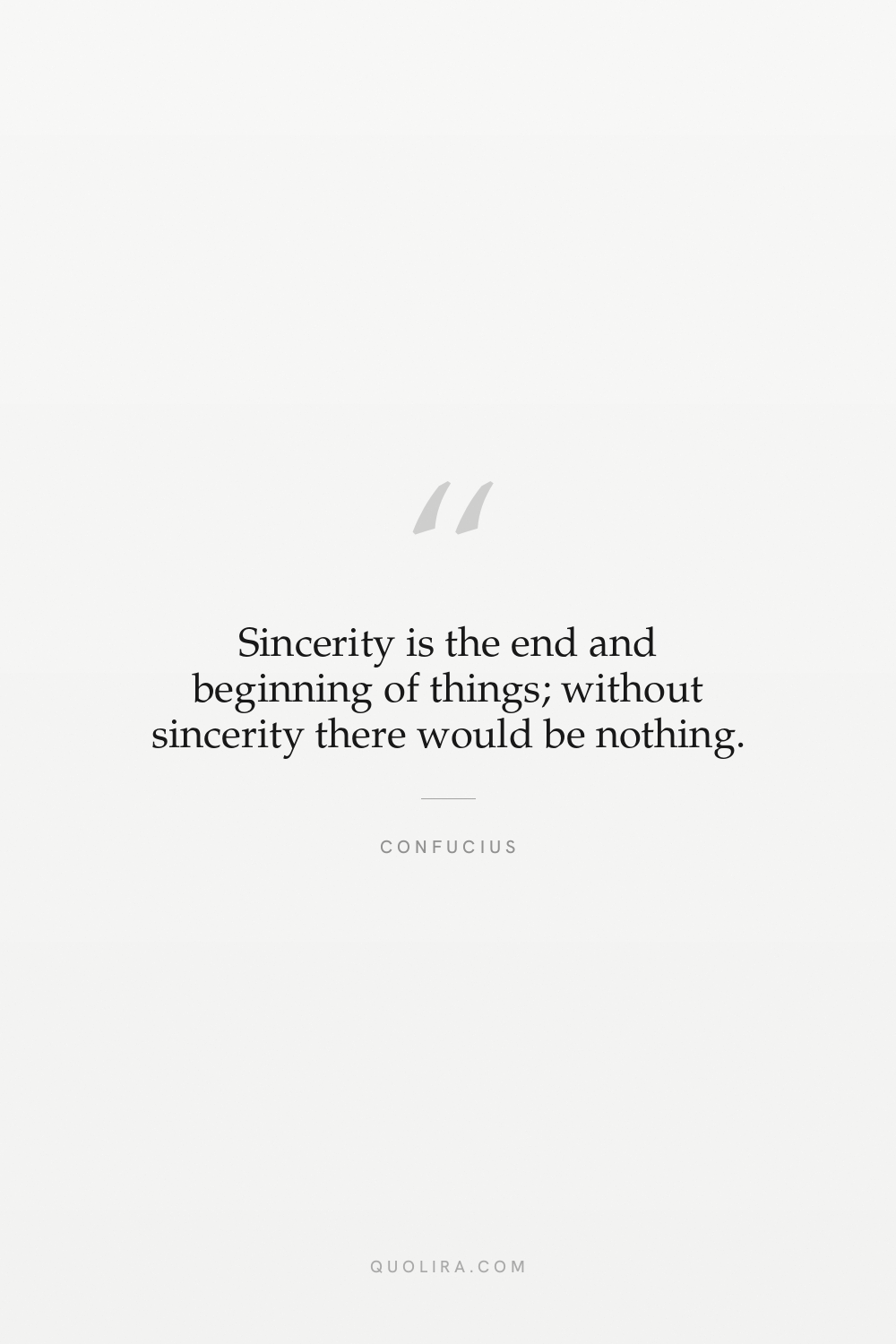
“Sincerity is the end and beginning of things; without sincerity there would be nothing.”
Confucius · The Doctrine of the Mean, Chapter XXV
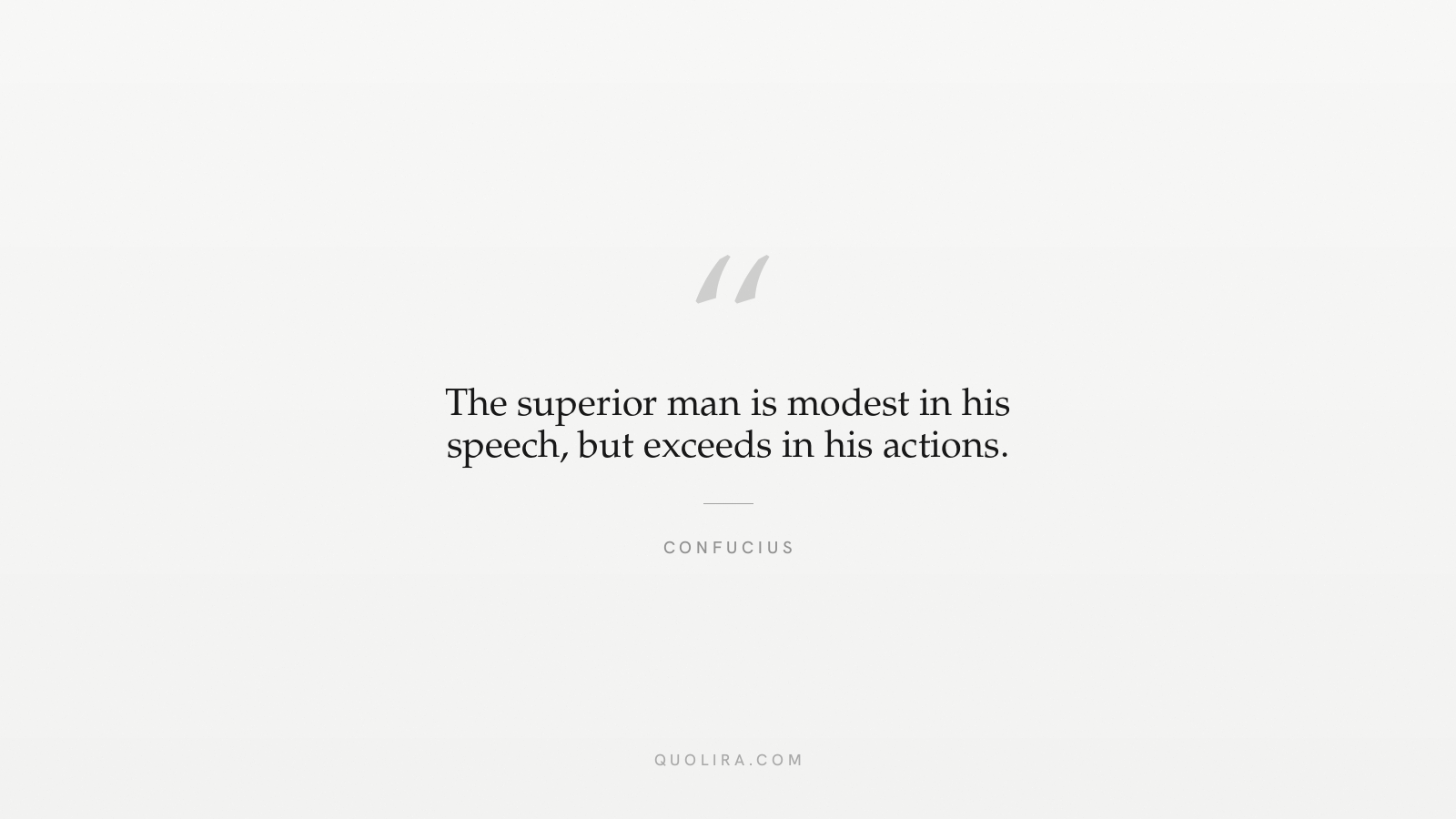
“The superior man is modest in his speech, but exceeds in his actions.”
Confucius · The Analects, Book IV, Chapter XXIV
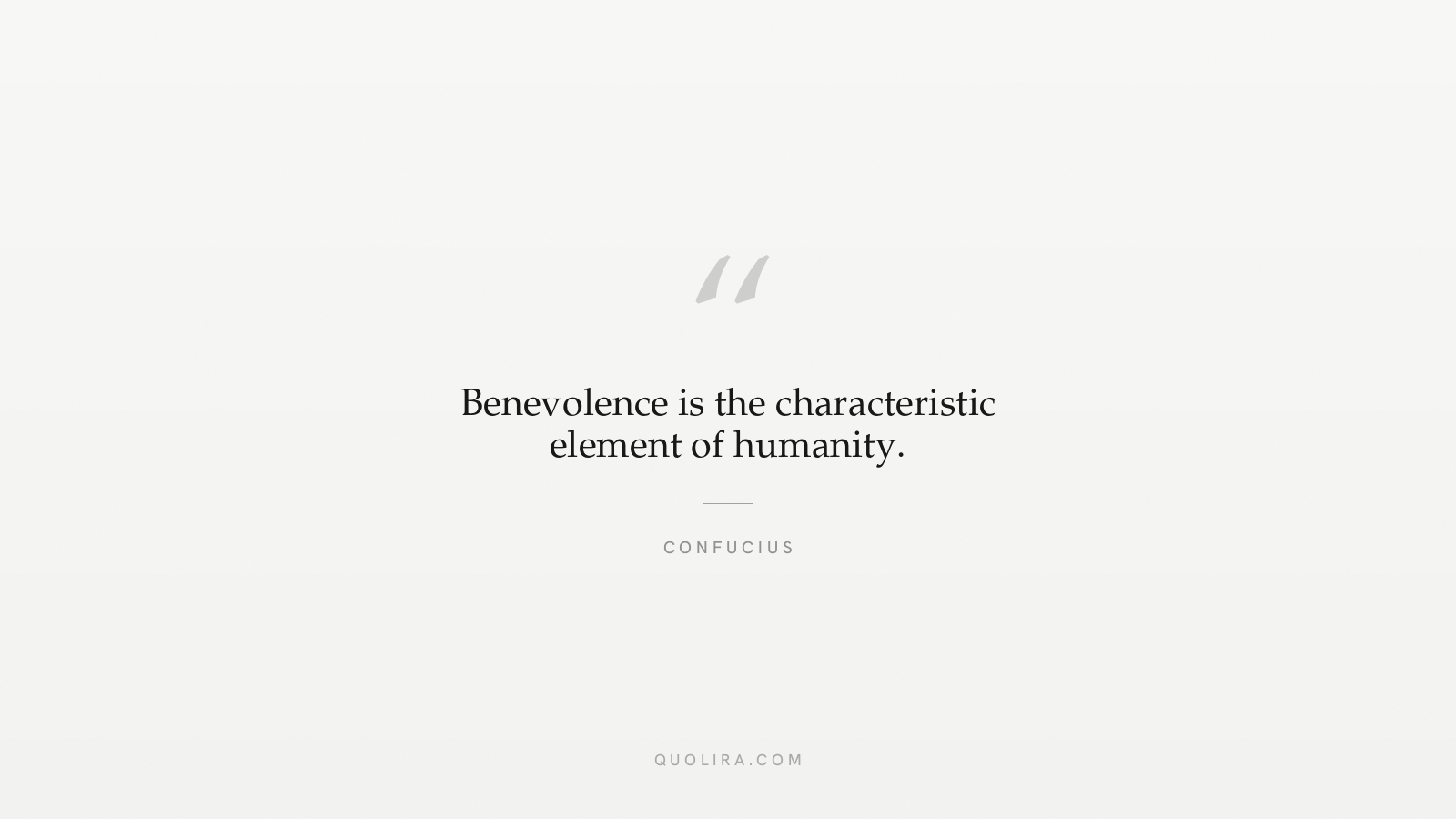
“Benevolence is the characteristic element of humanity.”
Confucius · The Doctrine of the Mean, Chapter XX
“Virtue is not left to stand alone. He who practices it will have neighbors.”
Confucius · The Analects, Book IV, Chapter XXV