“When the archer misses the center of the target, he turns round and seeks for the cause of his failure in himself.”
Confucius · The Doctrine of the Mean, Chapter XIV
 quolira
.com
Confucius said it, in The Analects, Book IX, Chapter XXVIII.
Hard seasons reveal who holds steady. This is the line I'd send to someone in a rough stretch. Real character shows itself when the easy weather ends.
From the collection: 23 Famous Confucius Quotes on Learning, Virtue, and Self-Reflection · More Confucius quotes
This quote means that a person's true character and steadfastness often become visible only when conditions are hard. Pine and cypress trees stay green while other plants lose their leaves, so their quality shows most clearly in the cold. The line suggests that loyalty, integrity, and resilience are measured by what remains constant under pressure rather than by what looks impressive during easy times.
The saying is found in The Analects, Book IX, Chapter XXVIII, a collection of sayings attributed to Confucius and recorded by his disciples. Nature imagery appears often in classical Chinese writing, and evergreen trees were commonly used as symbols of endurance. In this passage, the remark follows a broader discussion about the value of inner strength and moral seriousness. Readers have long treated it as an image of a person who stays true to principle when others waver, which fits the Analects' general preference for consistency over display.
Confucius, known in Chinese as Kongzi or Kong Fuzi, lived in the state of Lu during the late Spring and Autumn period, traditionally dated to roughly 551 to 479 BCE. He is remembered as a teacher who sought to restore moral order through education, ritual propriety, and the example of virtuous leaders. His teachings were gathered by his followers, and the Analects became one of the most influential books in Chinese history. Confucius did not write the book himself, so the wording of individual sayings reflects the recollections and editing of those who recorded them.
“When the archer misses the center of the target, he turns round and seeks for the cause of his failure in himself.”
Confucius · The Doctrine of the Mean, Chapter XIV
“When we see men of worth, we should think of equaling them; when we see men of a contrary character, we should turn inwards and examine ourselves.”
Confucius · The Analects, Book IV, Chapter XVII
“I am not bothered by the fact that I am not understood. I am bothered when I do not know others.”
Confucius · The Analects, Book I, Chapter XVI
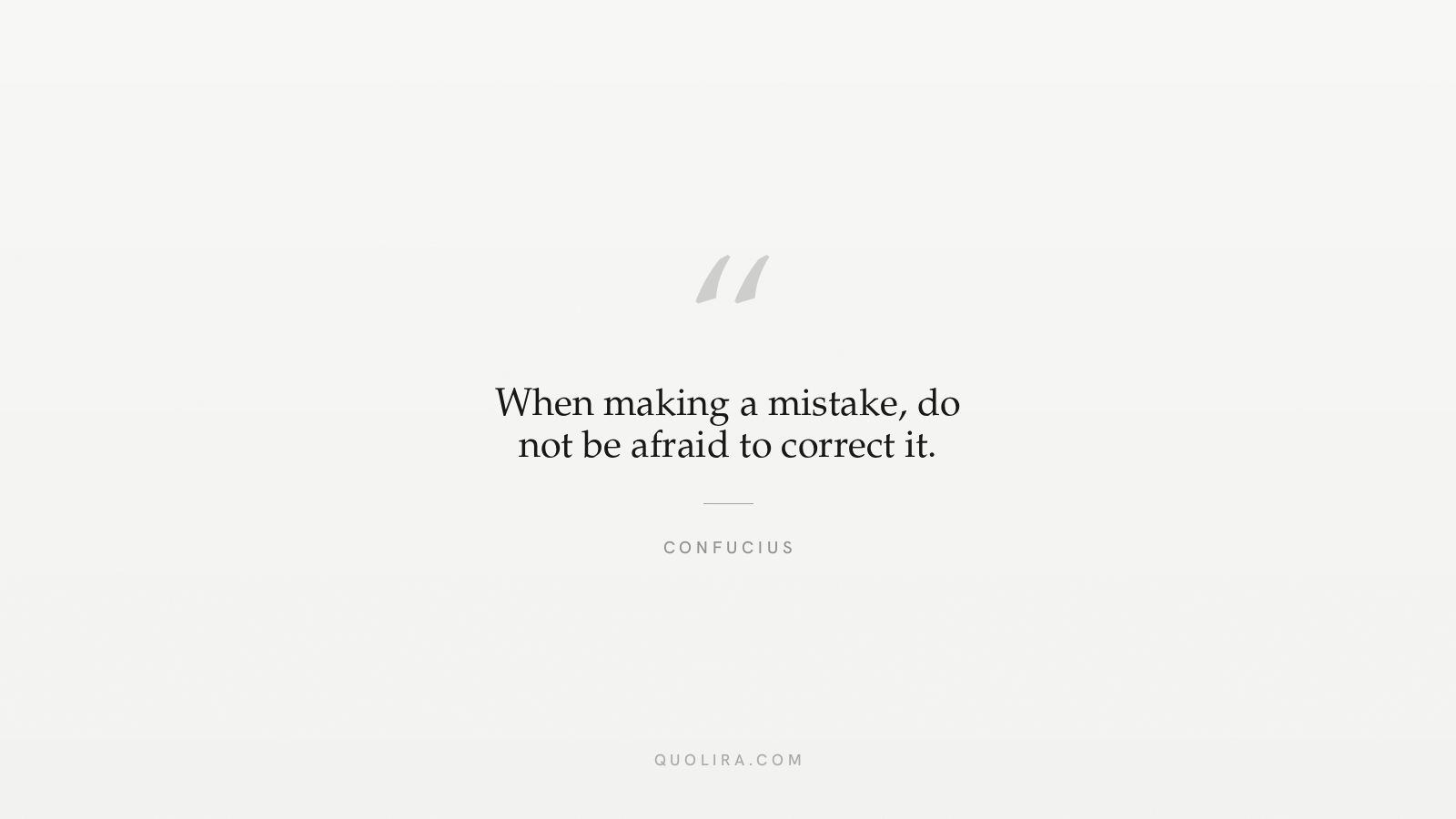
“When making a mistake, do not be afraid to correct it.”
Confucius · The Analects, Book I, Chapter VIII
“If names be not correct, language is not in accordance with the truth of things.”
Confucius · The Analects, Book XIII, Chapter III
“It is not truth that makes man great, but man that makes truth great.”
Confucius · The Importance of Living (1937), as quoted by Lin Yutang
“To be fond of learning is to be near to knowledge. To practice with vigor is to be near to magnanimity.”
Confucius · The Doctrine of the Mean, Chapter XX
“The man of virtue makes the difficulty to be overcome his first business, and success only a subsequent consideration.”
Confucius · The Analects, Book VI
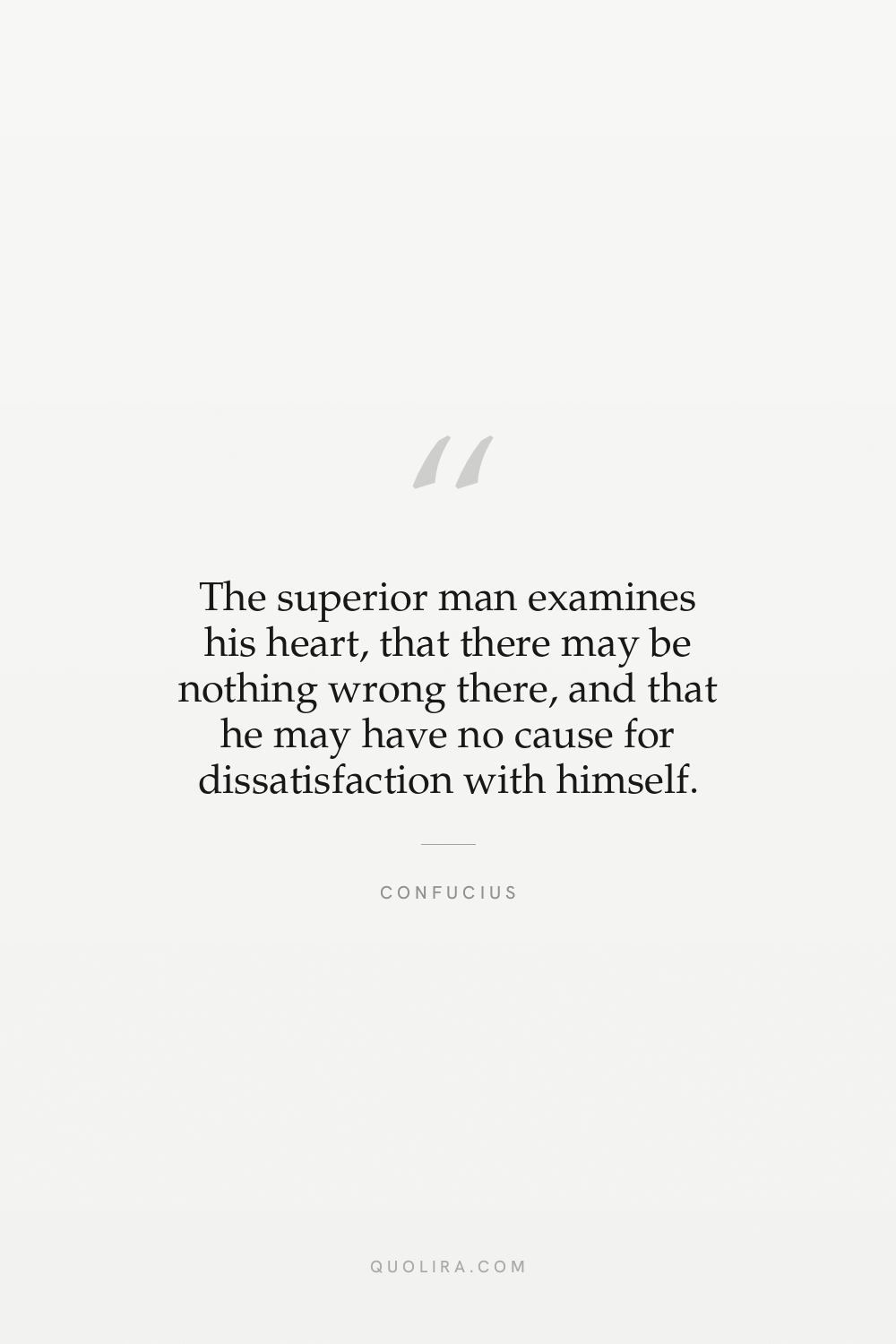
“The superior man examines his heart, that there may be nothing wrong there, and that he may have no cause for dissatisfaction with himself.”
Confucius · The Doctrine of the Mean
“Sincerity is the end and beginning of things; without sincerity there would be nothing.”
Confucius · The Doctrine of the Mean, Chapter XXV
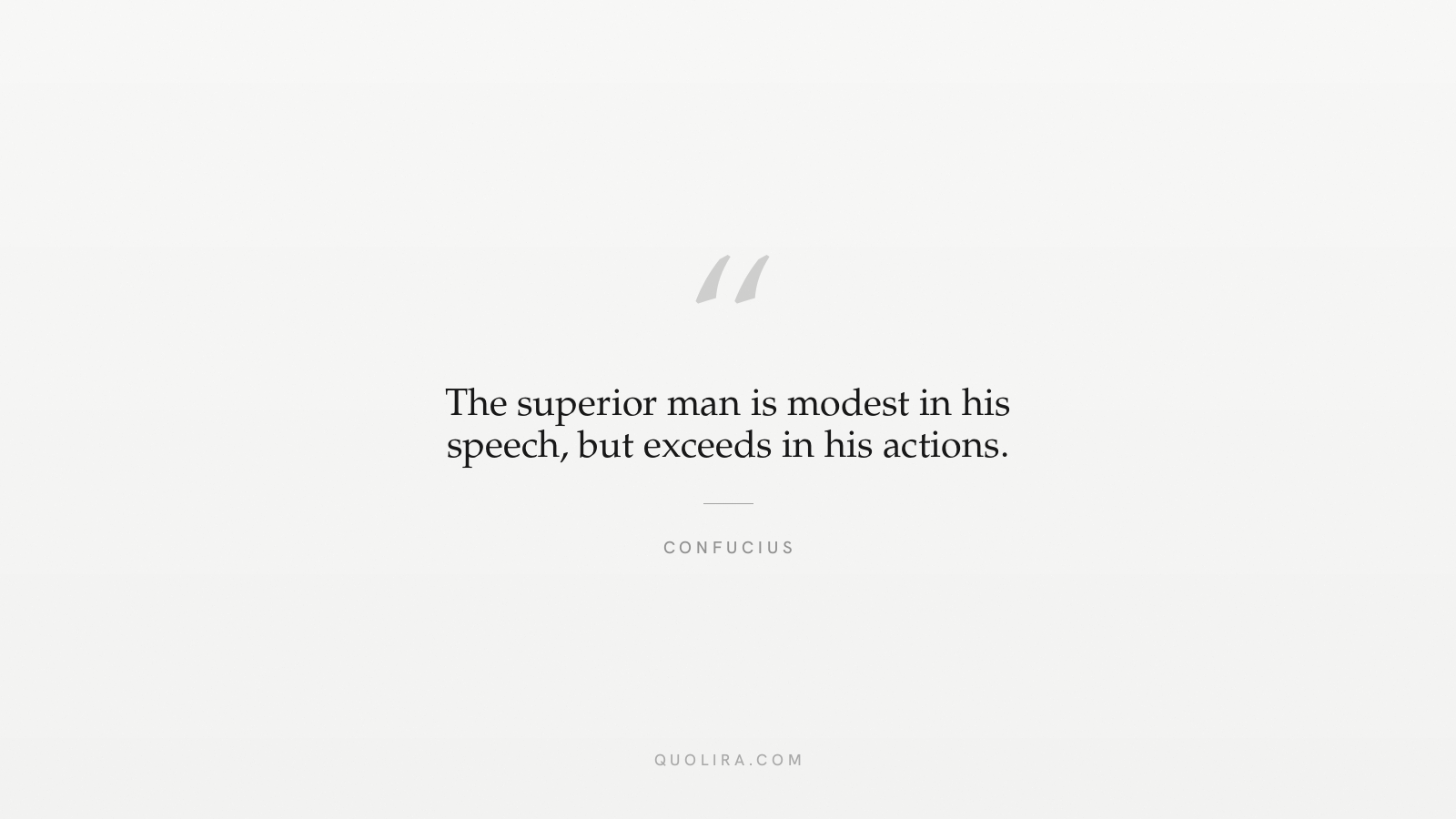
“The superior man is modest in his speech, but exceeds in his actions.”
Confucius · The Analects, Book IV, Chapter XXIV
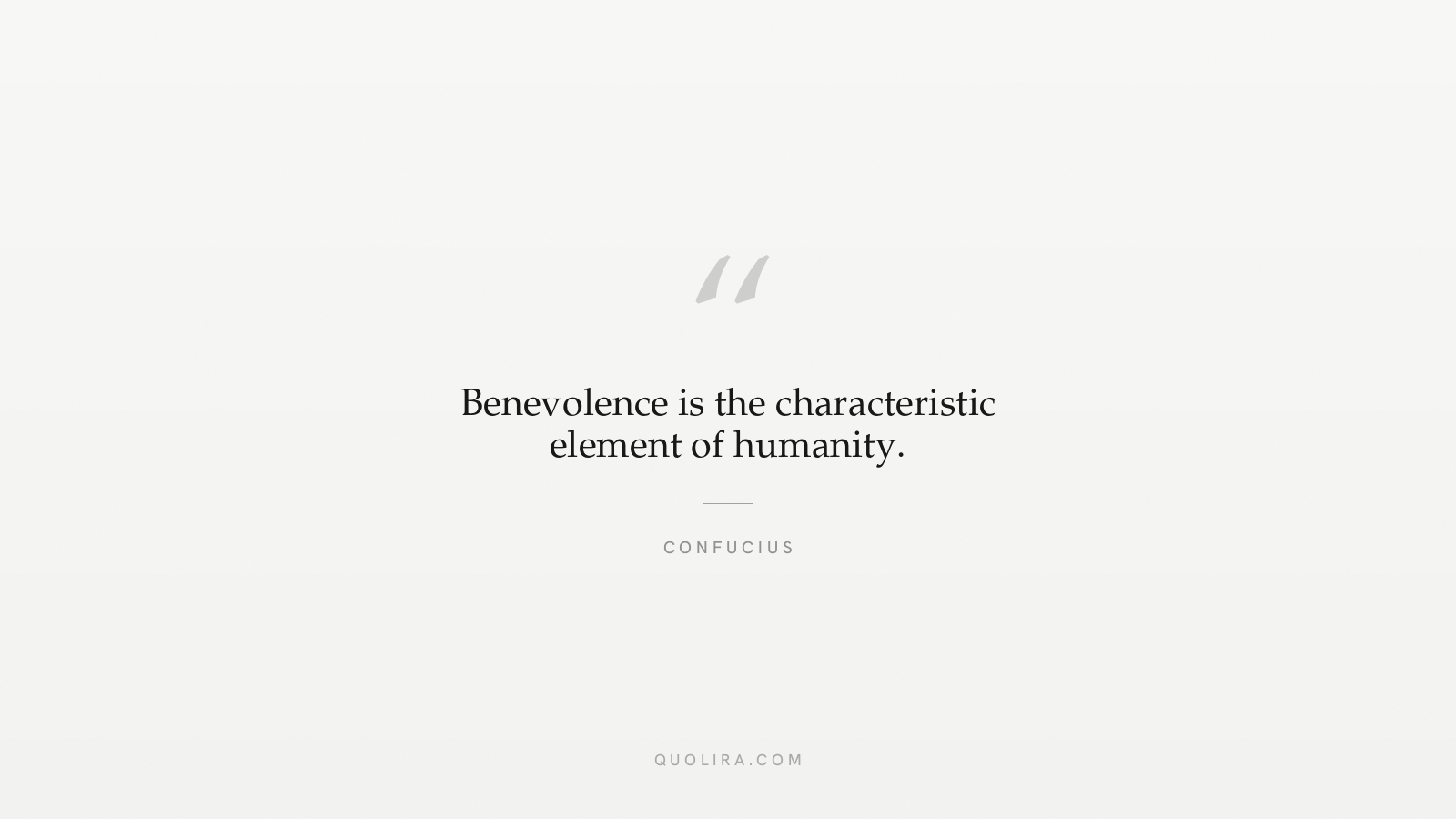
“Benevolence is the characteristic element of humanity.”
Confucius · The Doctrine of the Mean, Chapter XX