“The wise find pleasure in water; the virtuous find pleasure in hills.”
Confucius · The Analects, Book VI, Chapter XXIII
 quolira
.com
Confucius said it, in The Analects, Book II, Chapter III.
Confucius prefers example to punishment and argues that people learn more from watching than from being threatened. Parents, managers, and anyone with a team should take note. Leading by behavior tends to outlast rules.
From the collection: 23 Famous Confucius Quotes on Learning, Virtue, and Self-Reflection · More Confucius quotes
This quote means that people are better guided by good example and respectful treatment than by force alone, and that such guidance helps them develop a sense of shame about wrongdoing and a desire to do right. A leader who models conduct and treats others with courtesy creates the conditions in which people can reform themselves. The emphasis is on moral formation rather than mere compliance.
The passage comes from The Analects, Book II, Chapter III, which contrasts governing through punishments and regulations with governing through virtue and ritual propriety. In the surrounding discussion, Confucius argues that rules alone may produce obedience without conscience, while education in proper conduct builds genuine character. The remark is often cited in discussions of political philosophy and leadership, where it is read as a statement about the relationship between rulers and the governed. Its wording varies somewhat among translations, and this version reflects one English rendering.
Confucius, known in Chinese as Kongzi or Kong Fuzi, lived in the state of Lu during the late Spring and Autumn period, traditionally dated to roughly 551 to 479 BCE. He is remembered as a teacher and political thinker who believed that social harmony depended on the moral example of those in authority. His ideas were later elaborated by followers such as Mencius and Xunzi, and they became central to Chinese governance and education for centuries. He wrote little that survives directly, so his teachings are known largely through the Analects, compiled from the memories and notes of his students.
“The wise find pleasure in water; the virtuous find pleasure in hills.”
Confucius · The Analects, Book VI, Chapter XXIII
“Only after Winter comes do we know that the pine and the cypress are the last to fade.”
Confucius · The Analects, Book IX, Chapter XXVIII
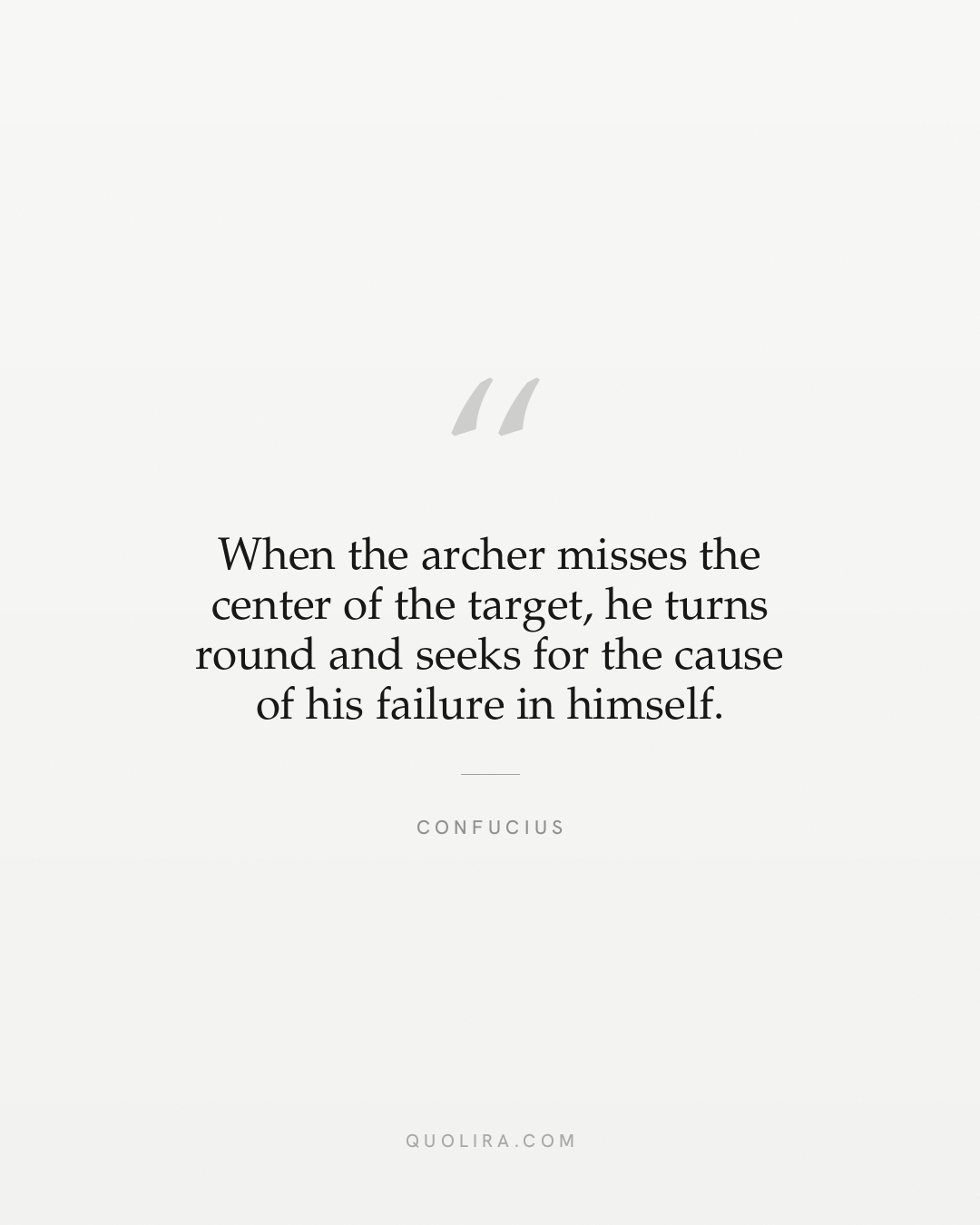
“When the archer misses the center of the target, he turns round and seeks for the cause of his failure in himself.”
Confucius · The Doctrine of the Mean, Chapter XIV
“When we see men of worth, we should think of equaling them; when we see men of a contrary character, we should turn inwards and examine ourselves.”
Confucius · The Analects, Book IV, Chapter XVII
“I am not bothered by the fact that I am not understood. I am bothered when I do not know others.”
Confucius · The Analects, Book I, Chapter XVI
“When making a mistake, do not be afraid to correct it.”
Confucius · The Analects, Book I, Chapter VIII
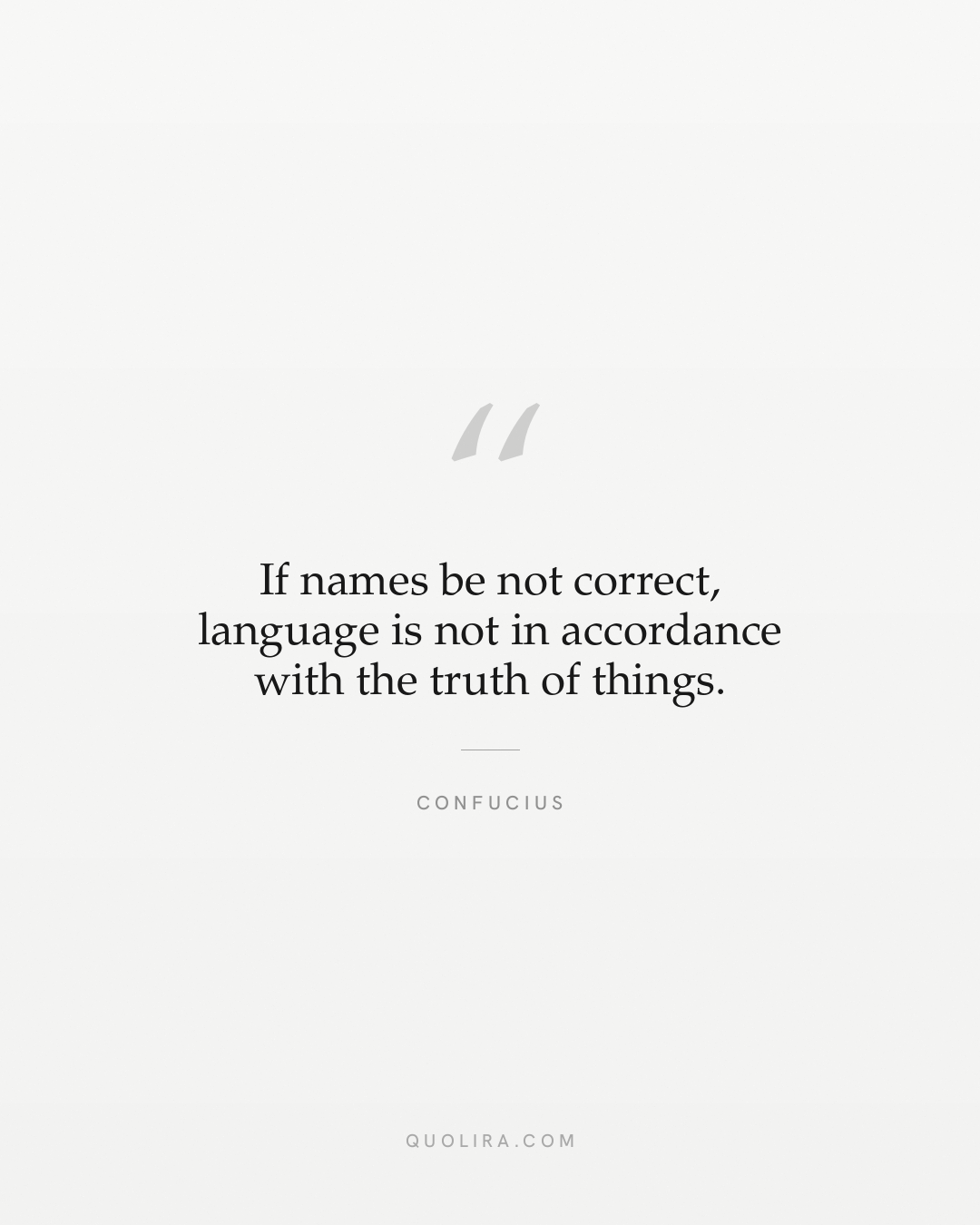
“If names be not correct, language is not in accordance with the truth of things.”
Confucius · The Analects, Book XIII, Chapter III
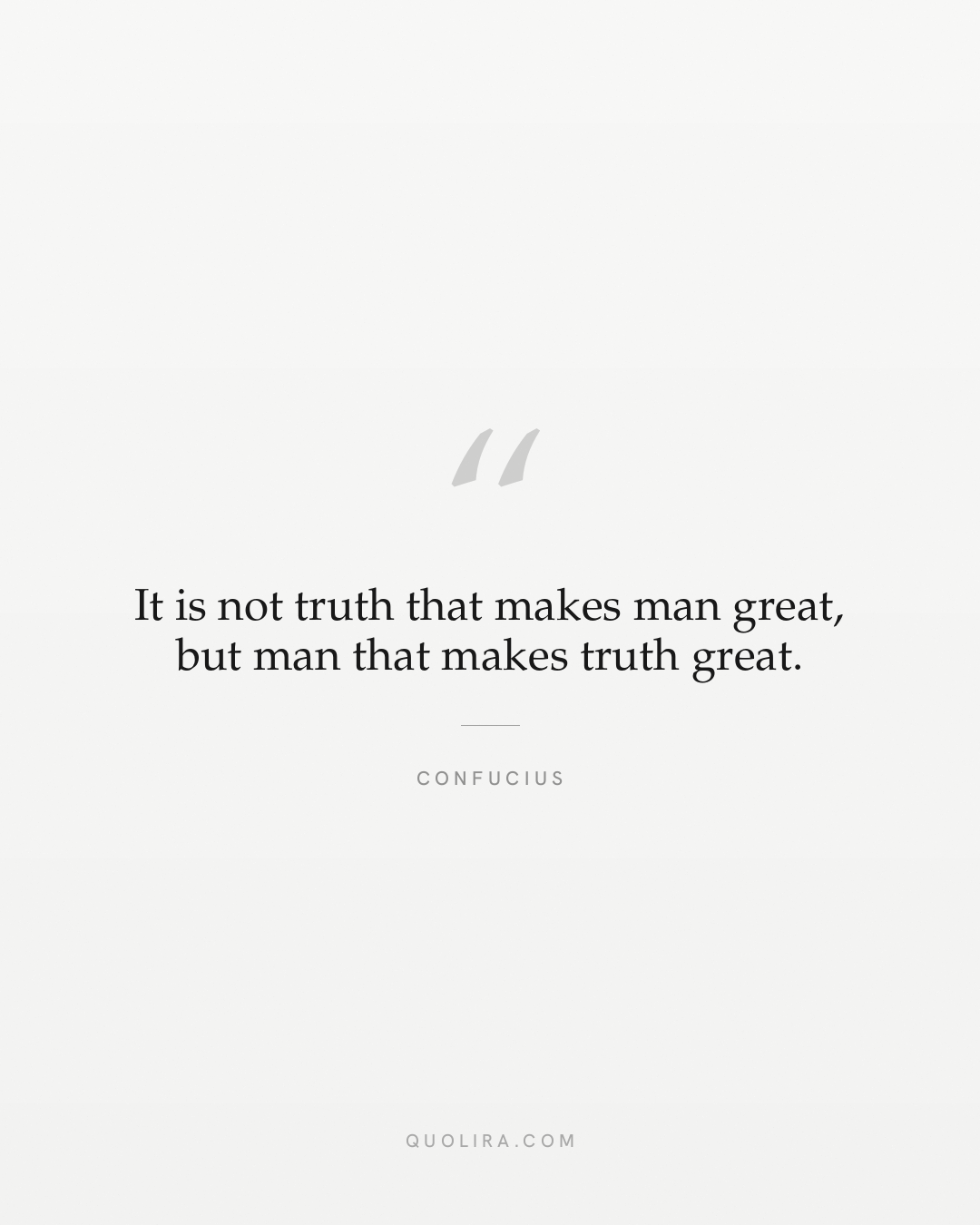
“It is not truth that makes man great, but man that makes truth great.”
Confucius · The Importance of Living (1937), as quoted by Lin Yutang
“To be fond of learning is to be near to knowledge. To practice with vigor is to be near to magnanimity.”
Confucius · The Doctrine of the Mean, Chapter XX
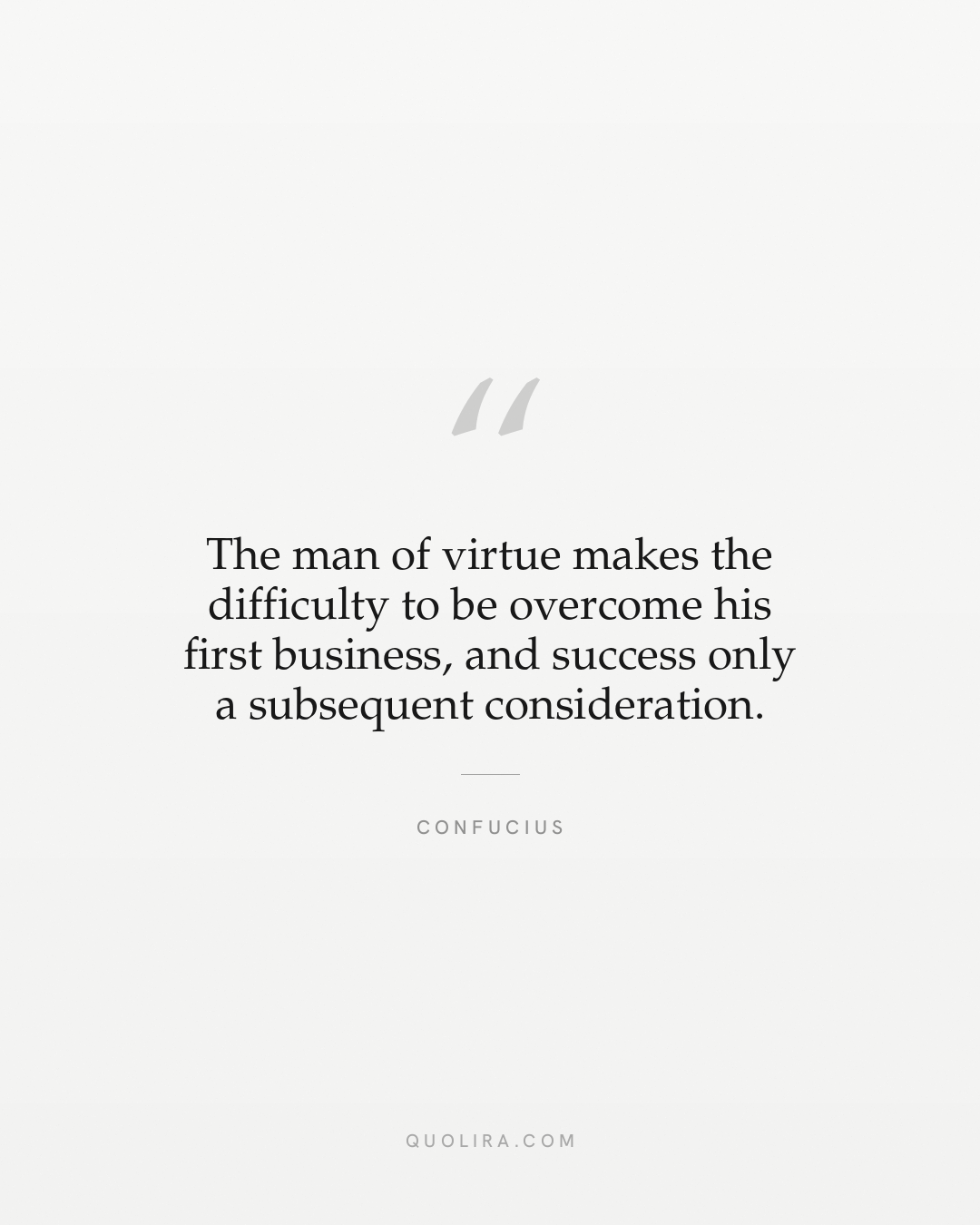
“The man of virtue makes the difficulty to be overcome his first business, and success only a subsequent consideration.”
Confucius · The Analects, Book VI
“The superior man examines his heart, that there may be nothing wrong there, and that he may have no cause for dissatisfaction with himself.”
Confucius · The Doctrine of the Mean
“Sincerity is the end and beginning of things; without sincerity there would be nothing.”
Confucius · The Doctrine of the Mean, Chapter XXV