“Only after Winter comes do we know that the pine and the cypress are the last to fade.”
Confucius · The Analects, Book IX, Chapter XXVIII
 quolira
.com
Confucius said it, in The Analects, Book VI, Chapter XXIII.
Confucius sorts temperaments by what they enjoy, with motion for the wise and stillness for the virtuous. You don't have to pick one. Notice which one pulls you on a free weekend.
From the collection: 23 Famous Confucius Quotes on Learning, Virtue, and Self-Reflection · More Confucius quotes
This quote means that wise people and virtuous people are drawn to different things, with the wise appreciating the restless movement of water and the virtuous valuing the stability of mountains. The contrast points to two complementary qualities: the adaptability and curiosity of intellect, and the steadiness and firmness of moral character. Together they describe a balanced person who is both open and grounded.
The line appears in The Analects, Book VI, Chapter XXIII, in a section where Confucius speaks about temperament and the qualities he hoped to see in learners and leaders. Early Chinese texts often pair natural images with human traits, and water and mountains were common metaphors in this tradition. The remark is brief and has no extended commentary within the passage itself, so its meaning has been interpreted in various ways by later readers. Many take it as a gentle reflection on how different strengths can coexist within a well-formed person.
Confucius, known in Chinese as Kongzi or Kong Fuzi, lived in the state of Lu during the late Spring and Autumn period, traditionally dated to roughly 551 to 479 BCE. He taught that learning and moral cultivation were lifelong tasks and that a good person should embody both knowledge and virtue. His students recorded his conversations, and their collection, the Analects, shaped Chinese education and ethics for many centuries. Because the surviving words come mainly from his followers, the exact phrasing reflects their record rather than a text he composed himself.
“Only after Winter comes do we know that the pine and the cypress are the last to fade.”
Confucius · The Analects, Book IX, Chapter XXVIII
“When the archer misses the center of the target, he turns round and seeks for the cause of his failure in himself.”
Confucius · The Doctrine of the Mean, Chapter XIV
“When we see men of worth, we should think of equaling them; when we see men of a contrary character, we should turn inwards and examine ourselves.”
Confucius · The Analects, Book IV, Chapter XVII
“I am not bothered by the fact that I am not understood. I am bothered when I do not know others.”
Confucius · The Analects, Book I, Chapter XVI
“When making a mistake, do not be afraid to correct it.”
Confucius · The Analects, Book I, Chapter VIII
“If names be not correct, language is not in accordance with the truth of things.”
Confucius · The Analects, Book XIII, Chapter III
“It is not truth that makes man great, but man that makes truth great.”
Confucius · The Importance of Living (1937), as quoted by Lin Yutang
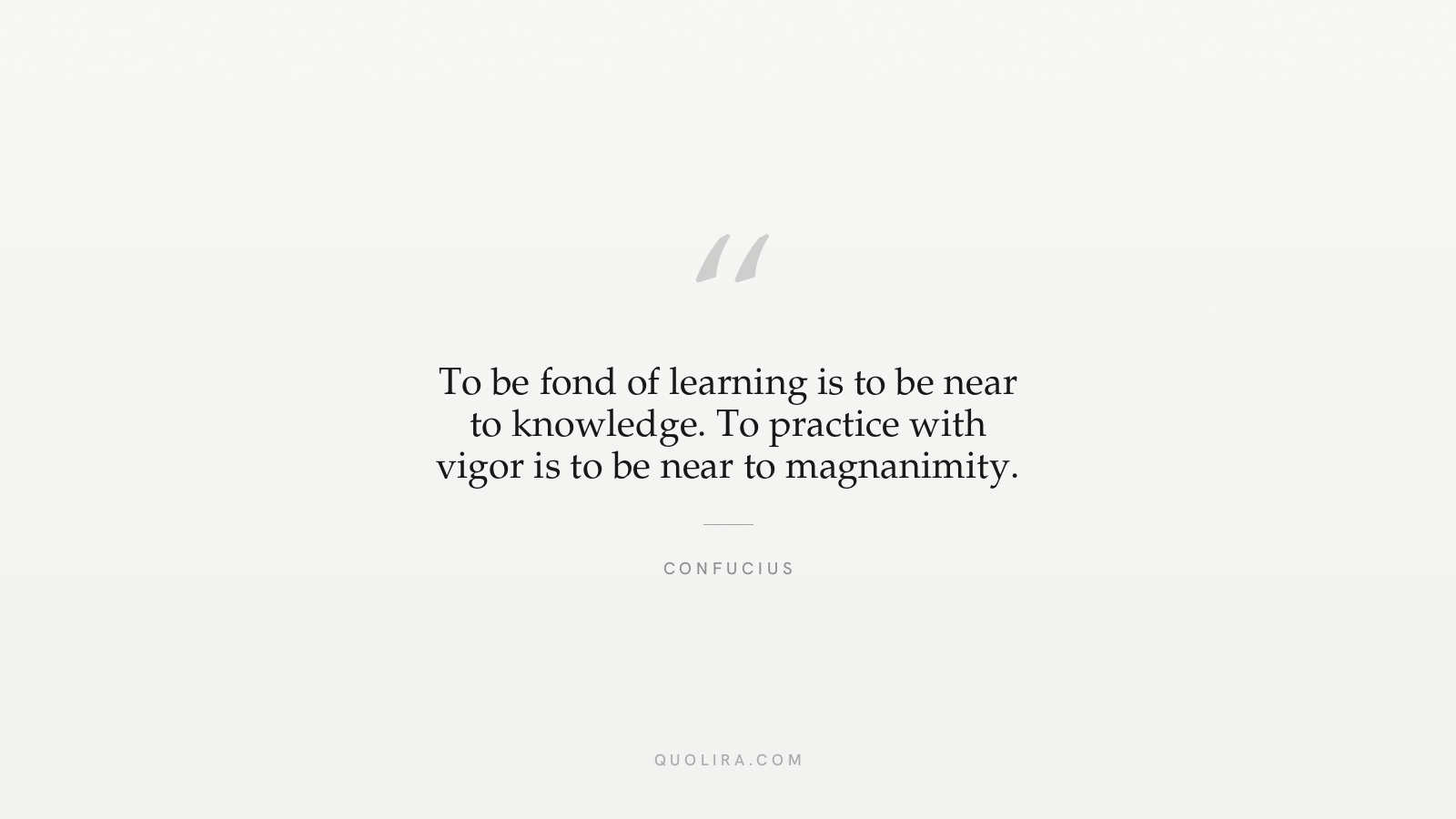
“To be fond of learning is to be near to knowledge. To practice with vigor is to be near to magnanimity.”
Confucius · The Doctrine of the Mean, Chapter XX
“The man of virtue makes the difficulty to be overcome his first business, and success only a subsequent consideration.”
Confucius · The Analects, Book VI
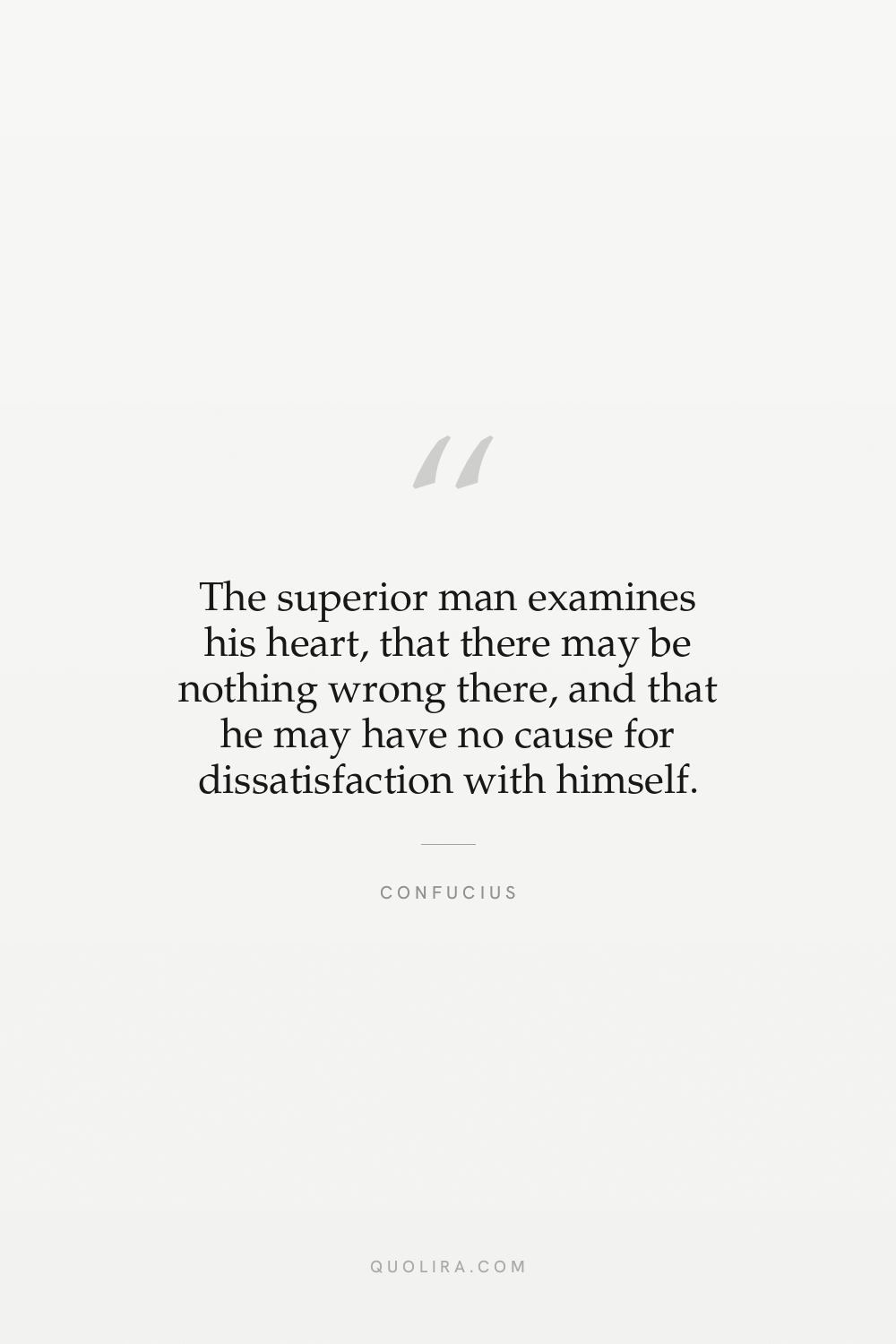
“The superior man examines his heart, that there may be nothing wrong there, and that he may have no cause for dissatisfaction with himself.”
Confucius · The Doctrine of the Mean
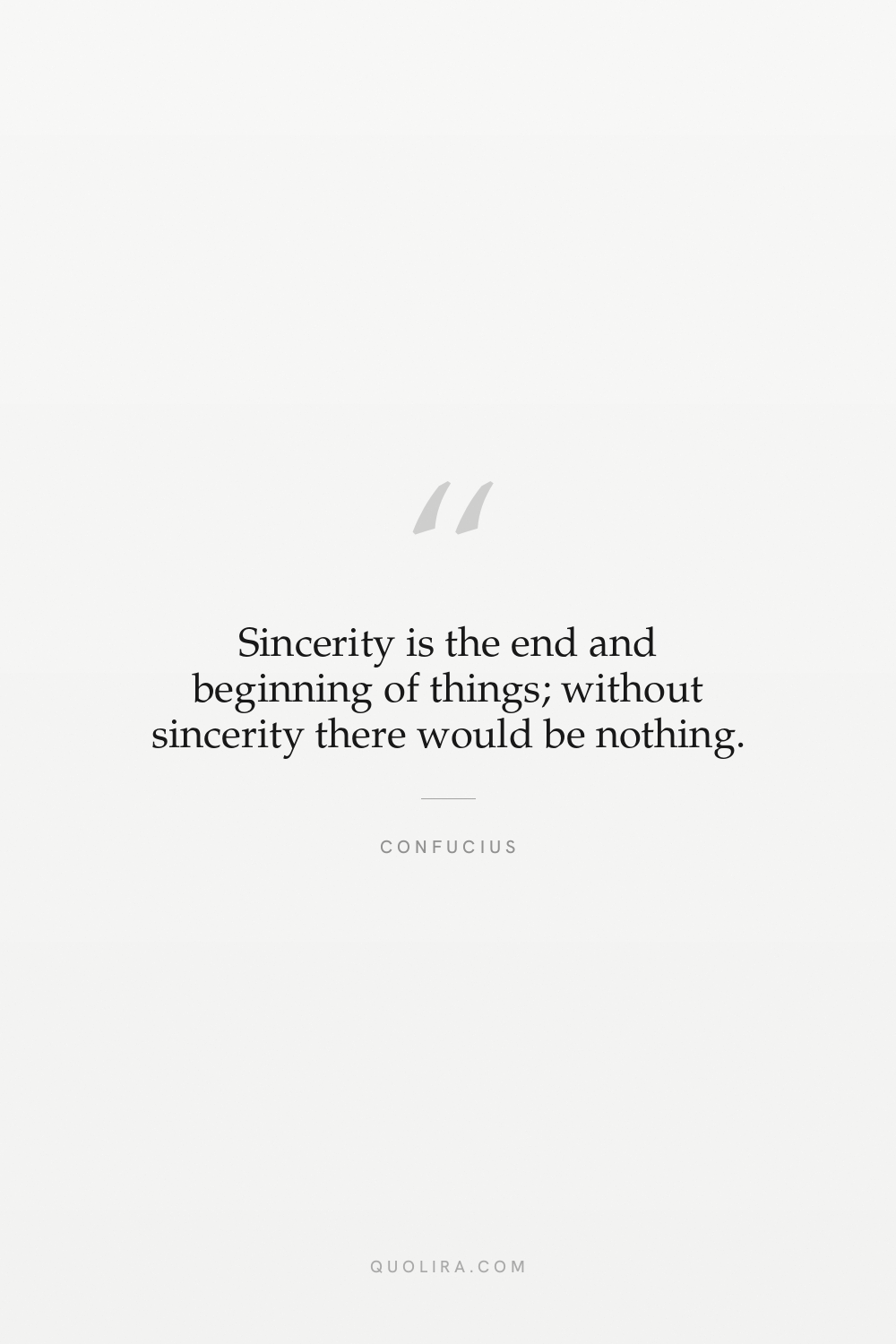
“Sincerity is the end and beginning of things; without sincerity there would be nothing.”
Confucius · The Doctrine of the Mean, Chapter XXV
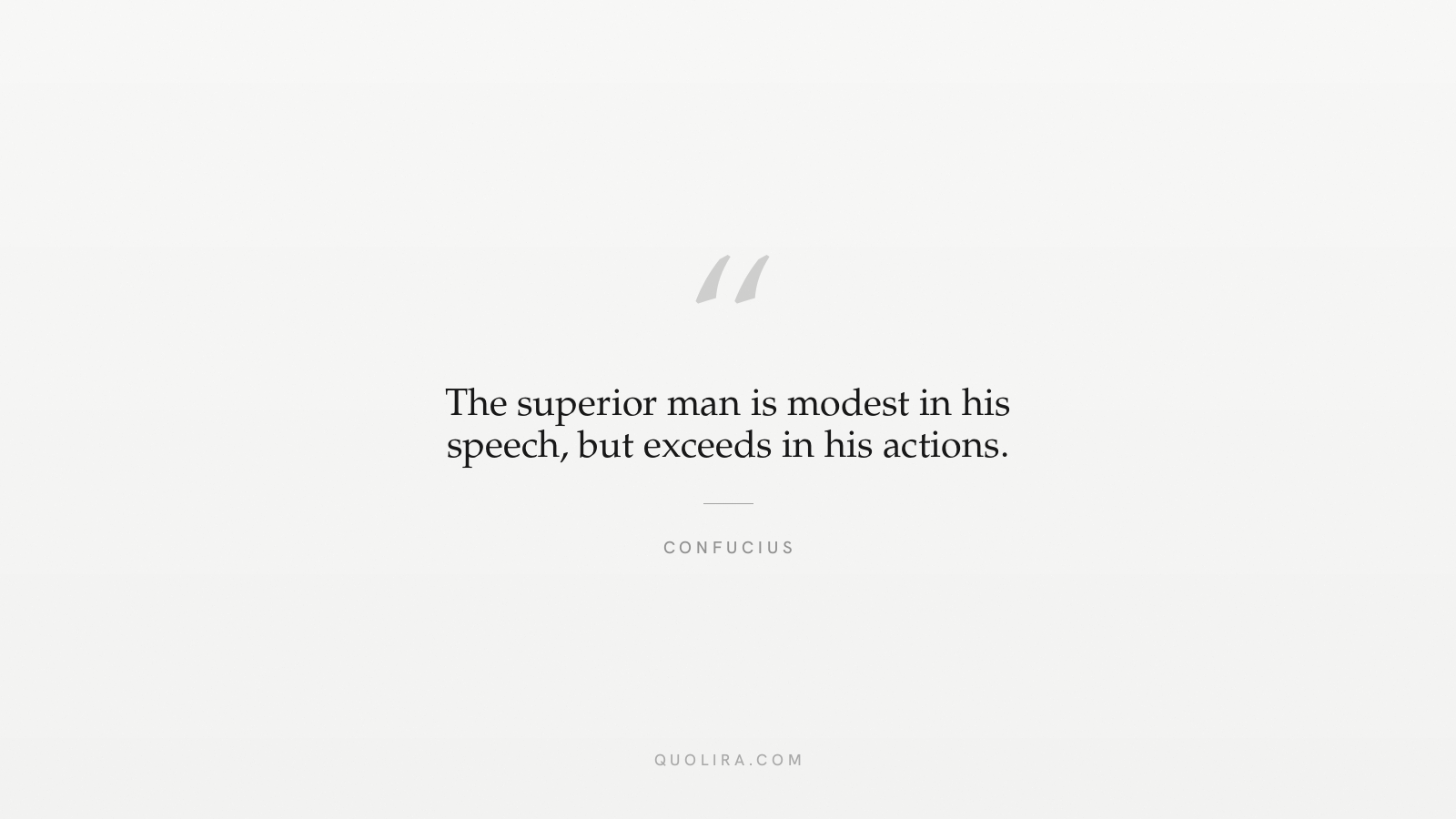
“The superior man is modest in his speech, but exceeds in his actions.”
Confucius · The Analects, Book IV, Chapter XXIV