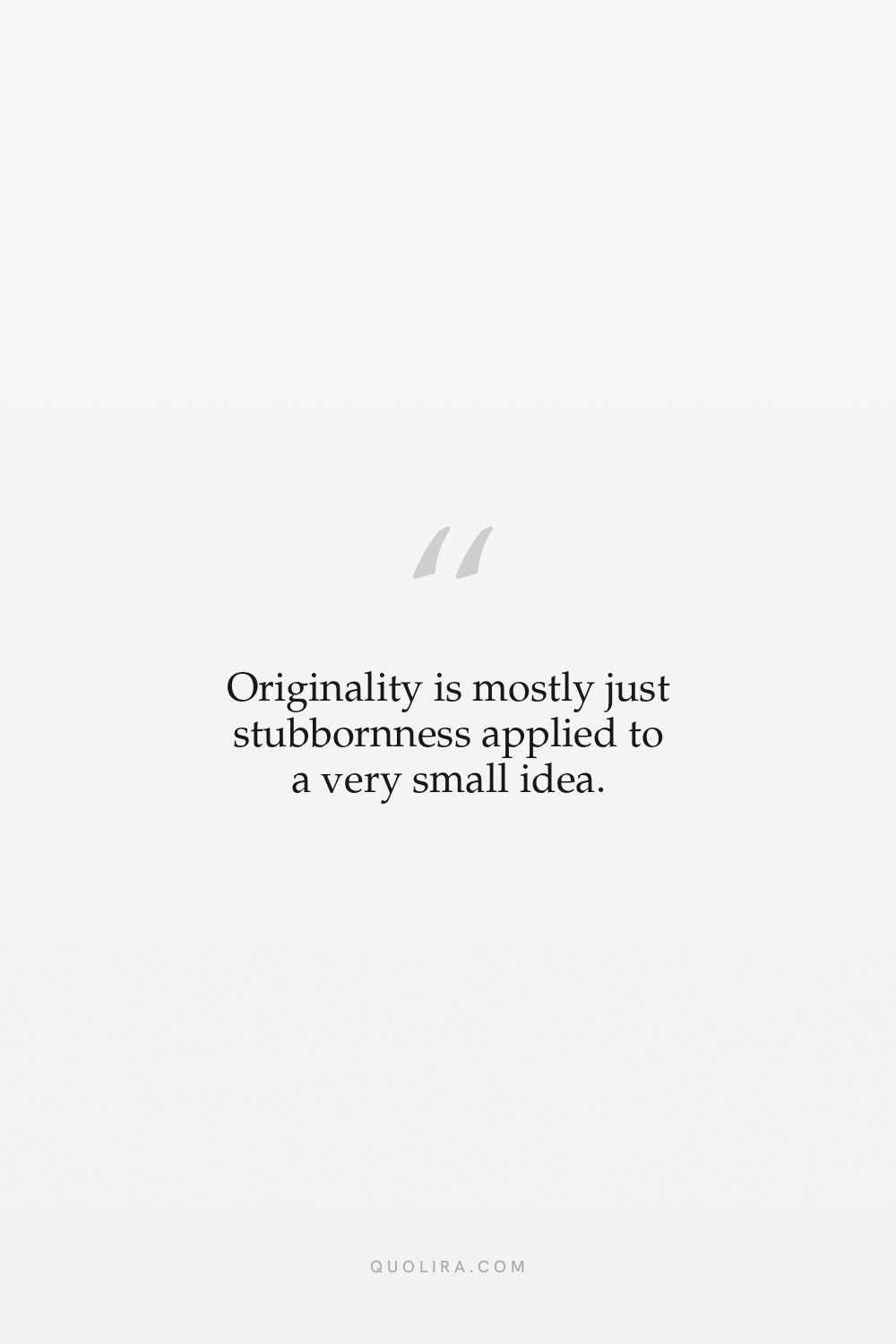
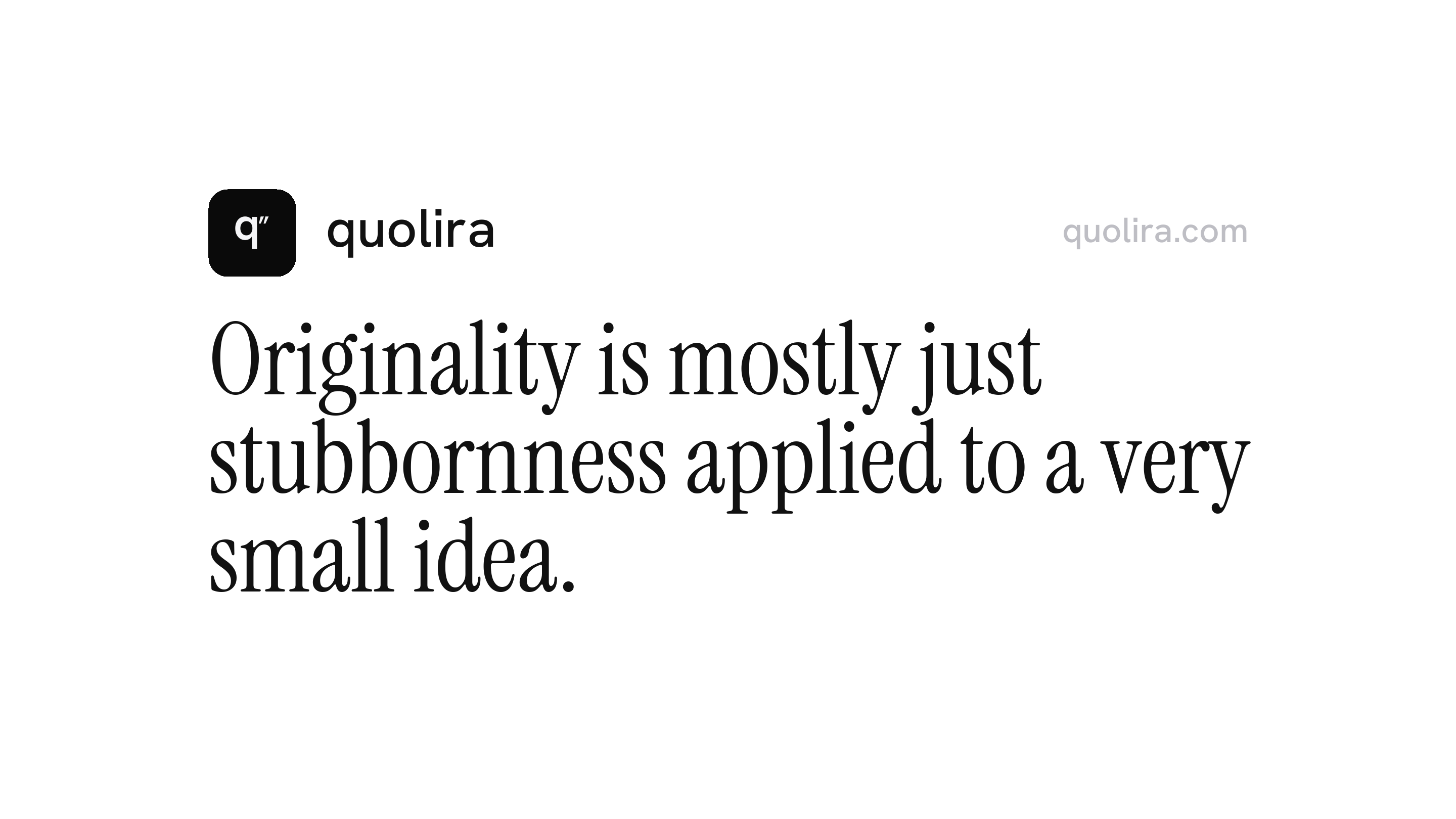
“Originality is mostly just stubbornness applied to a very small idea.”
Original
 quolira
.com
This is an original line written for Quolira, not attributed to a known author.
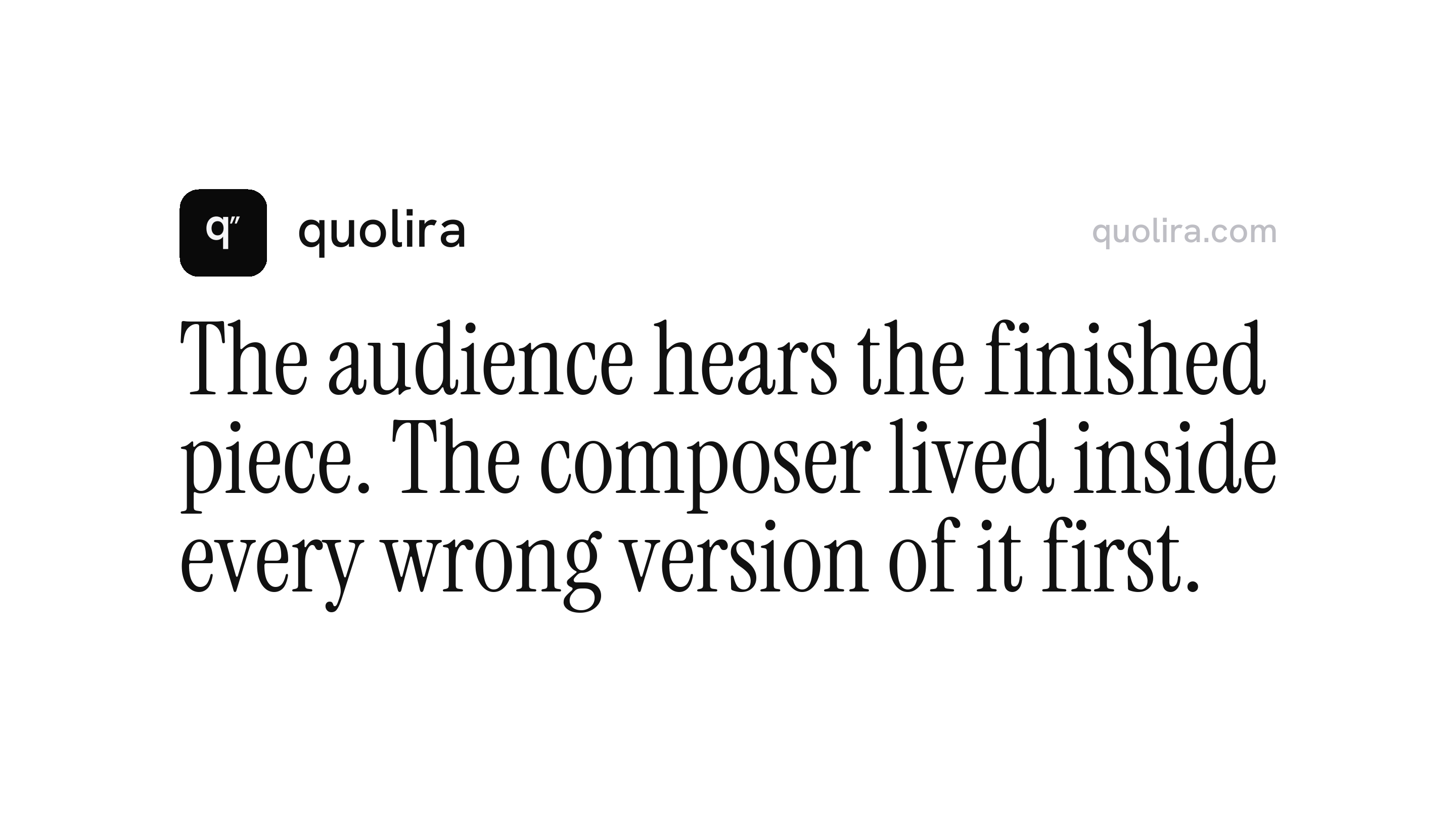
Stravinsky's sketchbooks are full of abandoned approaches. The public performance is the tip; the iceberg underneath is all the work that got discarded to make the final thing feel inevitable.
From the collection: 8 Quotes on Making Something Out of Nothing
This line draws attention to a fundamental asymmetry between the person who creates something and the person who receives it. The listener or viewer encounters a work in its resolved, finished state, with all the rough edges removed and all the failed attempts invisible. The composer, by contrast, lived through every discarded version, every wrong turn, every moment of doubt before the final form emerged. The quote asks us to remember that the polish we admire is built on a foundation of hidden difficulty.
In an era when finished work is more visible than ever and the process behind it is almost never shown, it is easy to measure your own messy, uncertain creative process against someone else's polished result. This quote names that imbalance honestly and gently. It is not a complaint about audiences but a reminder that struggle is not a sign that something is going wrong. The wrong versions are not failures. They are the actual work, and they are invisible by design.
Share this quote whenever creative frustration tempts you or someone you know to give up before a project is finished. It is particularly useful in teaching and mentoring, where students often feel that their difficulty with a piece means they lack talent. Use it to open a conversation about process versus product, about what it actually takes to bring something from idea to completion. It can also serve as a reminder to have patience with yourself during the parts of any project that feel irredeemably broken.
“Originality is mostly just stubbornness applied to a very small idea.”
Original
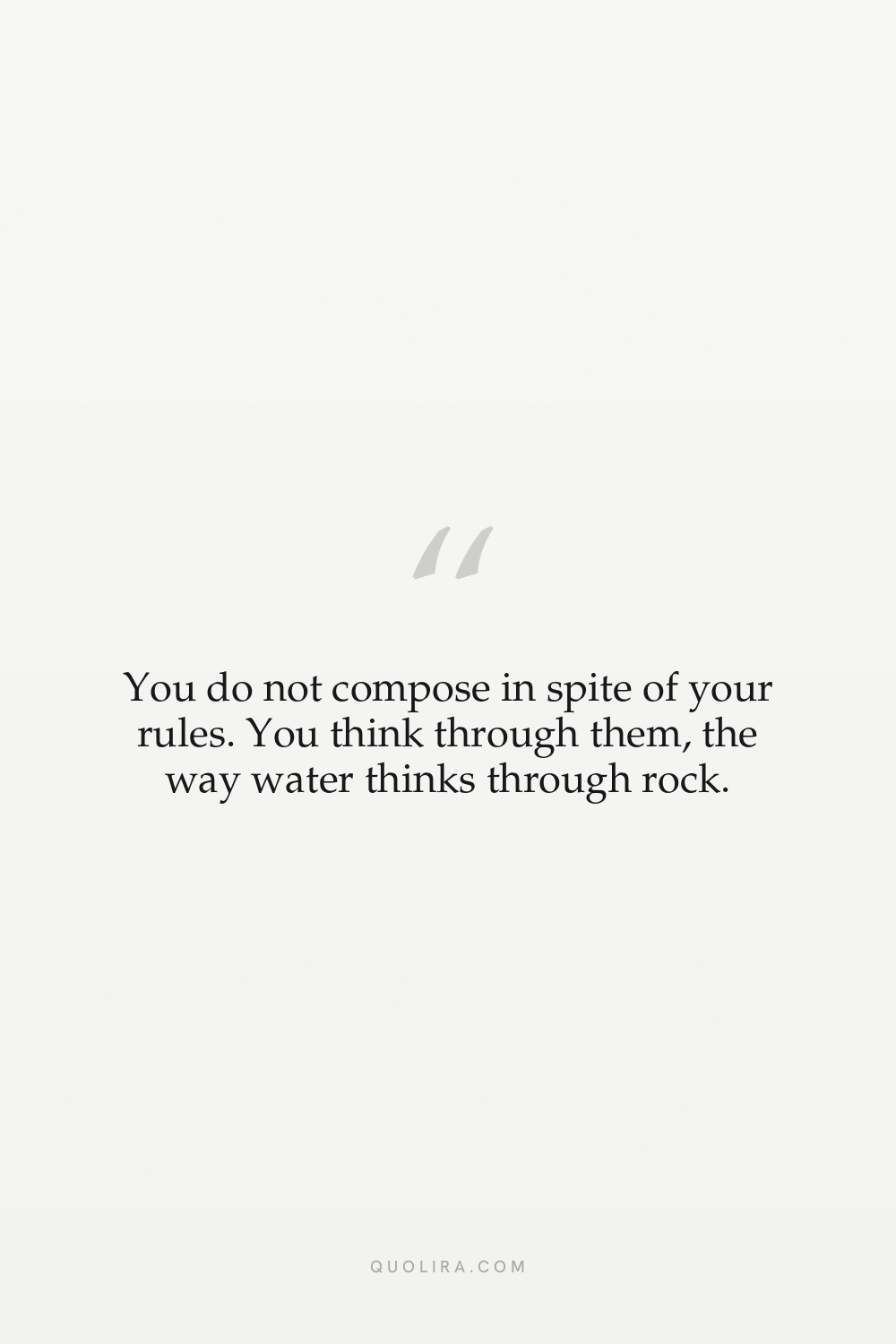
“You do not compose in spite of your rules. You think through them, the way water thinks through rock.”
Original
“Silence before a note is not empty. It is the whole argument, waiting to be made.”
Original
“The form you choose is not your cage. It is your spine.”
Original
“Rejoicing in hope; patient in tribulation; continuing instant in prayer.”
King James Bible · Romans 12:12 (KJV)
“Why art thou cast down, O my soul? and why art thou disquieted in me? hope thou in God.”
King James Bible · Psalm 42:5 (KJV), trimmed
“Which hope we have as an anchor of the soul, both sure and stedfast.”
King James Bible · Hebrews 6:19 (KJV)
“I had fainted, unless I had believed to see the goodness of the LORD in the land of the living.”
King James Bible · Psalm 27:13 (KJV)
“God is our refuge and strength, a very present help in trouble.”
King James Bible · Psalm 46:1 (KJV)
“Hope springs eternal in the human breast.”
Alexander Pope · An Essay on Man, Epistle I (1733)
“All shall be well, and all shall be well, and all manner of thing shall be well.”
Julian of Norwich · Revelations of Divine Love (c. 1395)
“They that sow in tears shall reap in joy.”
King James Bible · Psalm 126:5 (KJV)