“The bluebird carries the sky on his back.”
Henry David Thoreau · Journal, April 3, 1852
 quolira
.com
Henry David Thoreau said it, in A Week on the Concord and Merrimack Rivers, 1849.
From A Week on the Concord and Merrimack Rivers (1849), where Thoreau reflects on the writer's labor. He suggests that real effort doesn't need an audience, and you may never see the result. Keep making things anyway.
From the collection: 25 Henry David Thoreau Quotes on Simple Living, Freedom, and Paying Attention · More Henry David Thoreau quotes
This quote means that speaking and writing have real value even when no one hears or reads what you produce, because expressing something true is a rare achievement in itself. The line suggests that the worth of an effort does not depend on how large its audience is. Thoreau points to the act of honest expression as the thing that sets a person apart.
The line comes from A Week on the Concord and Merrimack Rivers, published in 1849. The book describes a boating trip Thoreau took with his brother John in 1839, mixed with reflections on history, nature, friendship, and religion. The book sold poorly, and Thoreau reportedly had many unsold copies, which gives the sentiment a personal edge. The passage reflects the book's broader concern with whether thinking and writing still matter when the world seems indifferent.
Henry David Thoreau (1817 to 1862) was an American writer, naturalist, and philosopher born in Concord, Massachusetts. He is best known for Walden, which describes the two years he spent living in a cabin near Walden Pond, and for his essay Civil Disobedience. A friend and close associate of Ralph Waldo Emerson, he was part of the transcendentalist circle. His writing combines close observation of the natural world with sharp criticism of social conformity.
“The bluebird carries the sky on his back.”
Henry David Thoreau · Journal, April 3, 1852
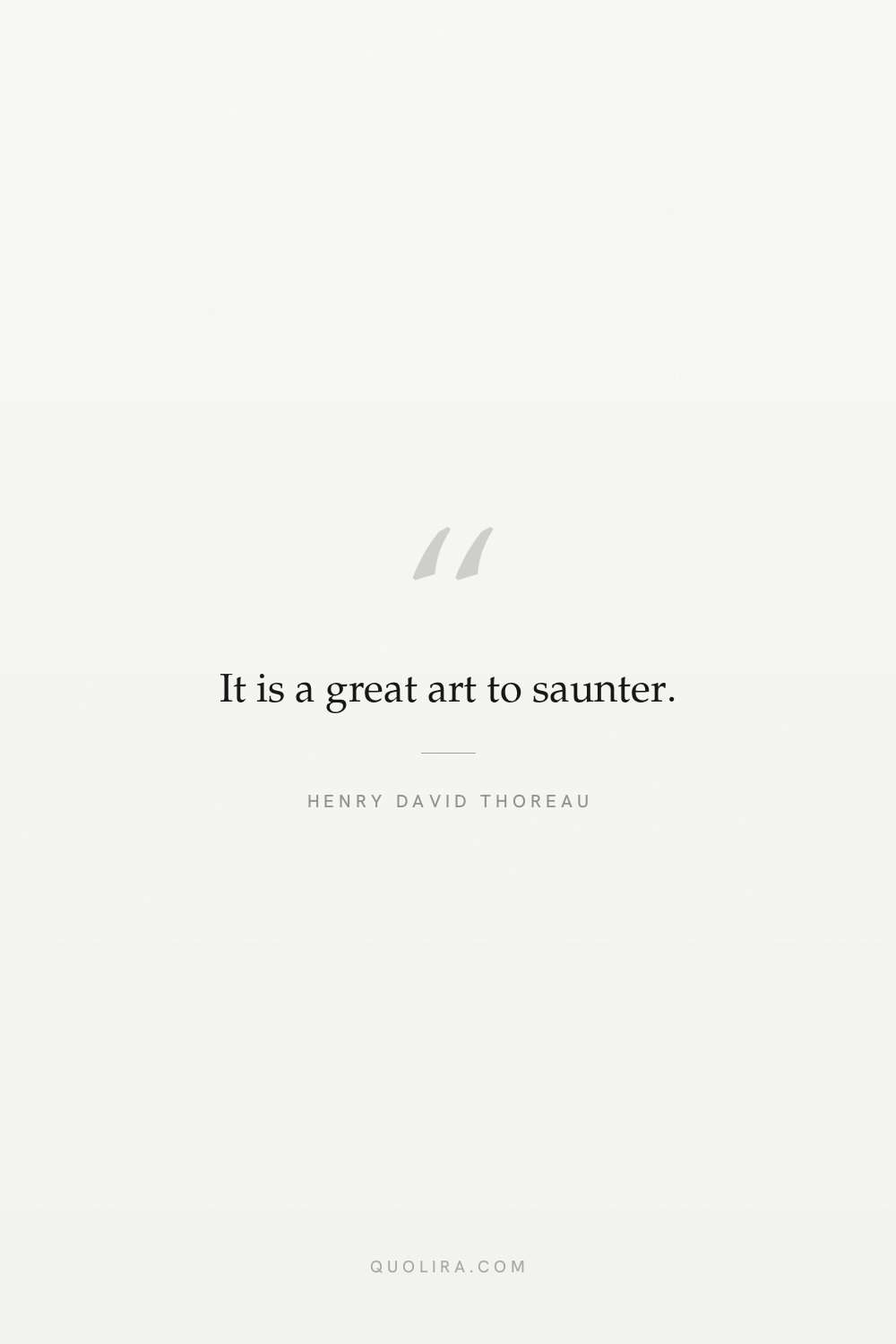
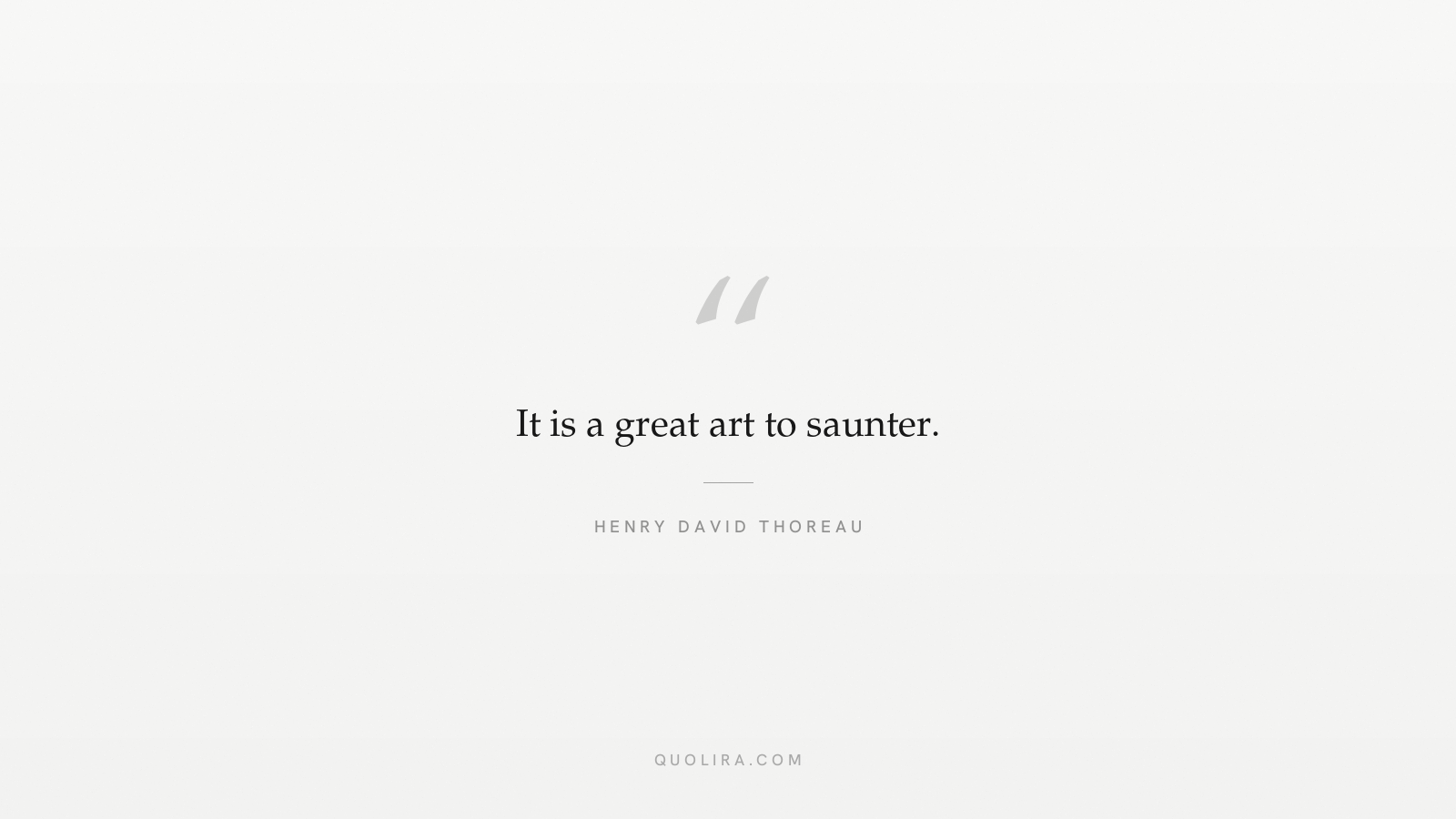
“It is a great art to saunter.”
Henry David Thoreau · Journal, April 26, 1841
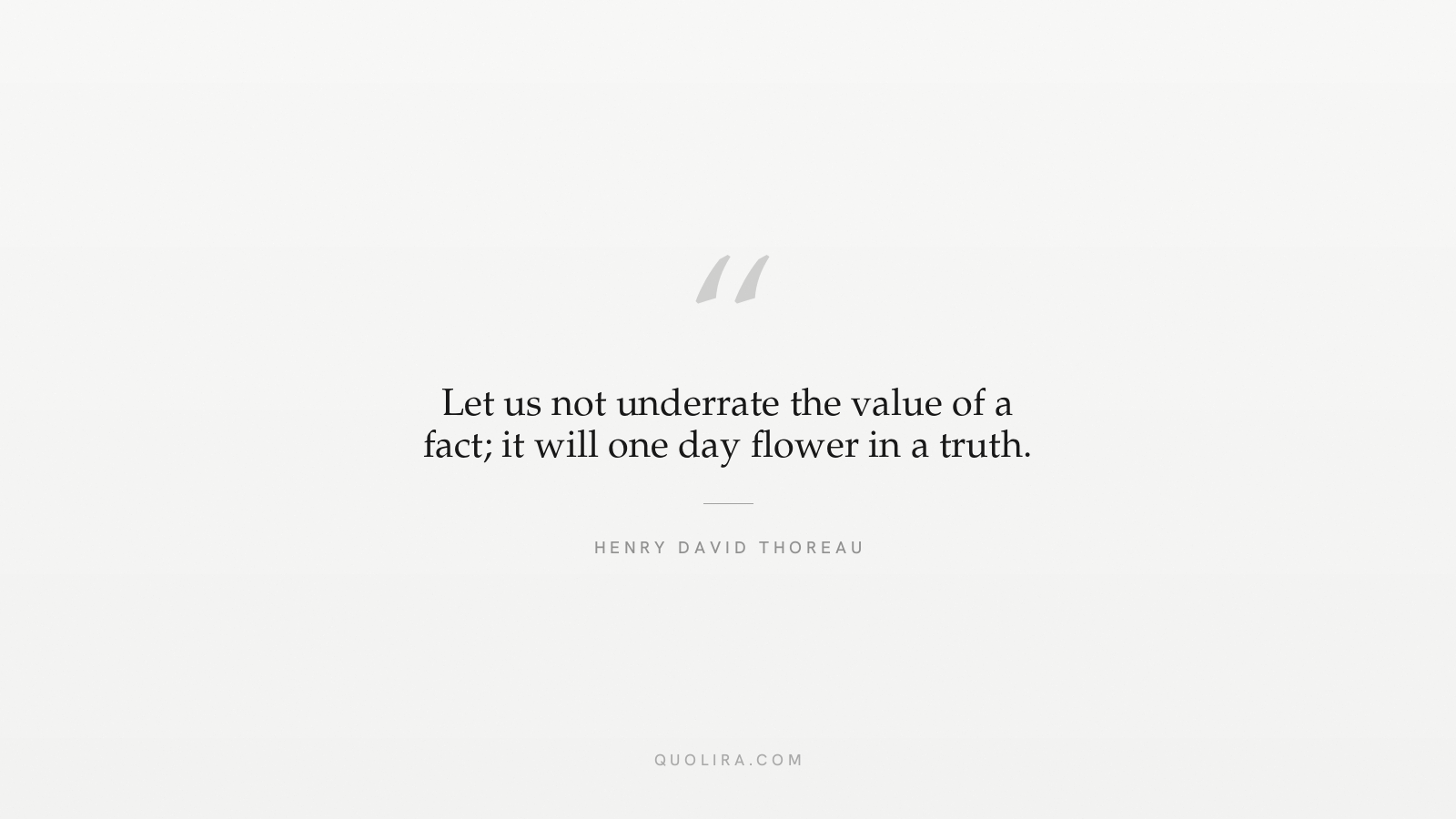
“Let us not underrate the value of a fact; it will one day flower in a truth.”
Henry David Thoreau · Natural History of Massachusetts, 1842
“Disobedience is the true foundation of liberty. The obedient must be slaves.”
Henry David Thoreau · Journal, 1847
“When will the world learn that a million men are of no importance compared with one man?”
Henry David Thoreau · Letter to Ralph Waldo Emerson, June 8, 1843
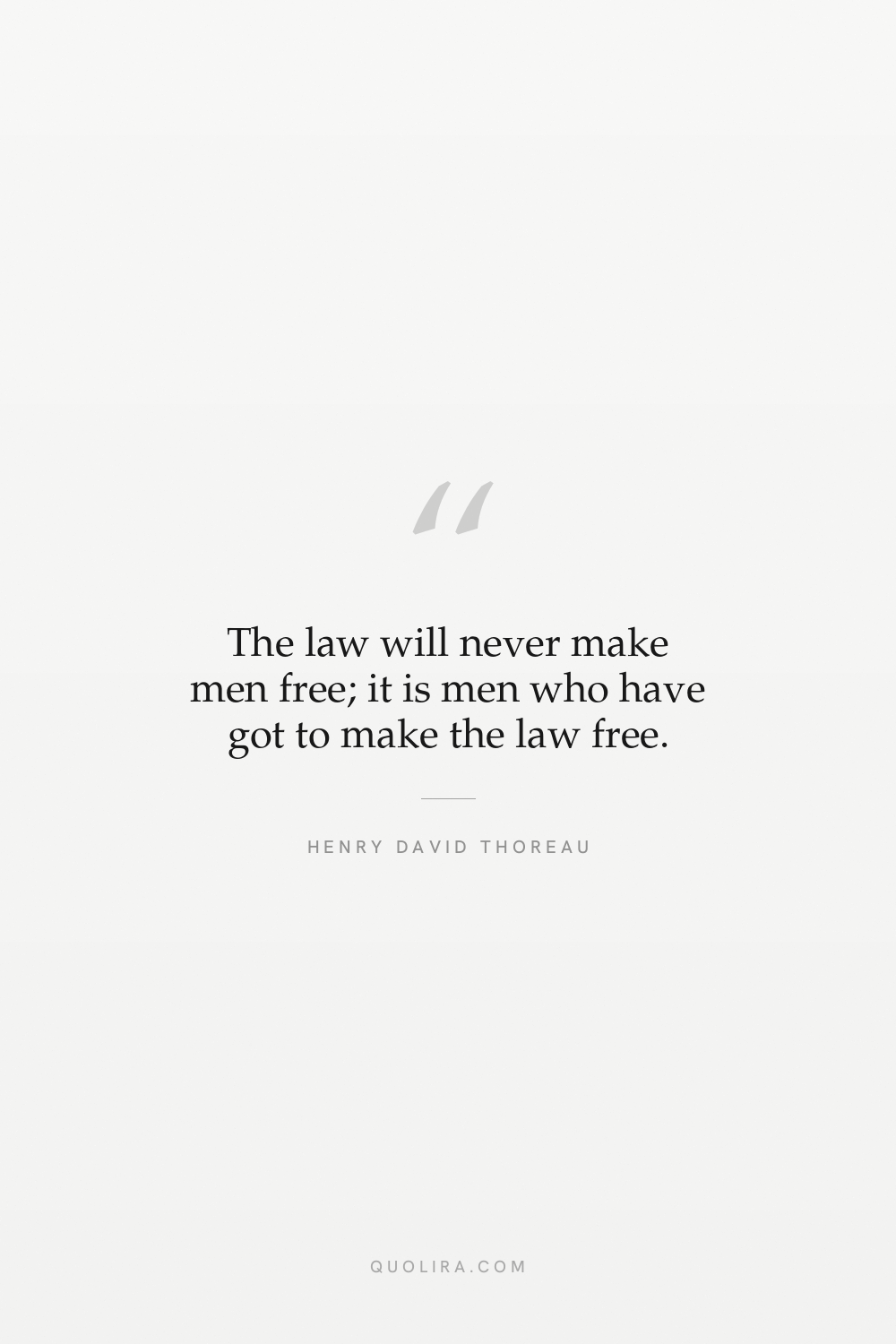
“The law will never make men free; it is men who have got to make the law free.”
Henry David Thoreau · Slavery in Massachusetts, 1854
“I came into this world, not chiefly to make this a good place to live in, but to live in it, be it good or bad.”
Henry David Thoreau · Civil Disobedience, 1849
“Any man more right than his neighbors constitutes a majority of one.”
Henry David Thoreau · Civil Disobedience, 1849
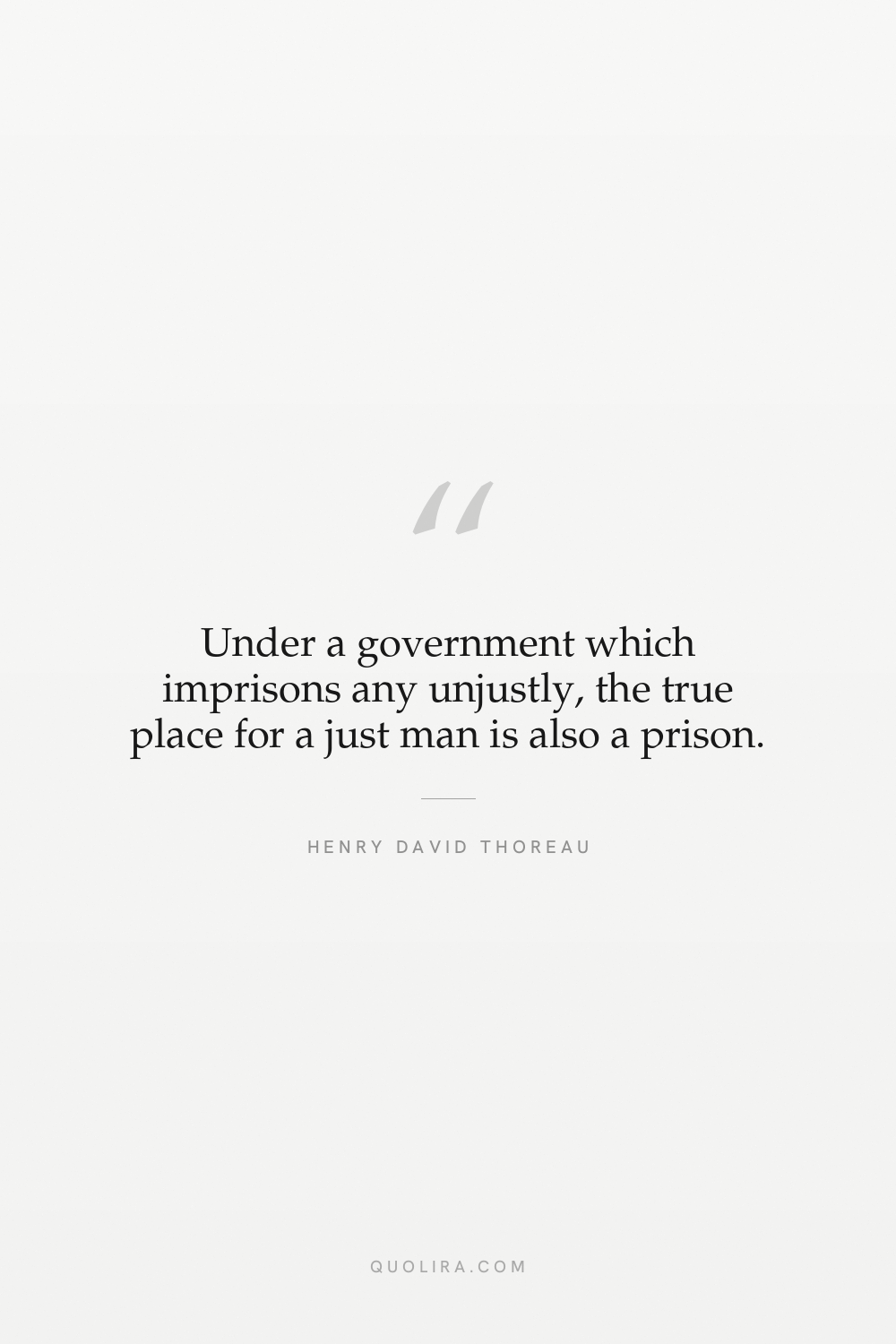
“Under a government which imprisons any unjustly, the true place for a just man is also a prison.”
Henry David Thoreau · Civil Disobedience, 1849
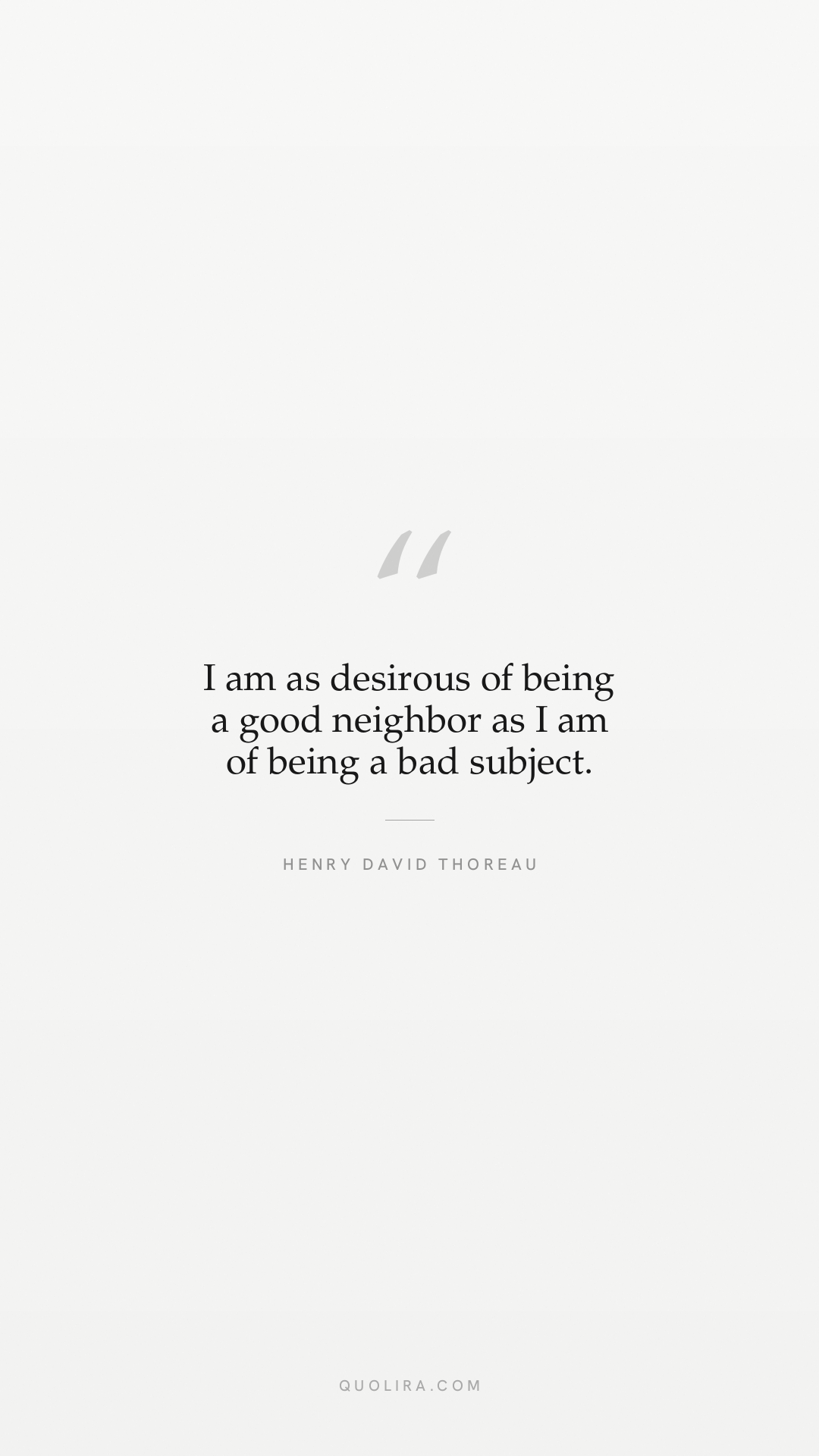
“I am as desirous of being a good neighbor as I am of being a bad subject.”
Henry David Thoreau · Civil Disobedience, 1849
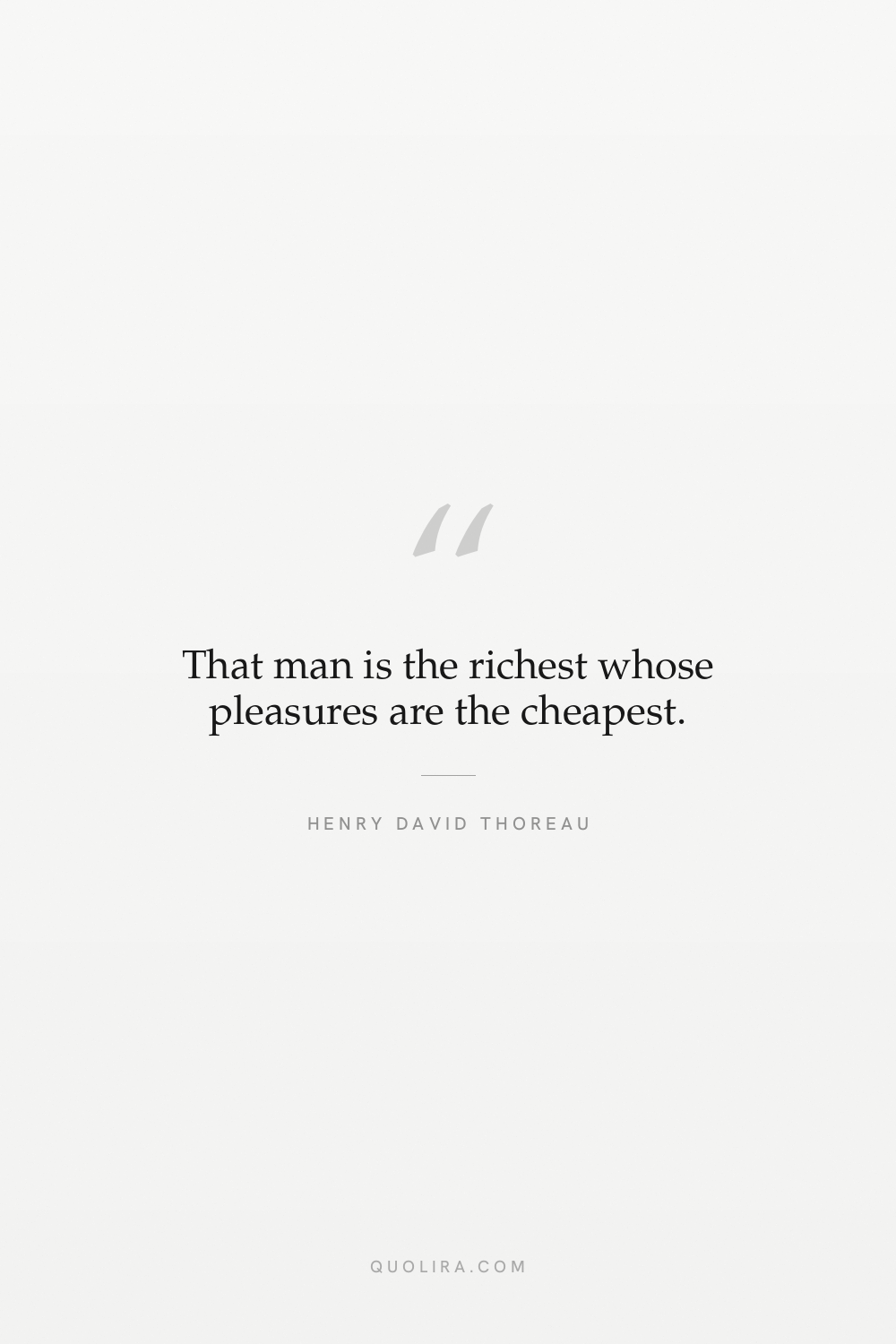
“That man is the richest whose pleasures are the cheapest.”
Henry David Thoreau · Journal, March 11, 1856
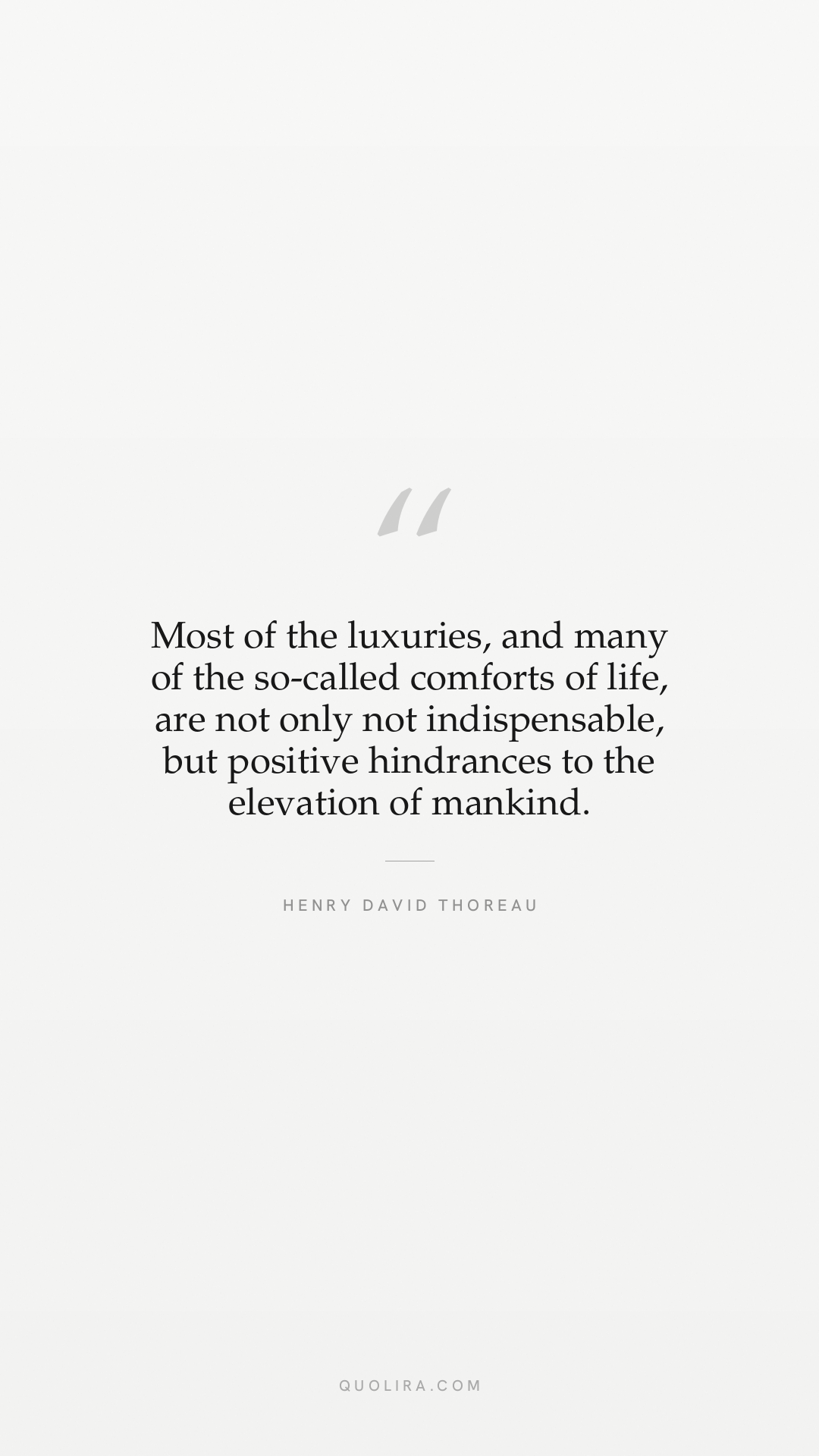
“Most of the luxuries, and many of the so-called comforts of life, are not only not indispensable, but positive hindrances to the elevation of mankind.”
Henry David Thoreau · Walden, 1854