“That man is the richest whose pleasures are the cheapest.”
Henry David Thoreau · Journal, March 11, 1856
 quolira
.com
Henry David Thoreau said it, in Civil Disobedience, 1849.
Thoreau wrote this in Civil Disobedience (1849), and it is a joke with a serious point. He wanted to be a good neighbor and a bad subject, loyal to people before a government that did wrong. Few lines pack citizenship into fewer words.
From the collection: 25 Henry David Thoreau Quotes on Simple Living, Freedom, and Paying Attention · More Henry David Thoreau quotes
The quote means that Thoreau cared as much about being a considerate member of his community as he did about refusing to obey laws he considered wrong. He presents good citizenship as something more than compliance, rooted in honesty and conscience toward others.
The line comes from Civil Disobedience, published in 1849, an essay that argues individuals owe their first loyalty to their own sense of right. Thoreau wrote it after spending a night in jail for refusing to pay a poll tax that supported policies he opposed. The essay questions whether a government's authority should ever override personal conscience, and this sentence softens that challenge by insisting that his resistance was meant to be neighborly rather than hostile.
Henry David Thoreau (1817 to 1862) was an American writer, naturalist and essayist from Concord, Massachusetts. He belonged to the Transcendentalist circle that included Ralph Waldo Emerson. He is known for Walden, for his journals, and for Civil Disobedience, which has influenced many later thinkers and activists. His writing remains widely read for its blend of moral seriousness and close attention to everyday life.
“That man is the richest whose pleasures are the cheapest.”
Henry David Thoreau · Journal, March 11, 1856
“Most of the luxuries, and many of the so-called comforts of life, are not only not indispensable, but positive hindrances to the elevation of mankind.”
Henry David Thoreau · Walden, 1854
“Only that day dawns to which we are awake.”
Henry David Thoreau · Walden, 1854
“Money is not required to buy one necessity of the soul.”
Henry David Thoreau · Walden, 1854
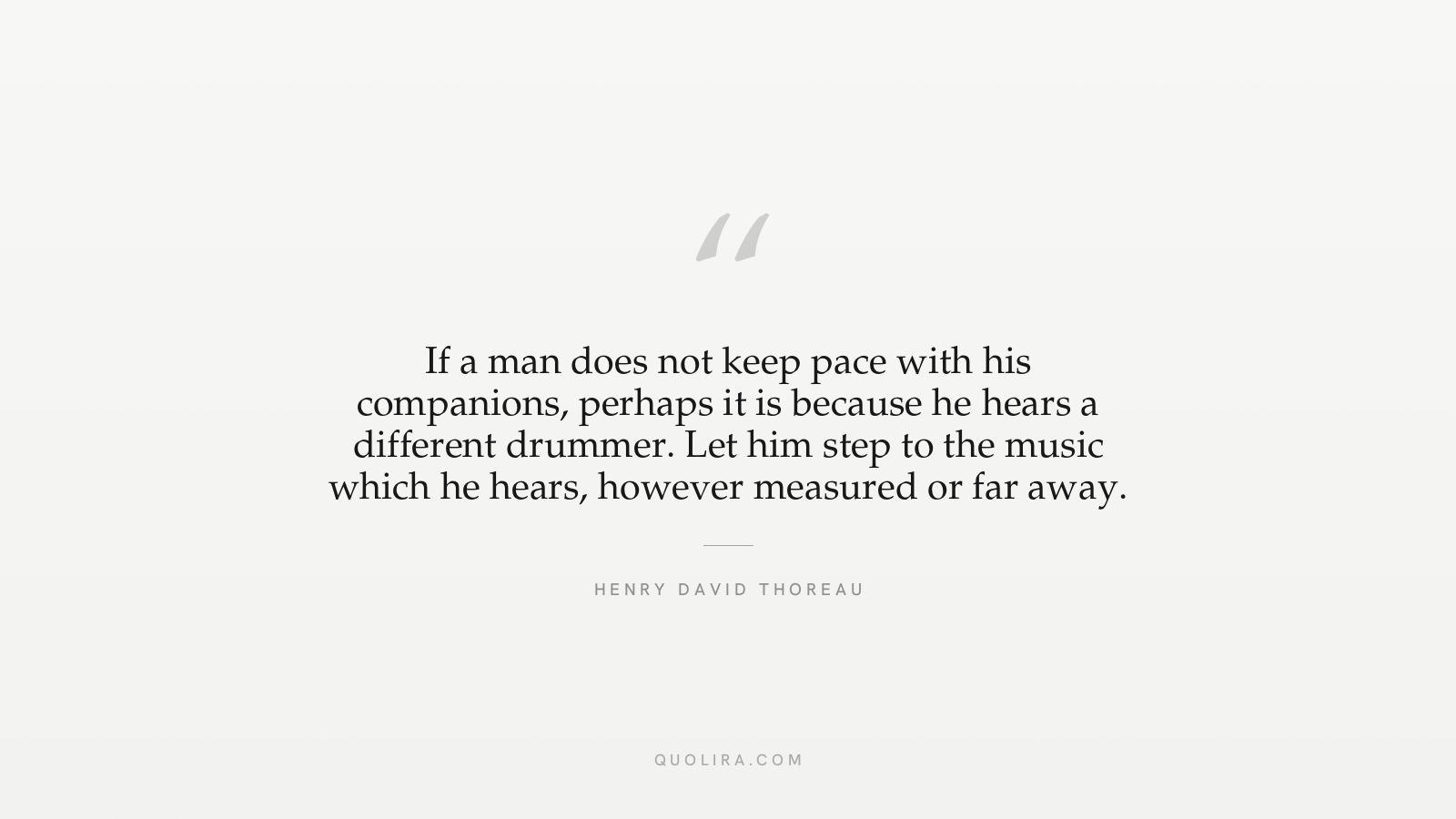
“If a man does not keep pace with his companions, perhaps it is because he hears a different drummer. Let him step to the music which he hears, however measured or far away.”
Henry David Thoreau · Walden, 1854
“If one advances confidently in the direction of his dreams, and endeavors to live the life which he has imagined, he will meet with a success unexpected in common hours.”
Henry David Thoreau · Walden, 1854
“The mass of men lead lives of quiet desperation. What is called resignation is confirmed desperation.”
Henry David Thoreau · Walden, 1854
“Simplify, simplify.”
Henry David Thoreau · Walden, 1854
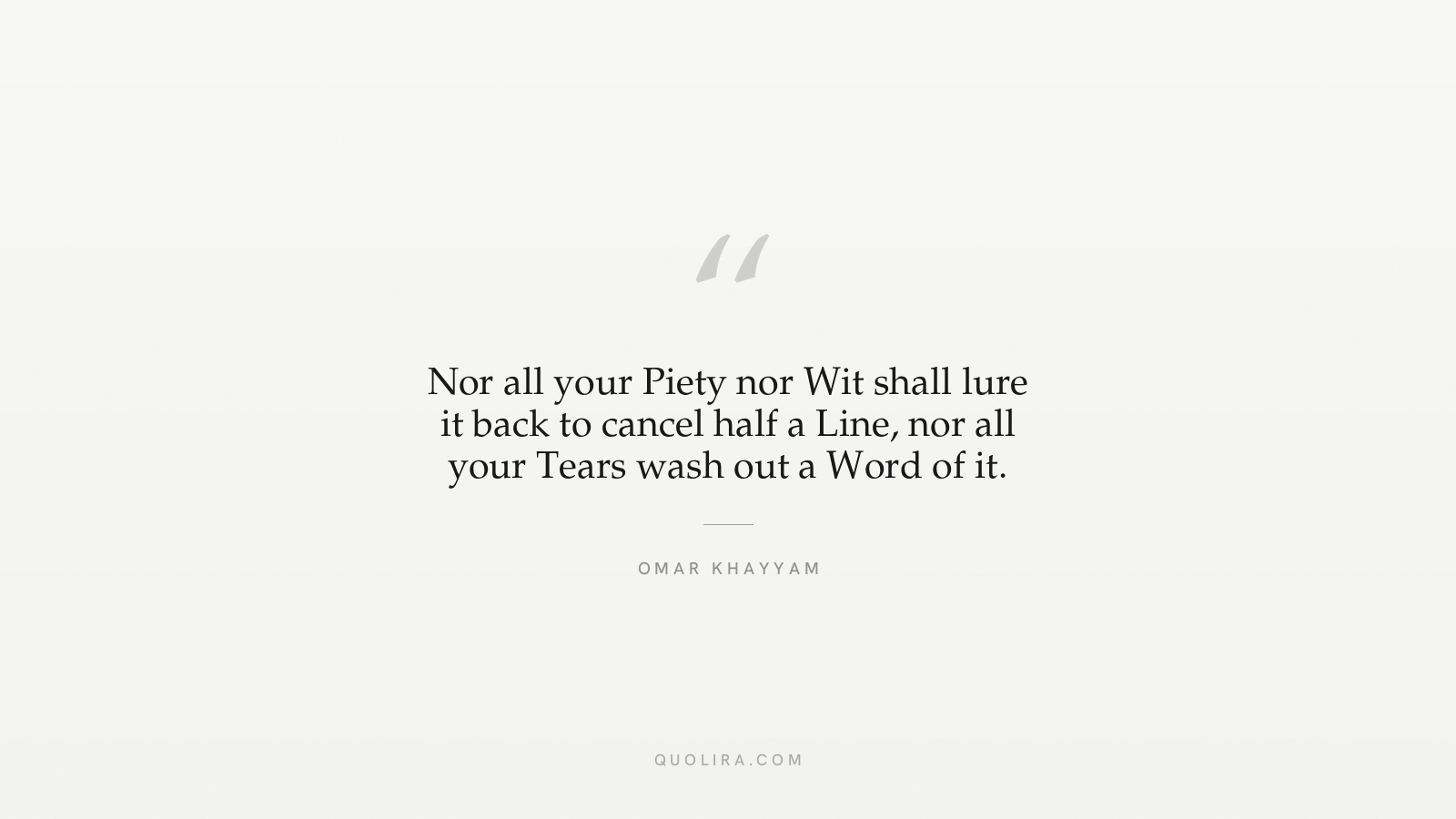
“Nor all your Piety nor Wit shall lure it back to cancel half a Line, nor all your Tears wash out a Word of it.”
Omar Khayyam · The Rubaiyat of Omar Khayyam, English version by Edward FitzGerald, 1859
“I wish I'd had the courage to live a life true to myself, not the life others expected of me.”
Bronnie Ware · The Top Five Regrets of the Dying, 2011
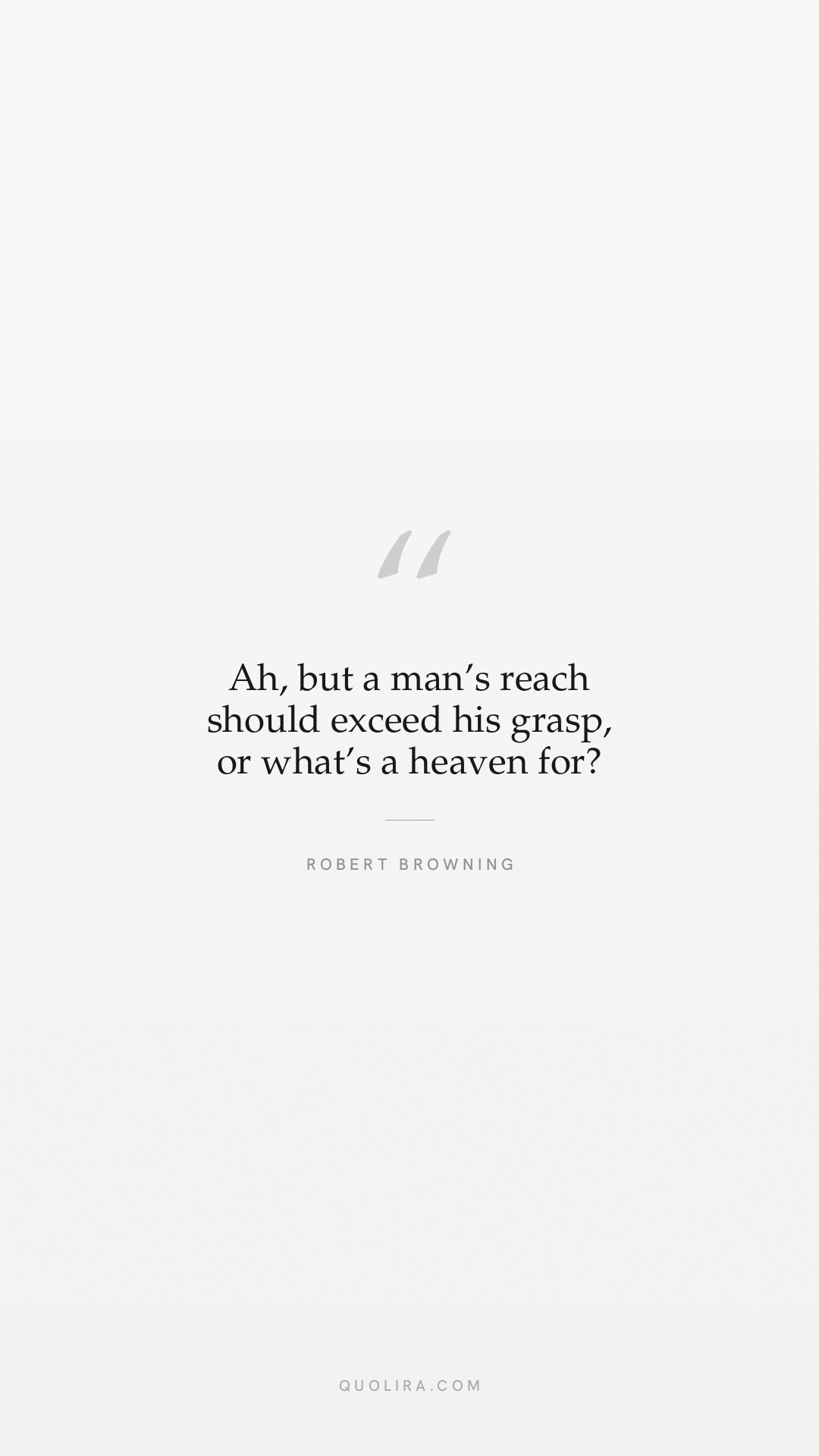
“Ah, but a man's reach should exceed his grasp, or what's a heaven for?”
Robert Browning · Andrea del Sarto, 1855
“To strive, to seek, to find, and not to yield.”
Alfred, Lord Tennyson · Ulysses, 1842