“Man has been here 32,000 years. That it took a hundred million years to prepare the world for him is proof that that is what it was done for.”
Mark Twain · Was the World Made for Man? (1903)
 quolira
.com
Mark Twain said it, in 'English as She Is Taught,' The Century, Vol. 33, No. 6 (April 1887).
Twain jokes about the cautious side of learning. Wisdom can make people careful, which is exactly why it can make them less bold. It is funny because it is a little bit true.
From the collection: 25 Mark Twain Quotes That Still Land Sharp and Funny · More Mark Twain quotes
The quote means that as a person gains wisdom, they tend to become more careful about what they say and do, because they understand more of what can go wrong. Twain frames caution as a companion of learning rather than a sign of timidity. The paradox is that growing knowledge often produces hesitation instead of boldness.
The sentence comes from English as She Is Taught, an essay published in The Century, Volume 33, Number 6, in April 1887. The essay is best known for its mock treatment of grammatical and spelling errors in a schoolbook, which Twain presents with exaggerated seriousness. The line about wisdom and caution sits within that satirical framework, where the narrator's apparent learning is itself part of the joke. It shows how Twain used reasonable-sounding observations to set up a comic turn.
Mark Twain was the pen name of Samuel Langhorne Clemens, an American writer and humorist whose career included novels, travel books, lectures, and essays. He often wrote with a deadpan voice that made pointed observations seem offhand. His work frequently examined education, politics, and social habits with a critical eye. This quote reflects that method, offering a modest-sounding reflection that quietly comments on the limits of experience and the cost of knowing too much.
“Man has been here 32,000 years. That it took a hundred million years to prepare the world for him is proof that that is what it was done for.”
Mark Twain · Was the World Made for Man? (1903)
“The funniest things are the forbidden.”
Mark Twain · Notebook 18 (February to September 1879), Mark Twain's Notebooks & Journals, Vol. 2 (1975)
“Reader, suppose you were an idiot. And suppose you were a member of Congress. But I repeat myself.”
Mark Twain · Draft manuscript, c. 1881, quoted by Albert Bigelow Paine in Mark Twain: A Biography (1912)
“Be respectful to your superiors, if you have any.”
Mark Twain · 'Advice to Youth,' speech to The Saturday Morning Club, Boston (15 April 1882)
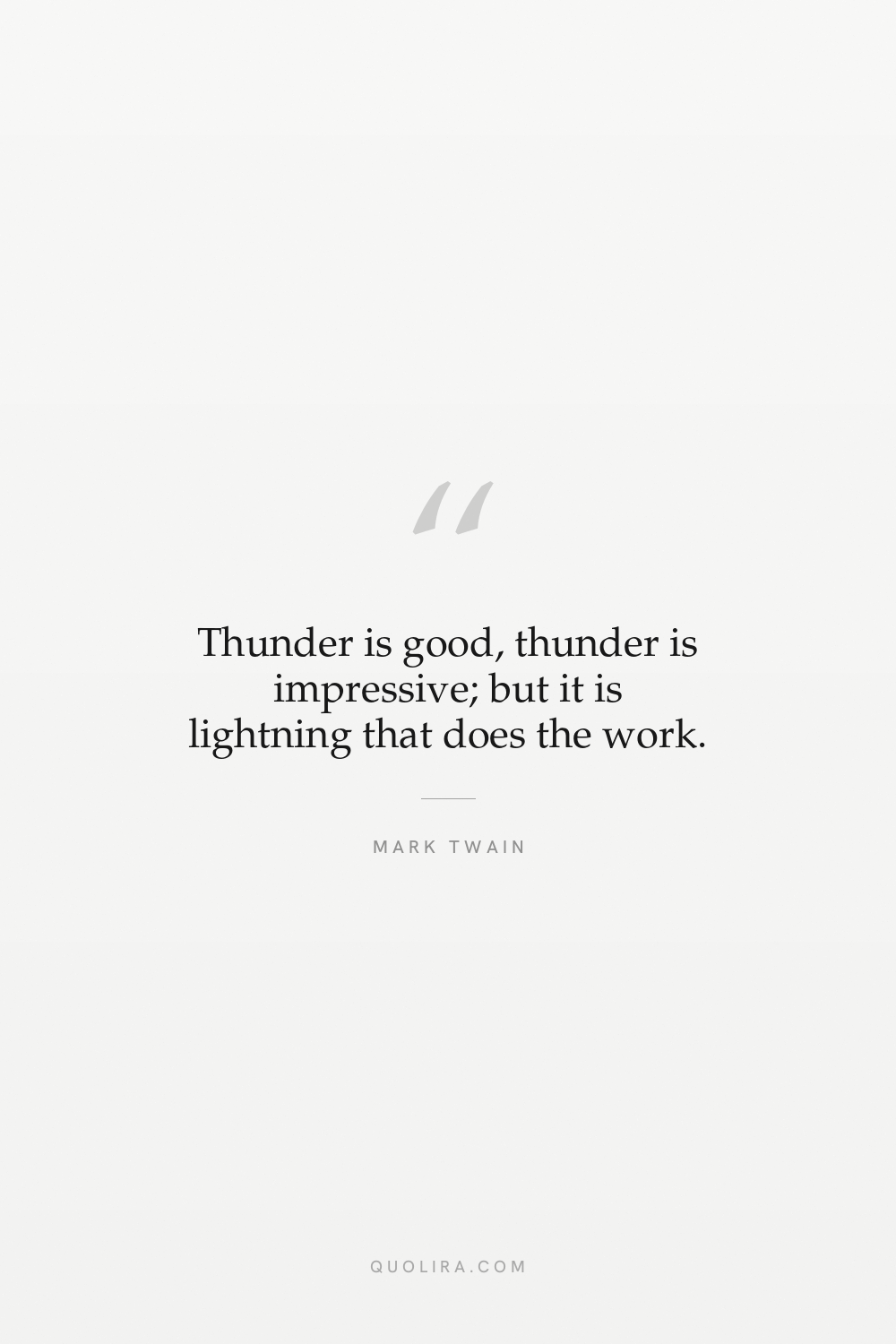
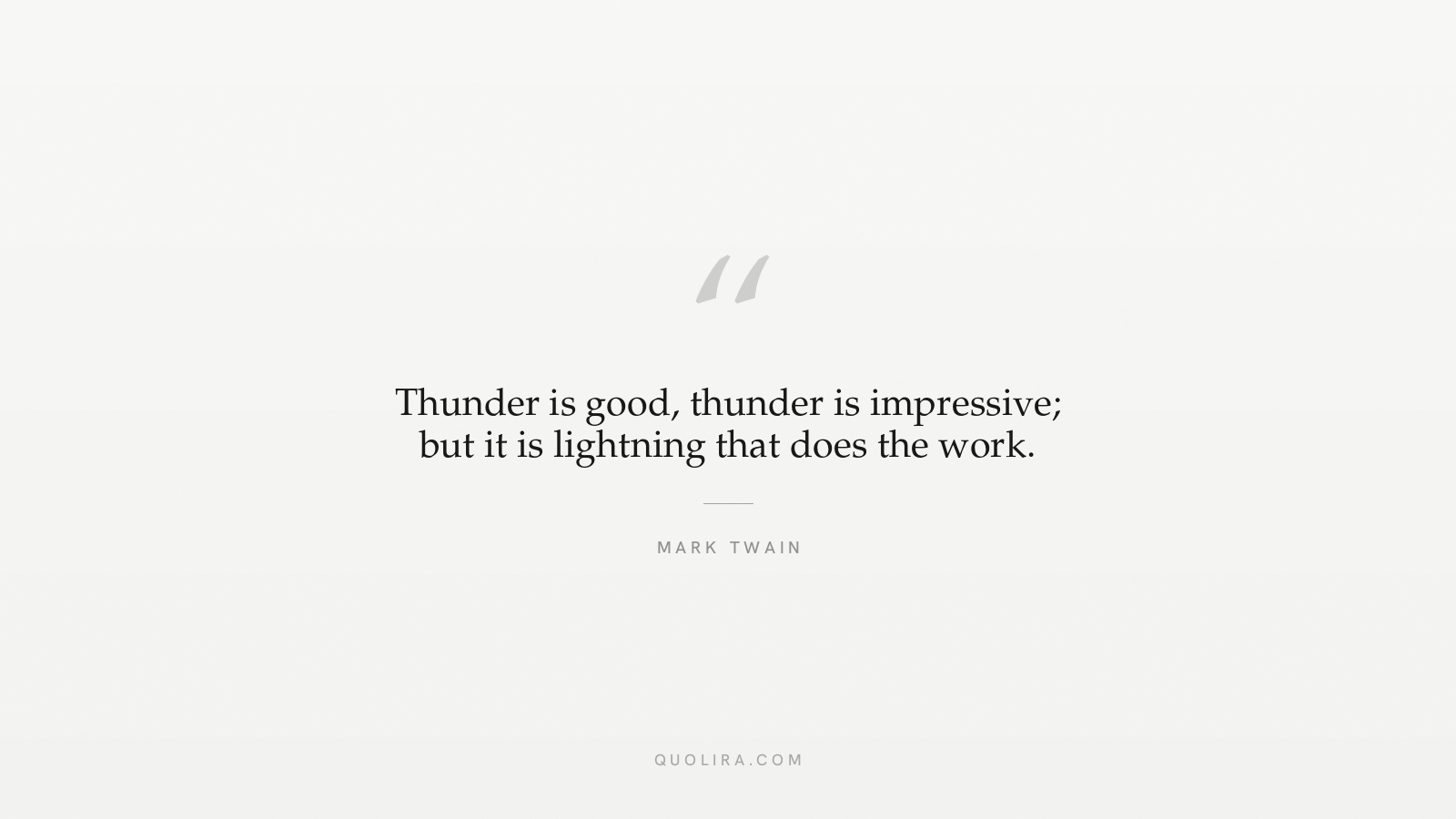
“Thunder is good, thunder is impressive; but it is lightning that does the work.”
Mark Twain · Letter to an Unidentified Person (1908)
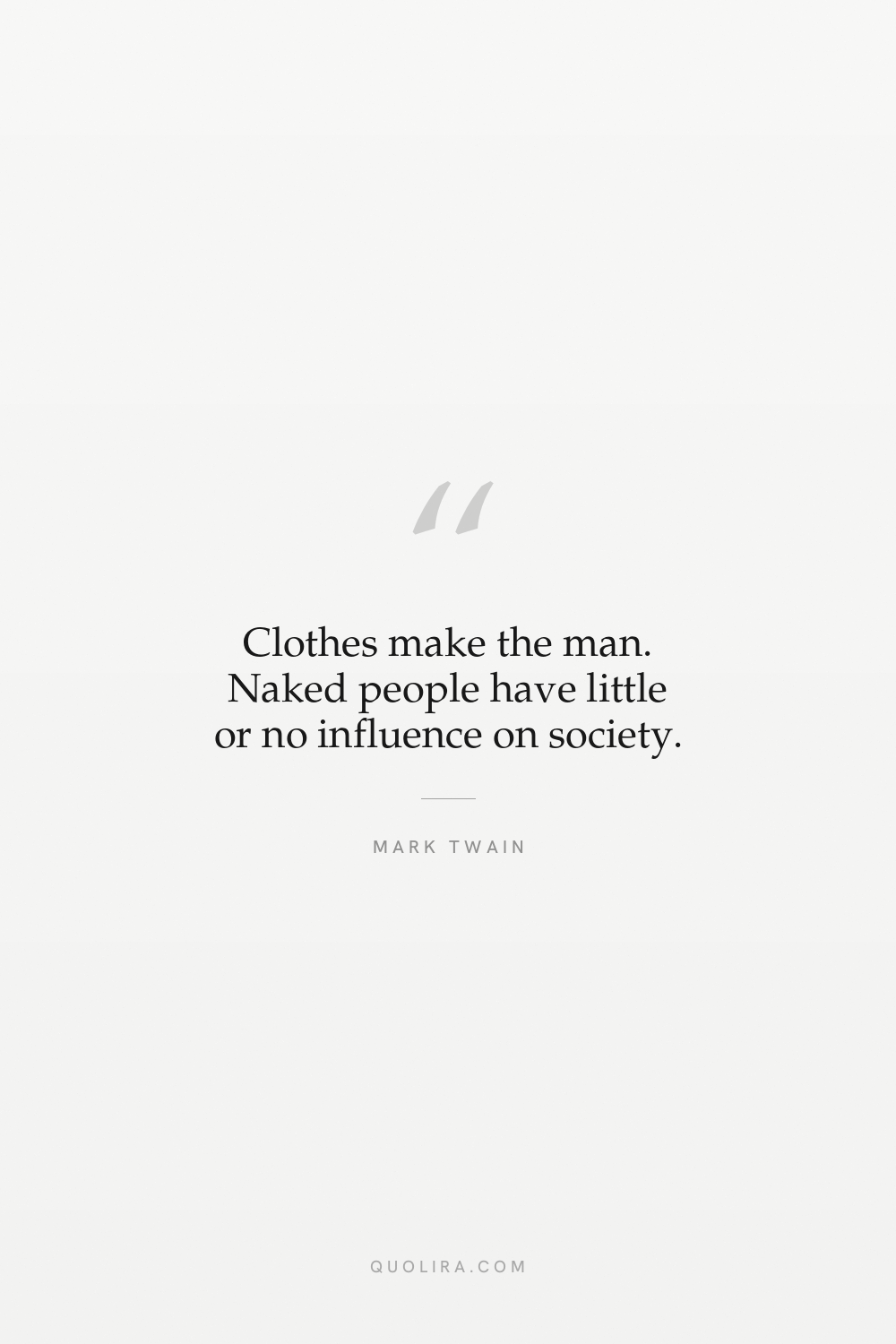
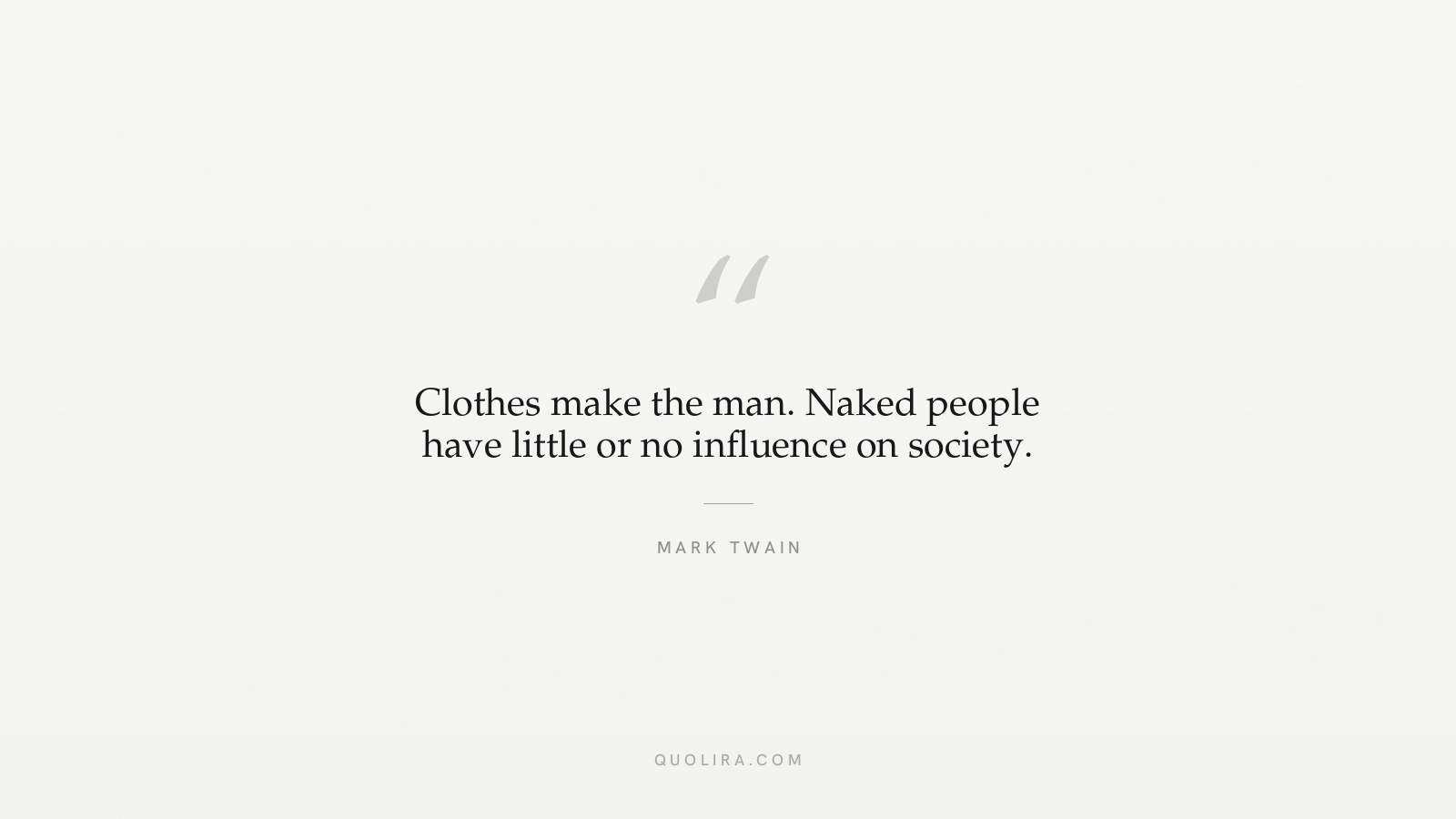
“Clothes make the man. Naked people have little or no influence on society.”
Mark Twain · More Maxims of Mark (1927), edited by Merle Johnson
“Always acknowledge a fault frankly. This will throw those in authority off their guard and give you opportunity to commit more.”
Mark Twain · More Maxims of Mark (1927), edited by Merle Johnson
“Always do right. This will gratify some people, and astonish the rest.”
Mark Twain · Address to the Young People's Society, Greenpoint Presbyterian Church, Brooklyn (16 February 1901)
“Virtue never has been as respectable as money.”
Mark Twain · The Innocents Abroad (1869), ch. 54
“Wheresoever she was, THERE was Eden.”
Mark Twain · Eve's Diary
“Principles have no real force except when one is well-fed.”
Mark Twain · Extracts From Adam's Diary (1906)
“It is not worth while to try to keep history from repeating itself, for man's character will always make the preventing of the repetitions impossible.”
Mark Twain · Mark Twain in Eruption: Hitherto Unpublished Pages About Men and Events (1940)