“Patience is a narcotic for the weak.”
Edgar Pangborn · A Mirror for Observers (1954)
 quolira
.com
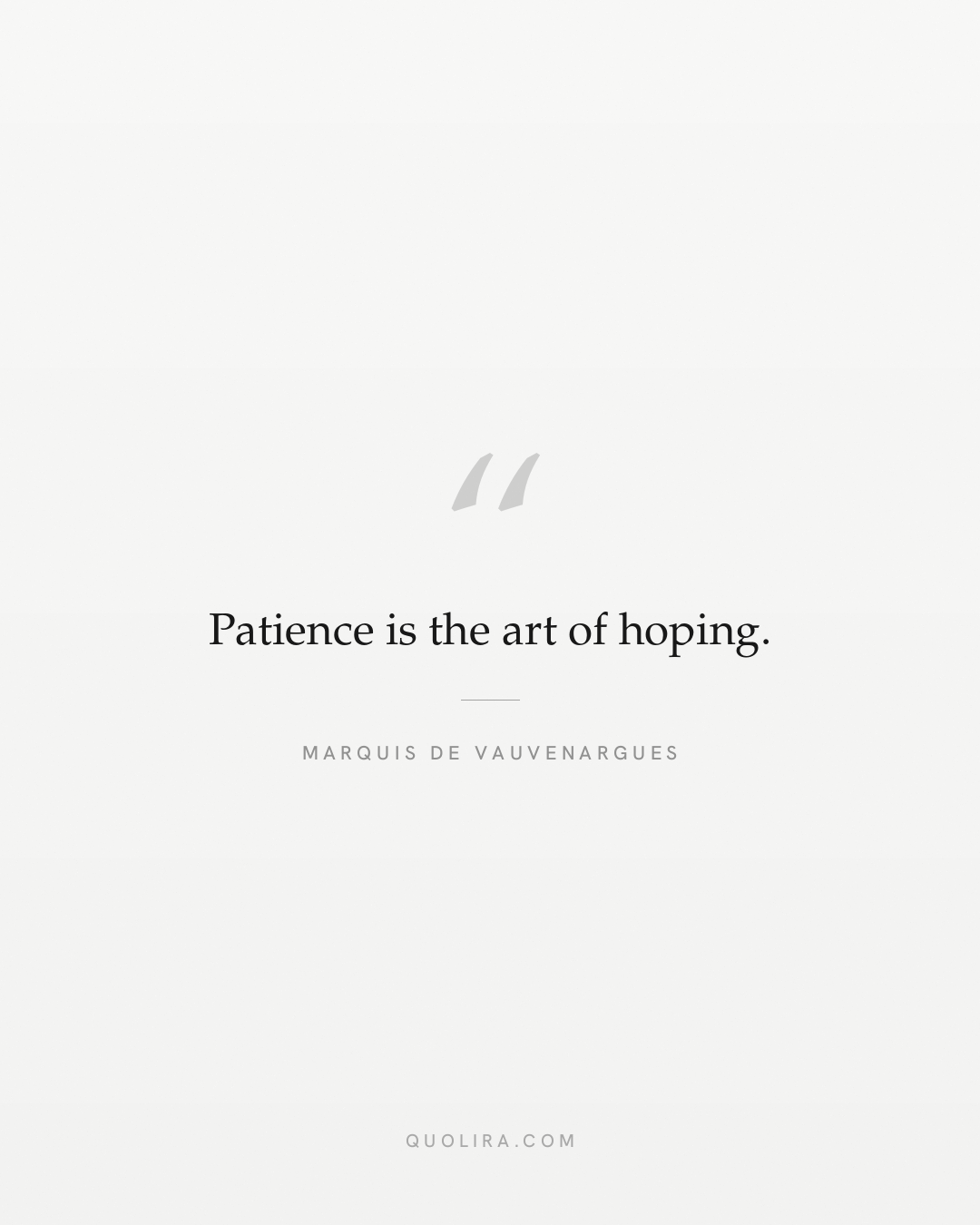
Marquis de Vauvenargues said it, in Reflections and Maxims (1746).
Vauvenargues, a French moralist who died young, treats patience as hope with discipline behind it. When the result is out of your hands, you can still choose to hope on purpose. That choice is the whole practice.
From the collection: 25 Quotes on Patience That Teach You to Wait · More Marquis de Vauvenargues quotes
This line describes patience as a form of hope that keeps its direction while waiting. To be patient, in Vauvenargues's sense, is not to sit idle but to go on expecting that something good can still arrive. He treats waiting as an active inner stance rather than an absence of action, and the patient person is still looking forward and still believing that the future has room in it.
Vauvenargues wrote in French, and his reflections were published in 1746 as a collection of short maxims. The form suited him, since he compressed observations about human nature, ambition, and virtue into brief sentences meant to be read slowly. Maxims like this were a common tool of eighteenth-century moralists, who preferred a sharp phrase to a long argument. The line belongs to his reflections on character and conduct, where he often shows how ordinary feelings reveal deeper truths about people.
Luc de Clapiers, marquis de Vauvenargues, lived from 1715 to 1747. He began a military career and left the army after his health failed, after which he devoted his remaining years to writing. He is remembered as a moralist who admired courage, generosity, and sincerity, and who wrote with unusual warmth for his era. He died young, in 1747, and his short maxims remain among the most read works of French moral reflection.
“Patience is a narcotic for the weak.”
Edgar Pangborn · A Mirror for Observers (1954)
“Or arm th' obdured breast with stubborn patience as with triple steel.”
John Milton · Paradise Lost (1667), Book II
“Sufferance is the badge of all our tribe.”
William Shakespeare · The Merchant of Venice (late 1590s), Act I, scene 3
“How poor are they that have not patience! What wound did ever heal but by degrees?”
William Shakespeare · Othello (c. 1603), Act II, scene 3
“Superanda omnis fortuna ferendo est.”
Virgil · Aeneid, Book V (29-19 BC)
“Patience makes lighter what sorrow may not heal.”
Horace · Odes, Book I, poem 24
“The conclusion is, not that hardships are desirable, but that virtue is desirable, which enables us patiently to endure hardships.”
Seneca the Younger · Moral Letters to Lucilius, Letter 67 (translated by Richard Mott Gummere)
“She sat like patience on a monument, smiling at grief.”
William Shakespeare · Twelfth Night (c. 1601-02), Act II, scene 4
“Patience and shuffle the cards.”
Miguel de Cervantes · Don Quixote, Part II (1615)
“Though patience be a tired mare, yet she will plod.”
William Shakespeare · Henry V (c. 1599), Act II, scene i
“The strongest of all warriors are these two: Time and Patience.”
Leo Tolstoy · War and Peace (1865-1867; 1869), Book X
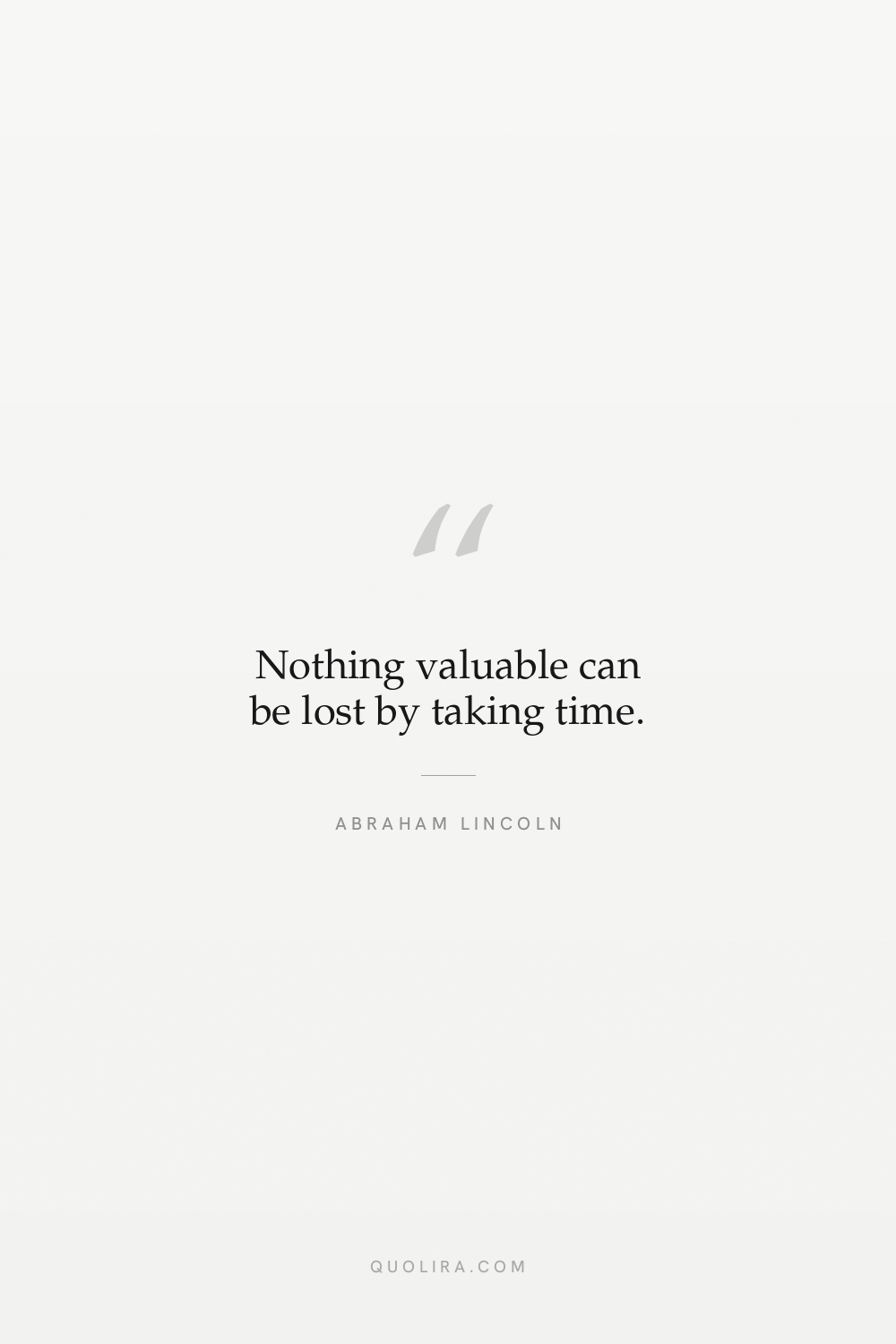
“Nothing valuable can be lost by taking time.”
Abraham Lincoln · First Inaugural Address (4 March 1861)