“Superanda omnis fortuna ferendo est.”
Virgil · Aeneid, Book V (29-19 BC)
 quolira
.com
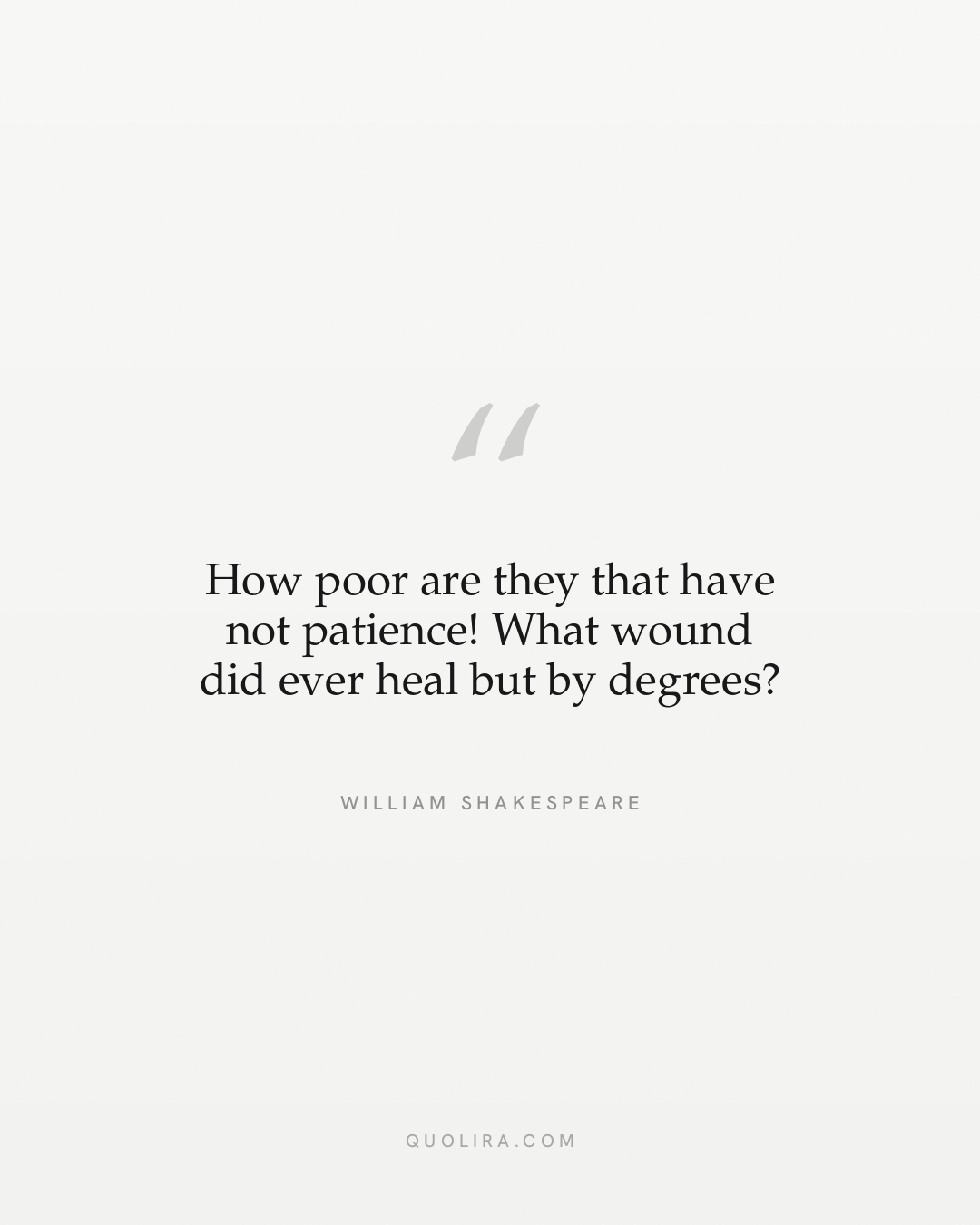
William Shakespeare said it, in Othello (c. 1603), Act II, scene 3.
Shakespeare's question holds up. Healing comes in degrees, and people who rush it usually reopen the cut. Give the hurt time to close.
From the collection: 25 Quotes on Patience That Teach You to Wait · More William Shakespeare quotes
This quote means that impatience only adds to suffering, because healing takes time and cannot be hurried. A person who cannot wait for recovery is likely to feel worse, not better.
The line appears in Othello, Act II, scene 3, spoken by Iago, the play's main villain. Iago's words are often self-serving and manipulative, so the advice carries an ironic edge, and audiences are invited to notice the gap between what he says and what he intends. The line draws on a common observation about wounds and recovery, and it sits within a scene that is full of tension, drinking, and the early stages of the play's disaster.
William Shakespeare was an English playwright and poet who was baptized in 1564 and died in 1616. He wrote plays for the London stage, including tragedies, comedies, and histories, and he was also a member of the acting company that later became known as the King's Men. Othello is generally dated to around the early 1600s. Shakespeare's language is admired for its range, its psychological depth, and its memorable phrasing, and many of his lines have entered everyday English. His work continues to be performed and studied worldwide.
“Superanda omnis fortuna ferendo est.”
Virgil · Aeneid, Book V (29-19 BC)
“Patience makes lighter what sorrow may not heal.”
Horace · Odes, Book I, poem 24
“The conclusion is, not that hardships are desirable, but that virtue is desirable, which enables us patiently to endure hardships.”
Seneca the Younger · Moral Letters to Lucilius, Letter 67 (translated by Richard Mott Gummere)
“She sat like patience on a monument, smiling at grief.”
William Shakespeare · Twelfth Night (c. 1601-02), Act II, scene 4
“Patience and shuffle the cards.”
Miguel de Cervantes · Don Quixote, Part II (1615)
“Though patience be a tired mare, yet she will plod.”
William Shakespeare · Henry V (c. 1599), Act II, scene i
“The strongest of all warriors are these two: Time and Patience.”
Leo Tolstoy · War and Peace (1865-1867; 1869), Book X
“Nothing valuable can be lost by taking time.”
Abraham Lincoln · First Inaugural Address (4 March 1861)
“Learn to labor and to wait.”
Henry Wadsworth Longfellow · A Psalm of Life (1838)
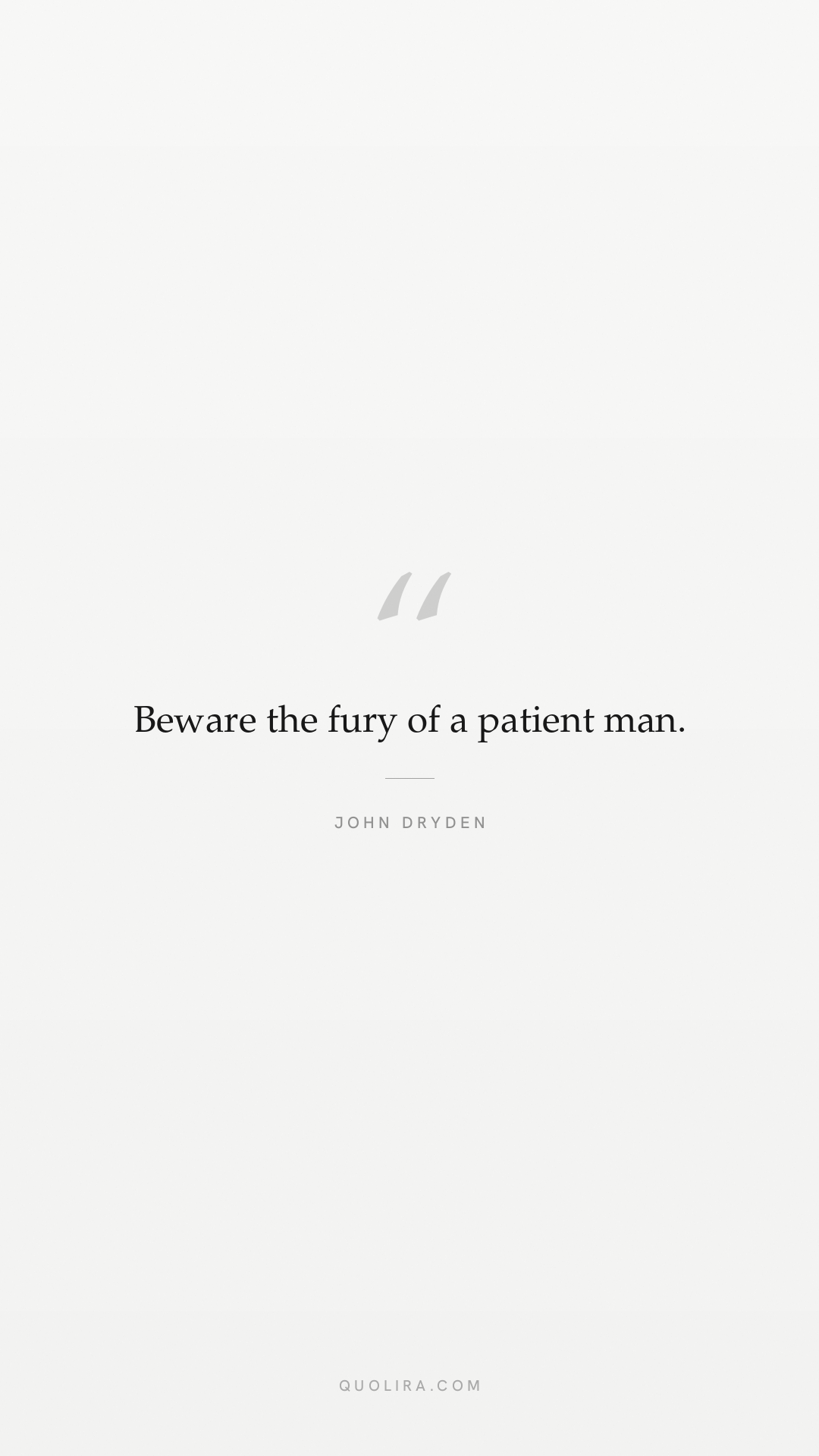
“Beware the fury of a patient man.”
John Dryden · Absalom and Achitophel (1681)
“He that can have patience can have what he will.”
Benjamin Franklin · Poor Richard's Almanack (1736)
“Everything comes in time to him who knows how to wait.”
Leo Tolstoy · War and Peace (1869)