“Yet he is lord of all the animals. He sets them to work, he gives back to them the bare minimum that will prevent them from starving, and the rest he keeps for himself.”
George Orwell · Animal Farm, Chapter 1
 quolira
.com
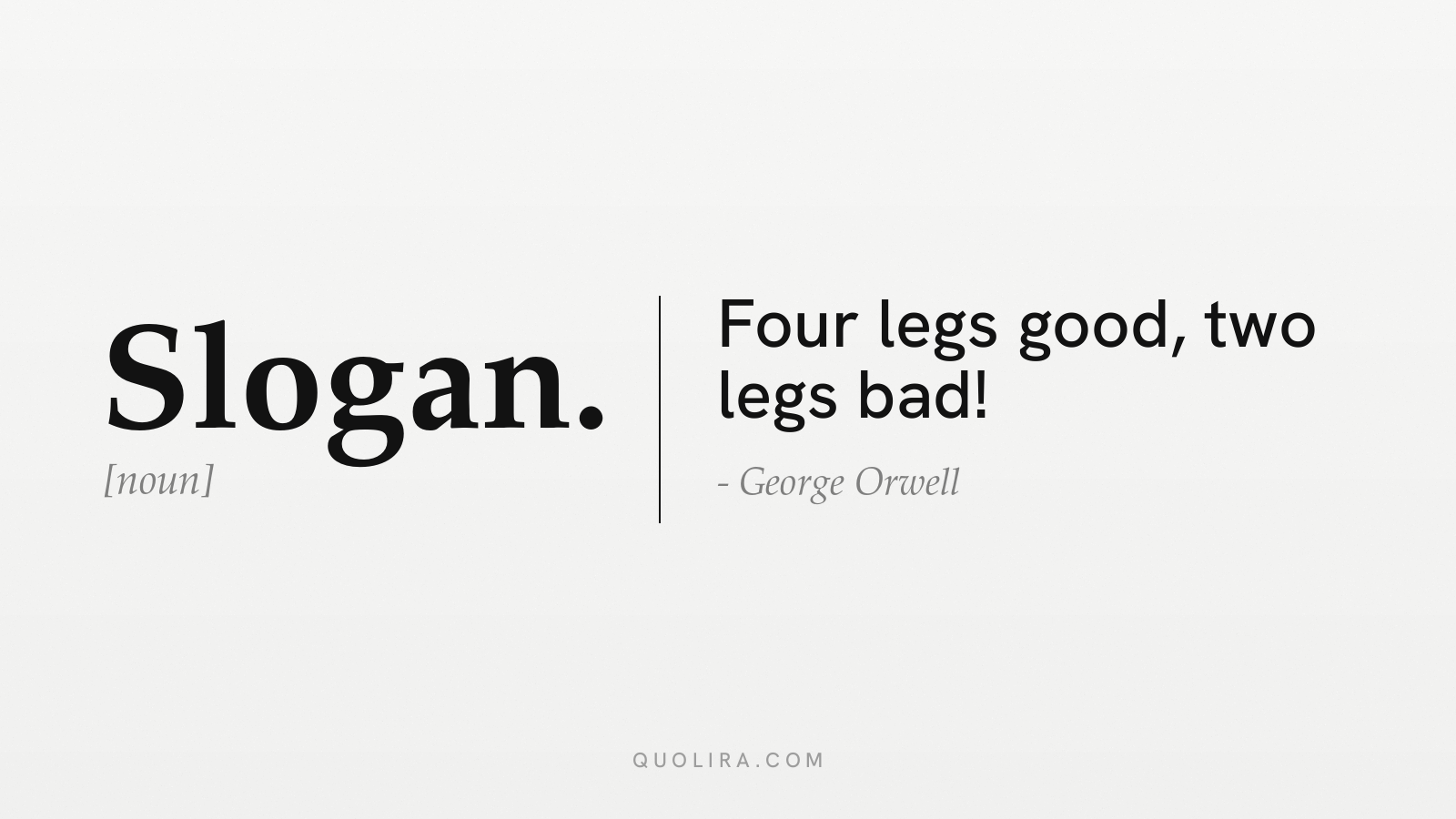
George Orwell said it, in Animal Farm, Chapter 3.
The sheep chant this slogan for nearly a quarter of an hour to shout down debate after Napoleon takes over the Sunday meetings. It is propaganda reduced to four words, and it works.
From the collection: 19 Animal Farm Quotes on Power, Propaganda, and Betrayal · More George Orwell quotes
The phrase means that the animals are willing to accept a simple rule that sorts the world into friends and enemies by the number of legs each creature has. It is a slogan that reduces a complicated debate to a single, memorable judgment.
The words appear in the third chapter of Animal Farm, when the sheep take up the slogan and repeat it in a way that drowns out discussion. The sheep have been taught the chant by the pigs, who use it to shape the animals' thinking without requiring them to reason through the question. Orwell uses this moment to show how propaganda works through repetition and emotion rather than argument. The slogan later becomes a model for the way the pigs manage the other animals, since it allows complex issues to be settled by a catchy line rather than by evidence.
George Orwell (1903 to 1950) was an English novelist and essayist who wrote about propaganda, language, and political manipulation. Animal Farm, published in 1945, is his best-known fable, and it satirizes the way revolutionary ideals can be corrupted by those who hold power. Orwell wrote with a strong interest in how words are used to obscure truth, and his later essays explored that subject directly. His short, memorable phrasing made his ideas easy to remember, and his work continues to be read as a warning about manipulation.
“Yet he is lord of all the animals. He sets them to work, he gives back to them the bare minimum that will prevent them from starving, and the rest he keeps for himself.”
George Orwell · Animal Farm, Chapter 1
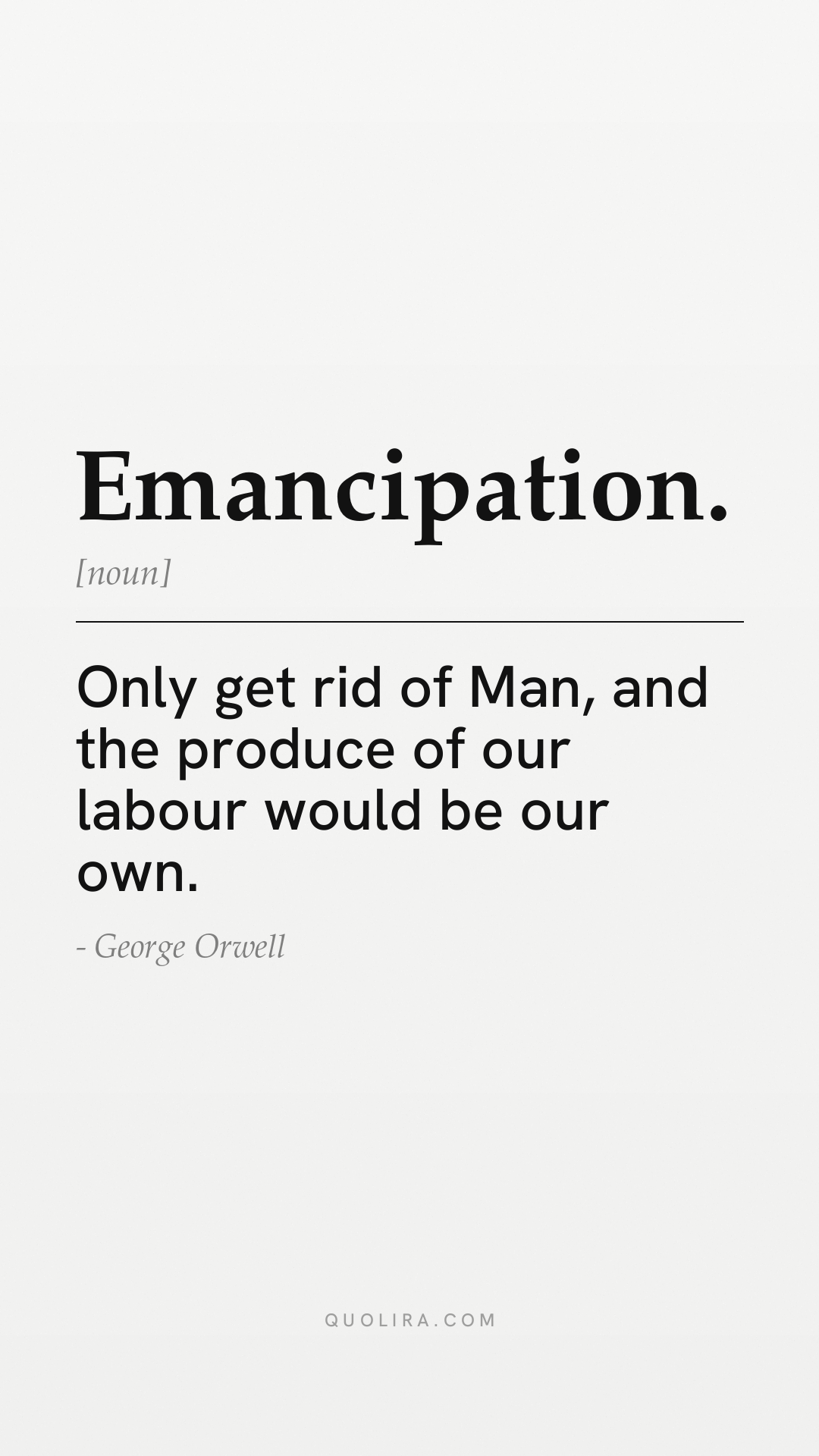
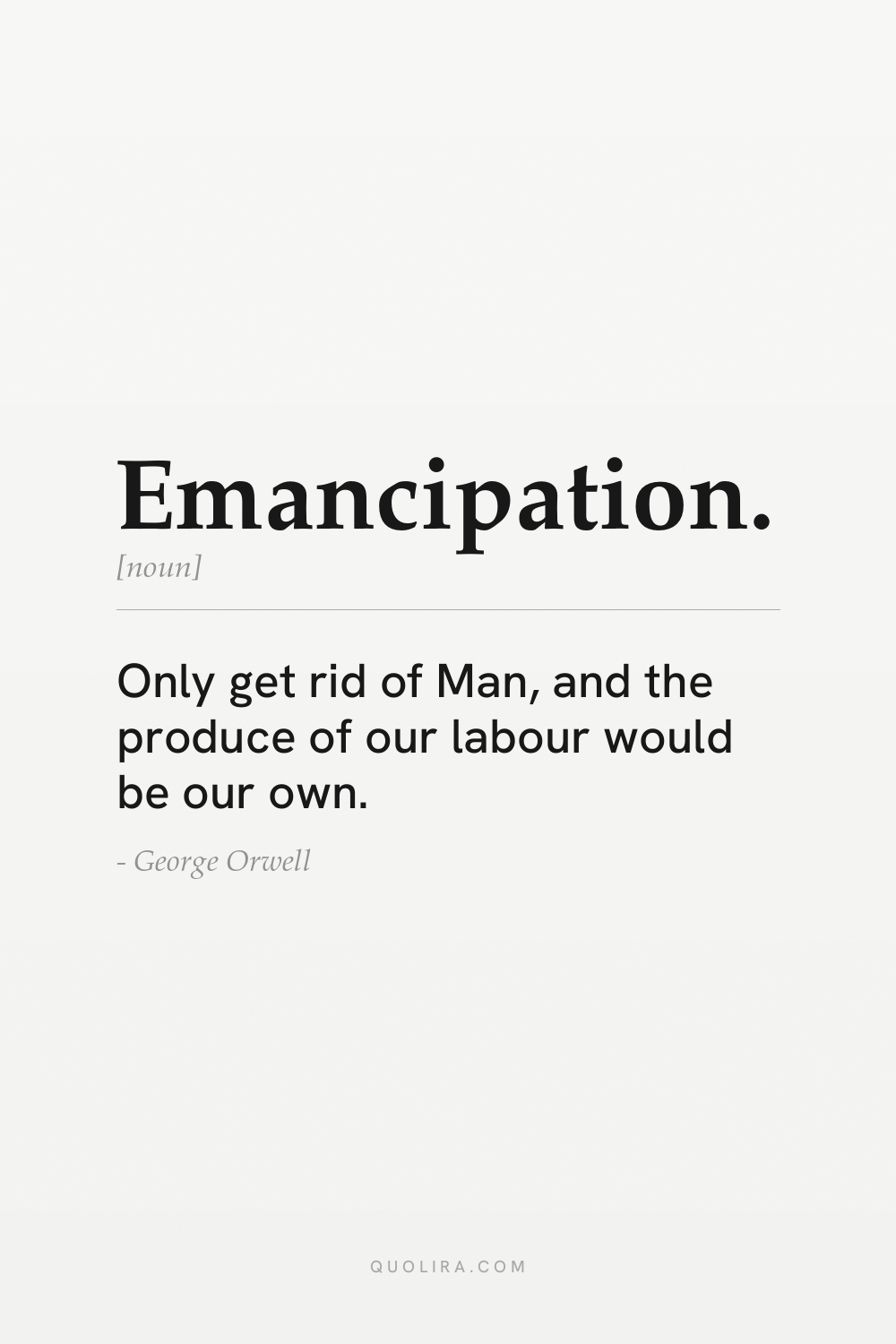
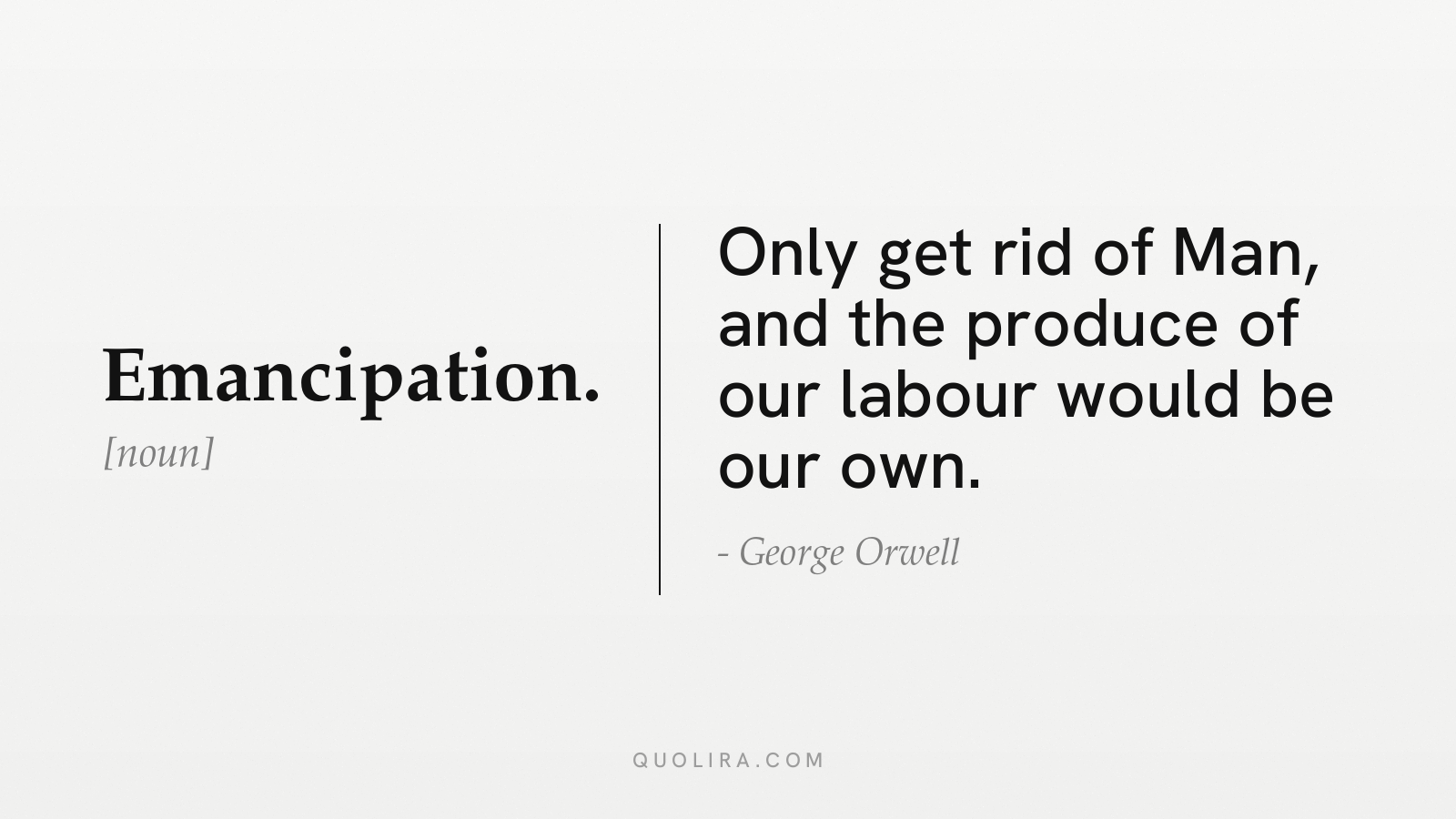
“Only get rid of Man, and the produce of our labour would be our own.”
George Orwell · Animal Farm, Chapter 1
“Is it not crystal clear, then, comrades, that all the evils of this life of ours spring from the tyranny of human beings?”
George Orwell · Animal Farm, Chapter 1
“Things are lovelier because they will not last.”
Original
“Ikigai is less a thing you find and more a thing you keep doing.”
Original
“If what I see in my mind excites me, there is a good chance it will make a good photograph.”
Ansel Adams
“I would never apologize for photographing rocks. Rocks can be very beautiful.”
Ansel Adams
“It is horrifying that we have to fight our own Government to save the environment.”
Ansel Adams
“I eagerly await new concepts and processes. I believe that the electronic image will be the next major advance.”
Ansel Adams · The Negative (1981), introduction to second edition
“For me the future of the image is going to be in electronic form.”
Ansel Adams · Interview with Paul Hill (March 1975), published in Dialogue with Photography (1979)
“The sheer ease with which we can produce a superficial image often leads to creative disaster.”
Ansel Adams · 'A Personal Credo' (1943), published in American Annual of Photography (1944)
“The only things in my life that compatibly exist with this grand universe are the creative works of the human spirit.”
Ansel Adams · Ansel Adams: An Autobiography (1985)