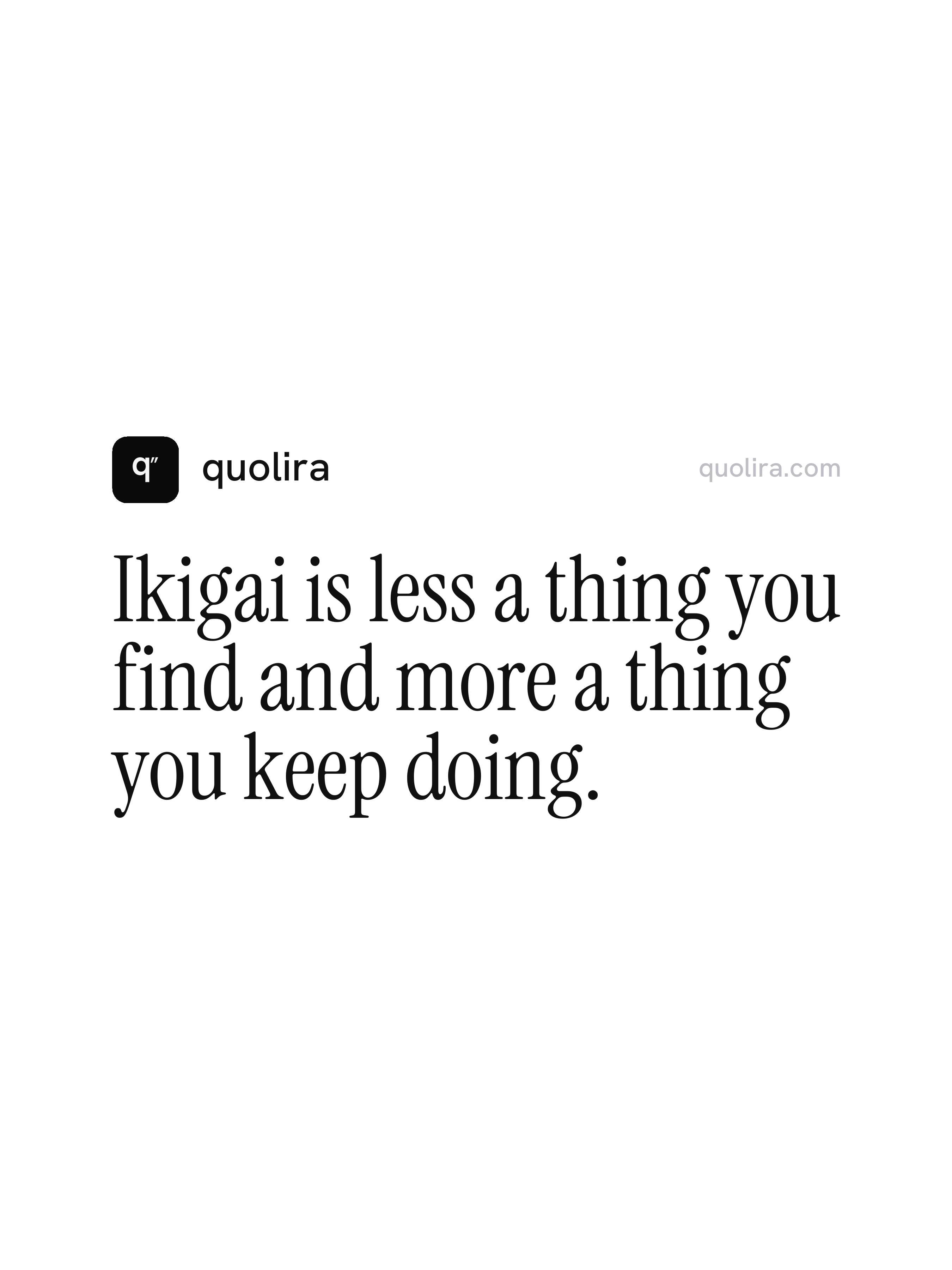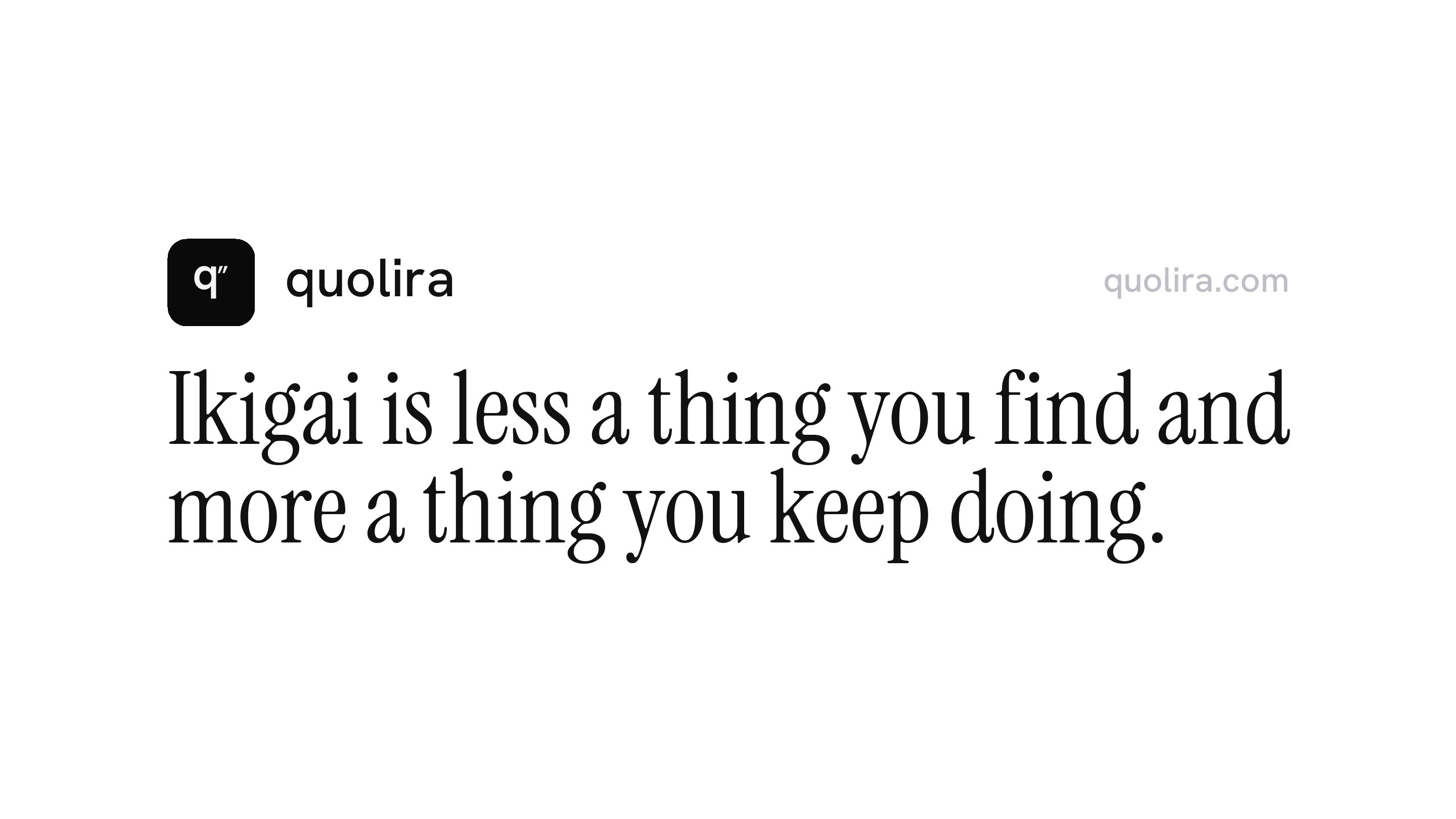
“Ikigai is less a thing you find and more a thing you keep doing.”
Original
 quolira
.com
This is an original line written for Quolira, not attributed to a known author.
This is an editorial line, not a translation, and it captures the core of mono no aware in one sentence. The beauty and the ending arrive together.
From the collection: Mono no Aware: Why Things Look Lovelier on the Way Out
The quote means that impermanence is part of what makes things beautiful, so their fleeting nature adds to their value rather than subtracting from it.
The idea is that a thing gains depth when we know it will not stay. A cherry blossom, a summer evening, or a conversation with an old friend seems more precious because its time is limited. The statement does not treat endings as tragic by default. Instead, it asks the reader to notice how attention sharpens when something is passing, and how that attention can turn an ordinary moment into a memory worth keeping.
Many people feel this without having words for it. Loss tends to make us look more closely, and we often understand what we had only after it begins to fade. The quote offers a gentler way to hold that experience. It suggests that transience is not a flaw in beauty but one of its conditions, which can relieve some of the pressure to make things last forever. It also invites a quieter kind of gratitude, one that focuses on what is present now.
The line works well in a personal journal, at the start of a reflective essay, or in a talk about mindfulness or aging. It can also frame a farewell, a seasonal celebration, or a photo series about changing places. Used this way, it gives people permission to slow down and appreciate what is here, without needing to explain why it matters.
“Ikigai is less a thing you find and more a thing you keep doing.”
Original
“If what I see in my mind excites me, there is a good chance it will make a good photograph.”
Ansel Adams
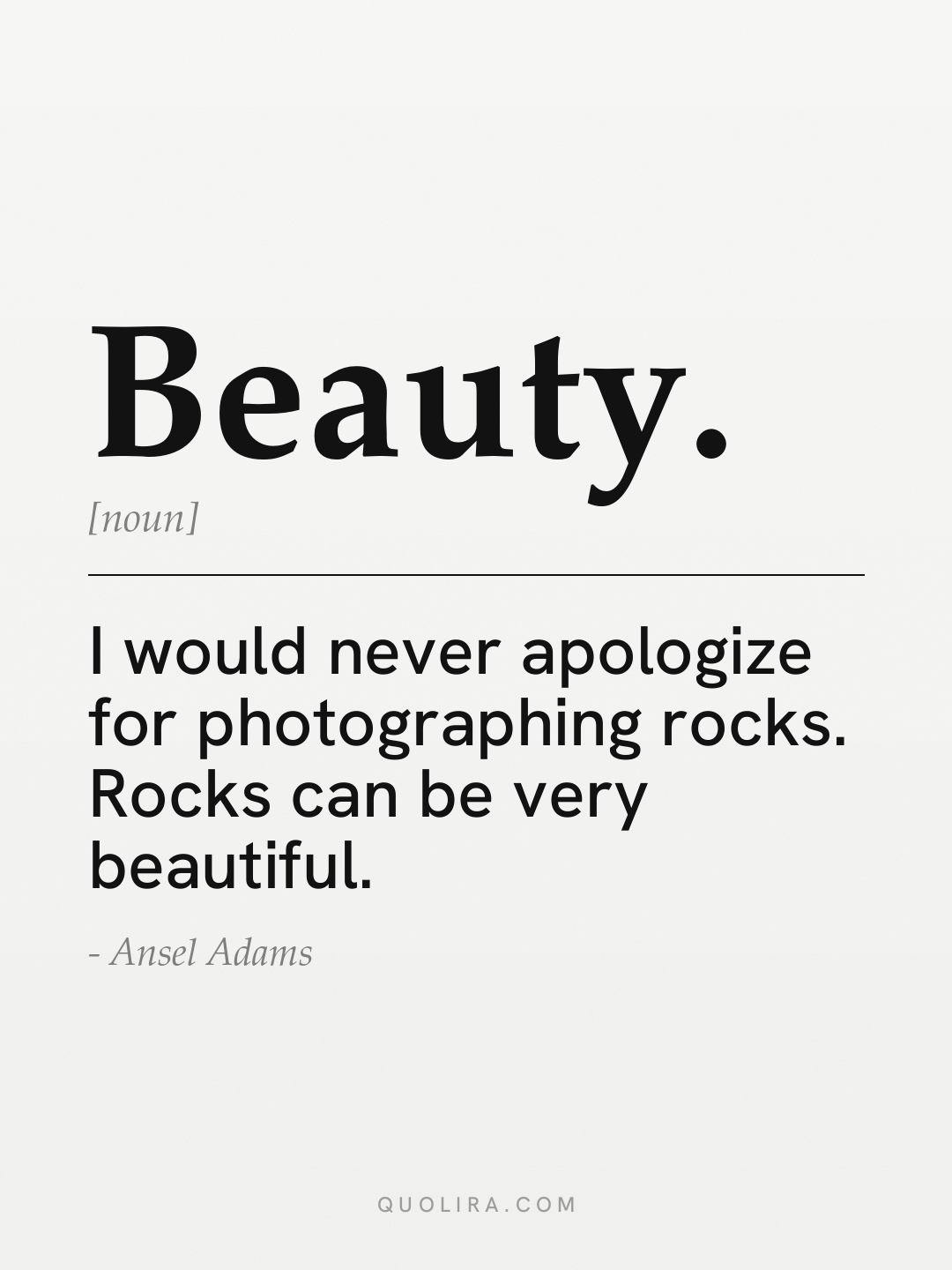
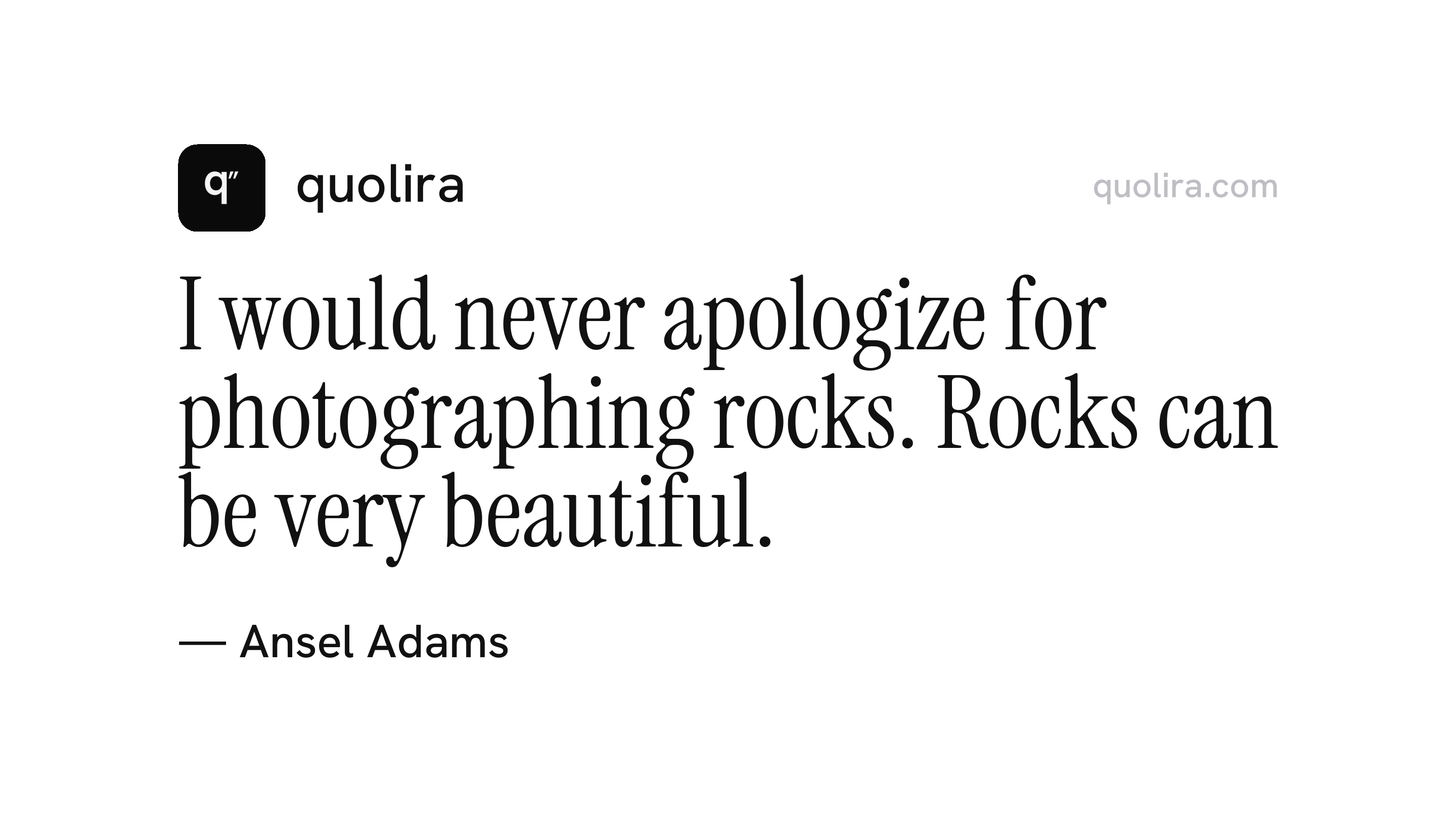
“I would never apologize for photographing rocks. Rocks can be very beautiful.”
Ansel Adams
“It is horrifying that we have to fight our own Government to save the environment.”
Ansel Adams
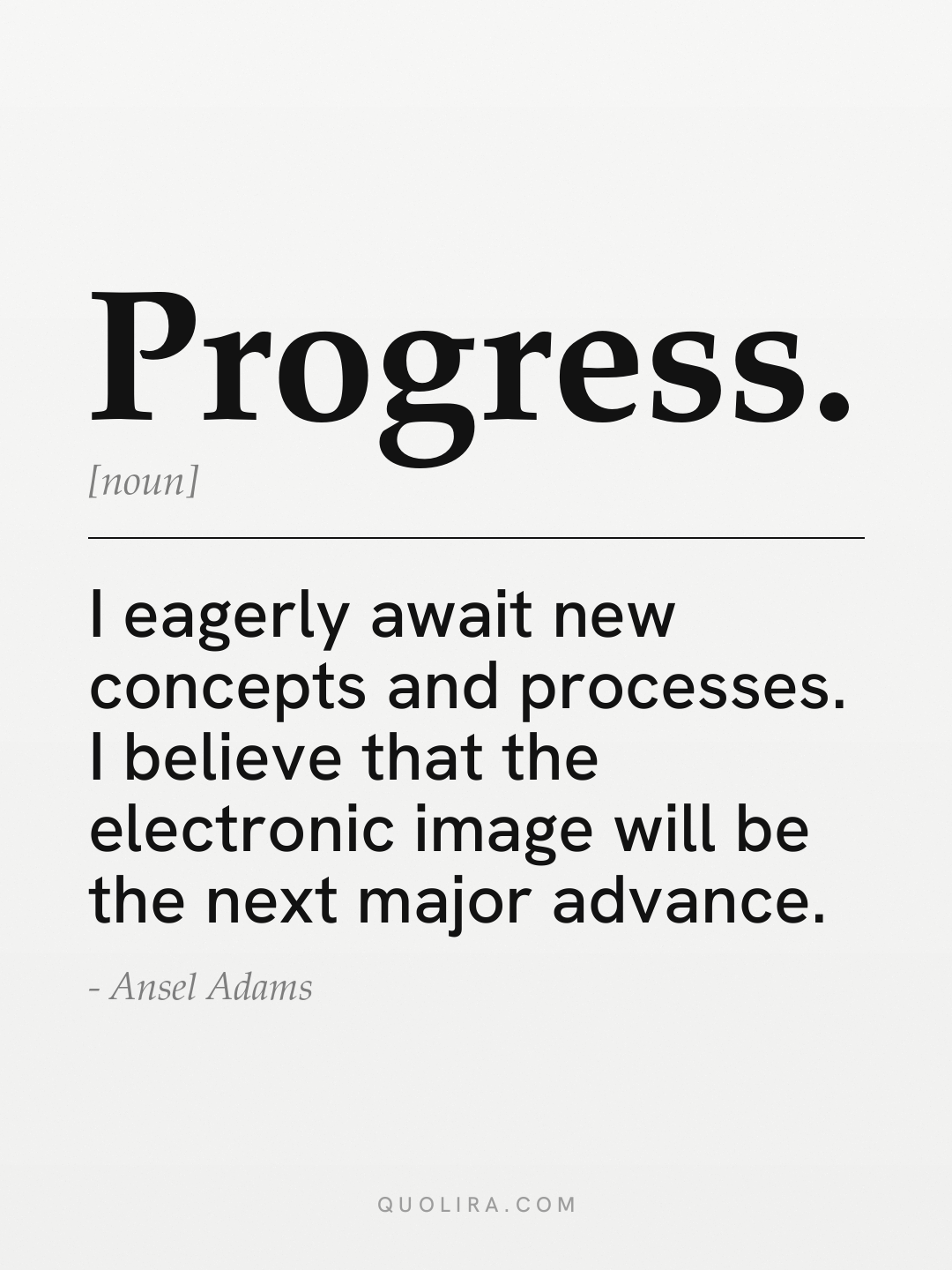
“I eagerly await new concepts and processes. I believe that the electronic image will be the next major advance.”
Ansel Adams · The Negative (1981), introduction to second edition
“For me the future of the image is going to be in electronic form.”
Ansel Adams · Interview with Paul Hill (March 1975), published in Dialogue with Photography (1979)
“The sheer ease with which we can produce a superficial image often leads to creative disaster.”
Ansel Adams · 'A Personal Credo' (1943), published in American Annual of Photography (1944)
“The only things in my life that compatibly exist with this grand universe are the creative works of the human spirit.”
Ansel Adams · Ansel Adams: An Autobiography (1985)
“No matter how sophisticated you may be, a large granite mountain cannot be denied; it speaks in silence to the very core of your being.”
Ansel Adams · Ansel Adams: An Autobiography (1985)
“The herculean task of a photographer is to capture a momentary frame as beautiful in reality, as it would be in a dream.”
Ansel Adams · Radio interview (1972)
“A great photograph is a full expression of what one feels about what is being photographed in the deepest sense, and is, thereby, a true expression of what one feels about life in its entirety.”
Ansel Adams · 'A Personal Credo' (1943), published in American Annual of Photography (1944)
“Let gratitude be the pillow upon which you kneel to say your nightly prayer. And let faith be the bridge you build to overcome evil and welcome good.”
Maya Angelou · Celebrations: Rituals of Peace and Prayer (2006)