“Things are lovelier because they will not last.”
Original
 quolira
.com
George Orwell said it, in Animal Farm, Chapter 1.
Old Major, the aging boar, delivers this during the meeting that sparks the rebellion. He frames tyranny as the root of every hardship, which makes the later betrayals hurt more.
From the collection: 19 Animal Farm Quotes on Power, Propaganda, and Betrayal · More George Orwell quotes
This quote argues that the hardships animals suffer on the farm come from being ruled by humans, and it frames human dominion as the root of every injustice they face. The speaker presents this as a plain truth that the animals can see once it is pointed out to them.
The words belong to Old Major, an aging boar who gathers the animals of Manor Farm in a barn in the opening chapter of Animal Farm. Before his death, he describes a dream of a world without humans and urges the animals to prepare for a rebellion. His speech is a turning point in the novel because it gives the animals a shared vocabulary of grievance and a vision of collective freedom. Orwell builds much of the later plot on the tension between that early idealism and the way power is later used.
George Orwell (1903 to 1950) was an English novelist, essayist, and critic. He is best known for Animal Farm, published in 1945, and for Nineteen Eighty-Four. Across his work he wrote about political power, propaganda, and the misuse of language, drawing on his experiences in colonial Burma, the Spanish Civil War, and the wartime British press. His clear, direct prose made his political writing widely read, and his fables remain common reading in schools and universities.
“Things are lovelier because they will not last.”
Original
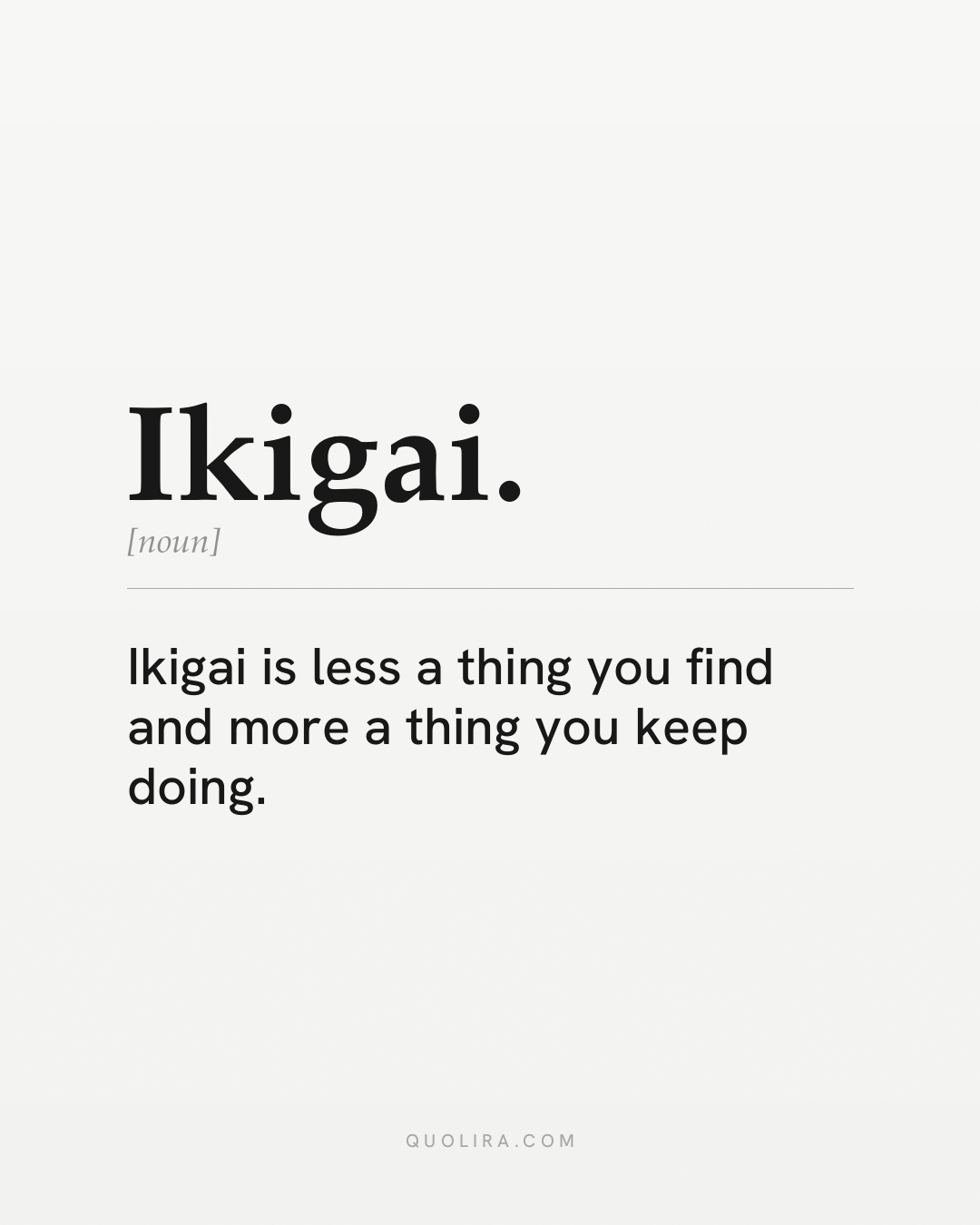
“Ikigai is less a thing you find and more a thing you keep doing.”
Original
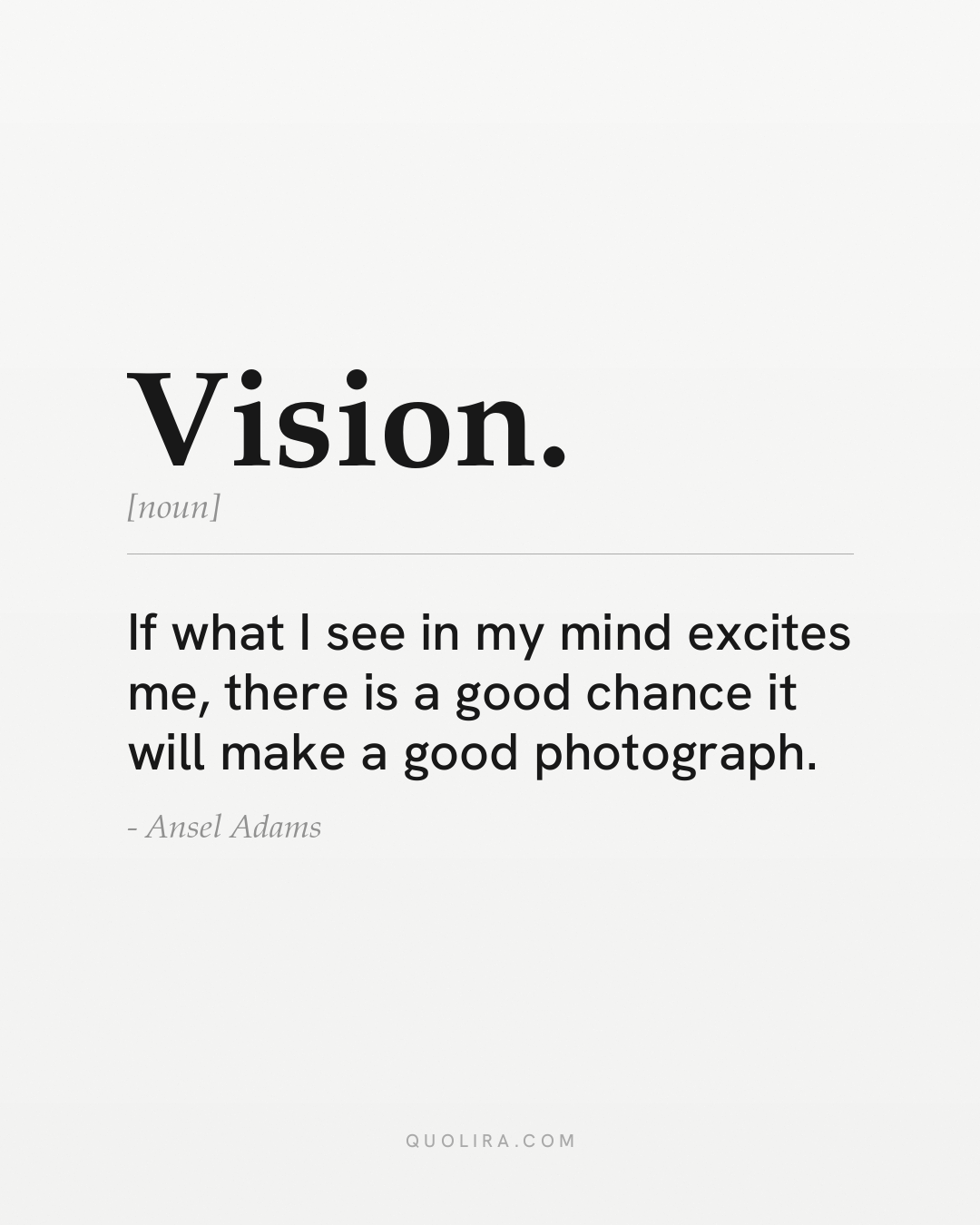
“If what I see in my mind excites me, there is a good chance it will make a good photograph.”
Ansel Adams
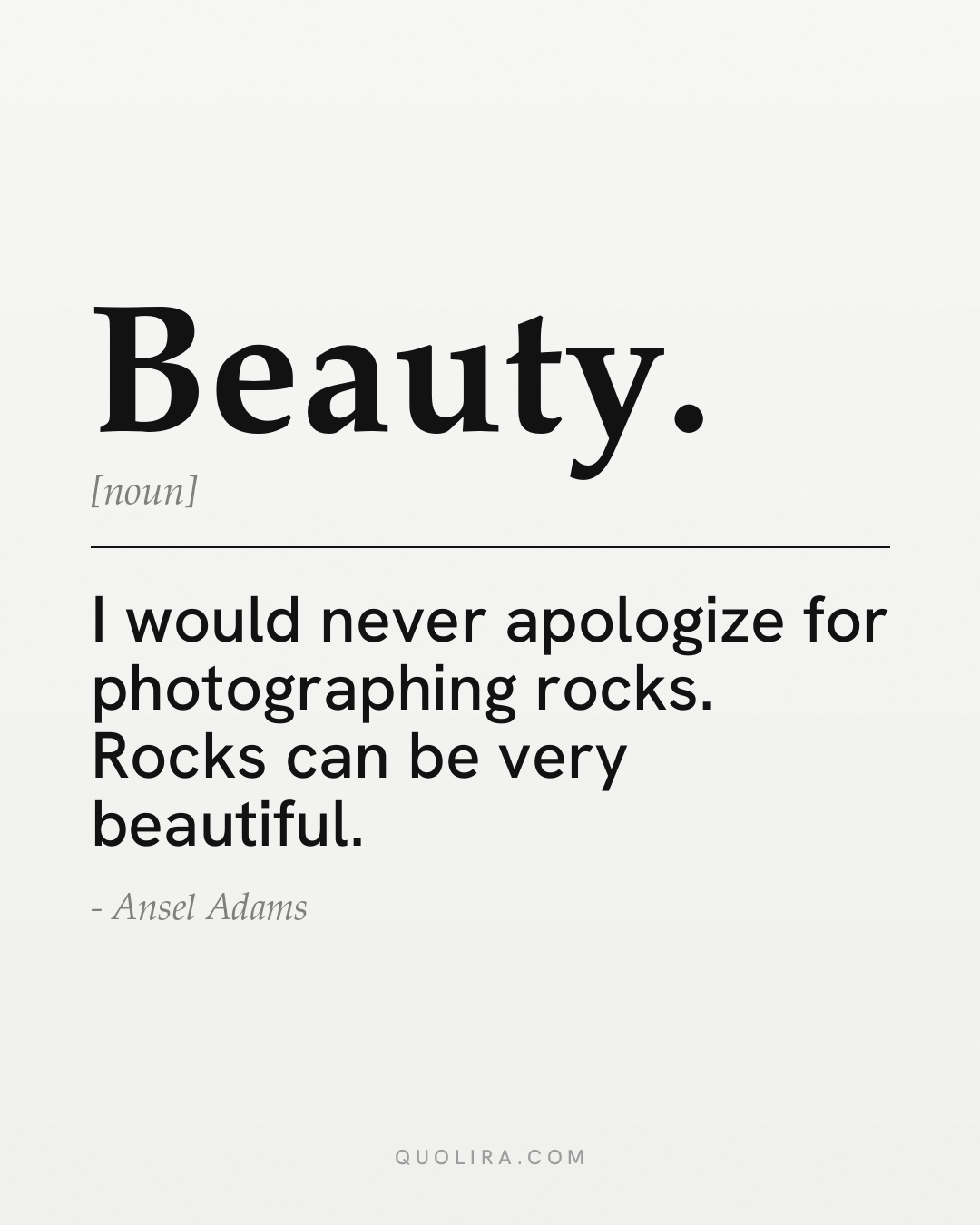
“I would never apologize for photographing rocks. Rocks can be very beautiful.”
Ansel Adams
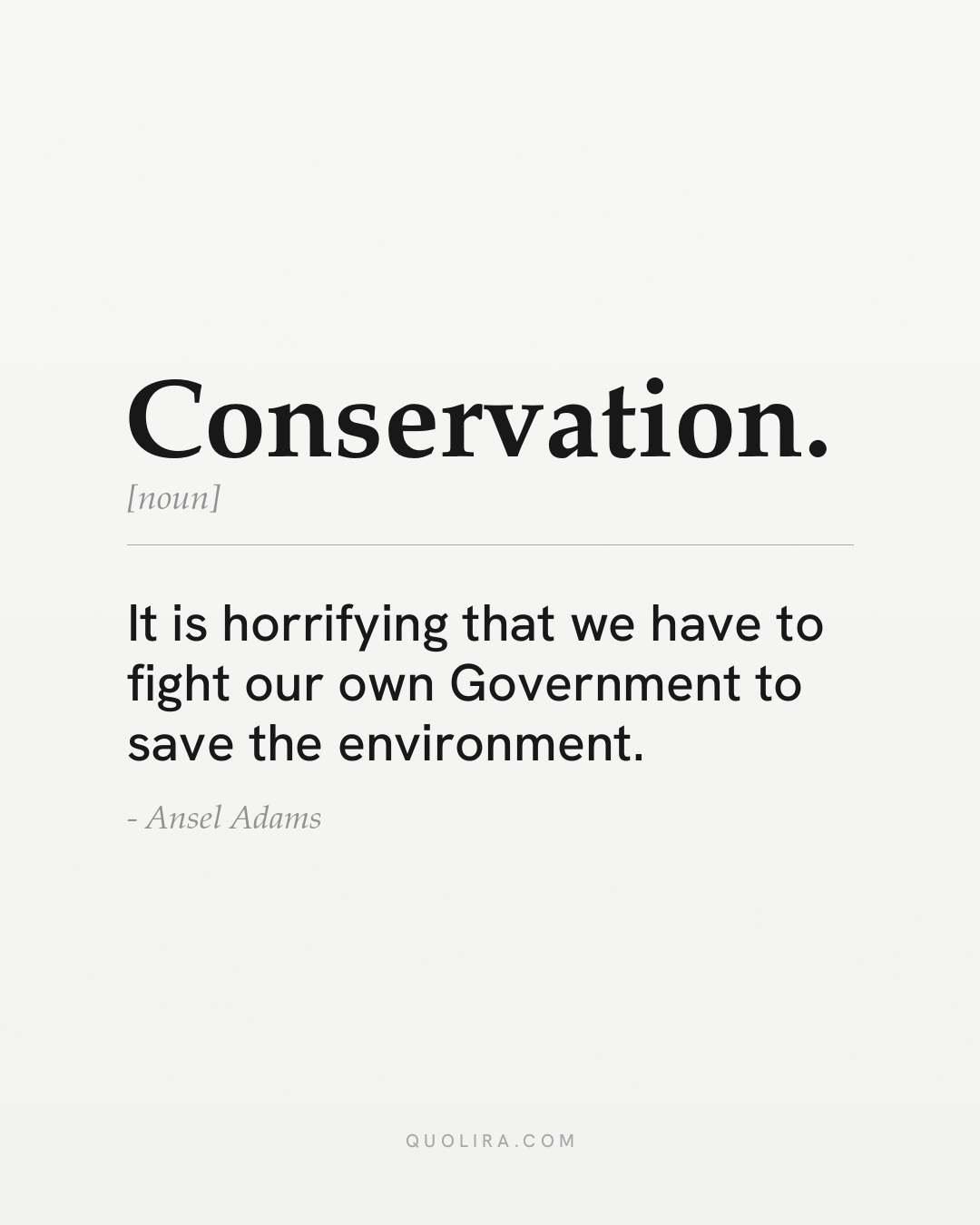
“It is horrifying that we have to fight our own Government to save the environment.”
Ansel Adams
“I eagerly await new concepts and processes. I believe that the electronic image will be the next major advance.”
Ansel Adams · The Negative (1981), introduction to second edition
“For me the future of the image is going to be in electronic form.”
Ansel Adams · Interview with Paul Hill (March 1975), published in Dialogue with Photography (1979)
“The sheer ease with which we can produce a superficial image often leads to creative disaster.”
Ansel Adams · 'A Personal Credo' (1943), published in American Annual of Photography (1944)
“The only things in my life that compatibly exist with this grand universe are the creative works of the human spirit.”
Ansel Adams · Ansel Adams: An Autobiography (1985)
“No matter how sophisticated you may be, a large granite mountain cannot be denied; it speaks in silence to the very core of your being.”
Ansel Adams · Ansel Adams: An Autobiography (1985)
“The herculean task of a photographer is to capture a momentary frame as beautiful in reality, as it would be in a dream.”
Ansel Adams · Radio interview (1972)
“A great photograph is a full expression of what one feels about what is being photographed in the deepest sense, and is, thereby, a true expression of what one feels about life in its entirety.”
Ansel Adams · 'A Personal Credo' (1943), published in American Annual of Photography (1944)