“Believe you can and you're halfway there.”
Theodore Roosevelt
 quolira
.com
quolira
quolira.com
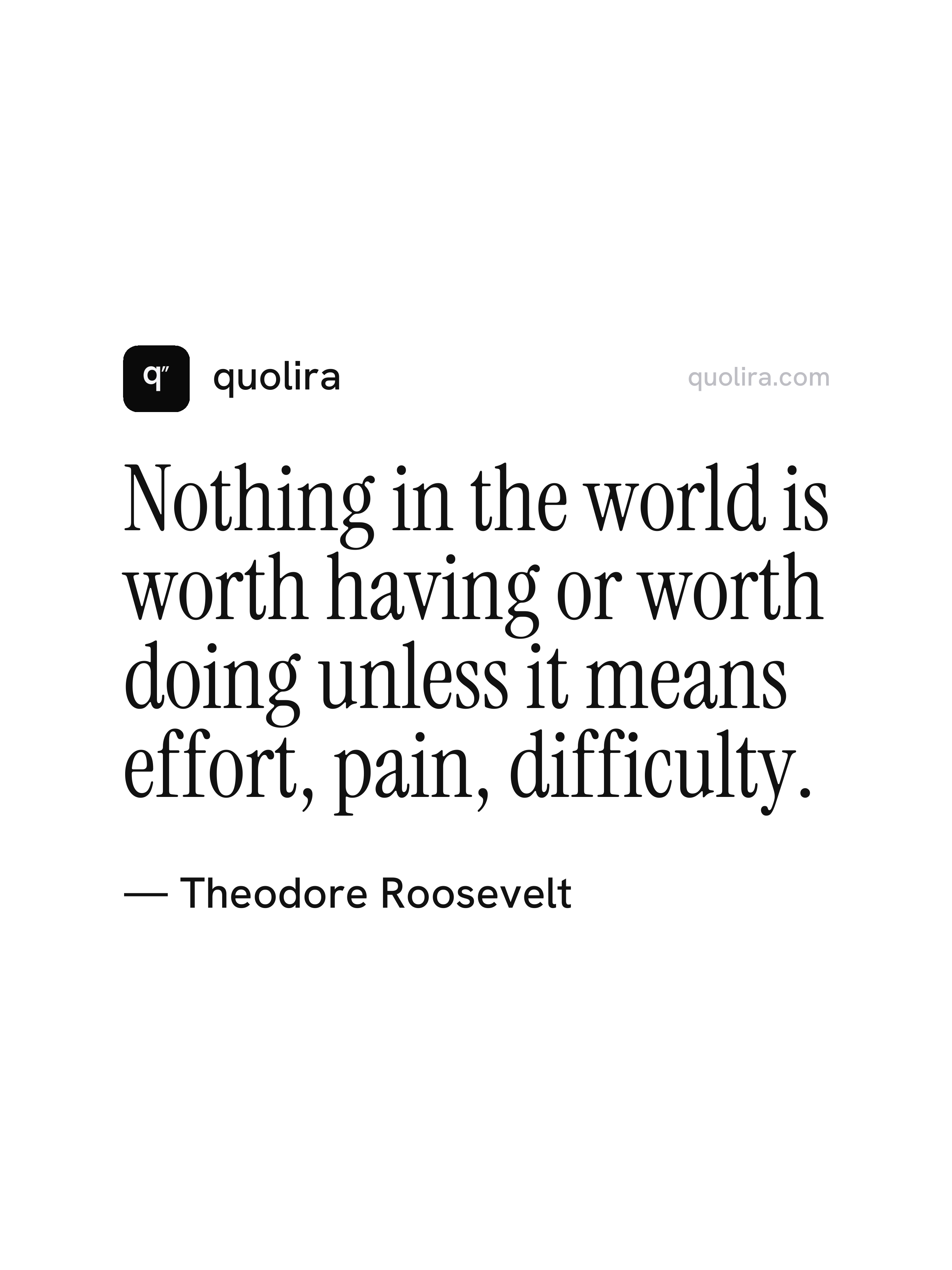
The quote makes an uncompromising case for difficulty as a prerequisite for real value. It argues that anything truly worth having or doing will necessarily involve effort, pain, or struggle. Comfort and ease, by this logic, are not marks of achievement but signs that something significant may be missing. The line challenges the common desire for reward without cost and suggests that the hardship itself is part of what makes the outcome meaningful.
Roosevelt delivered these ideas in a speech known as The Strenuous Life, given in Chicago in 1899. In that address, he argued against what he saw as a creeping preference for soft, easy living, both in individuals and in the nation as a whole. He believed that character, whether personal or national, was built through struggle and tested through difficulty. The speech was partly a response to the debates of his era about American ambition and identity, but its central argument about effort and reward has proven to extend well beyond that historical moment.
Theodore Roosevelt was the twenty-sixth president of the United States, serving in the early years of the twentieth century. Before and during his presidency he was a soldier, rancher, author, naturalist, and tireless advocate for conservation and reform. He lived the philosophy he preached, taking on physically and politically demanding challenges throughout his life. His 1899 Chicago speech became one of his best-known addresses and gave a name, the strenuous life, to the broader set of values he championed across his career.
“Believe you can and you're halfway there.”
Theodore Roosevelt
“Far and away the best prize that life offers is the chance to work hard at work worth doing.”
Theodore Roosevelt · Labor Day speech, Syracuse, 1903
“Speak softly and carry a big stick; you will go far.”
Theodore Roosevelt · Minnesota State Fair speech, 1901
“Do what you can, with what you have, where you are.”
Theodore Roosevelt · Autobiography, 1913
“It is not the critic who counts; not the man who points out how the strong man stumbles, or where the doer of deeds could have done them better. The credit belongs to the man who is actually in the arena.”
Theodore Roosevelt · Citizenship in a Republic speech, Paris, 1910
“Luk at tu!”
Minions · Despicable Me franchise
“Tank yu!”
Minions · Despicable Me franchise
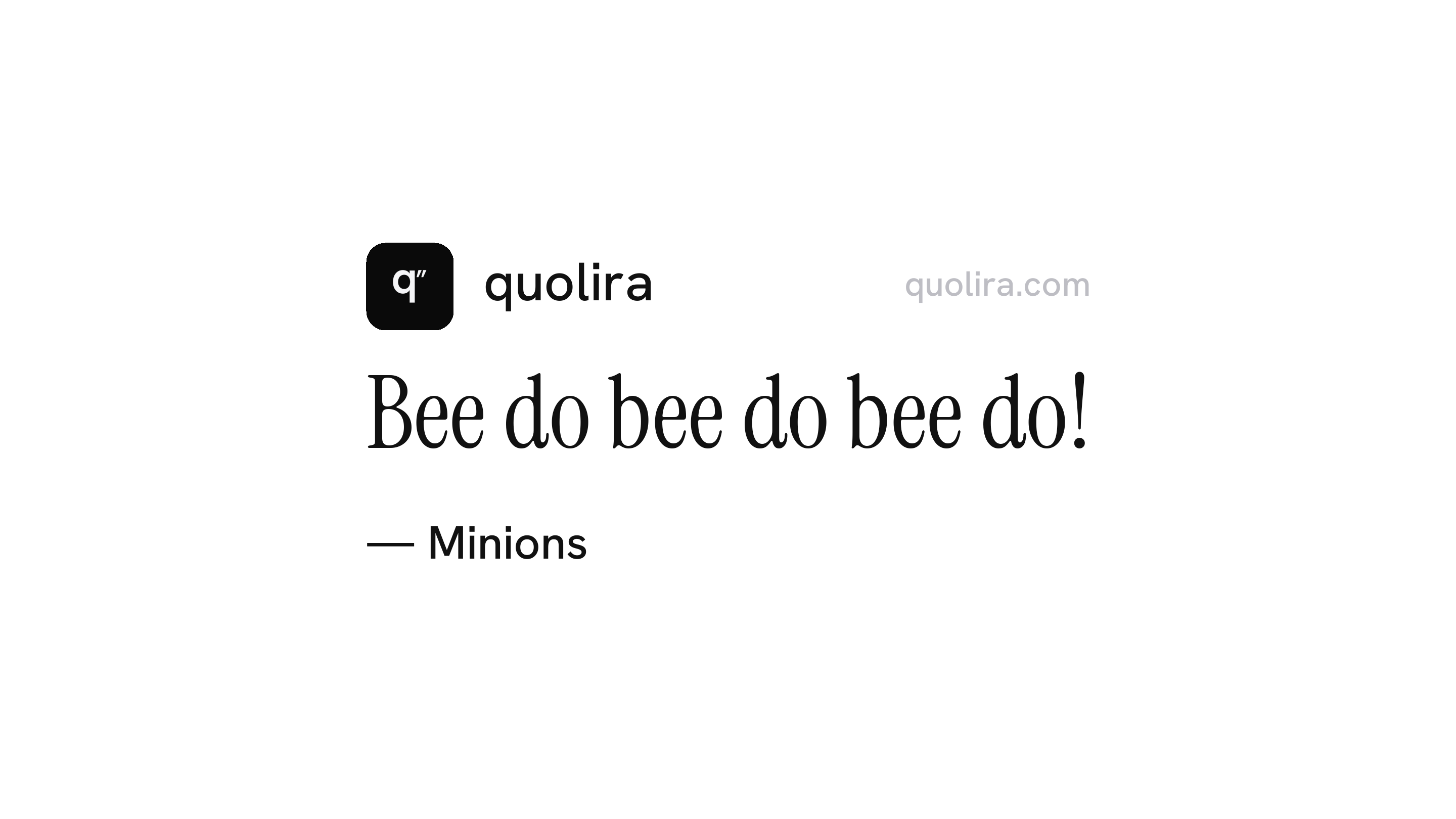
“Bee do bee do bee do!”
Minions · Despicable Me, 2010
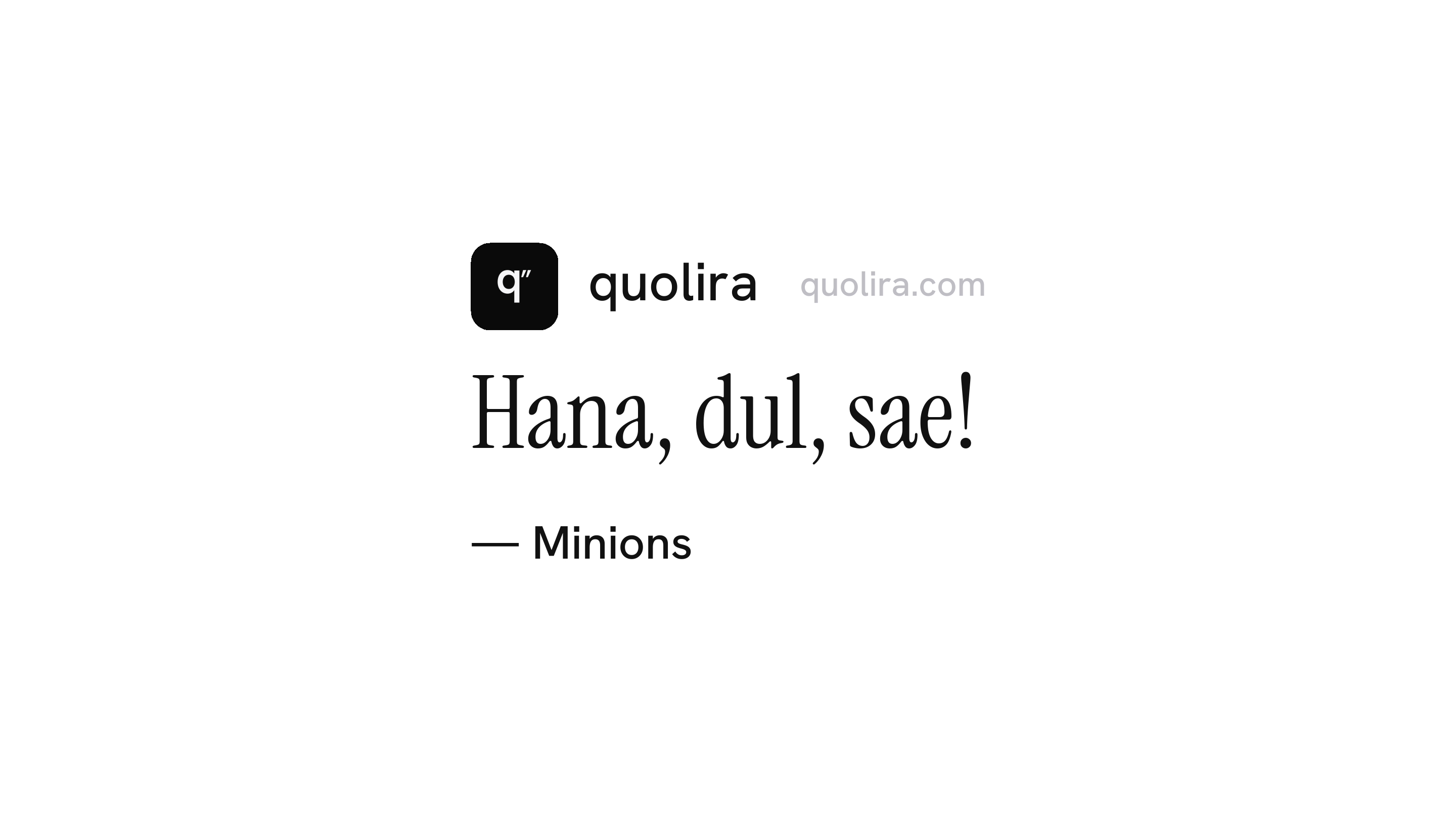
“Hana, dul, sae!”
Minions · Despicable Me franchise
“Muak muak muak!”
Minions · Despicable Me franchise
“Para tu!”
Minions · Despicable Me, 2010
“Kanpai!”
Minions · Minions franchise