Meaning
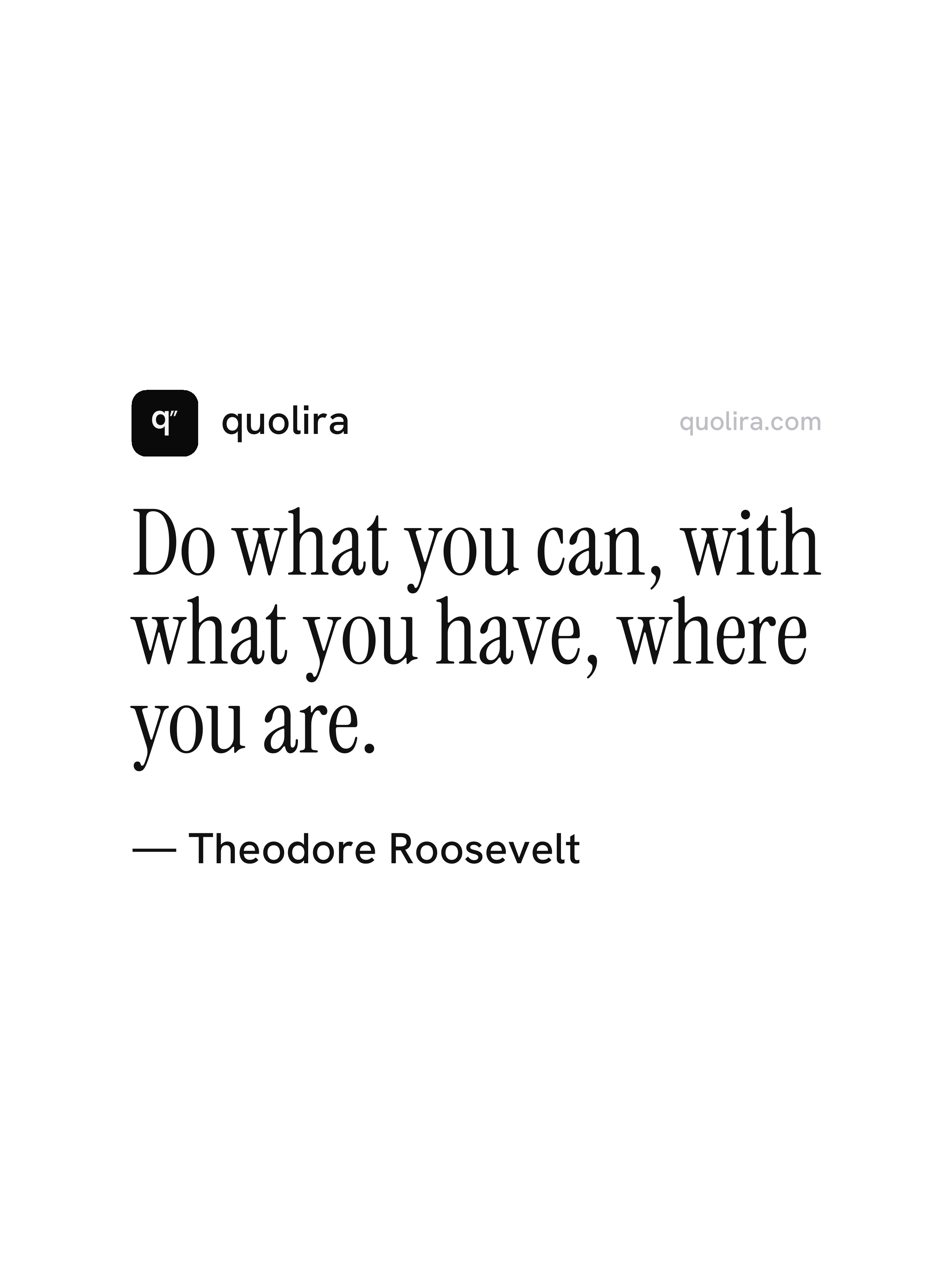
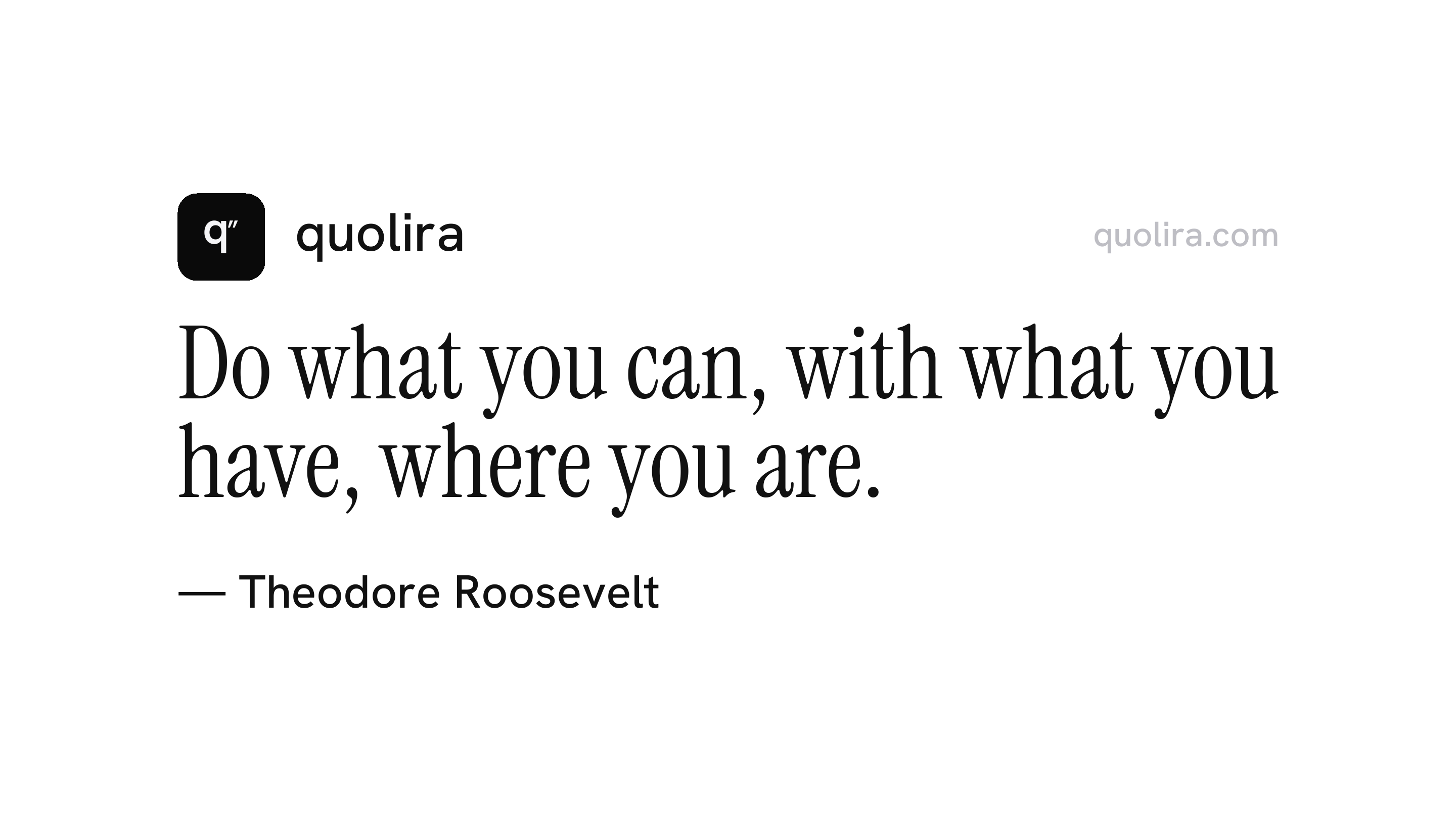
This line is a quiet but firm rejection of the excuses people commonly use to delay action: not enough resources, not the right place, not the right moment. Roosevelt is urging a kind of practical realism that refuses to wait for ideal conditions. You work with your actual circumstances, not imagined better ones, and you act where you actually are, not where you wish you were.
Context
Roosevelt included this thought in his autobiography, published in 1913 after he had left the presidency and lived through an extraordinary variety of experiences. Writing in that reflective mode, he was drawing on decades of personal history in which he had repeatedly faced difficult conditions and chosen action over paralysis. The line sits within a body of writing that consistently values effort, adaptability, and forward movement. It has since traveled far beyond its original context and is now quoted in conversations about leadership, resilience, and personal motivation.
About the author
Theodore Roosevelt served as the twenty-sixth president of the United States and was one of the most written-about and writing-prone figures in American political history. His autobiography is one of several dozen books he produced over his lifetime, covering an unusually wide range of subjects. He was known for approaching hardship directly, having spent time ranching in the Dakota Territory after personal tragedies, serving in combat, and undertaking a difficult expedition through South America in his later years. His advice on action carried the weight of a life visibly lived by it.