“Nothing is enough for the man to whom enough is too little.”
Epicurus · Vatican Sayings
 quolira
.com
quolira
quolira.com
This line reframes a frustrating experience that many people have when working toward a goal. When progress seems invisible for a stretch of time, it is tempting to read that stillness as failure or evidence that the effort is wasted. The quote pushes back on that reading. It suggests that the flat period is not emptiness but preparation, a kind of invisible accumulation happening beneath the surface before results become visible. The work is still doing something, even when you cannot see it.
The feeling of putting in effort and seeing nothing change is one of the most discouraging parts of any long pursuit. Whether someone is learning a skill, building a business, improving their health, or working through a creative process, there are almost always stretches where nothing seems to move. This line speaks directly to that experience and offers a mental model that makes the flat part bearable. Framing stagnation as loading rather than stalling changes the emotional relationship a person has with their own patience.
Keep this quote close during the middle stages of any goal, the period after the excitement of starting and before the satisfaction of arriving. It is especially useful when self-doubt creeps in and the temptation to quit feels reasonable. You can also use it to encourage someone else who is grinding through a difficult stretch. The core message is simple and grounding: trust the process, stay consistent, and understand that unseen progress is still progress.
“Nothing is enough for the man to whom enough is too little.”
Epicurus · Vatican Sayings
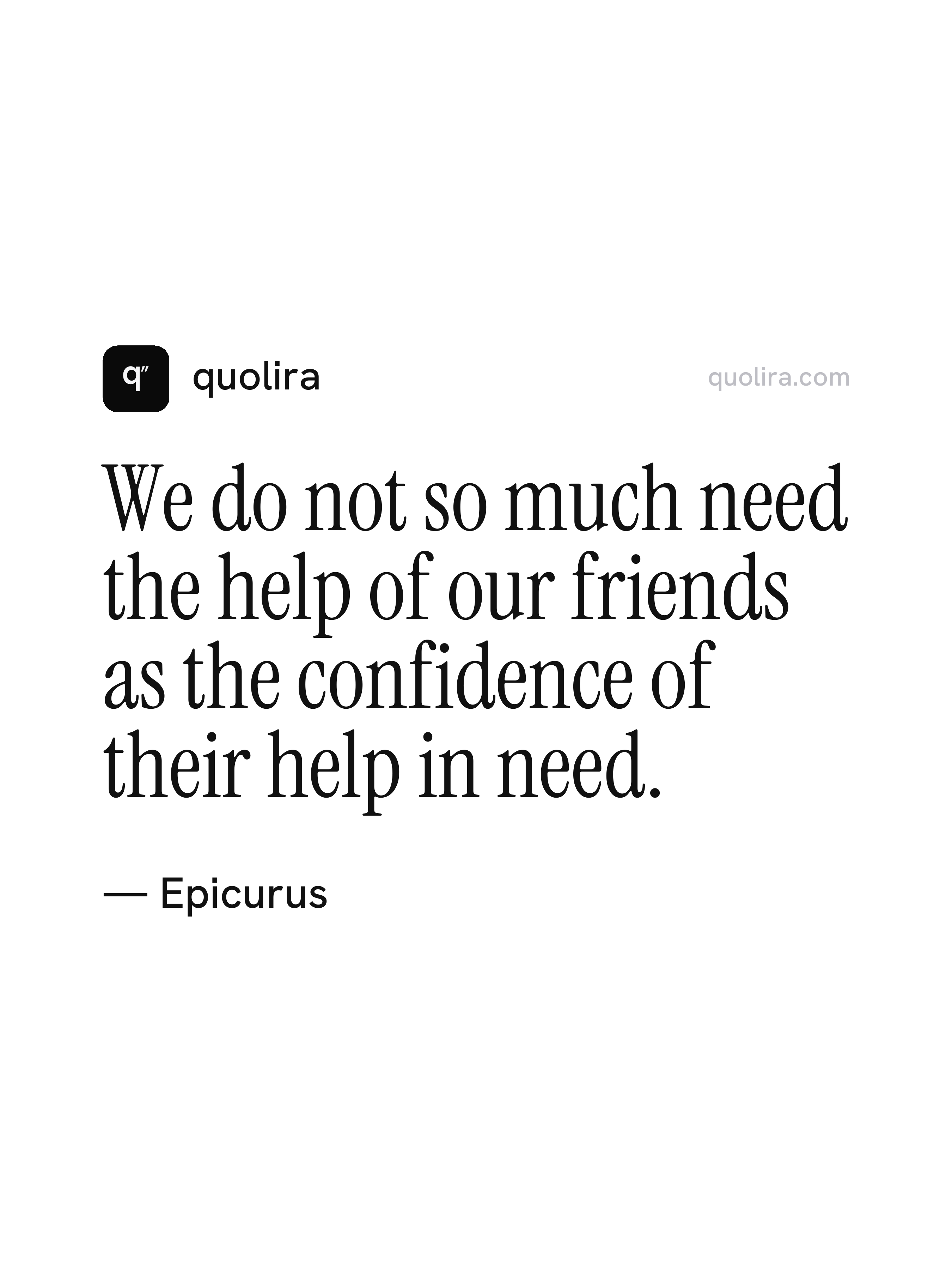
“We do not so much need the help of our friends as the confidence of their help in need.”
Epicurus · Vatican Sayings
“The wise man who has become accustomed to necessities knows better how to share with others than how to take from them.”
Epicurus · Vatican Sayings
“If thou wilt make a man happy, add not unto his riches but take away from his desires.”
Epicurus
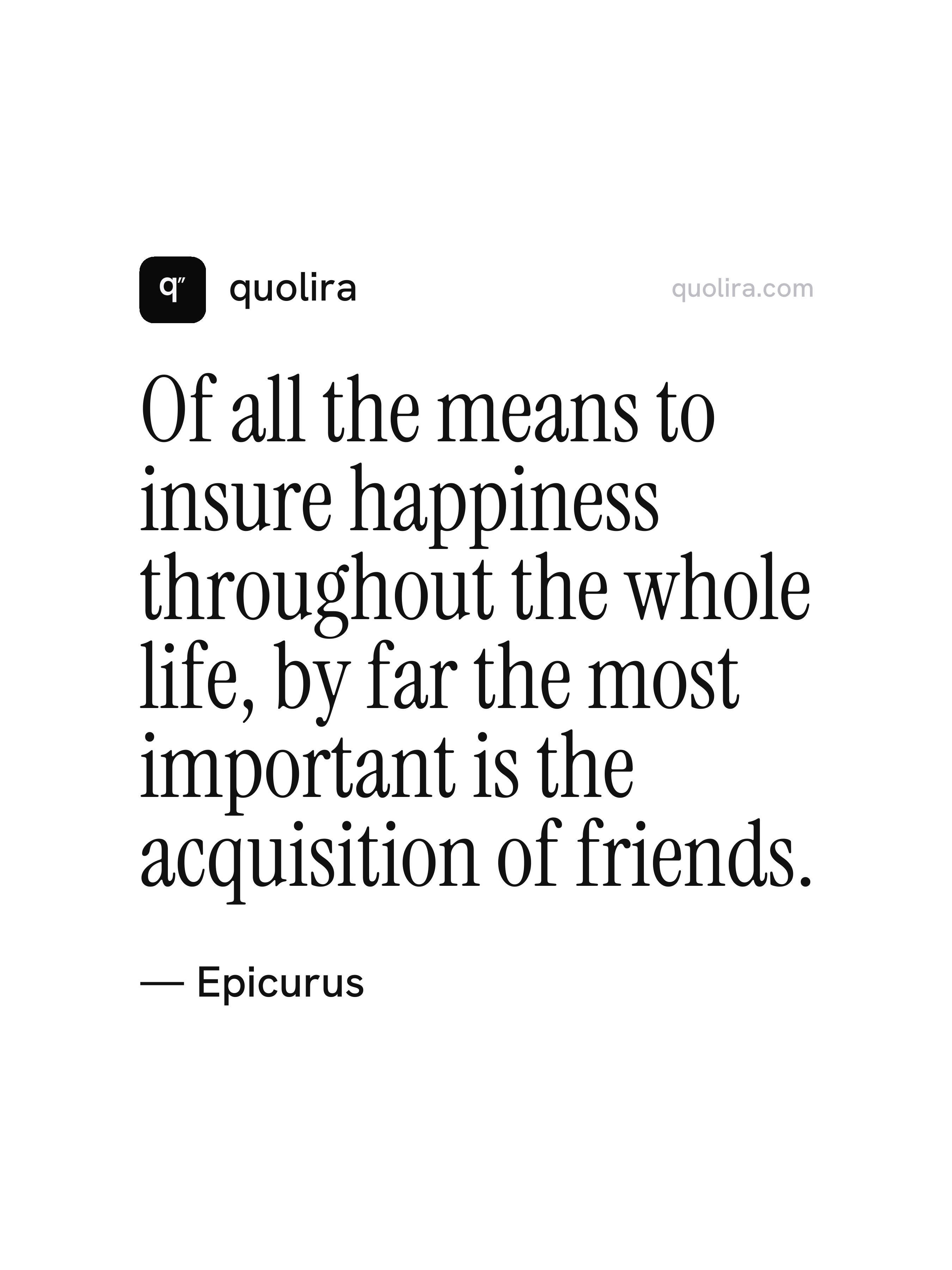
“Of all the means to insure happiness throughout the whole life, by far the most important is the acquisition of friends.”
Epicurus · Principal Doctrines
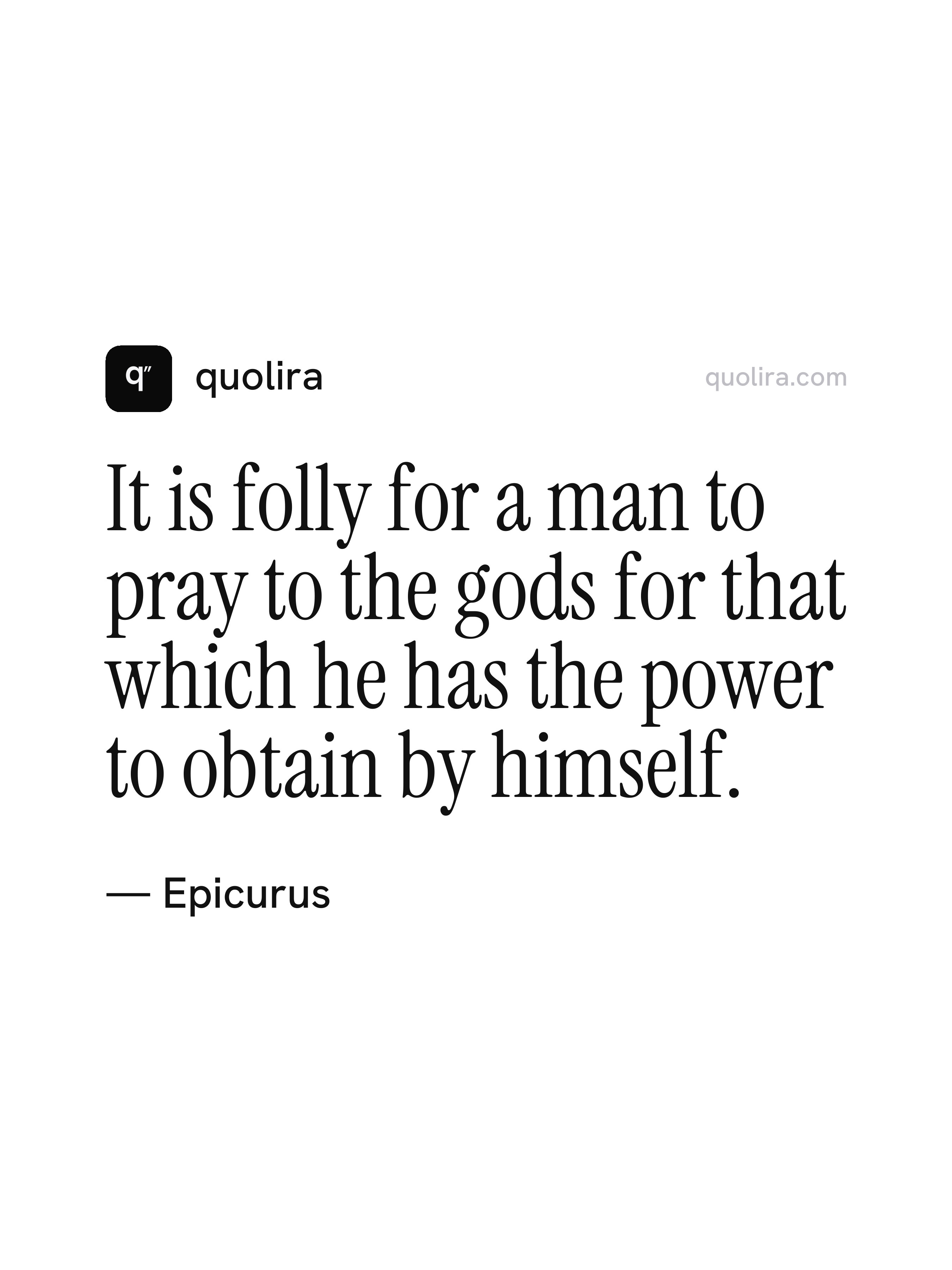
“It is folly for a man to pray to the gods for that which he has the power to obtain by himself.”
Epicurus · Vatican Sayings
“Is a man unhappy because of exile? Then set before me one who is content in exile.”
Epicurus
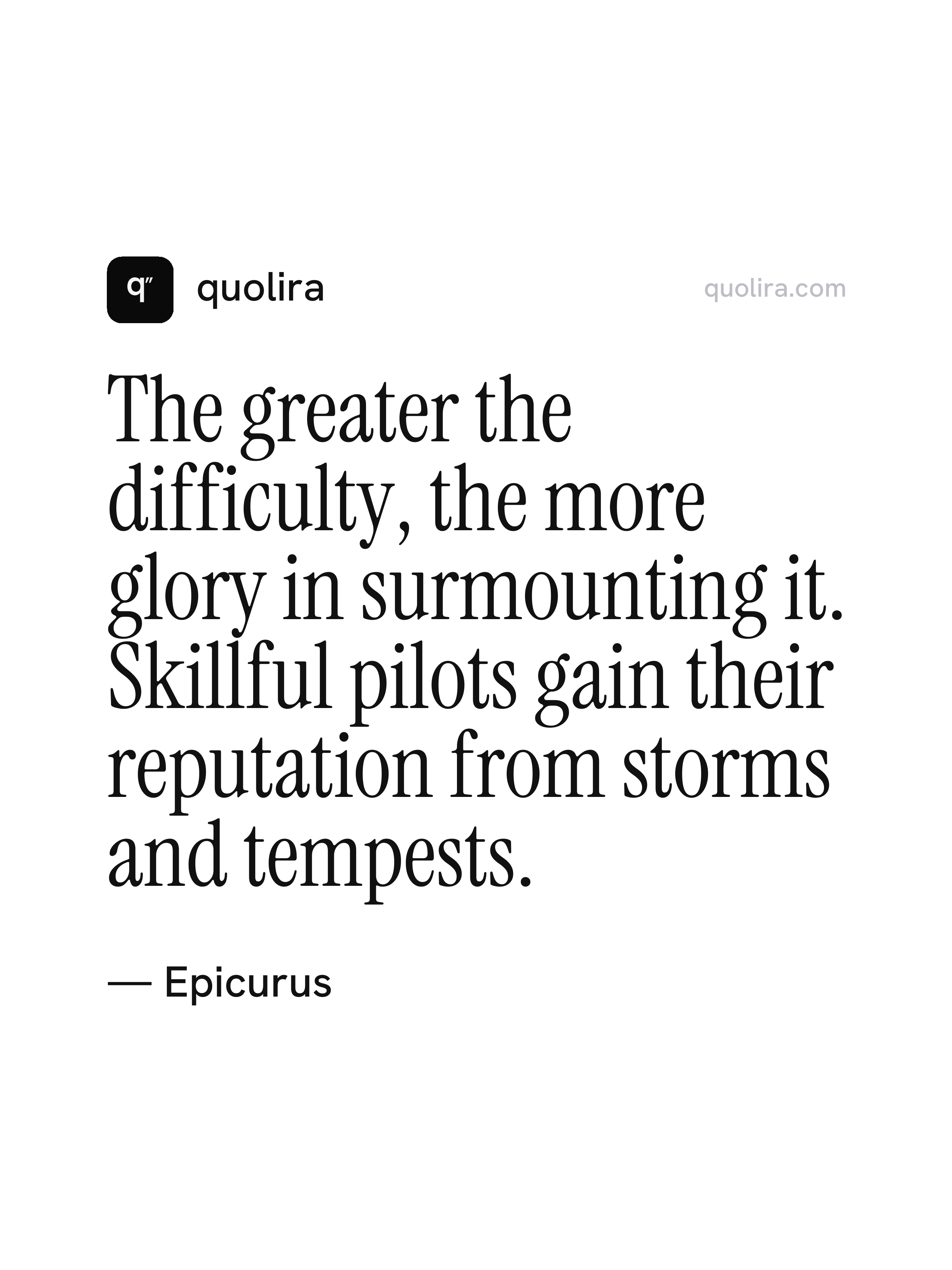
“The greater the difficulty, the more glory in surmounting it. Skillful pilots gain their reputation from storms and tempests.”
Epicurus
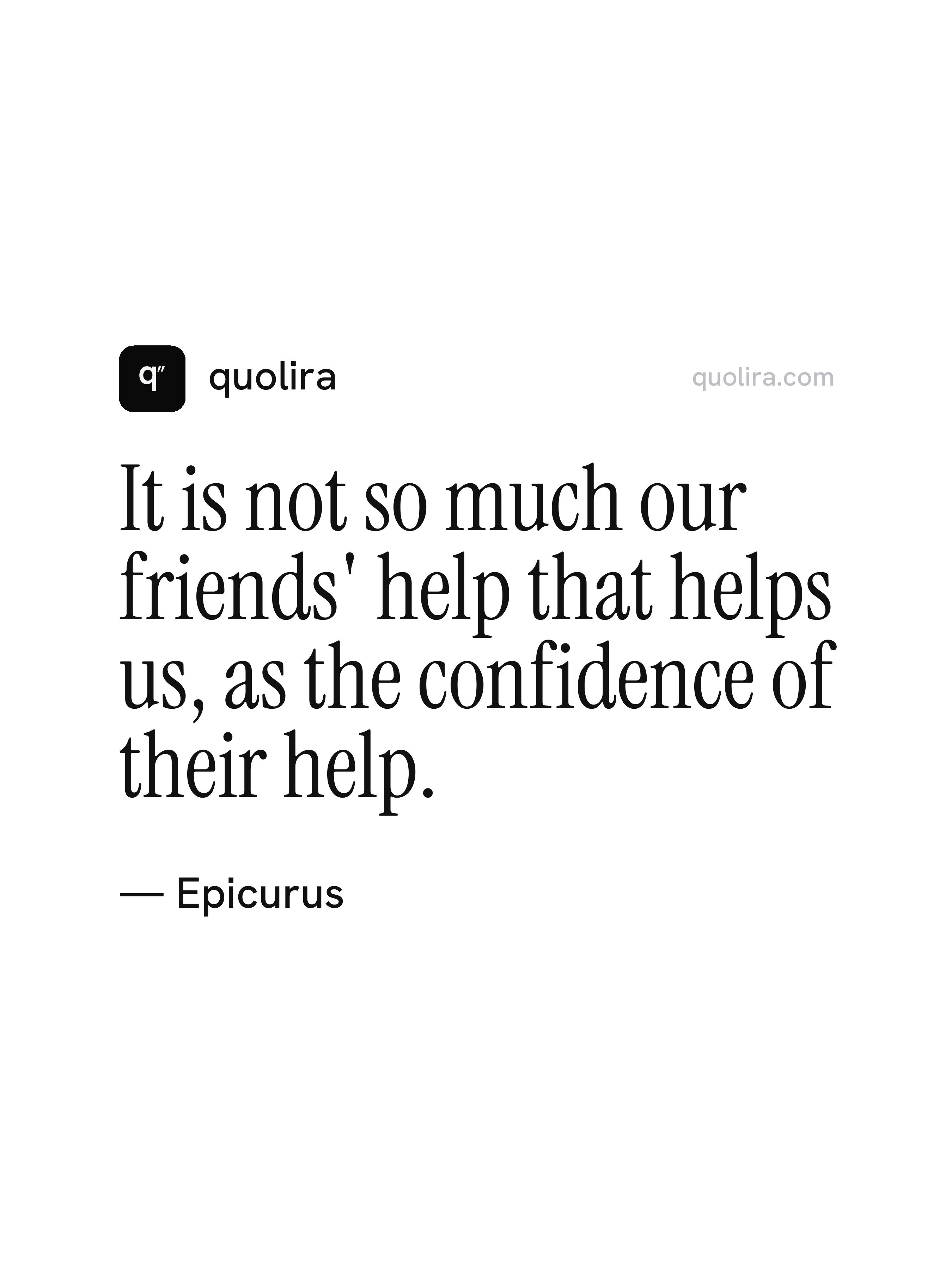
“It is not so much our friends' help that helps us, as the confidence of their help.”
Epicurus · Vatican Sayings
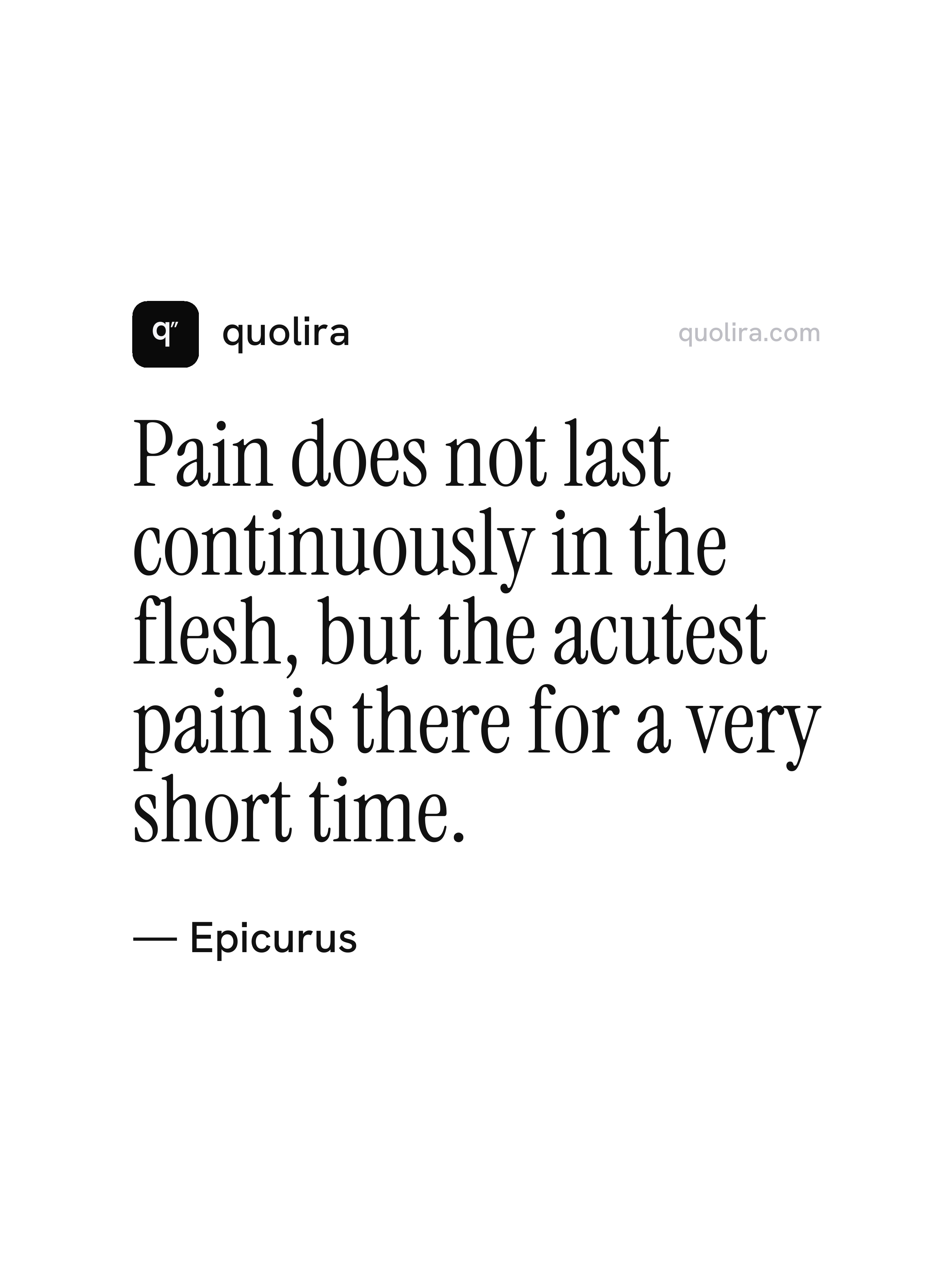
“Pain does not last continuously in the flesh, but the acutest pain is there for a very short time.”
Epicurus · Principal Doctrines
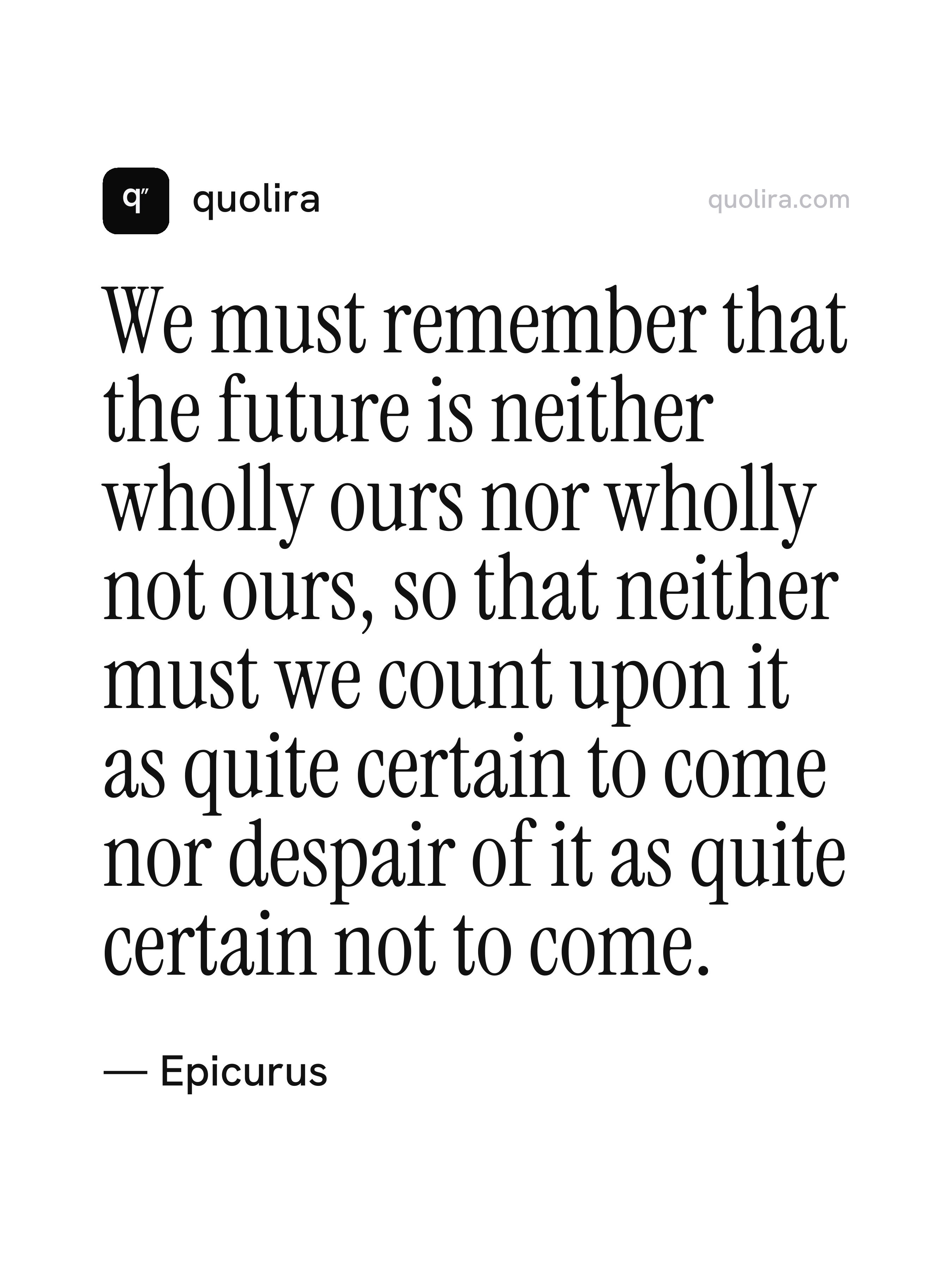
“We must remember that the future is neither wholly ours nor wholly not ours, so that neither must we count upon it as quite certain to come nor despair of it as quite certain not to come.”
Epicurus · Letter to Menoeceus
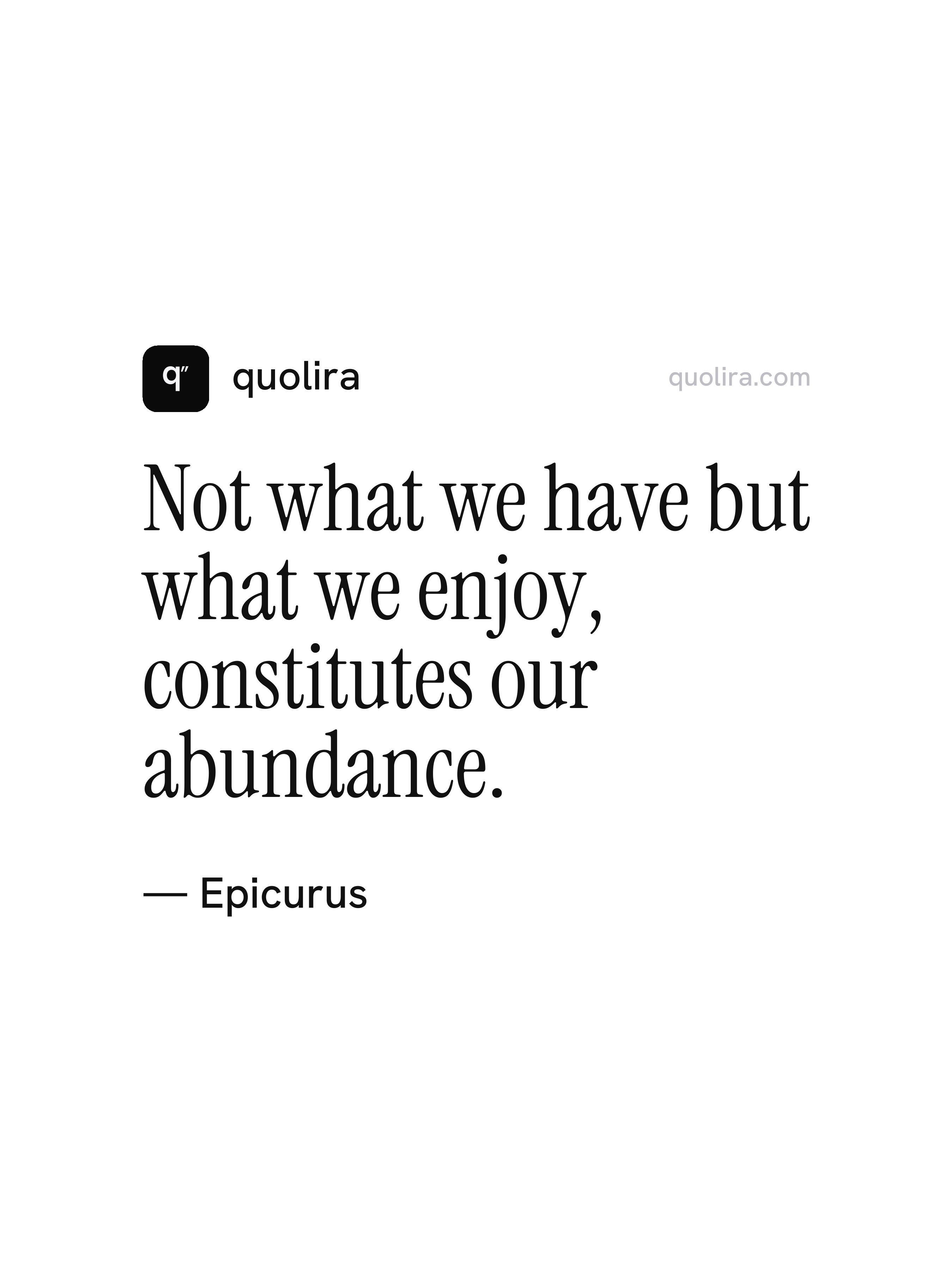
“Not what we have but what we enjoy, constitutes our abundance.”
Epicurus