“The greater the difficulty, the more glory in surmounting it. Skillful pilots gain their reputation from storms and tempests.”
Epicurus
 quolira
.com
quolira
quolira.com
Epicurus here uses a quiet rhetorical challenge to reframe how we think about exile and hardship. The question is not really about geography; it is about the relationship between external circumstances and inner contentment. By asking the reader to produce an example of someone truly at peace in exile, he implies that such people do exist, and that the difficulty lies not in the situation itself but in how the mind relates to it. Misery, in this view, is a choice of perspective rather than an inevitable consequence of circumstance.
This saying reflects the Epicurean conviction that the mind's disposition matters far more than the conditions of one's life. Epicurus and his followers lived through periods of political instability in the ancient Greek world, and exile was a real and feared punishment of the era. The philosopher himself reportedly spent periods away from his homeland and wrote about finding contentment in simple, inward-directed living. His broader philosophy held that peace of mind, not external comfort or status, was the true measure of a good life.
Epicurus was an ancient Greek philosopher born around 341 BCE, traditionally said to have died around 270 BCE. He established a philosophical school in Athens called the Garden, which was notably open to people of varying social standings. His teachings focused on friendship, moderate pleasure, and the cultivation of an untroubled mind as the path to genuine happiness. His work survives mainly through summaries and letters preserved by later writers, yet his ideas have continued to influence philosophical and popular thinking for centuries.
“The greater the difficulty, the more glory in surmounting it. Skillful pilots gain their reputation from storms and tempests.”
Epicurus
“It is not so much our friends' help that helps us, as the confidence of their help.”
Epicurus · Vatican Sayings
“Pain does not last continuously in the flesh, but the acutest pain is there for a very short time.”
Epicurus · Principal Doctrines
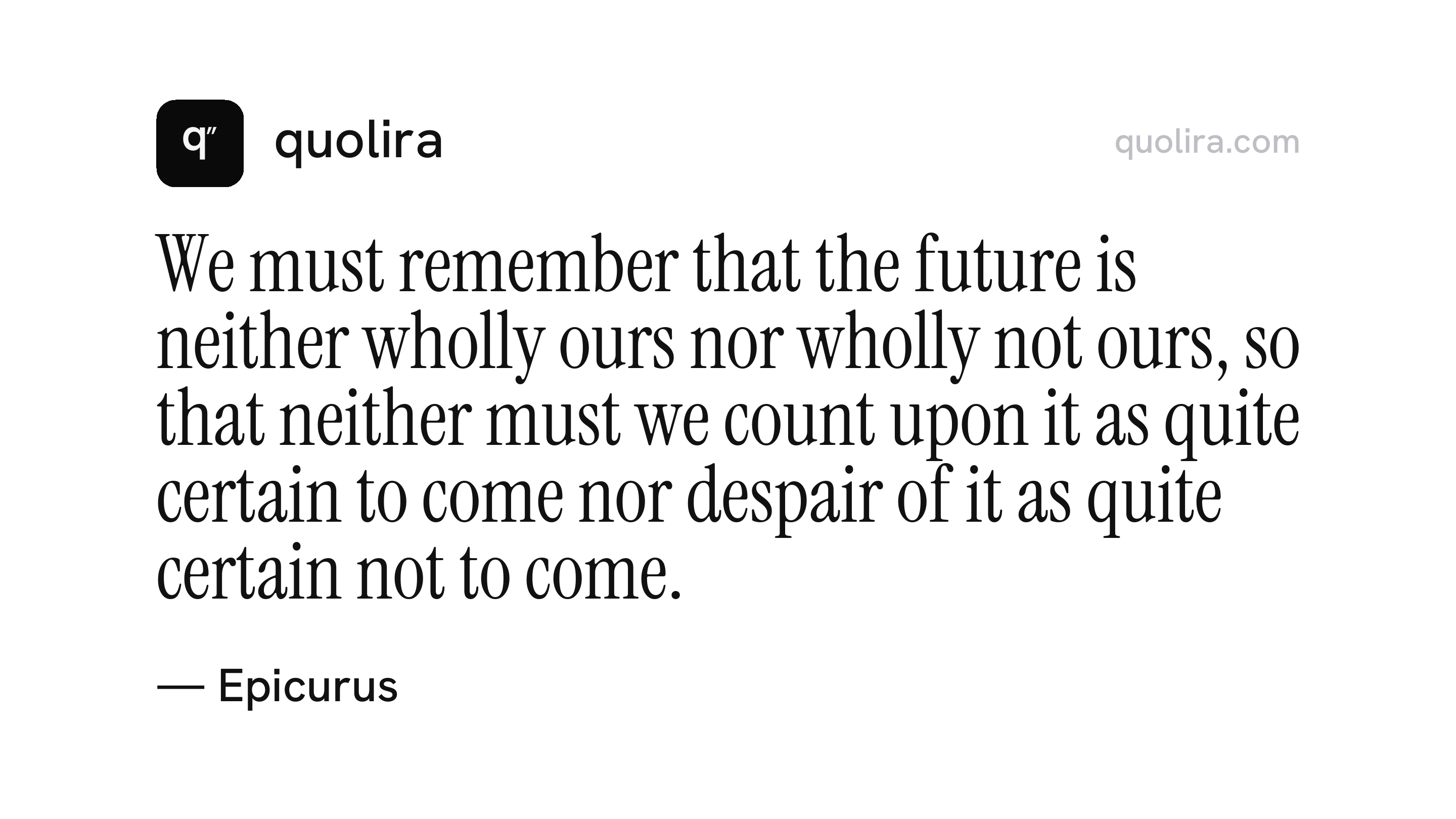
“We must remember that the future is neither wholly ours nor wholly not ours, so that neither must we count upon it as quite certain to come nor despair of it as quite certain not to come.”
Epicurus · Letter to Menoeceus
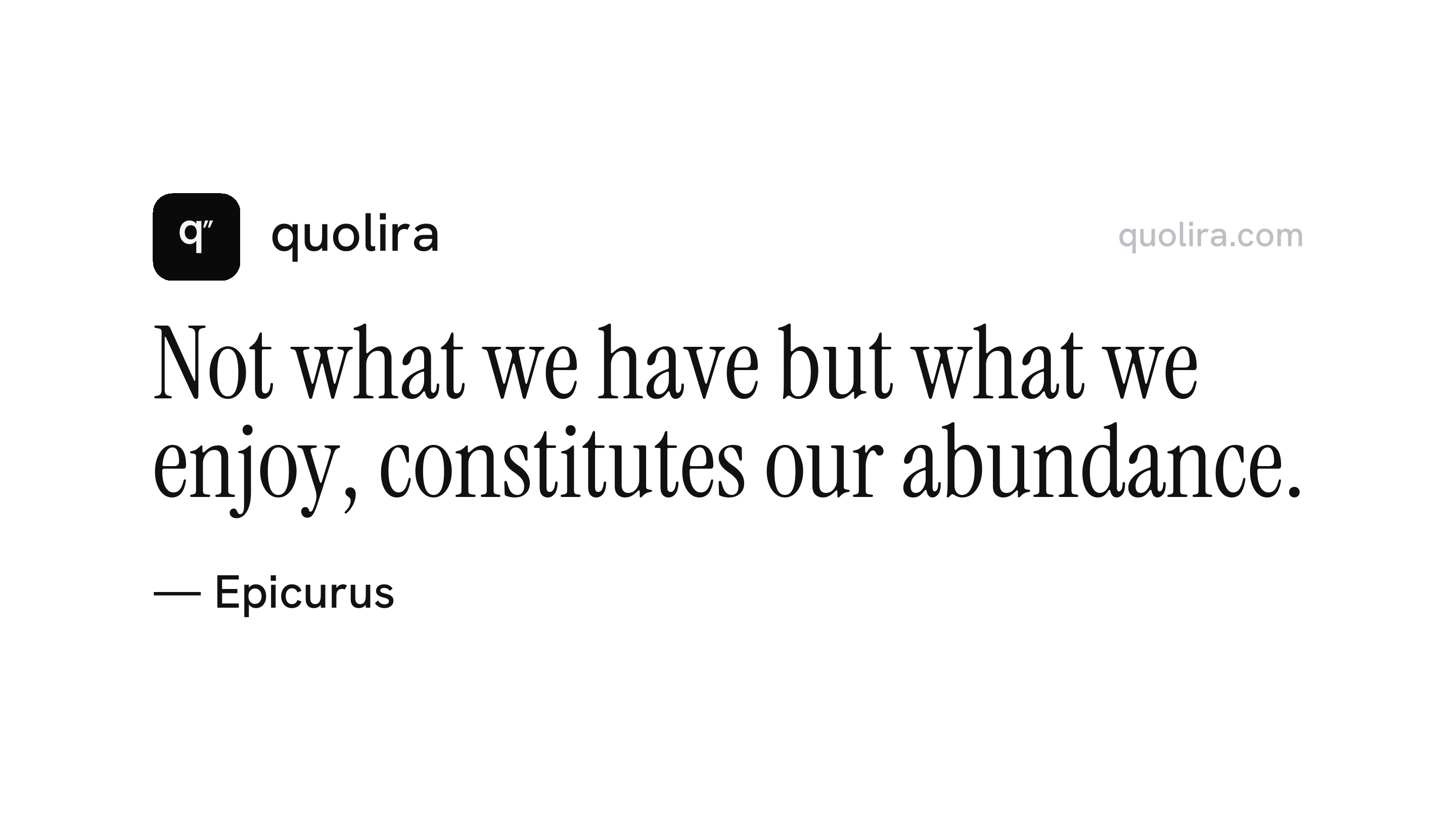
“Not what we have but what we enjoy, constitutes our abundance.”
Epicurus
“He who is not satisfied with a little, is satisfied with nothing.”
Epicurus · Vatican Sayings
“Do not spoil what you have by desiring what you have not; remember that what you now have was once among the things you only hoped for.”
Epicurus
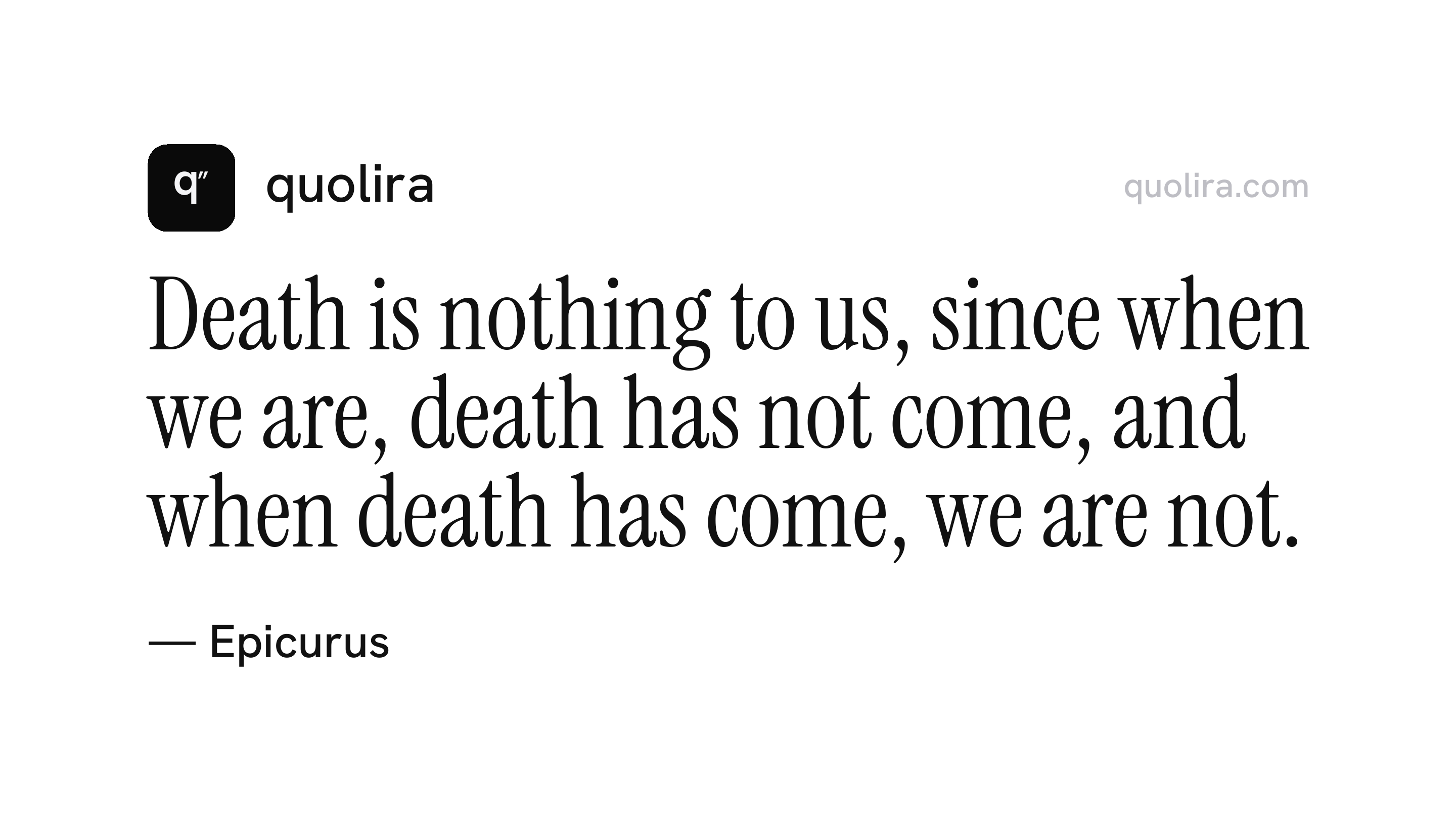
“Death is nothing to us, since when we are, death has not come, and when death has come, we are not.”
Epicurus · Letter to Menoeceus
“Enlightenment ideals are timeless, but their realization at any moment is the strenuous achievement of nations.”
Steven Pinker · Enlightenment Now, 2018
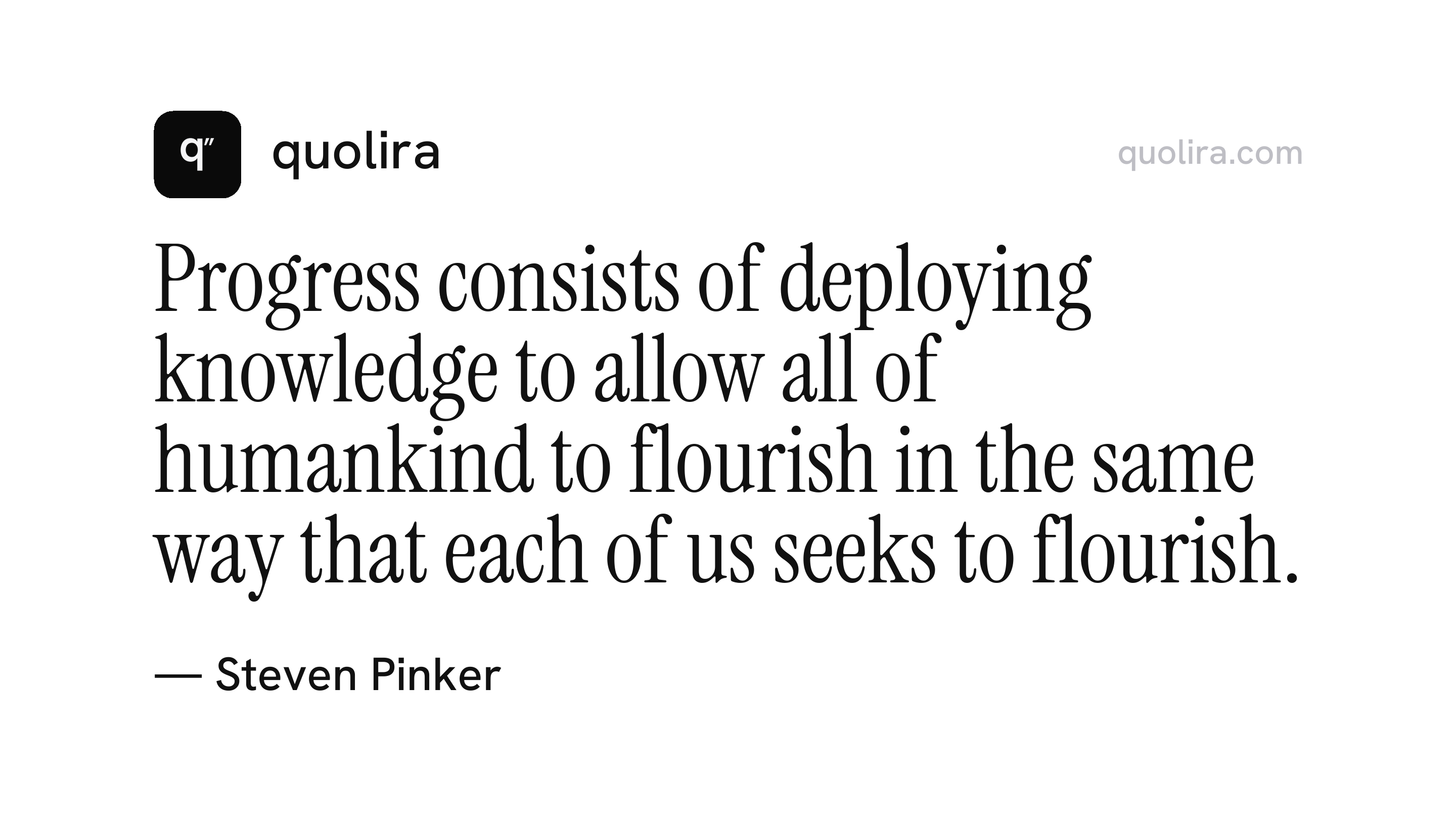
“Progress consists of deploying knowledge to allow all of humankind to flourish in the same way that each of us seeks to flourish.”
Steven Pinker · Enlightenment Now, 2018
“Pessimism is so reflexively expected of an intellectual that the way to flaunt your sophistication is to wear a long face.”
Steven Pinker · Enlightenment Now, 2018
“Knowledge is growing exponentially; knowledge needed to fend off our problems is growing faster than the problems.”
Steven Pinker · Enlightenment Now, 2018