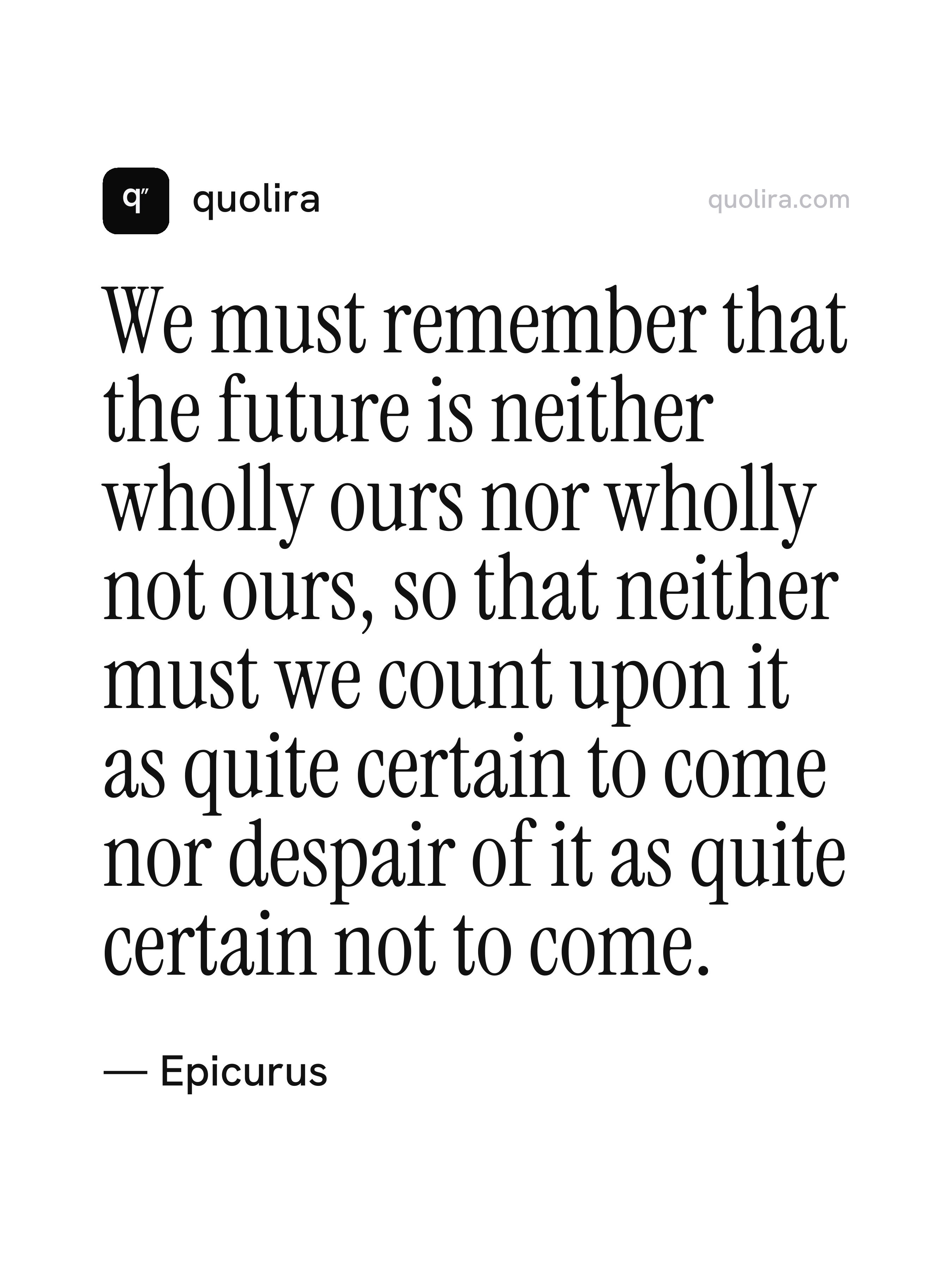
“We must remember that the future is neither wholly ours nor wholly not ours, so that neither must we count upon it as quite certain to come nor despair of it as quite certain not to come.”
Epicurus · Letter to Menoeceus
 quolira
.com
quolira
quolira.com
This saying offers a practical form of consolation about physical suffering. Epicurus is pointing out that the most intense pain a person can experience tends to be brief, while pain that persists over a longer period tends to be less overwhelming in its severity. The observation is meant to give the mind something to hold onto during suffering: the acute phase will pass, and what lingers is more endurable than it might first appear. It is a rational argument for hope and composure in the face of illness or injury.
This statement comes from the Principal Doctrines, one of the most important surviving records of Epicurean philosophy, preserved by the ancient biographer Diogenes Laertius. Epicurus reportedly suffered from significant physical ailments throughout his life and is said to have written about finding contentment despite them. His philosophy treated the management of pain as a serious subject, arguing that understanding the nature of pain could reduce its power over the mind. This doctrine is part of a broader effort in his system to show that a good life is possible even under difficult physical conditions.
Epicurus was an ancient Greek philosopher who lived from roughly 341 to 270 BCE. He founded a philosophical school in Athens, the Garden, and produced a large body of writing, most of which survives only in fragments or summaries. His philosophy is best known for its focus on pleasure and tranquility, but it also engaged seriously with questions of pain, fear, and mortality. His ideas have had a lasting influence on Western ethics and continue to attract readers looking for a grounded, practical approach to human happiness.
“We must remember that the future is neither wholly ours nor wholly not ours, so that neither must we count upon it as quite certain to come nor despair of it as quite certain not to come.”
Epicurus · Letter to Menoeceus
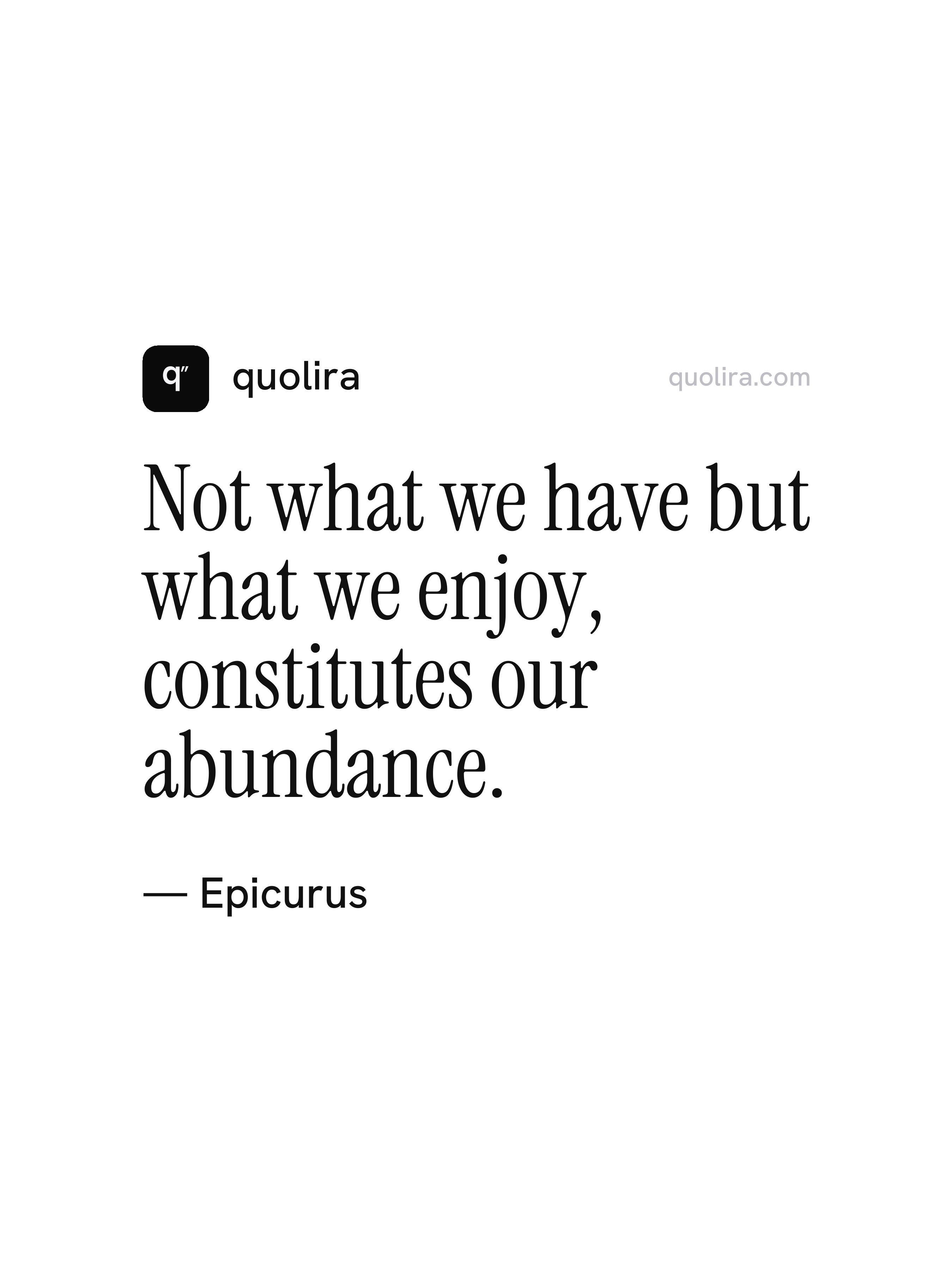
“Not what we have but what we enjoy, constitutes our abundance.”
Epicurus
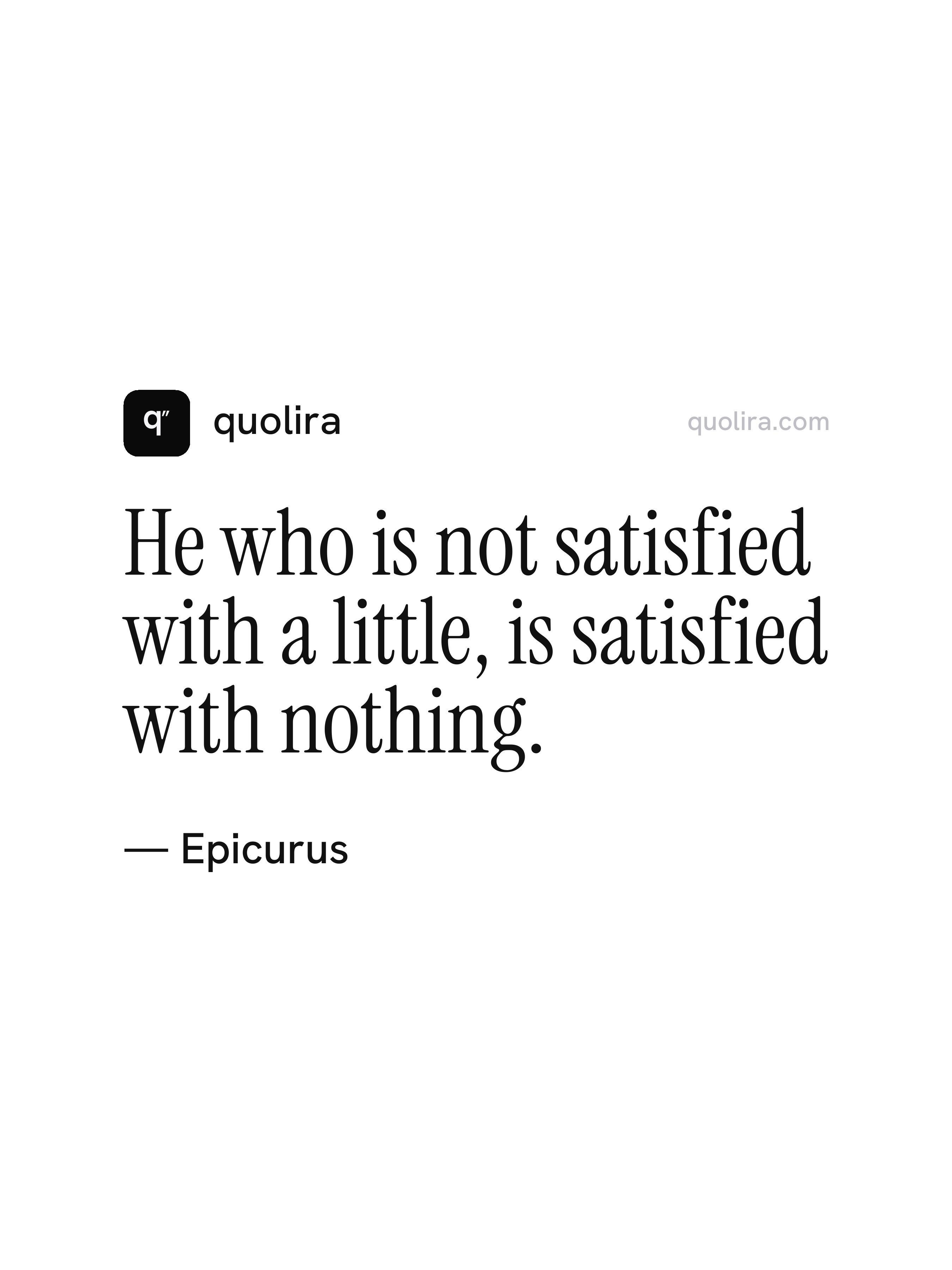
“He who is not satisfied with a little, is satisfied with nothing.”
Epicurus · Vatican Sayings
“Do not spoil what you have by desiring what you have not; remember that what you now have was once among the things you only hoped for.”
Epicurus
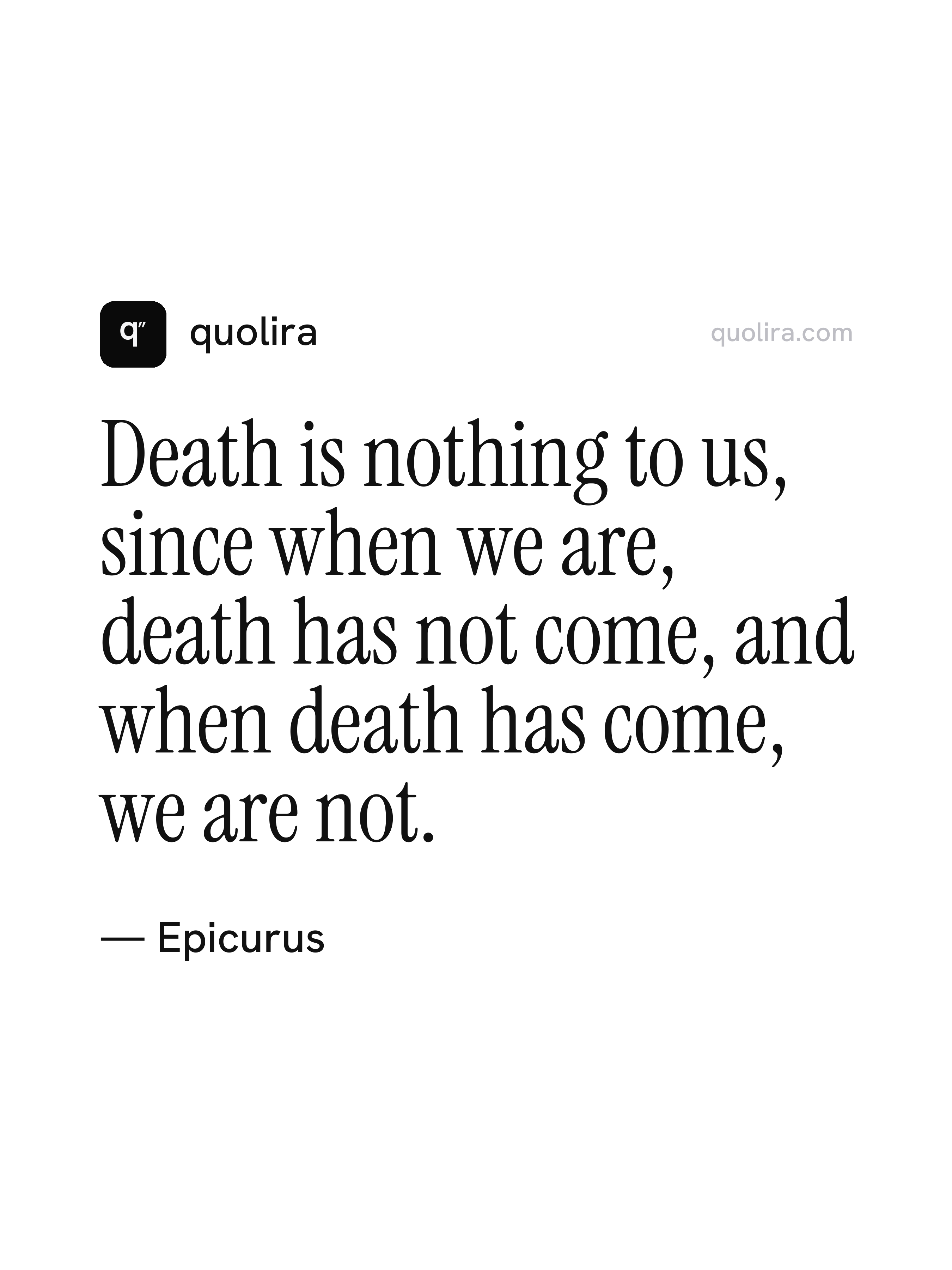
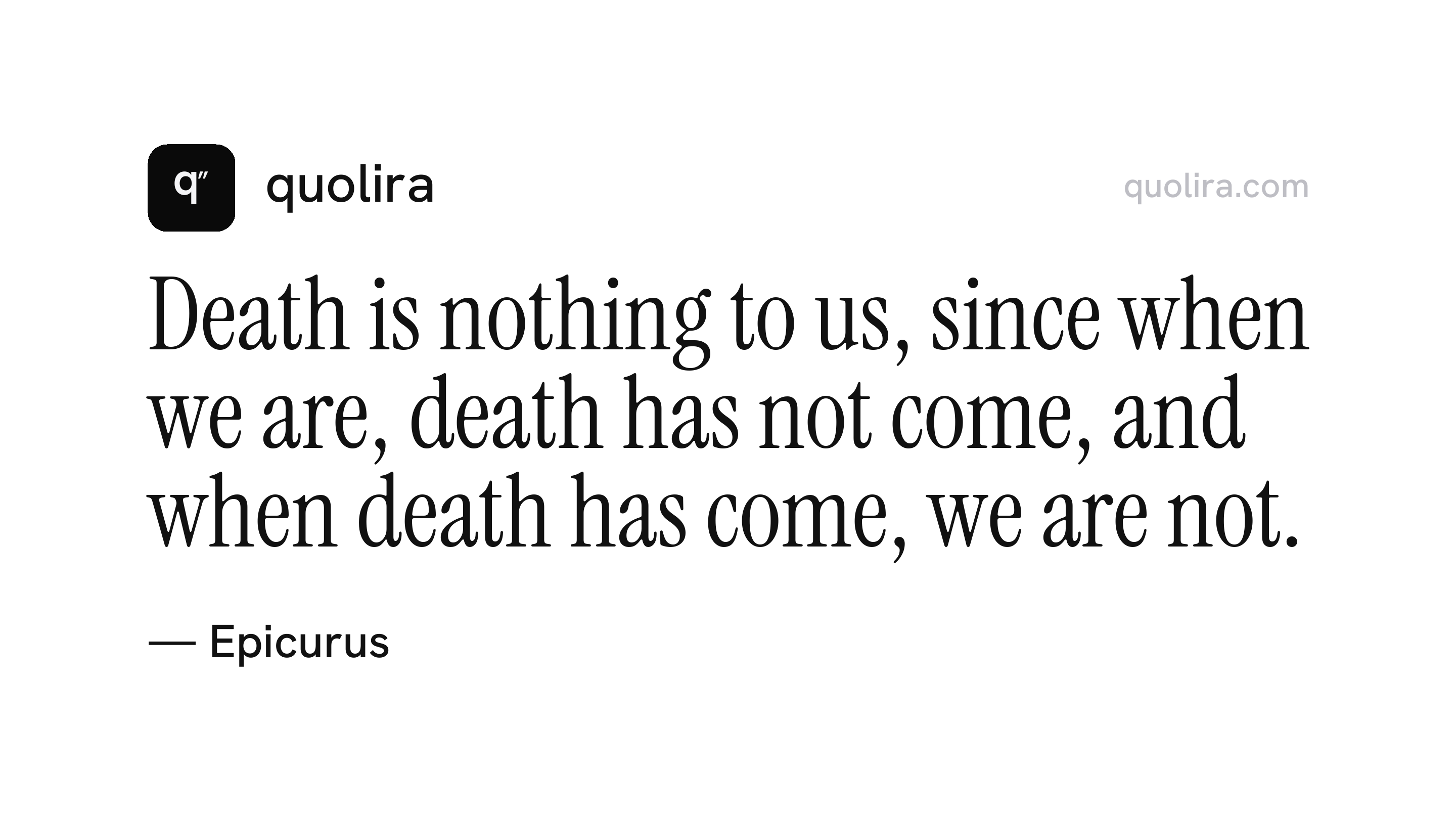
“Death is nothing to us, since when we are, death has not come, and when death has come, we are not.”
Epicurus · Letter to Menoeceus
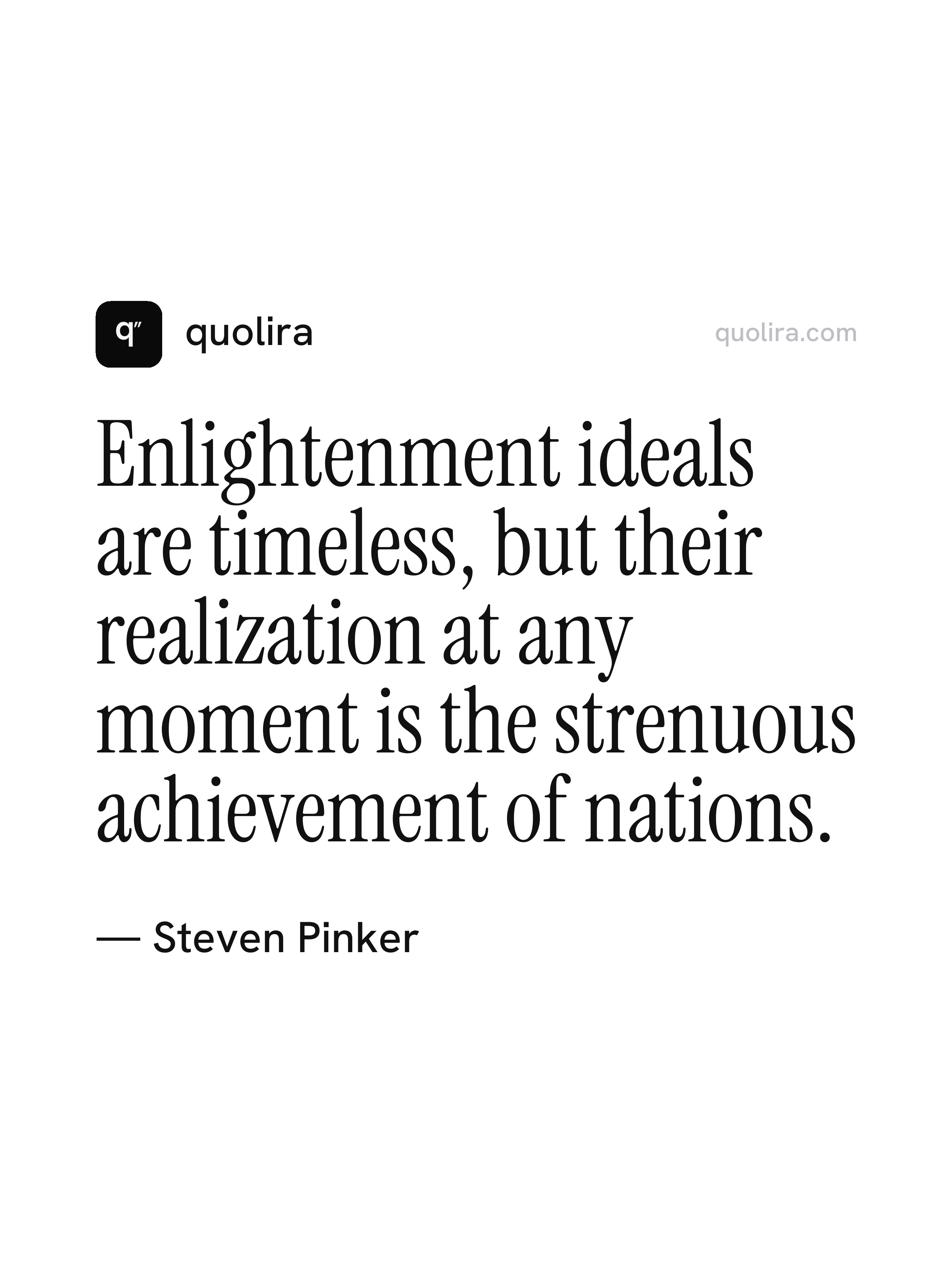
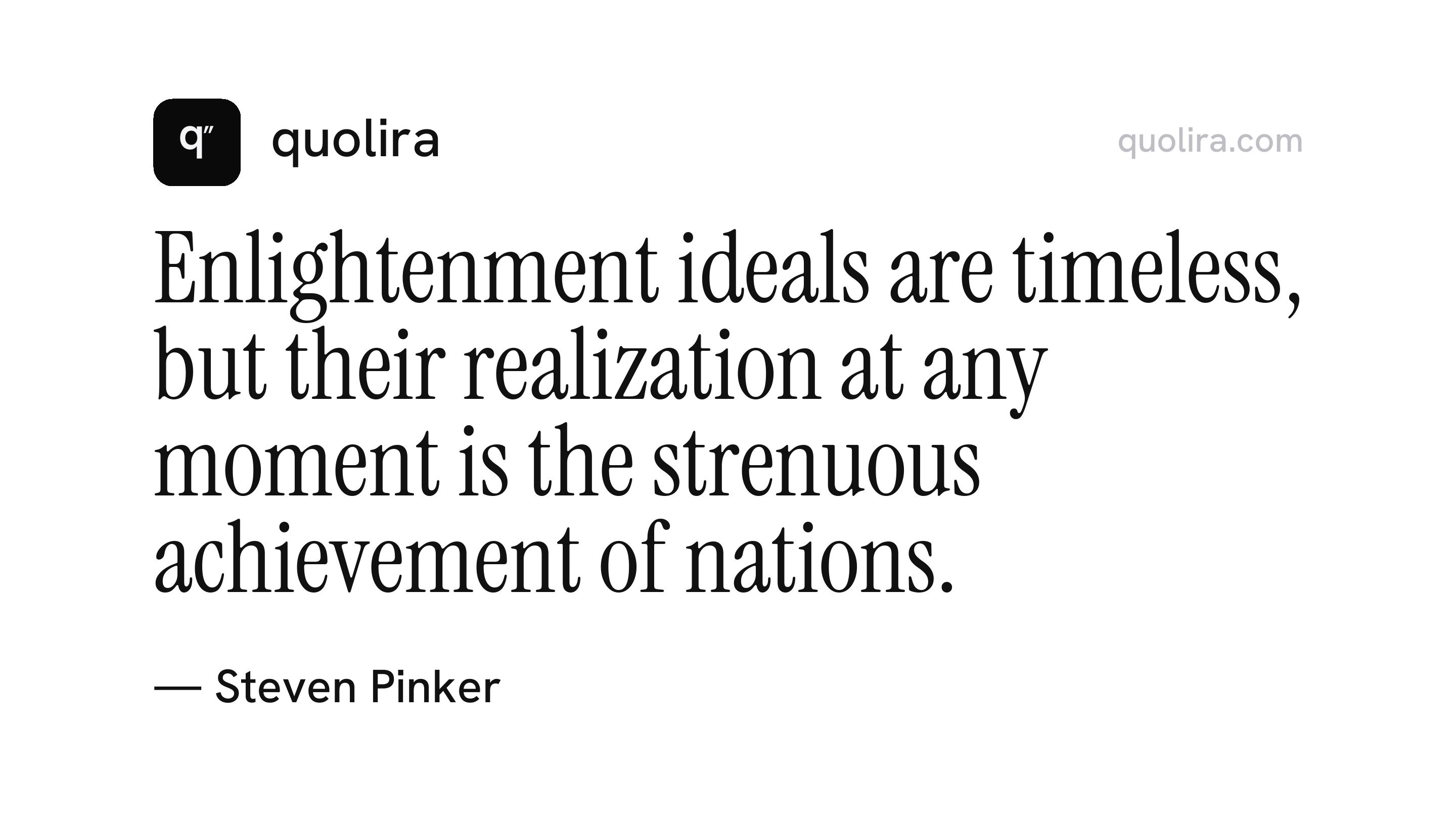
“Enlightenment ideals are timeless, but their realization at any moment is the strenuous achievement of nations.”
Steven Pinker · Enlightenment Now, 2018
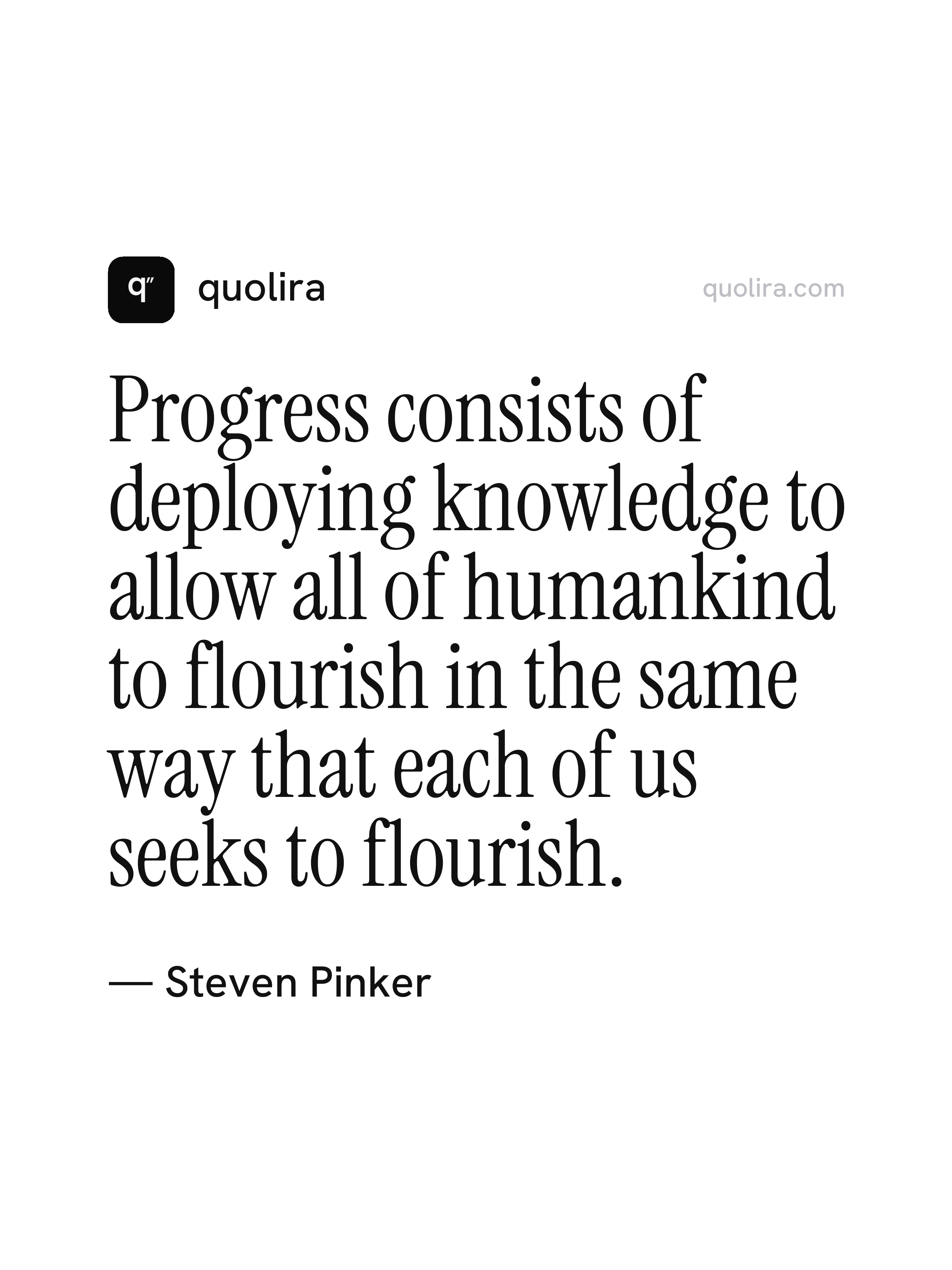
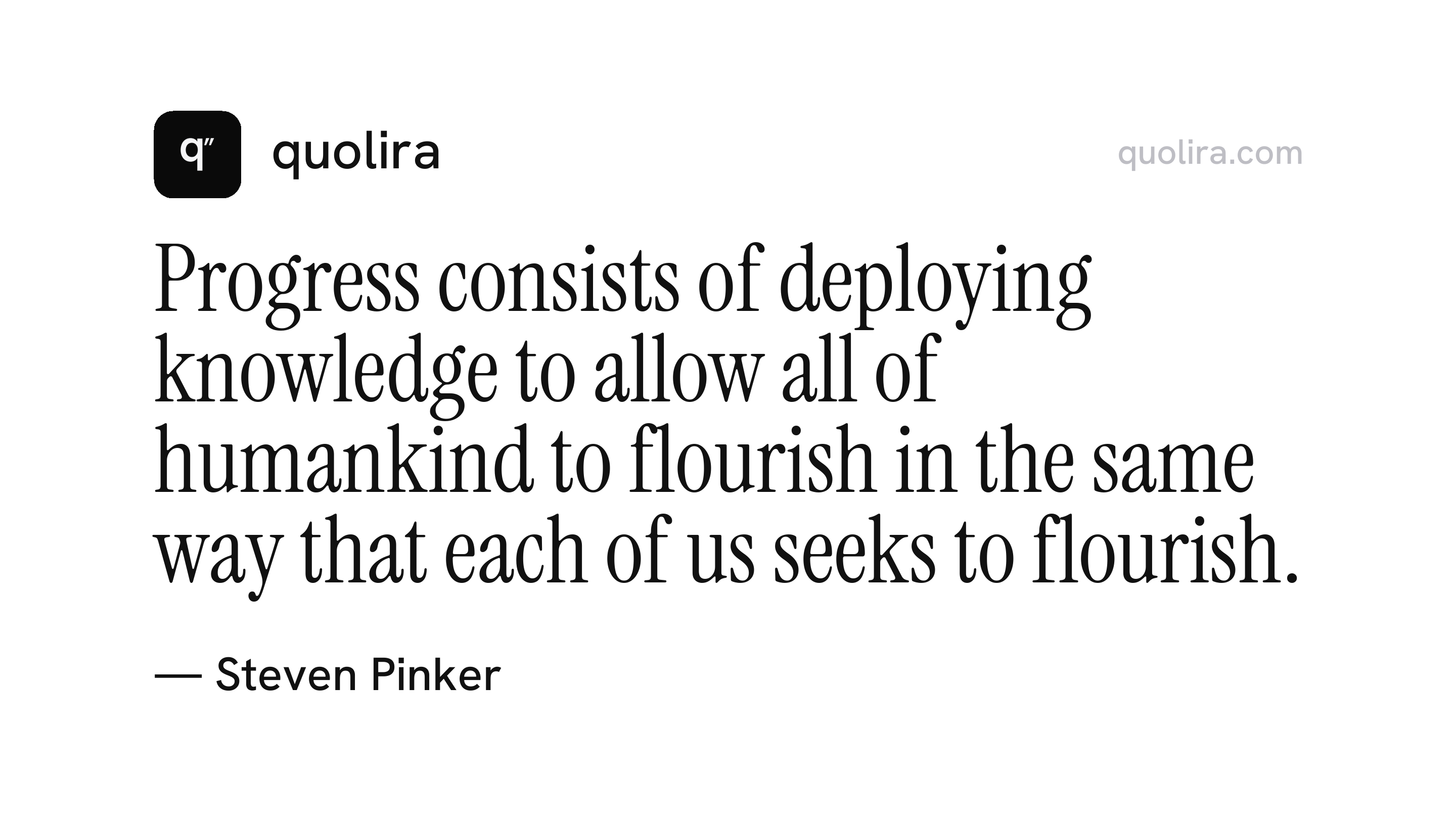
“Progress consists of deploying knowledge to allow all of humankind to flourish in the same way that each of us seeks to flourish.”
Steven Pinker · Enlightenment Now, 2018
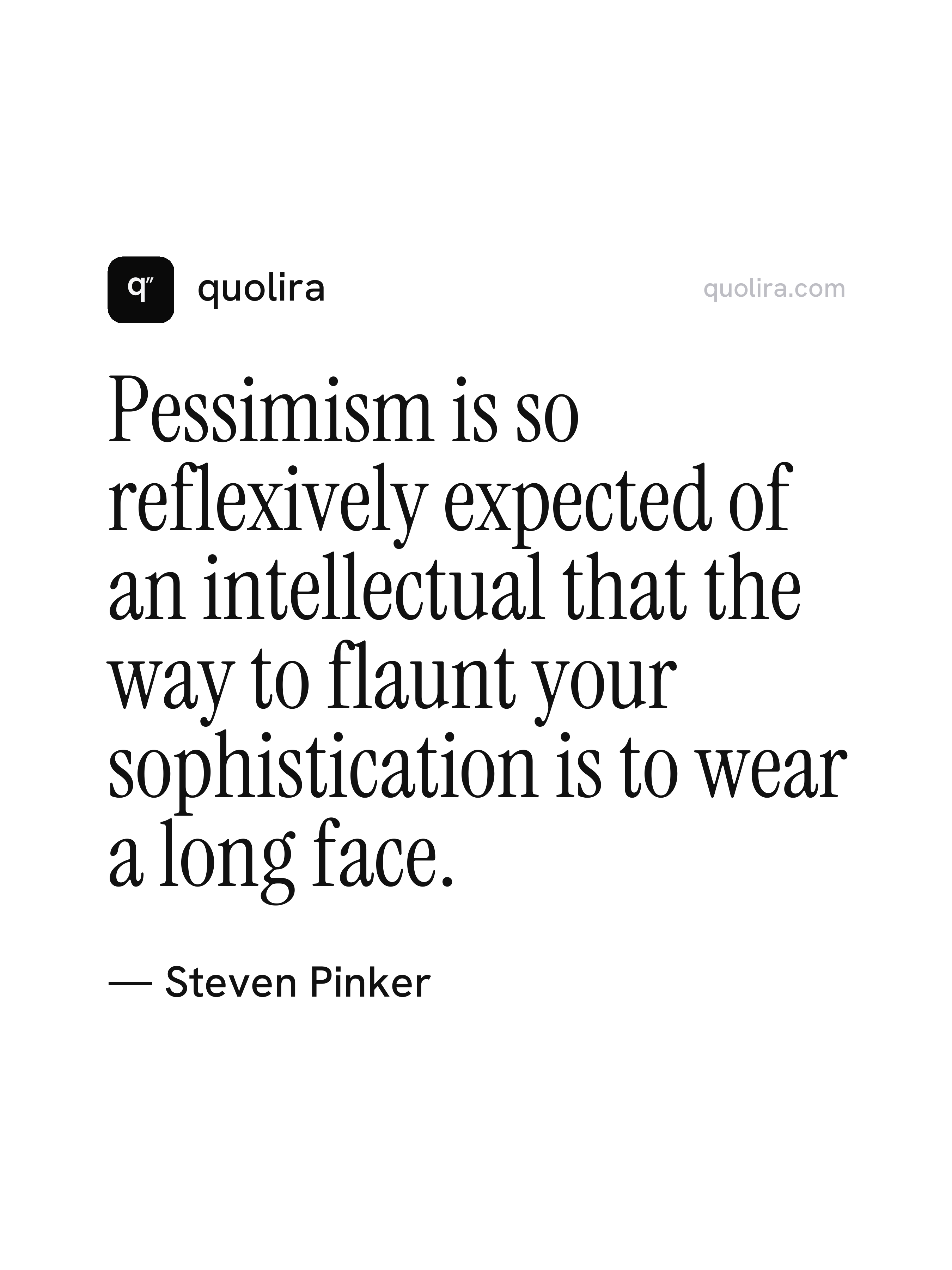
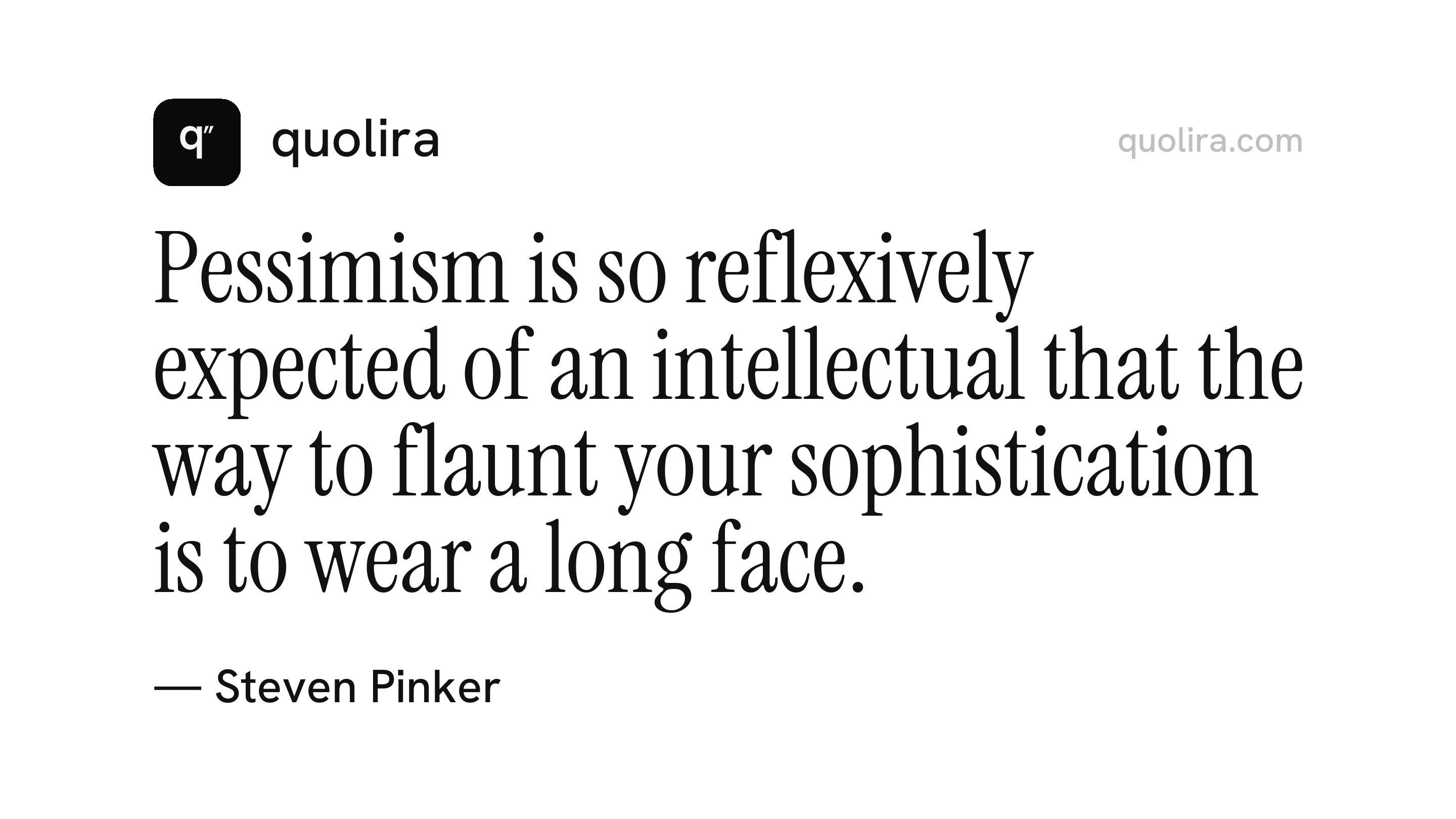
“Pessimism is so reflexively expected of an intellectual that the way to flaunt your sophistication is to wear a long face.”
Steven Pinker · Enlightenment Now, 2018
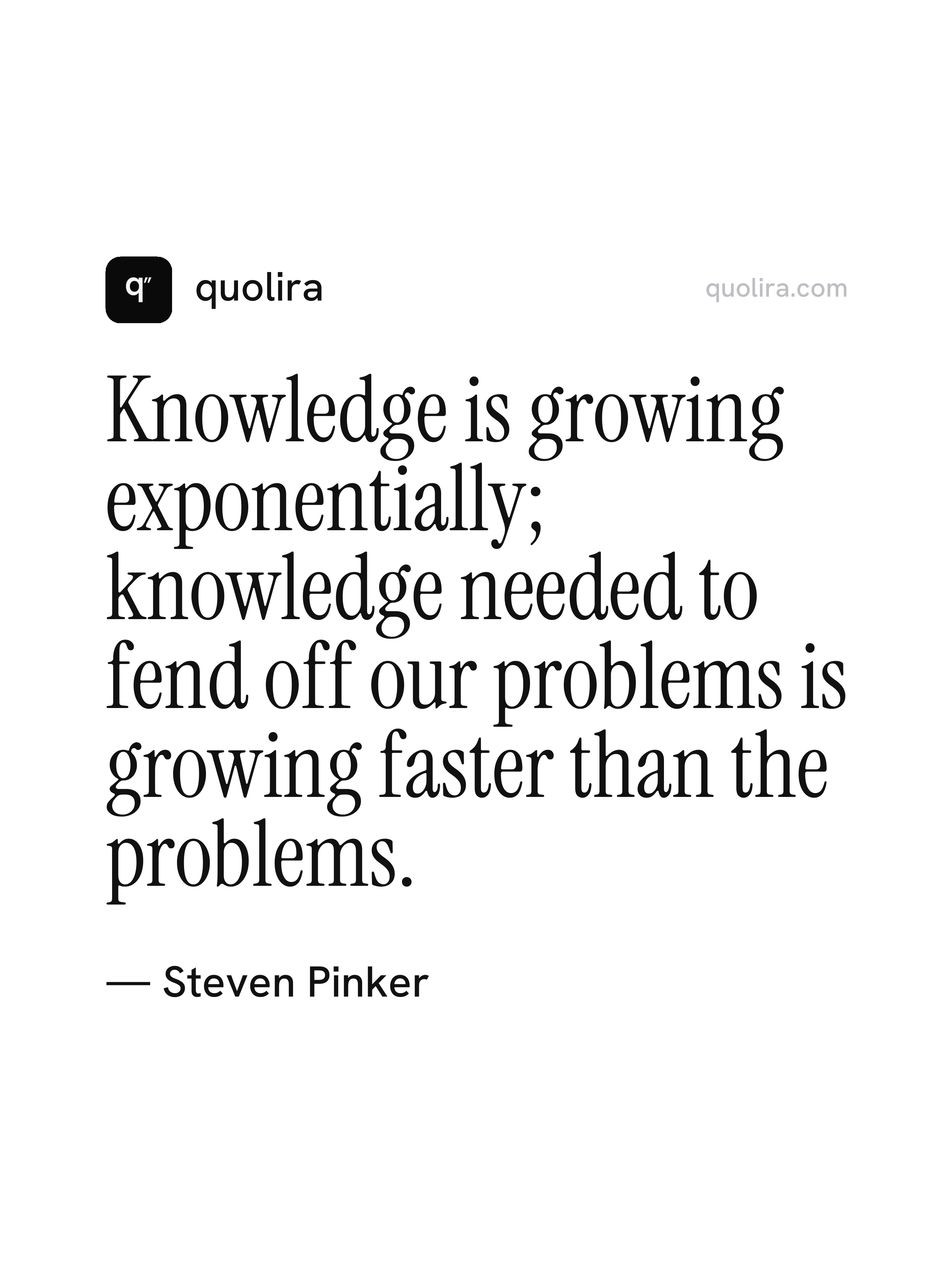
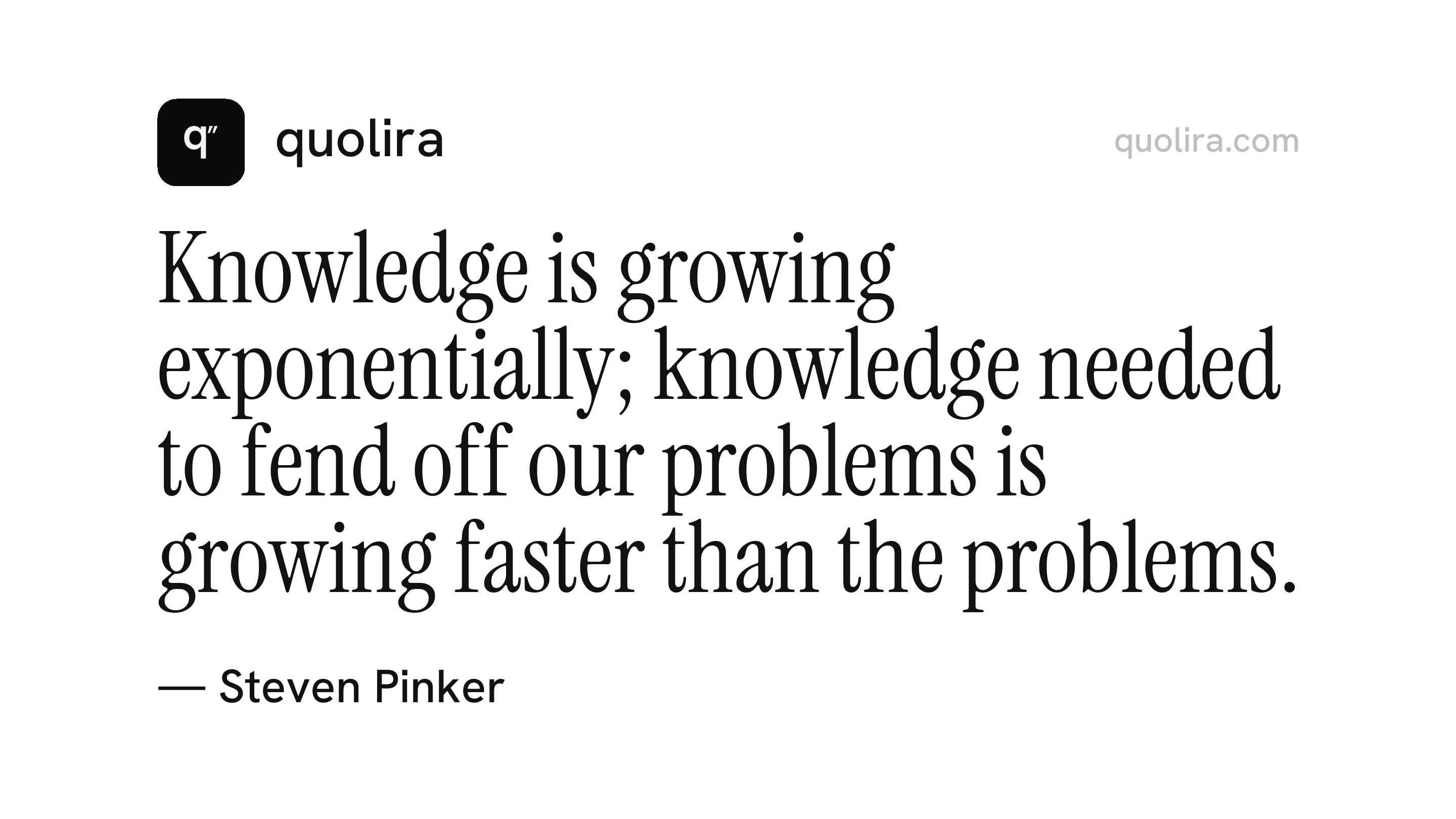
“Knowledge is growing exponentially; knowledge needed to fend off our problems is growing faster than the problems.”
Steven Pinker · Enlightenment Now, 2018
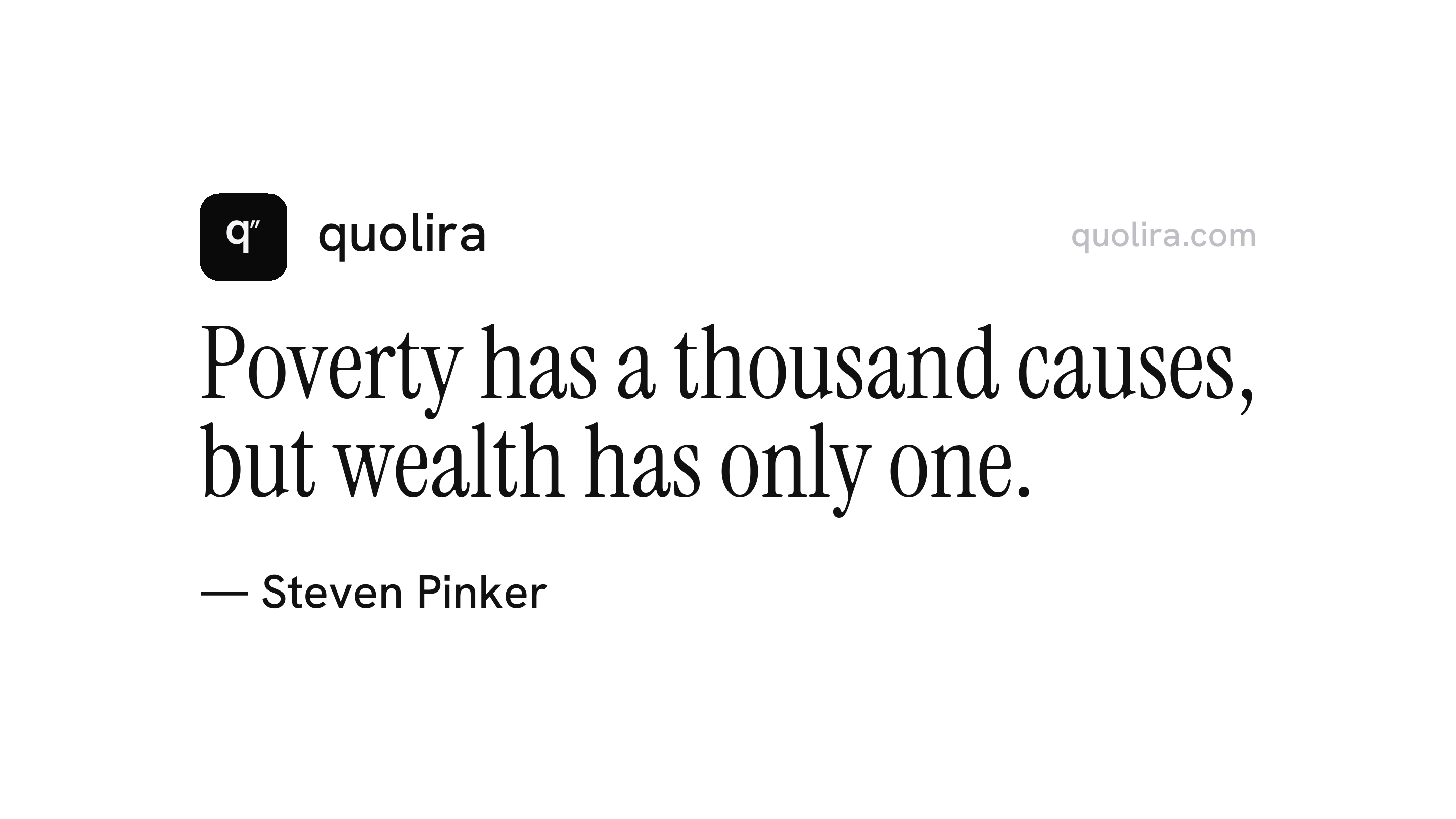
“Poverty has a thousand causes, but wealth has only one.”
Steven Pinker · Enlightenment Now, 2018
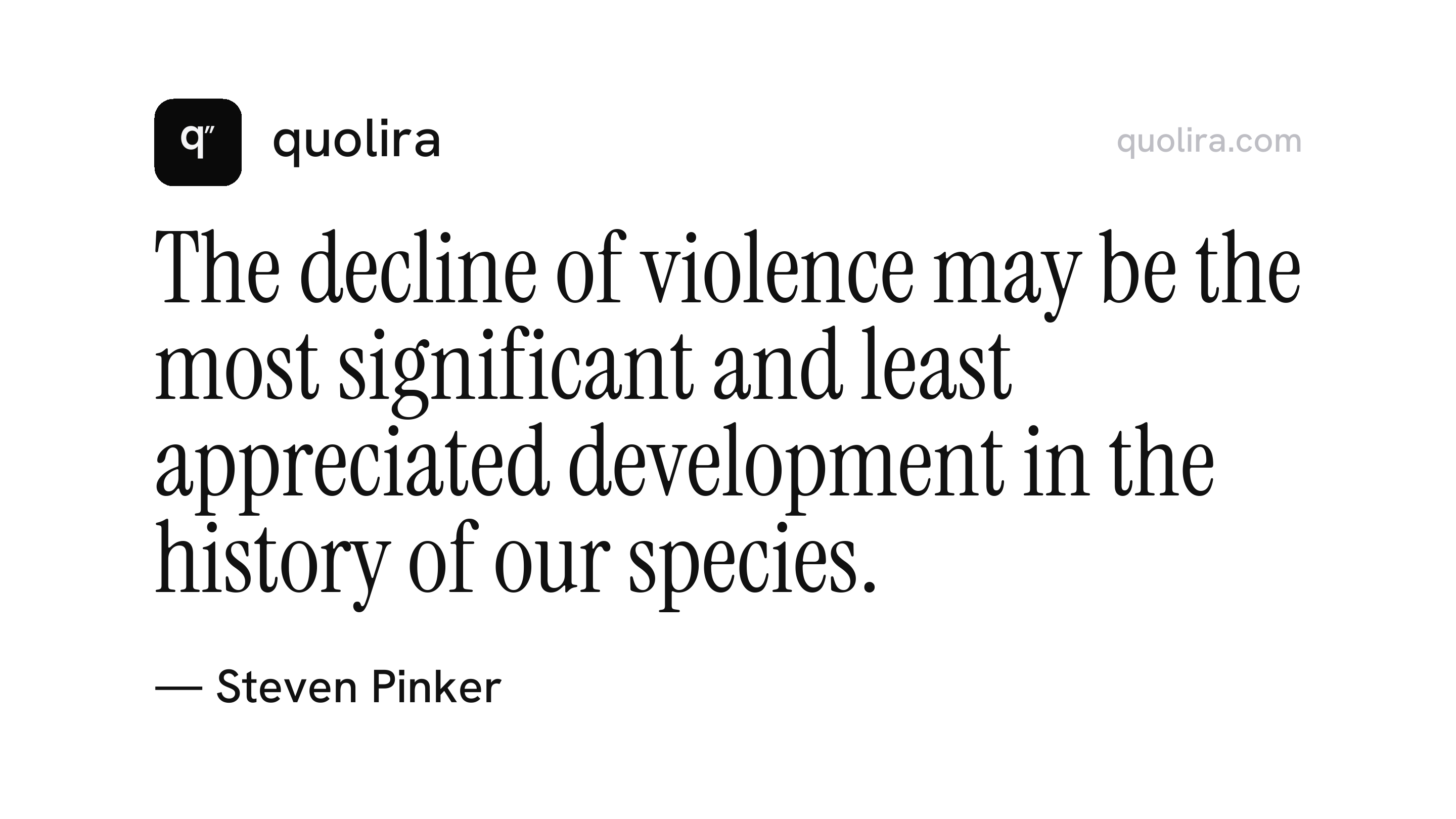
“The decline of violence may be the most significant and least appreciated development in the history of our species.”
Steven Pinker · The Better Angels of Our Nature, 2011
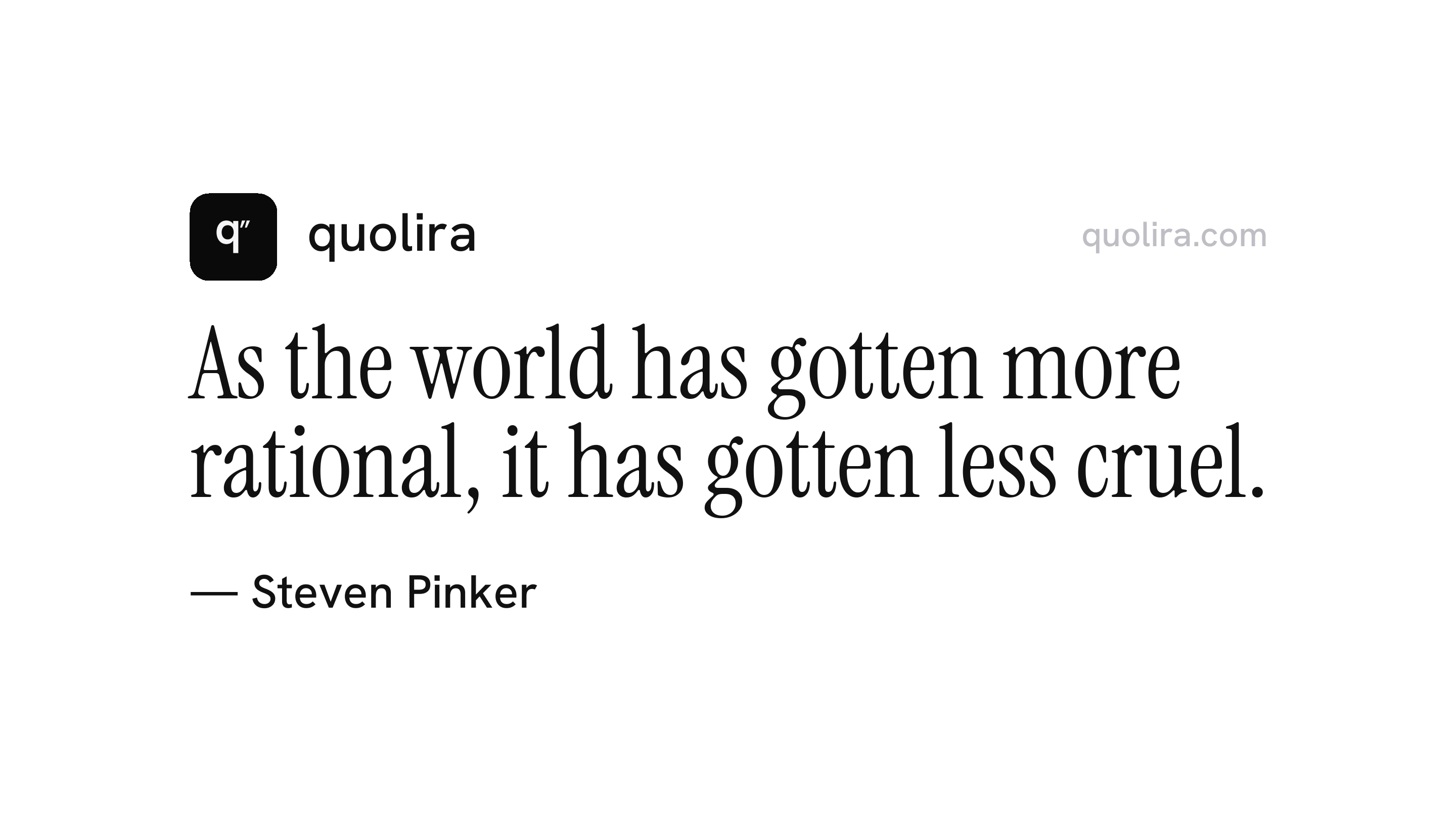
“As the world has gotten more rational, it has gotten less cruel.”
Steven Pinker · The Better Angels of Our Nature, 2011