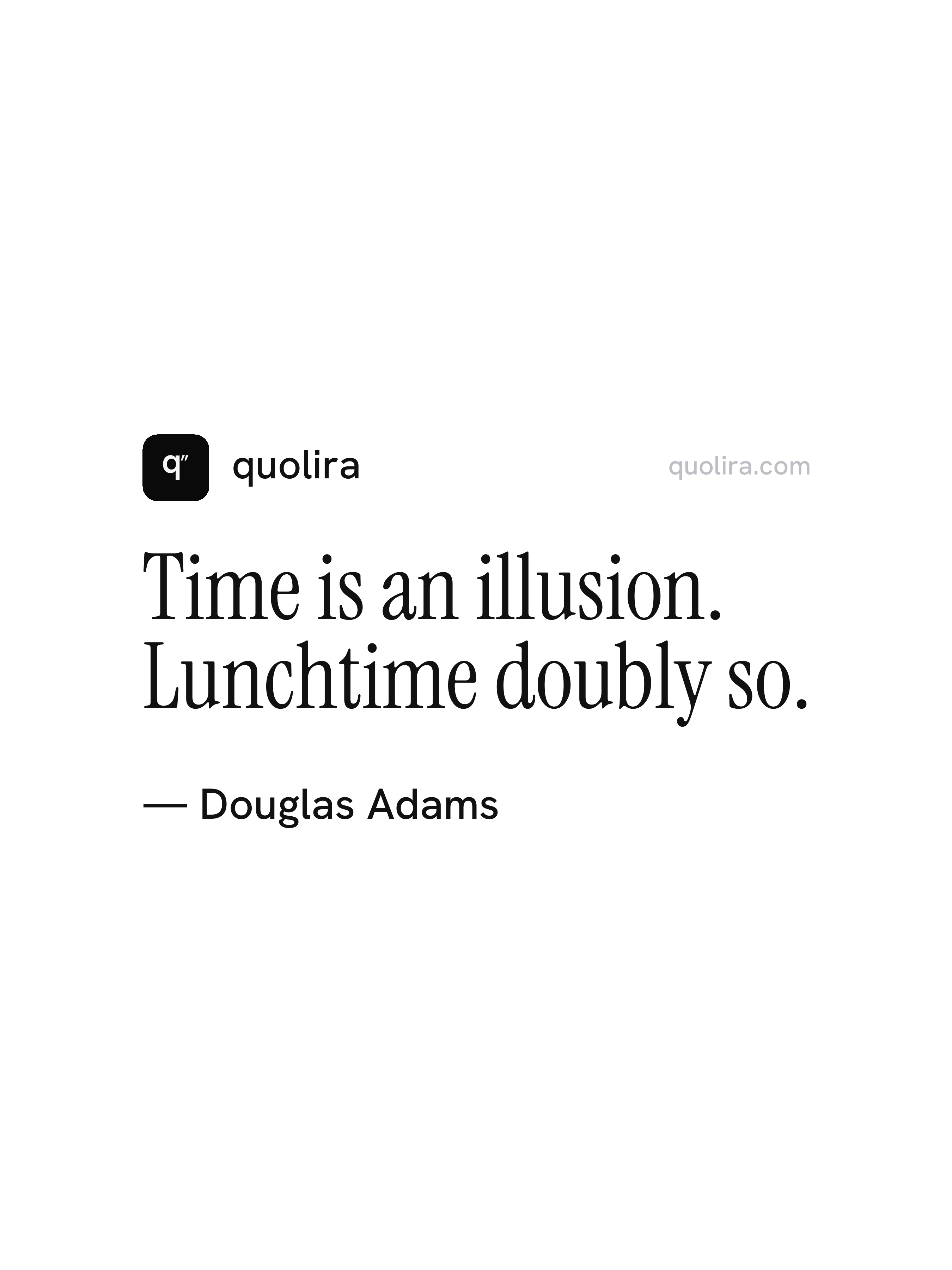
“Time is an illusion. Lunchtime doubly so.”
Douglas Adams · The Hitchhiker's Guide to the Galaxy, 1979
 quolira
.com
quolira
quolira.com
This passage builds its argument through deliberate repetition, listing absence after absence to make a cumulative point. The formal education system teaches facts, formulas, and procedures, but leaves people largely unprepared for the experiences that actually define a life: loving someone, losing someone, handling fame or poverty, ending a relationship with honesty, sitting with a dying person and finding words. By the end, the list feels both amusing and genuinely sorrowful, and the final sentence lands as a stark summary of everything that precedes it.
These words appear in The Sandman, the landmark comic book series written by Neil Gaiman that began publication in 1989. The series is known for weaving together mythology, folklore, horror, and philosophy into stories that often pause to reflect on large human questions. A passage like this one fits naturally into that world, where characters frequently voice observations that feel more like essays than dialogue. The Sandman established Gaiman as one of the most significant voices in contemporary fantasy and graphic storytelling.
Neil Gaiman is a British author whose work spans novels, short stories, comic books, screenplays, and children's literature. He grew up in England and has spent much of his adult life working across multiple countries. Beyond The Sandman, he is known for novels such as American Gods, Coraline, and Good Omens, the last co-written with Terry Pratchett. His writing consistently returns to mythology, dreams, and the stories humans tell themselves about who they are, and he has earned a devoted readership across several generations and many different formats.
“Time is an illusion. Lunchtime doubly so.”
Douglas Adams · The Hitchhiker's Guide to the Galaxy, 1979
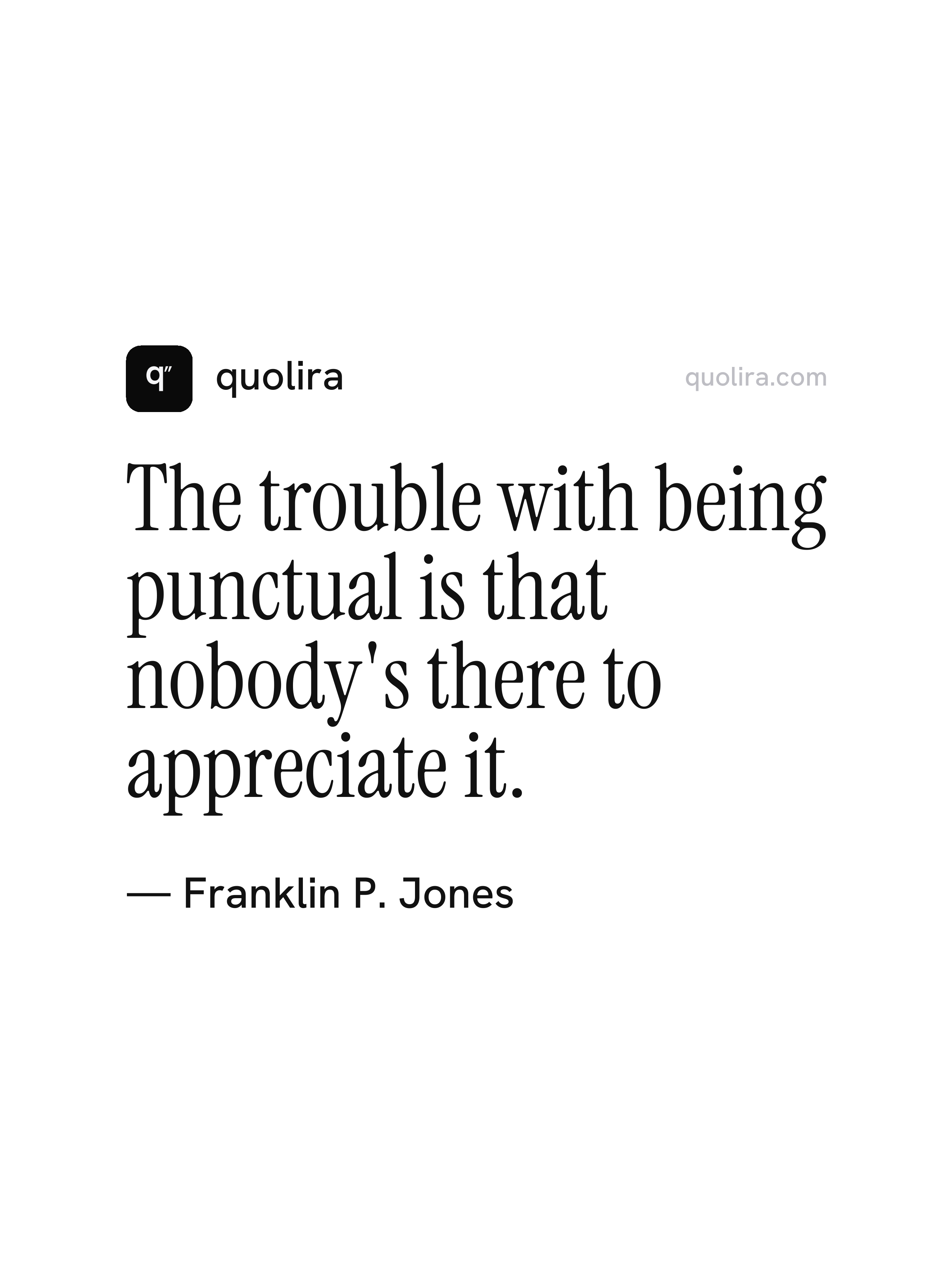
“The trouble with being punctual is that nobody's there to appreciate it.”
Franklin P. Jones · widely attributed
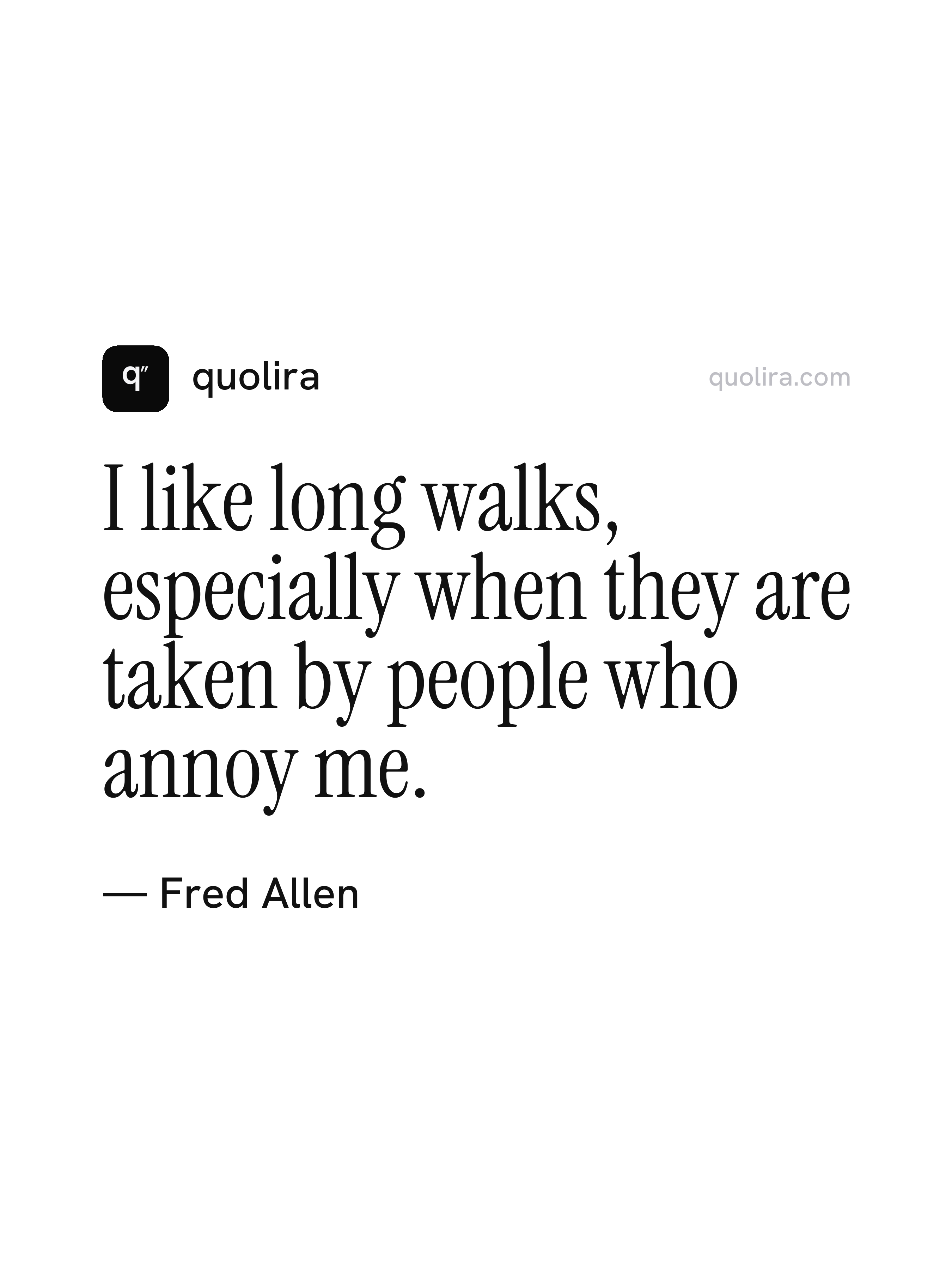
“I like long walks, especially when they are taken by people who annoy me.”
Fred Allen · widely attributed
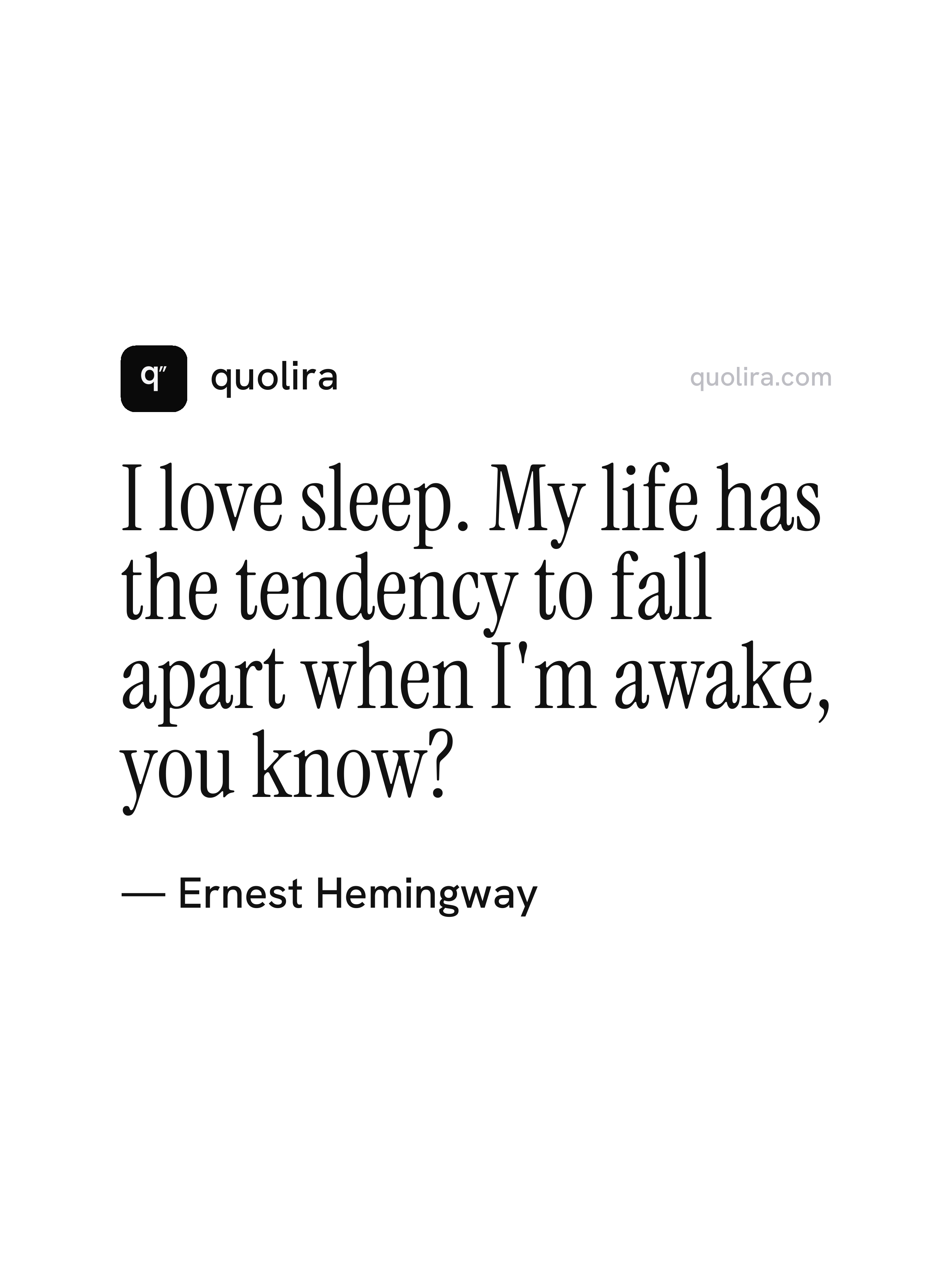
“I love sleep. My life has the tendency to fall apart when I'm awake, you know?”
Ernest Hemingway · widely attributed
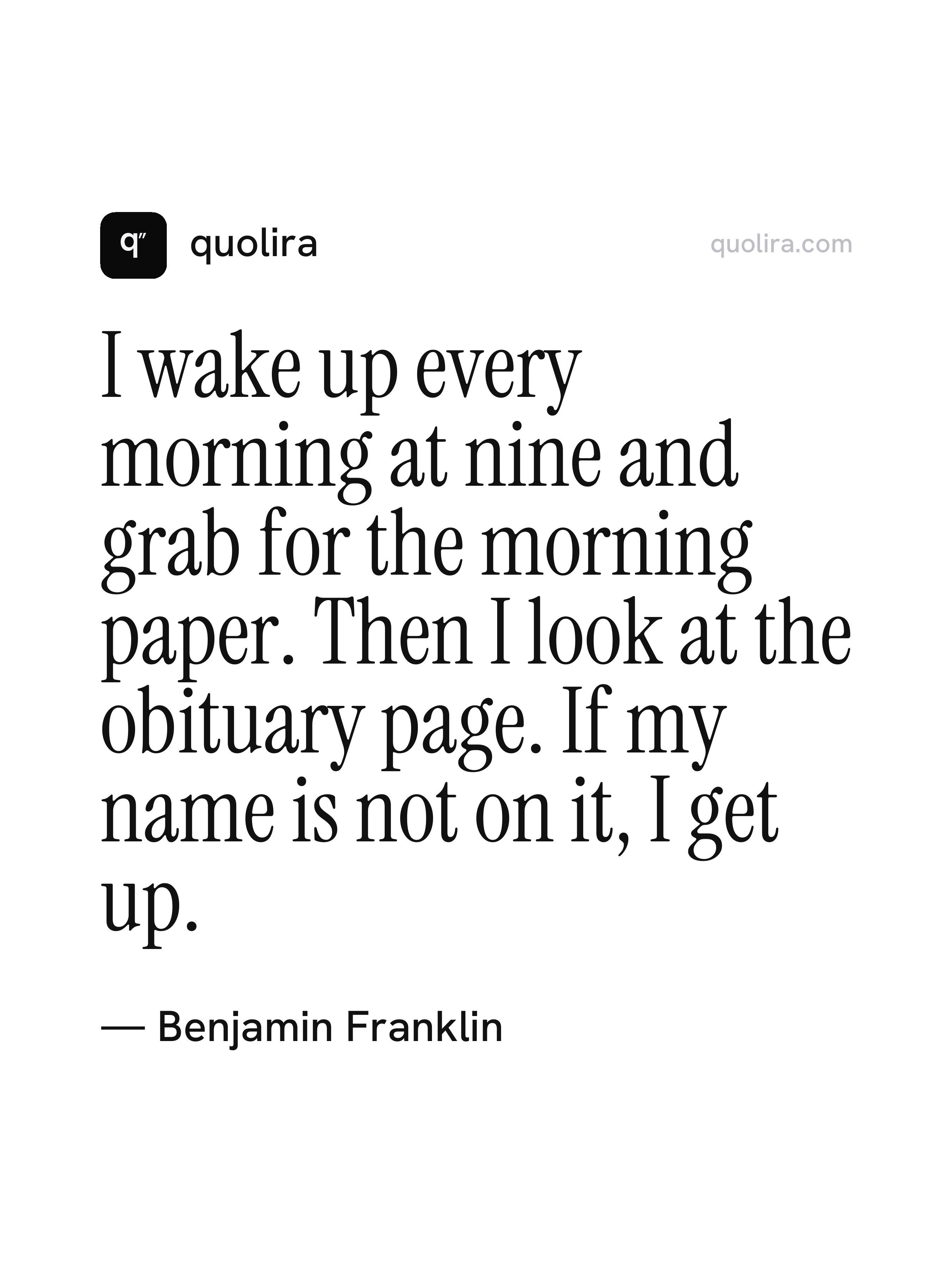
“I wake up every morning at nine and grab for the morning paper. Then I look at the obituary page. If my name is not on it, I get up.”
Benjamin Franklin · widely attributed
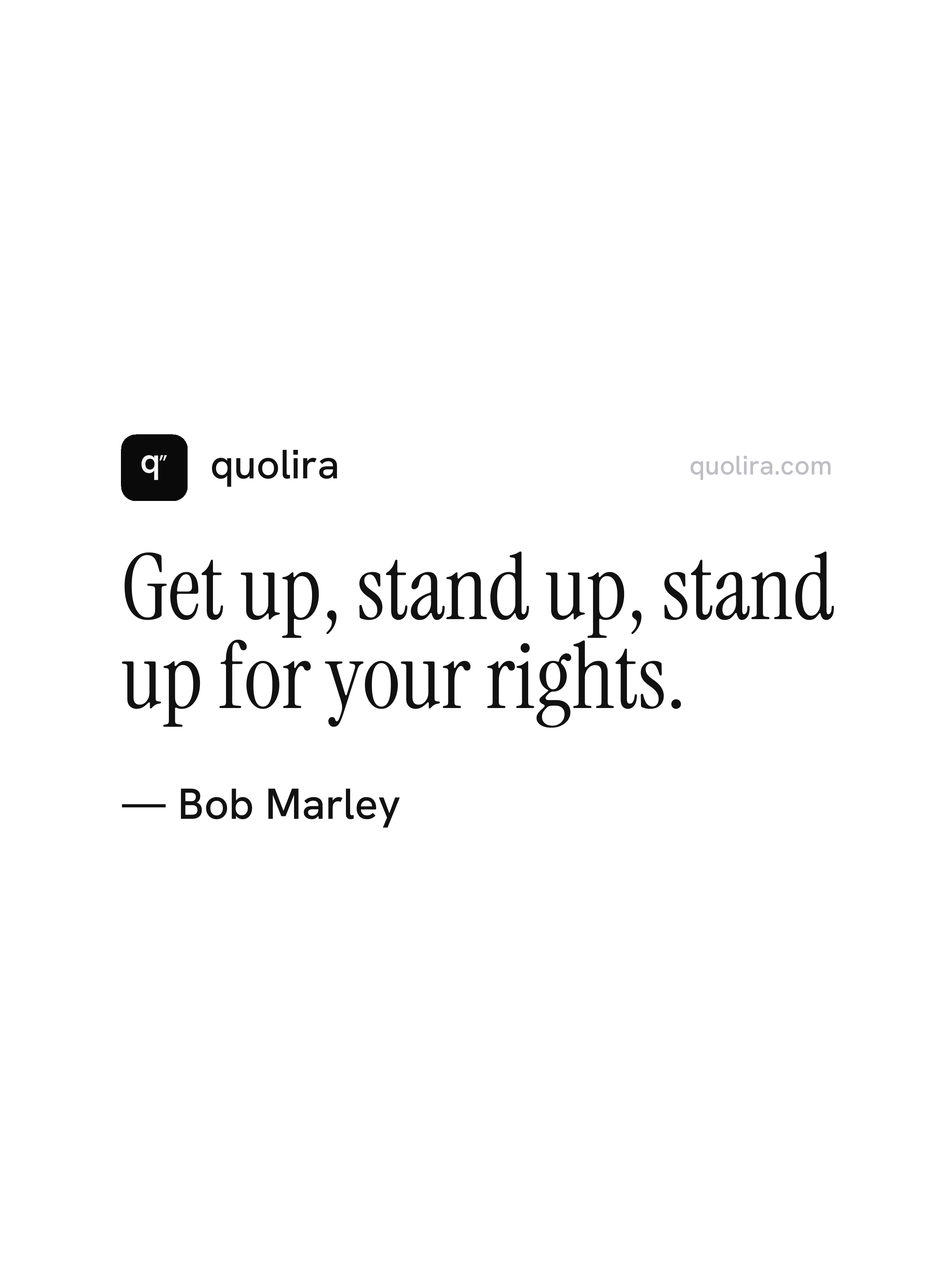
“Get up, stand up, stand up for your rights.”
Bob Marley · Get Up, Stand Up, 1973
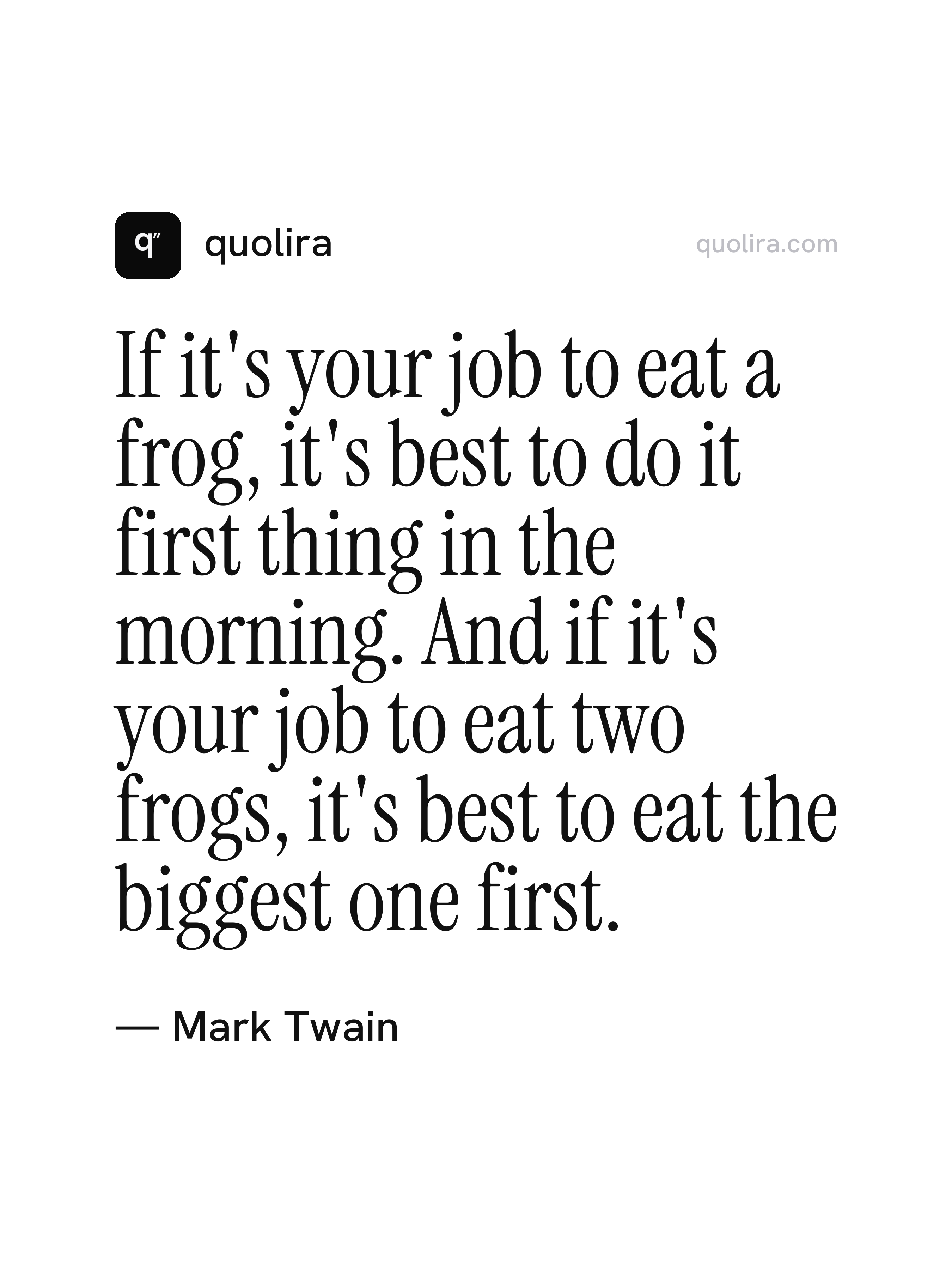
“If it's your job to eat a frog, it's best to do it first thing in the morning. And if it's your job to eat two frogs, it's best to eat the biggest one first.”
Mark Twain · widely attributed to Twain
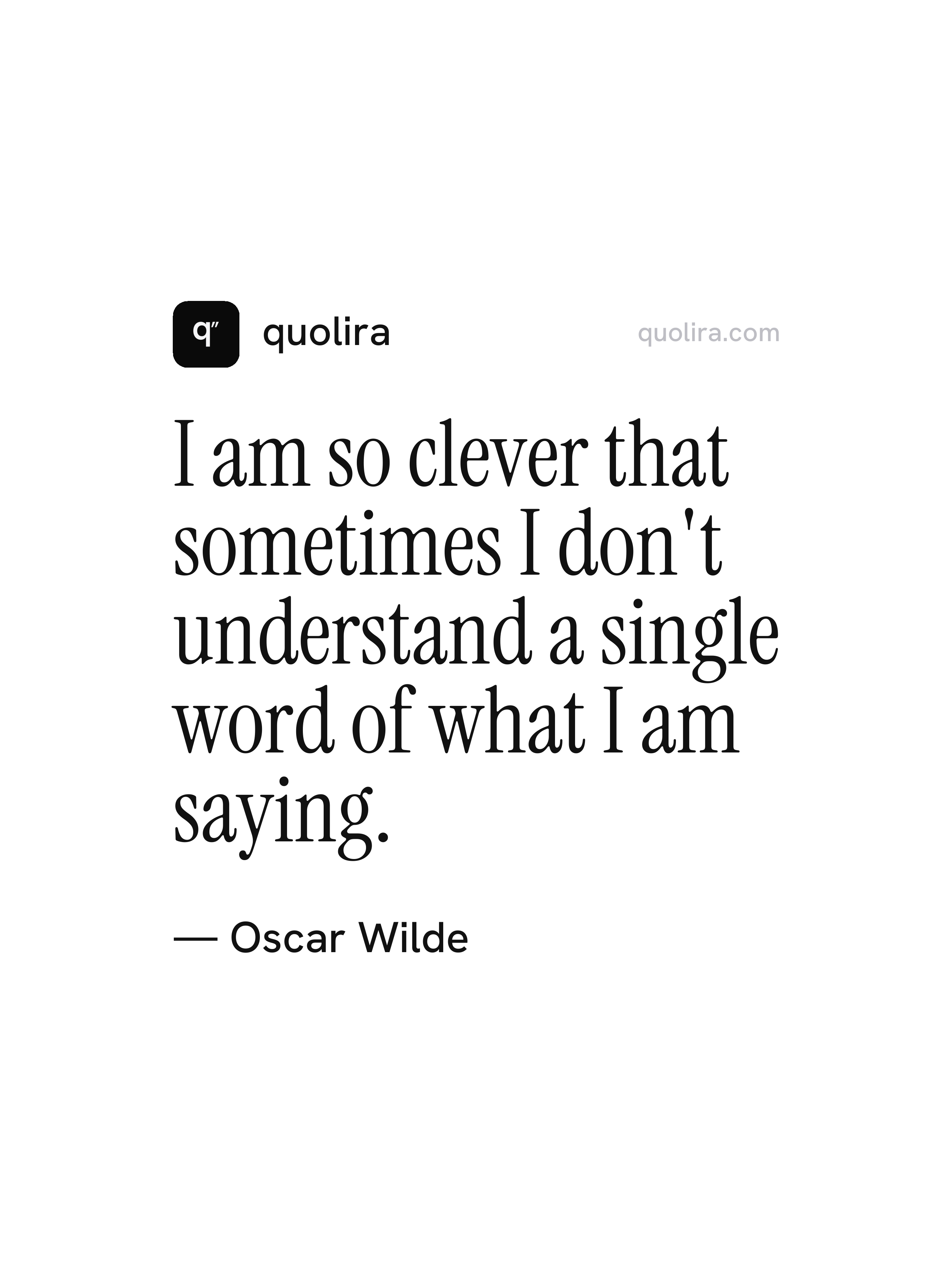
“I am so clever that sometimes I don't understand a single word of what I am saying.”
Oscar Wilde · The Happy Prince and Other Tales, 1888
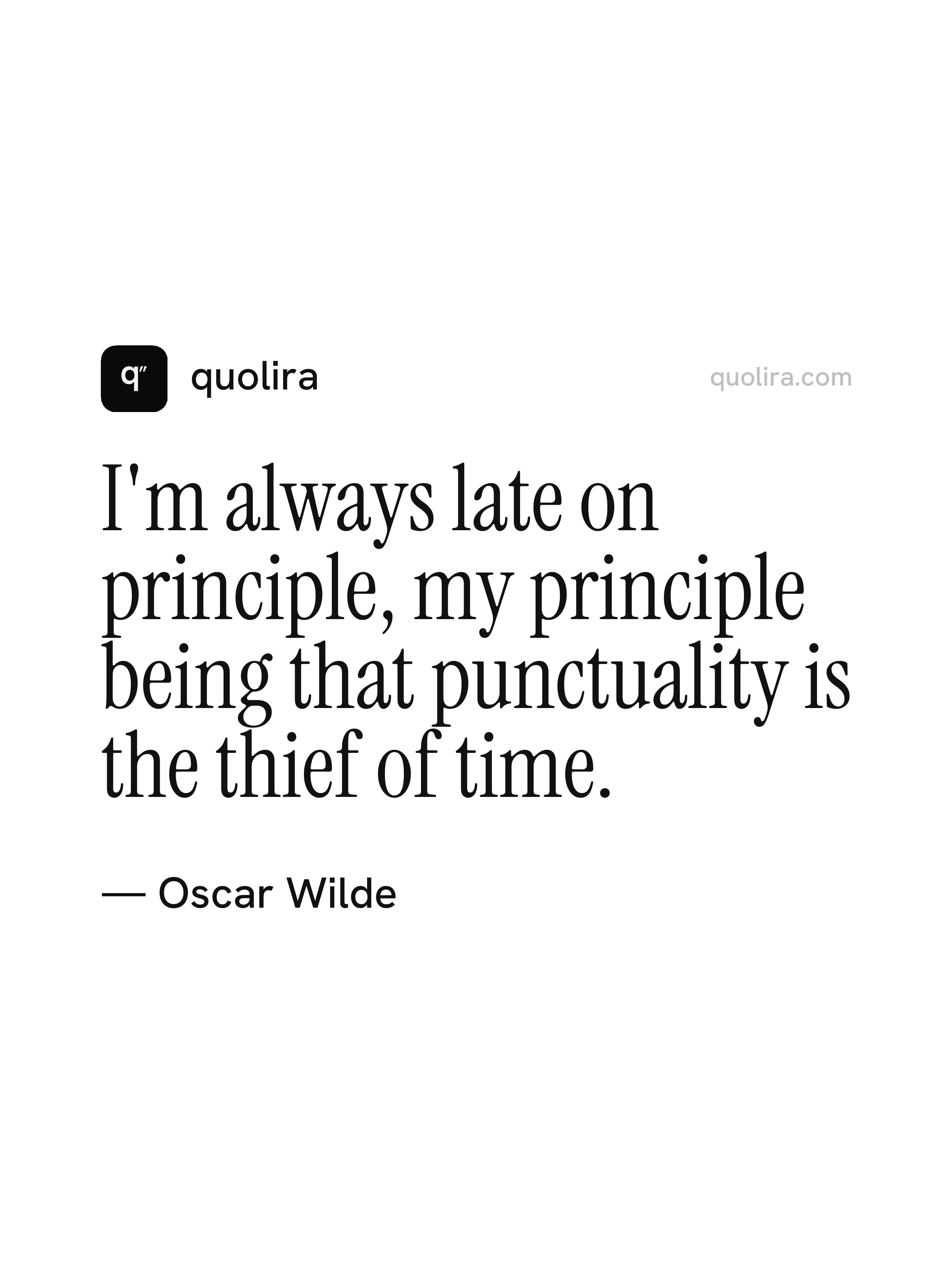
“I'm always late on principle, my principle being that punctuality is the thief of time.”
Oscar Wilde · The Picture of Dorian Gray, 1890
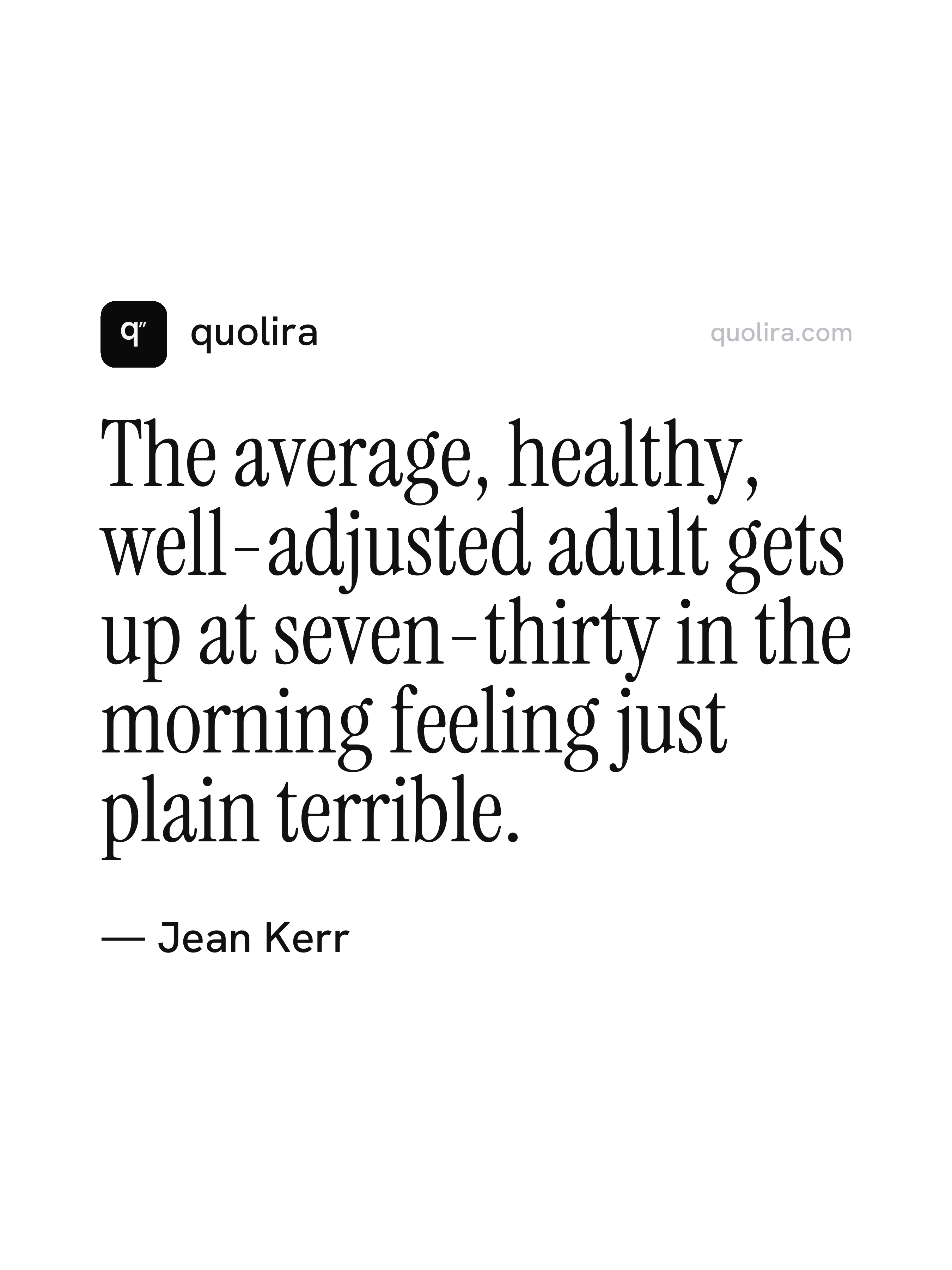
“The average, healthy, well-adjusted adult gets up at seven-thirty in the morning feeling just plain terrible.”
Jean Kerr · Please Don't Eat the Daisies, 1957
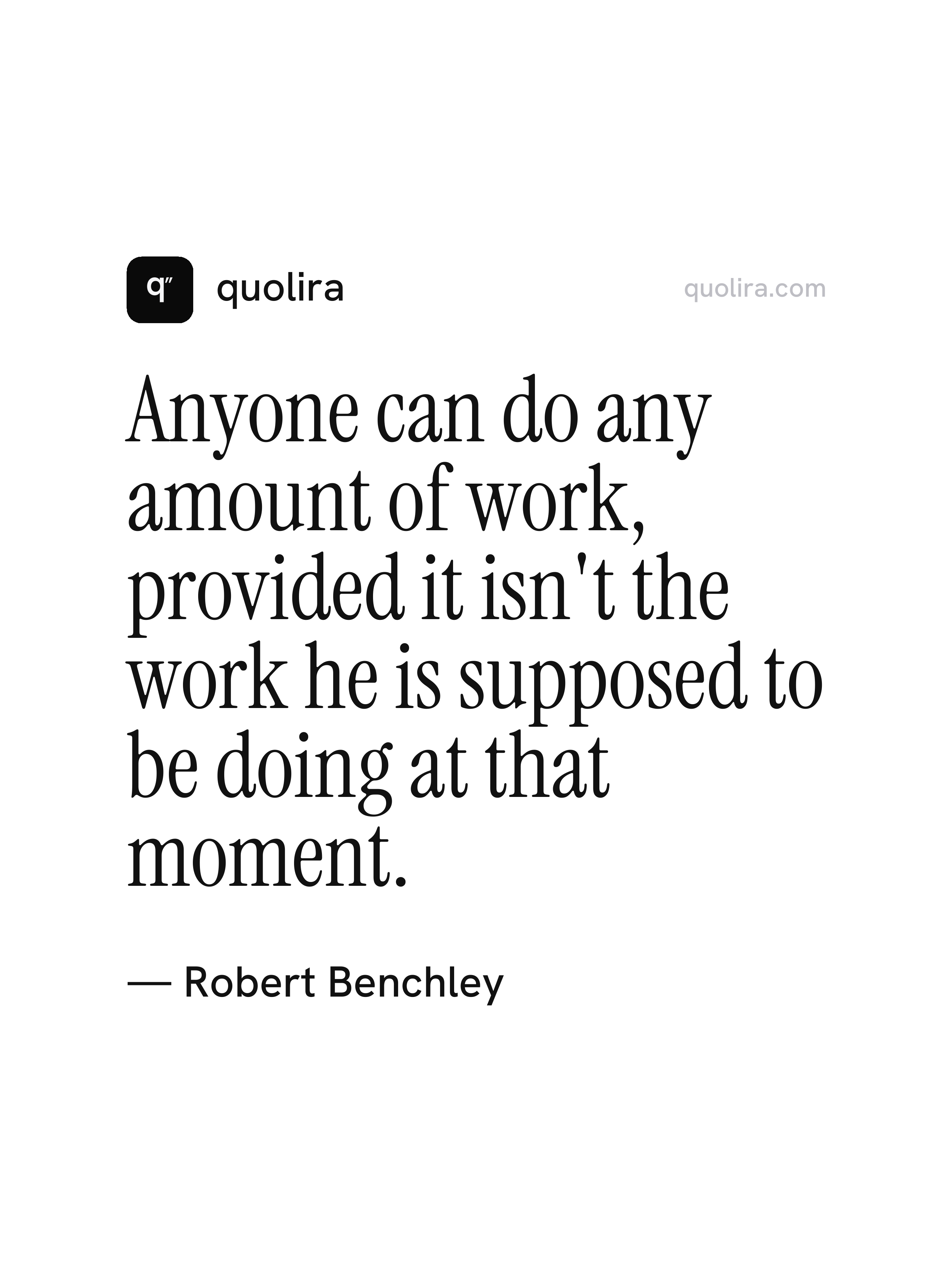
“Anyone can do any amount of work, provided it isn't the work he is supposed to be doing at that moment.”
Robert Benchley · Chips off the Old Benchley, 1949
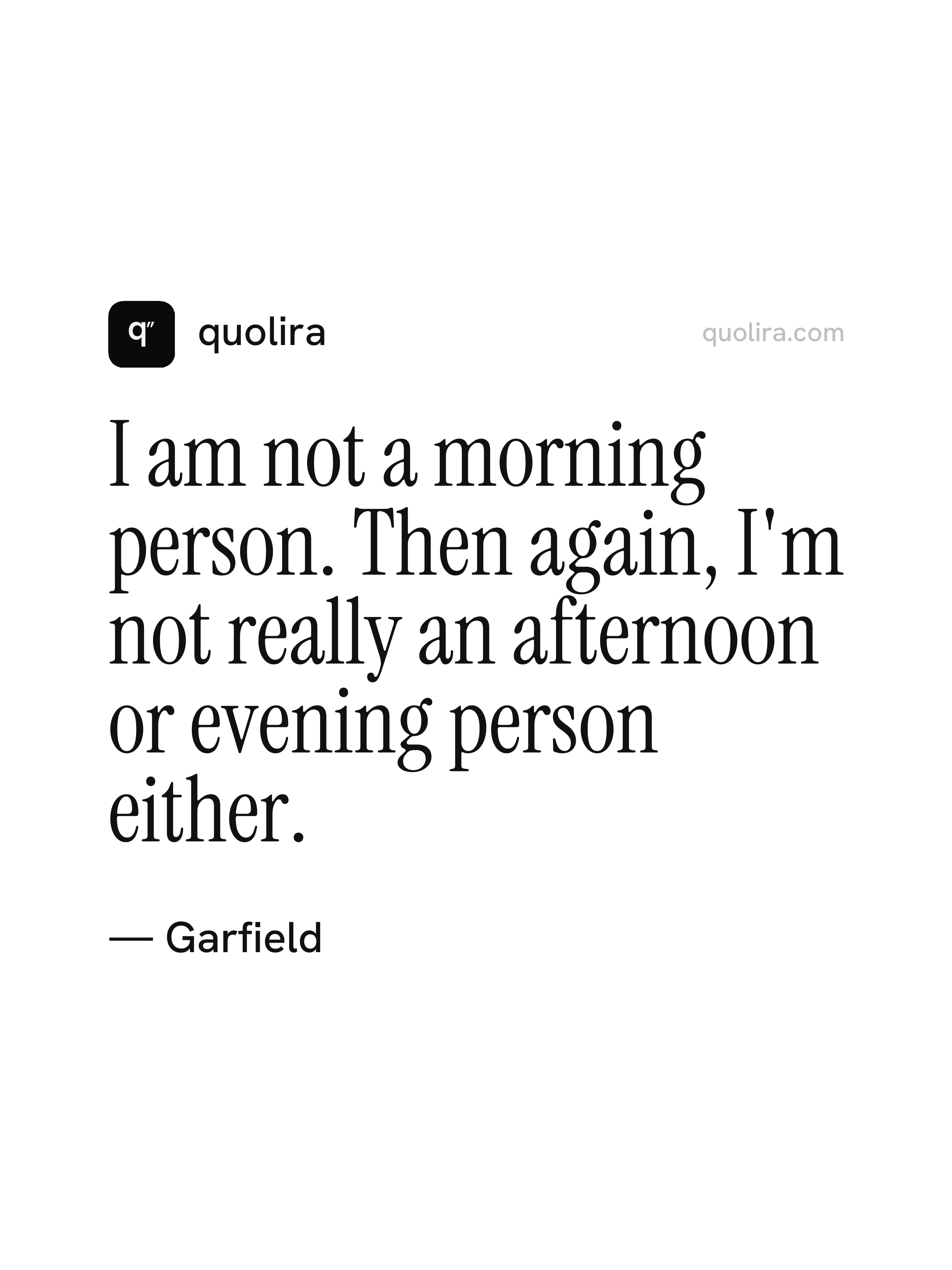
“I am not a morning person. Then again, I'm not really an afternoon or evening person either.”
Garfield · Jim Davis, Garfield comic strip