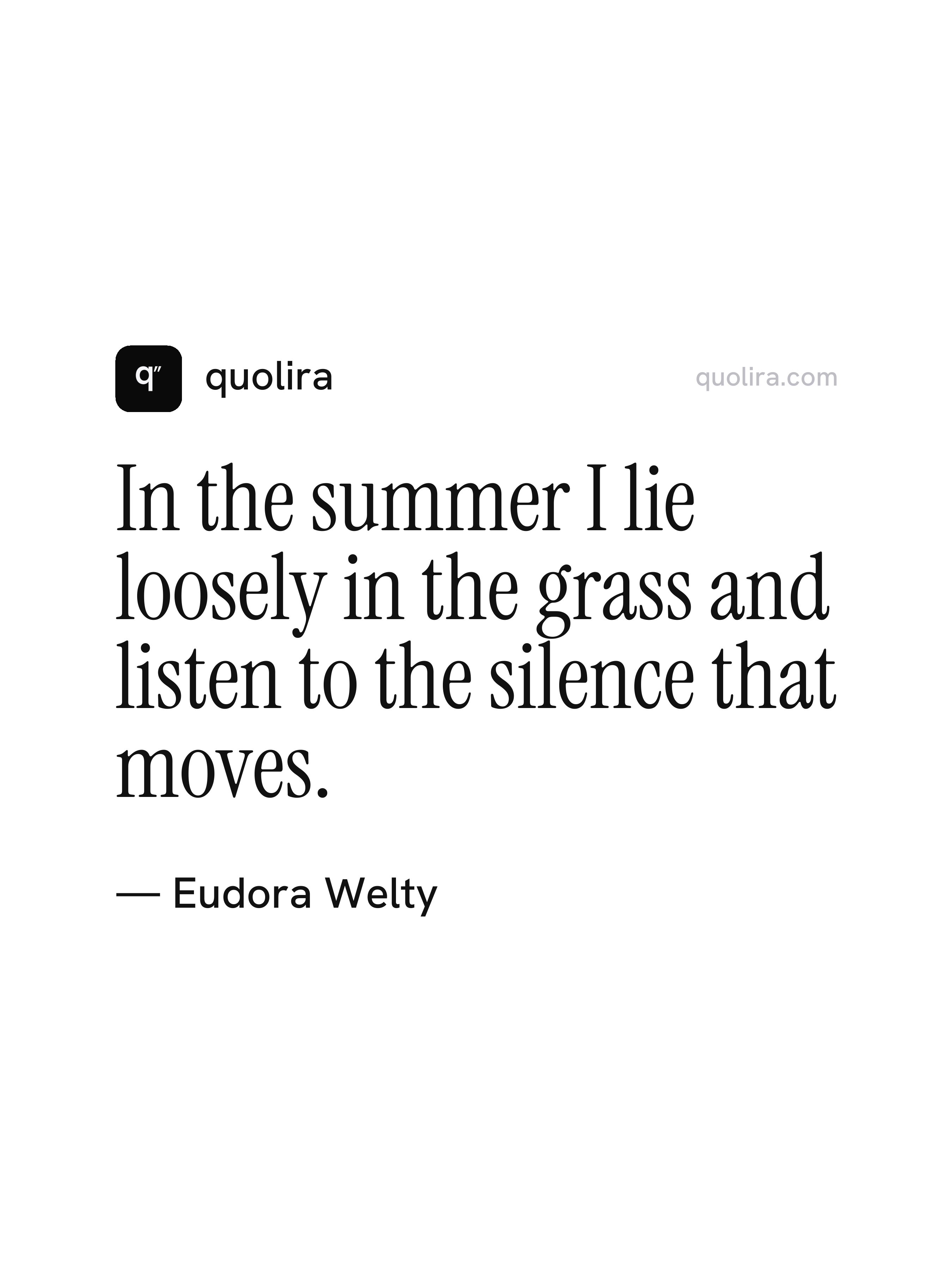
“In the summer I lie loosely in the grass and listen to the silence that moves.”
Eudora Welty · The Eye of the Story
 quolira
.com
quolira
quolira.com
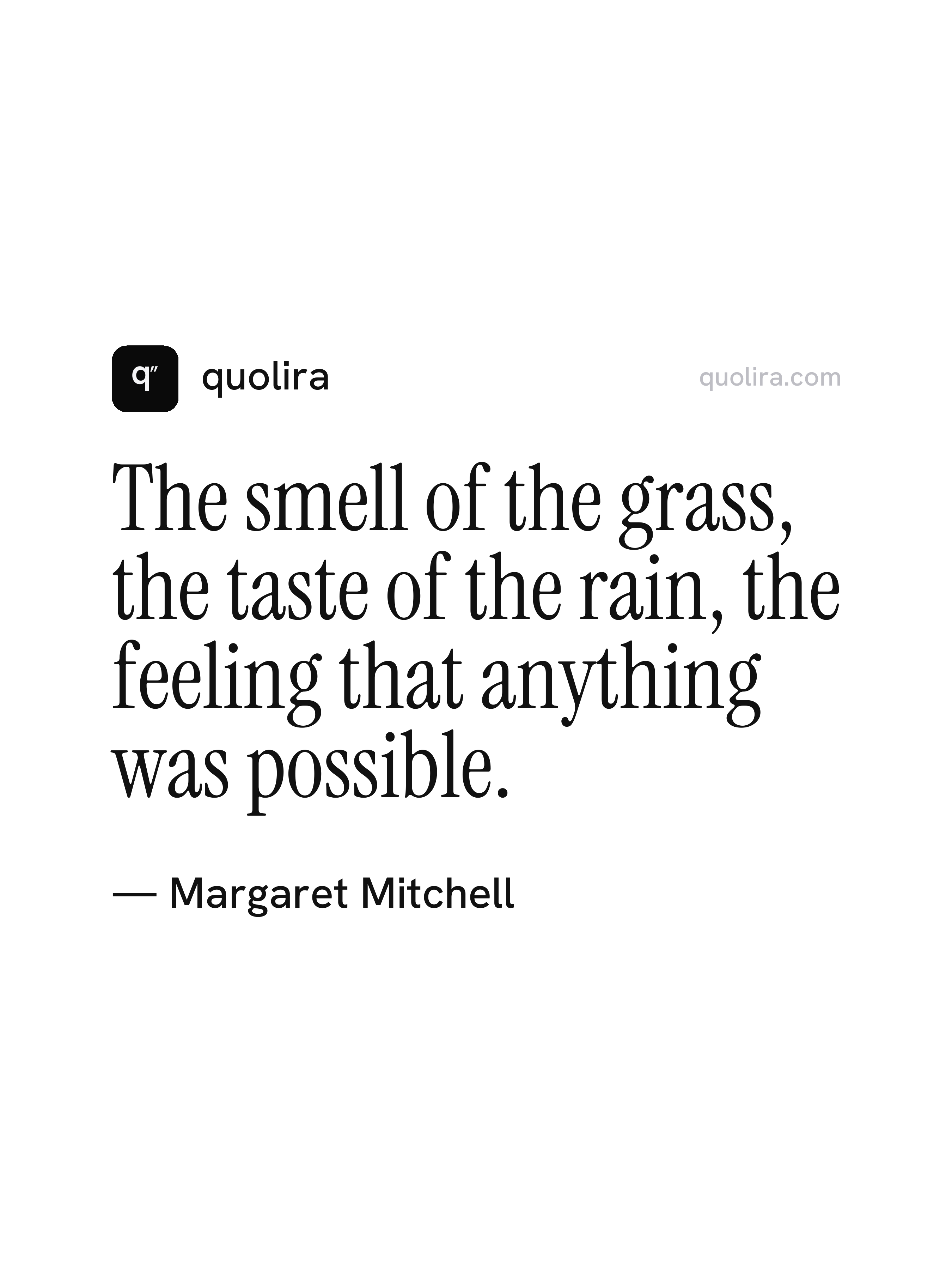
This line lists sensory details that together add up to something larger than any one of them: a feeling of pure possibility. The smell of grass and the taste of rain are grounding, earthy, specific. The final clause lifts everything into the emotional register, suggesting that the natural world, in the right moment, can communicate hope directly to the body. It is a line about the convergence of place, season, and a particular state of youthful openness.
Gone with the Wind is a long historical novel set against the backdrop of the American Civil War and its aftermath, centered on the life of a determined young woman in the South. The novel is saturated with the land of Georgia, its seasons, its smells, and its textures, and the plantation landscape functions almost as a character in its own right. A passage evoking grass and rain and possibility belongs to the novel's deep investment in the sensory reality of a specific place and in what it feels like to be young and ambitious before loss arrives.
Margaret Mitchell was an American author who published Gone with the Wind in 1936. The novel became one of the best-selling works of American fiction and won the Pulitzer Prize for Fiction the following year. Mitchell worked for years as a journalist before completing the novel, and she is known to have drawn on family stories and Southern history in writing it. Gone with the Wind remains her only published novel, though its cultural impact has been extraordinary and enduring, accompanied over the decades by significant critical debate about its portrayal of history and race.
“In the summer I lie loosely in the grass and listen to the silence that moves.”
Eudora Welty · The Eye of the Story
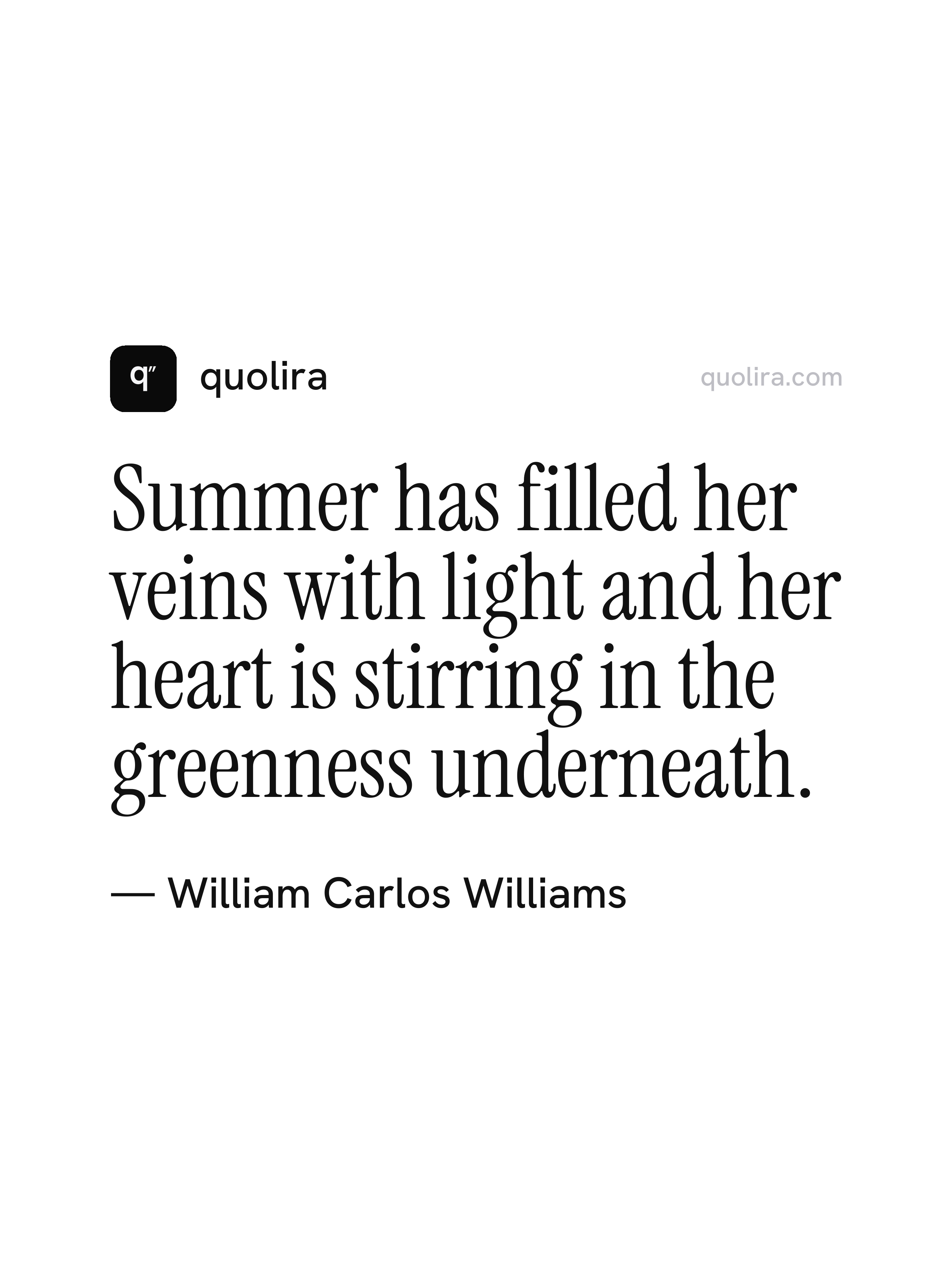
“Summer has filled her veins with light and her heart is stirring in the greenness underneath.”
William Carlos Williams · Spring and All
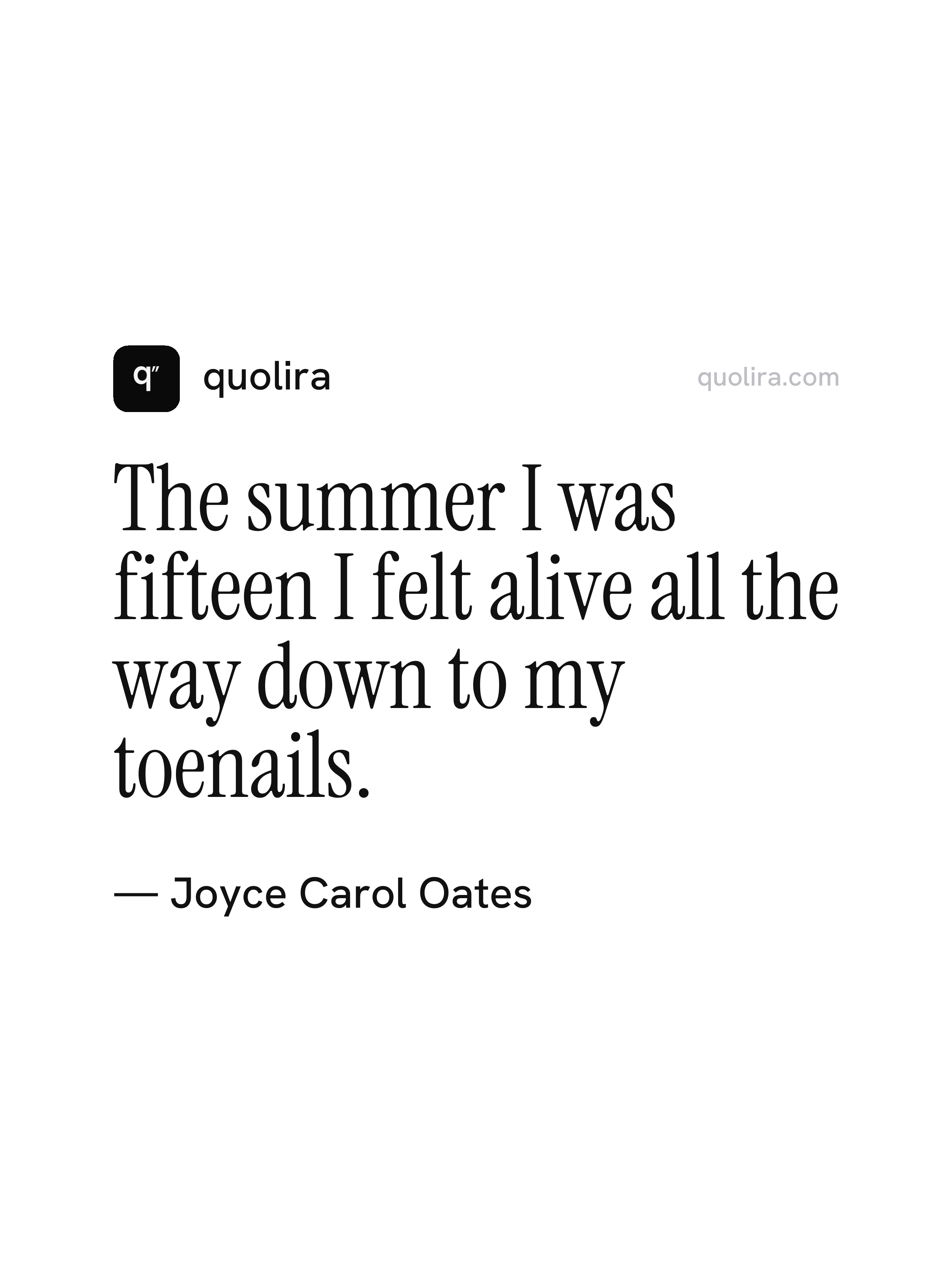
“The summer I was fifteen I felt alive all the way down to my toenails.”
Joyce Carol Oates · Bellefleur
“Every summer has a story.”
John Grisham · Sycamore Row
“The summer night is like a perfection of thought.”
Wallace Stevens · Harmonium
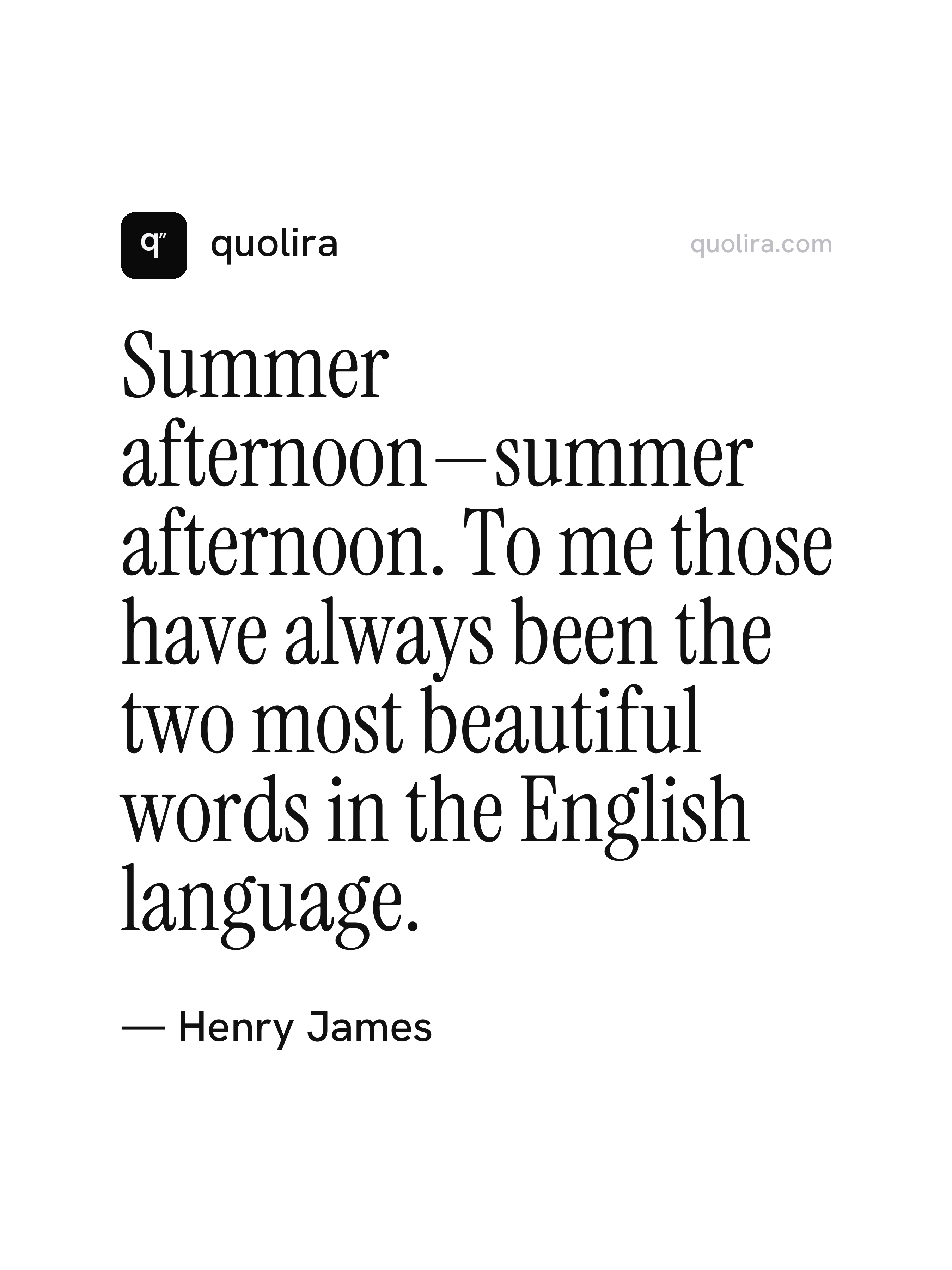
“Summer afternoon—summer afternoon. To me those have always been the two most beautiful words in the English language.”
Henry James · Edith Wharton's memoir, A Backward Glance
“The days are longer and the responsibilities are fewer, and you feel yourself expand and stretch and come alive again.”
Vivian Gornick · Unfinished Woman
“Dignity under pressure is its own kind of answer to the world.”
Original
“Endurance is not the absence of pain. It's the decision to keep your hands steady while you feel it.”
Original
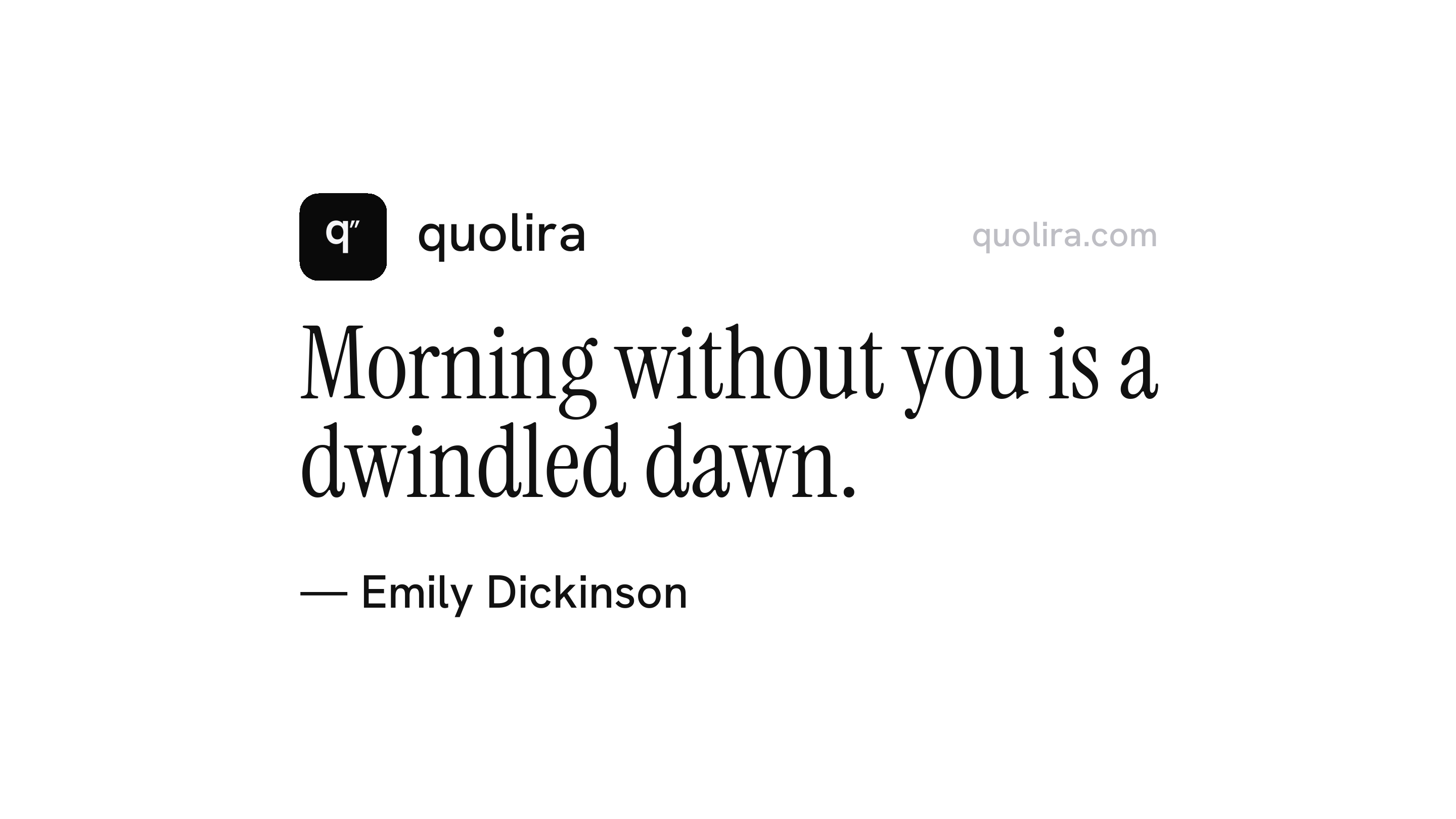
“Morning without you is a dwindled dawn.”
Emily Dickinson · Poem Fr949, c. 1864
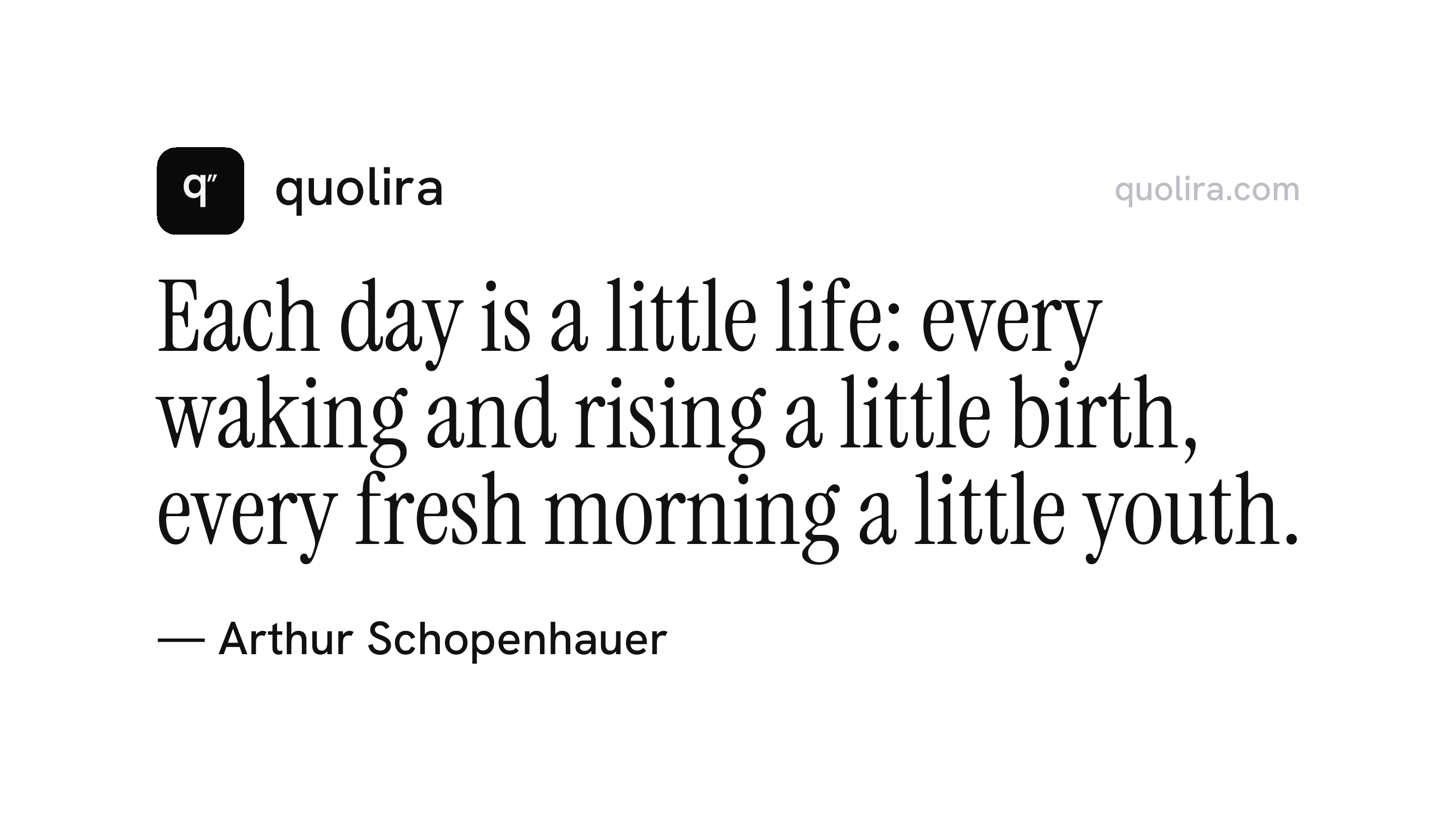
“Each day is a little life: every waking and rising a little birth, every fresh morning a little youth.”
Arthur Schopenhauer · "Counsels and Maxims", 1851
“Lose an hour in the morning and you will be all day hunting for it.”
Richard Whately · "Apophthegms", 1854