“If your brother sins, rebuke him, and if he repents, forgive him.”
Jesus · Luke 17:3 (NIV)
 quolira
.com
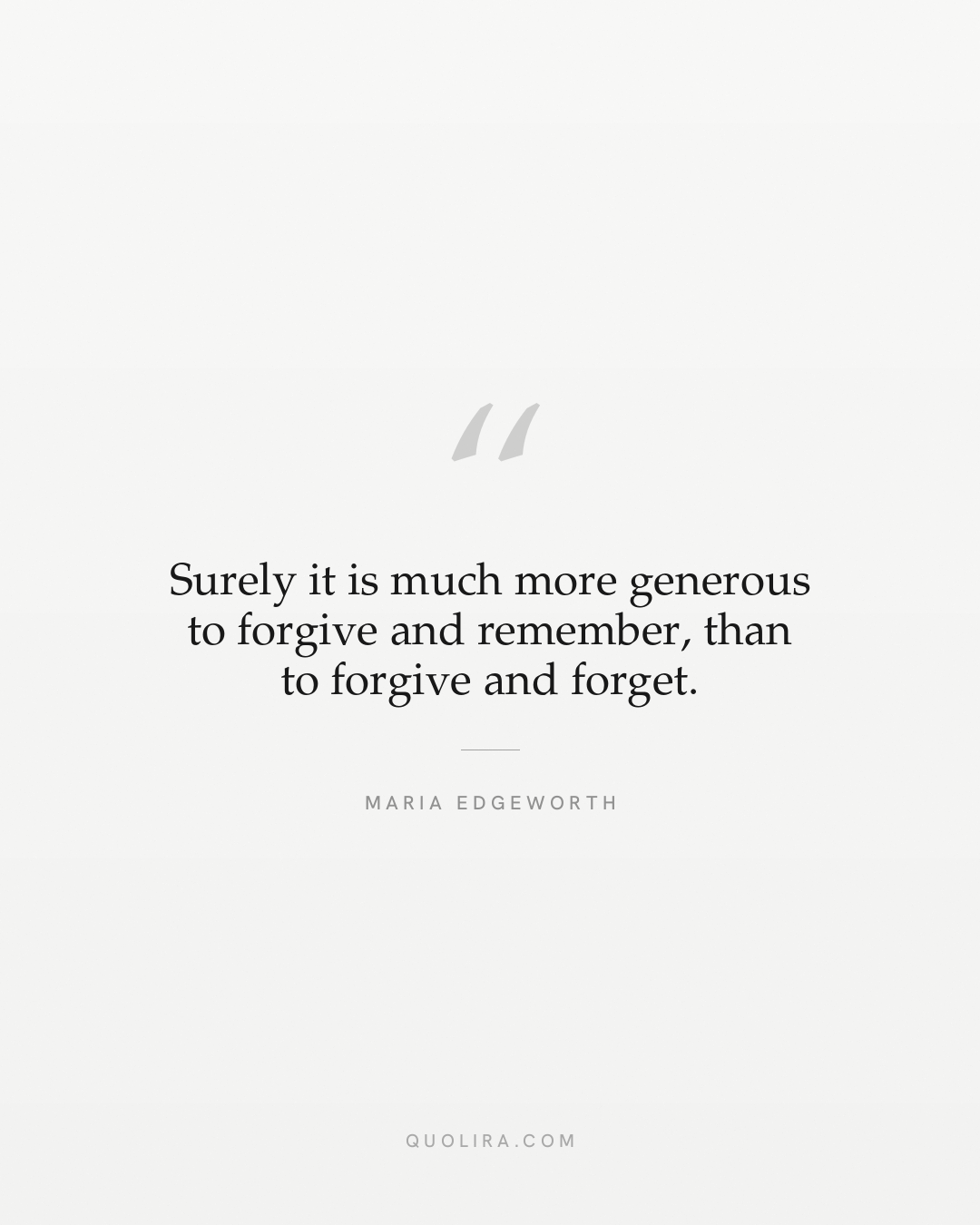
Maria Edgeworth said it, in An Essay on the Noble Science of Self-Justification.
Edgeworth separates the two actions more cleanly than most writers do. Remembering keeps you honest about what happened, while forgetting can leave the wound open without your noticing. Choose the one you can live with.
From the collection: 25 Quotes About Forgiveness: Famous Forgiveness Quotes That Free You · More Maria Edgeworth quotes
This quote means that it is more generous to forgive someone while still remembering the wrong than to forgive and pretend the wrong never happened. Edgeworth suggests that forgetting can be a kind of evasion, while remembering allows a person to forgive honestly and learn from what occurred. The generosity lies in choosing mercy with full awareness of the offense.
The line comes from an essay by Maria Edgeworth titled On the Noble Science of Self-Justification, which examines the habit people have of excusing their own faults and defending their conduct. Within that discussion, she distinguishes between forgiving and forgetting and argues that a memory of wrong can serve a moral purpose. Her essay reflects the moral and educational concerns that shaped much of her writing for young readers and general audiences.
Maria Edgeworth was an Anglo-Irish novelist and writer of moral tales and educational works. She was born in 1768 in England and died in 1849 in Ireland, where she spent much of her life at the family estate. She is best known for novels such as Castle Rackrent and for stories that examined manners, honesty, and the responsibilities of individuals within their families and communities.
“If your brother sins, rebuke him, and if he repents, forgive him.”
Jesus · Luke 17:3 (NIV)
“Be kind and compassionate to one another, forgiving each other, just as in Christ God forgave you.”
Paul of Tarsus · Ephesians 4:32 (NIV)
“I tell you, not seven times, but seventy-seven times.”
Jesus · Matthew 18:21-22 (NIV)
“Father, forgive them, for they do not know what they are doing.”
Jesus · Luke 23:34 (NIV), spoken from the cross
“Forgive, and you will be forgiven.”
Jesus · Luke 6:37 (NIV)
“Life, that ever needs forgiveness, has, for its first duty, to forgive.”
Edward Bulwer-Lytton · Zanoni (1842)
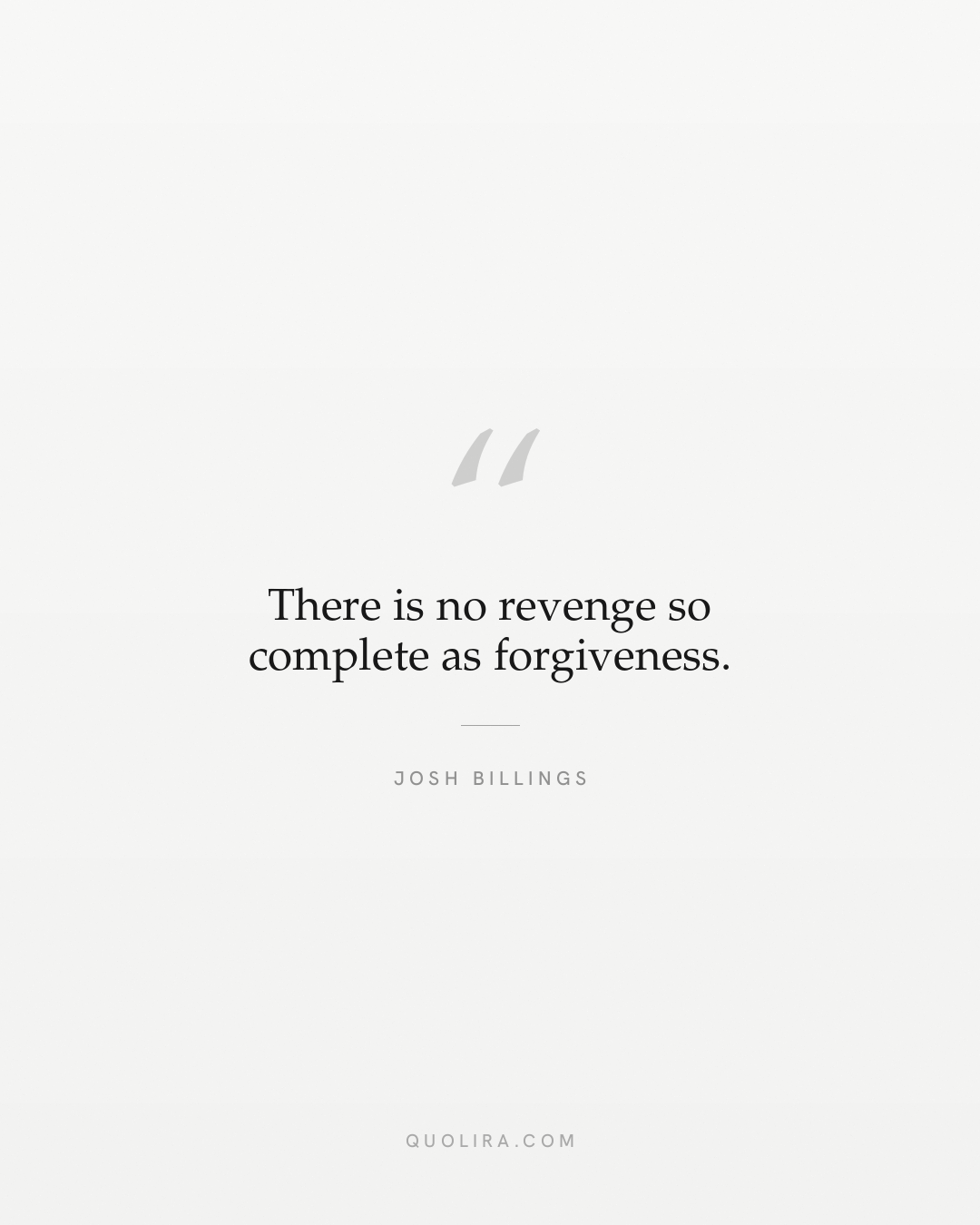
“There is no revenge so complete as forgiveness.”
Josh Billings · His Works, Complete (1873)
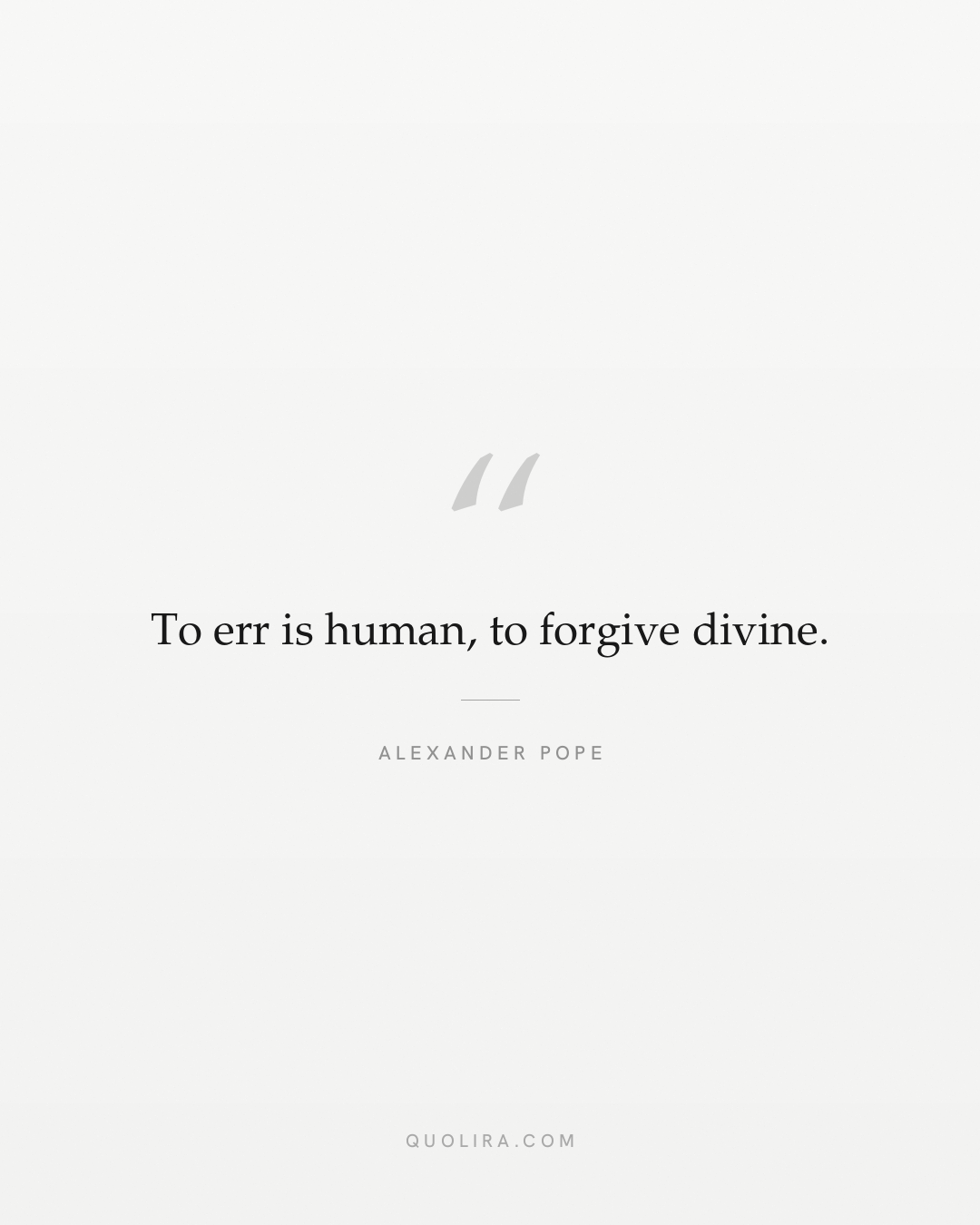
“To err is human, to forgive divine.”
Alexander Pope · An Essay on Criticism (1711)
“Forgive your enemies, but never forget their names.”
John F. Kennedy · Quoted in Mayor (1984) by Ed Koch
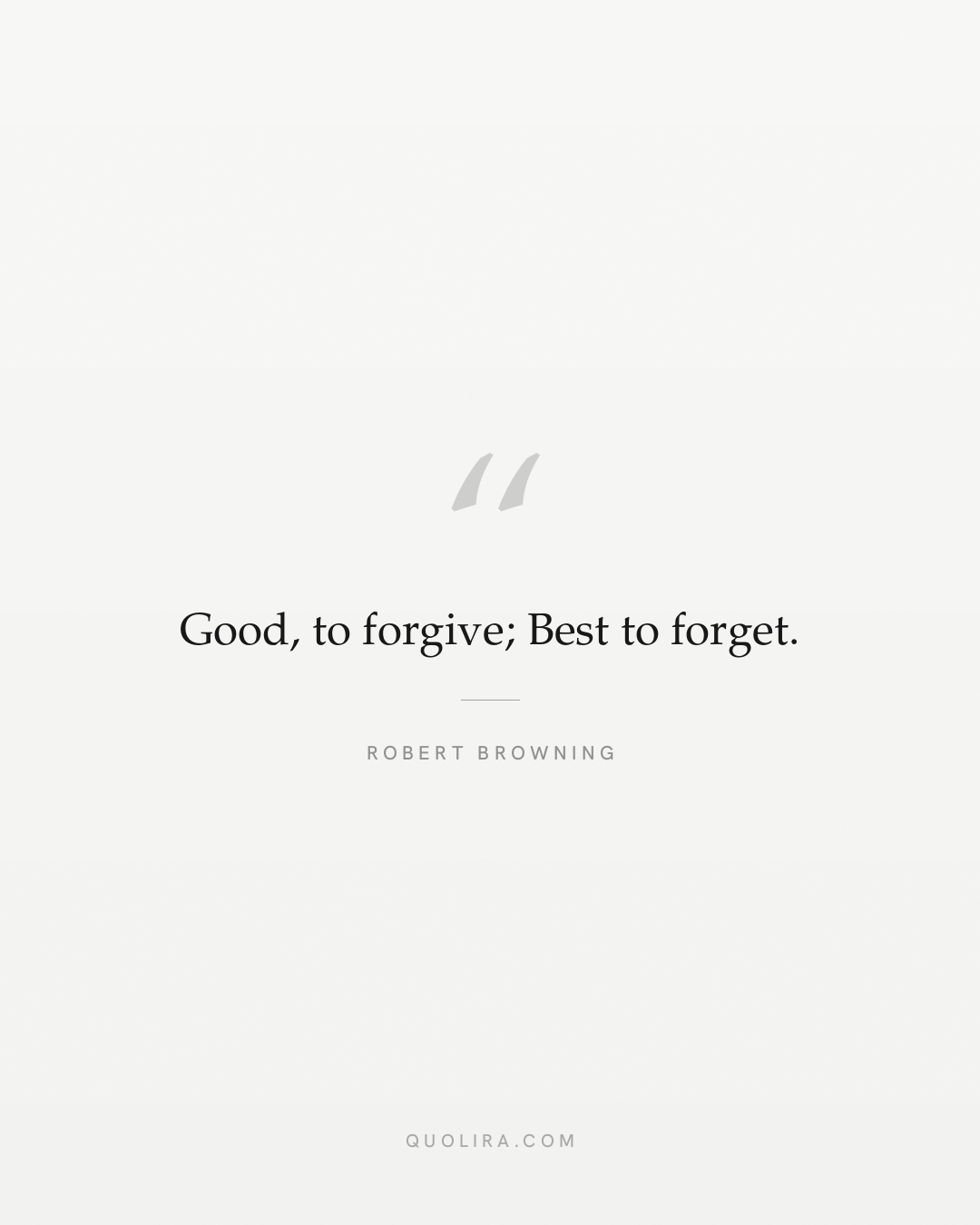
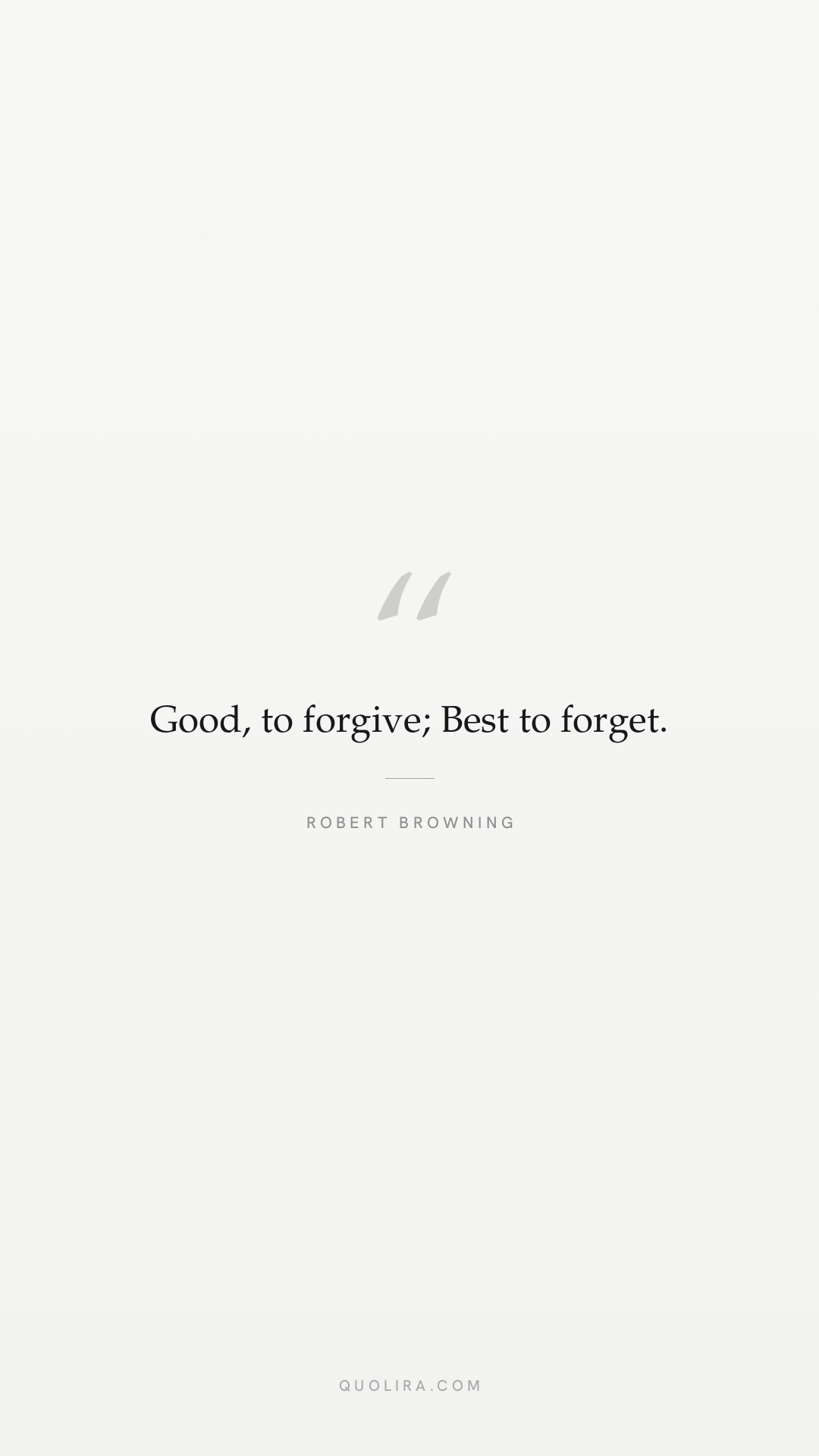
“Good, to forgive; Best to forget.”
Robert Browning · La Saisiaz, Prologue
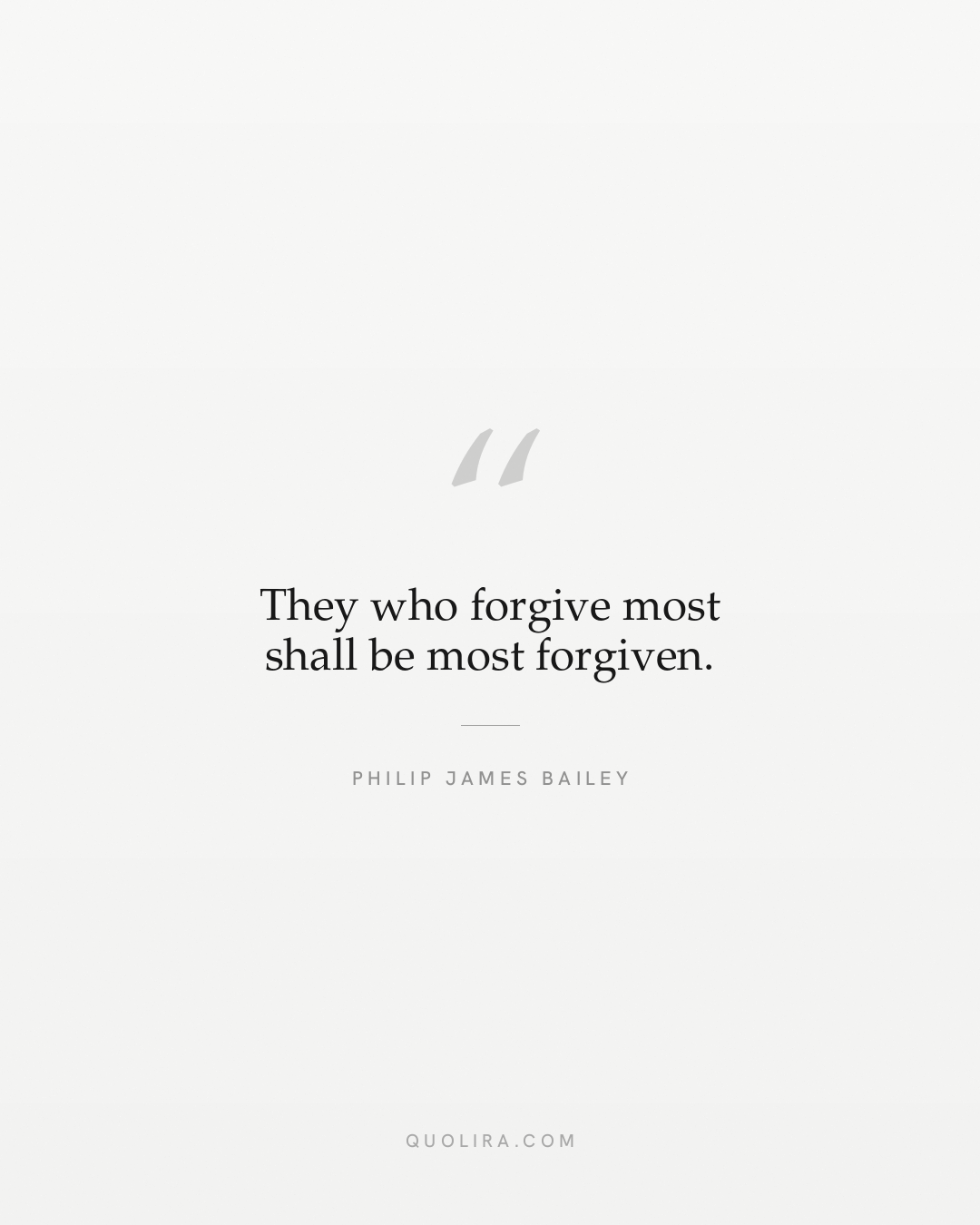
“They who forgive most shall be most forgiven.”
Philip James Bailey · Festus
“A room without books is like a body without a soul.”
Marcus Tullius Cicero (attributed) · Widely attributed to Cicero; not confirmed in his surviving writings.