“They who forgive most shall be most forgiven.”
Philip James Bailey · Festus
 quolira
.com
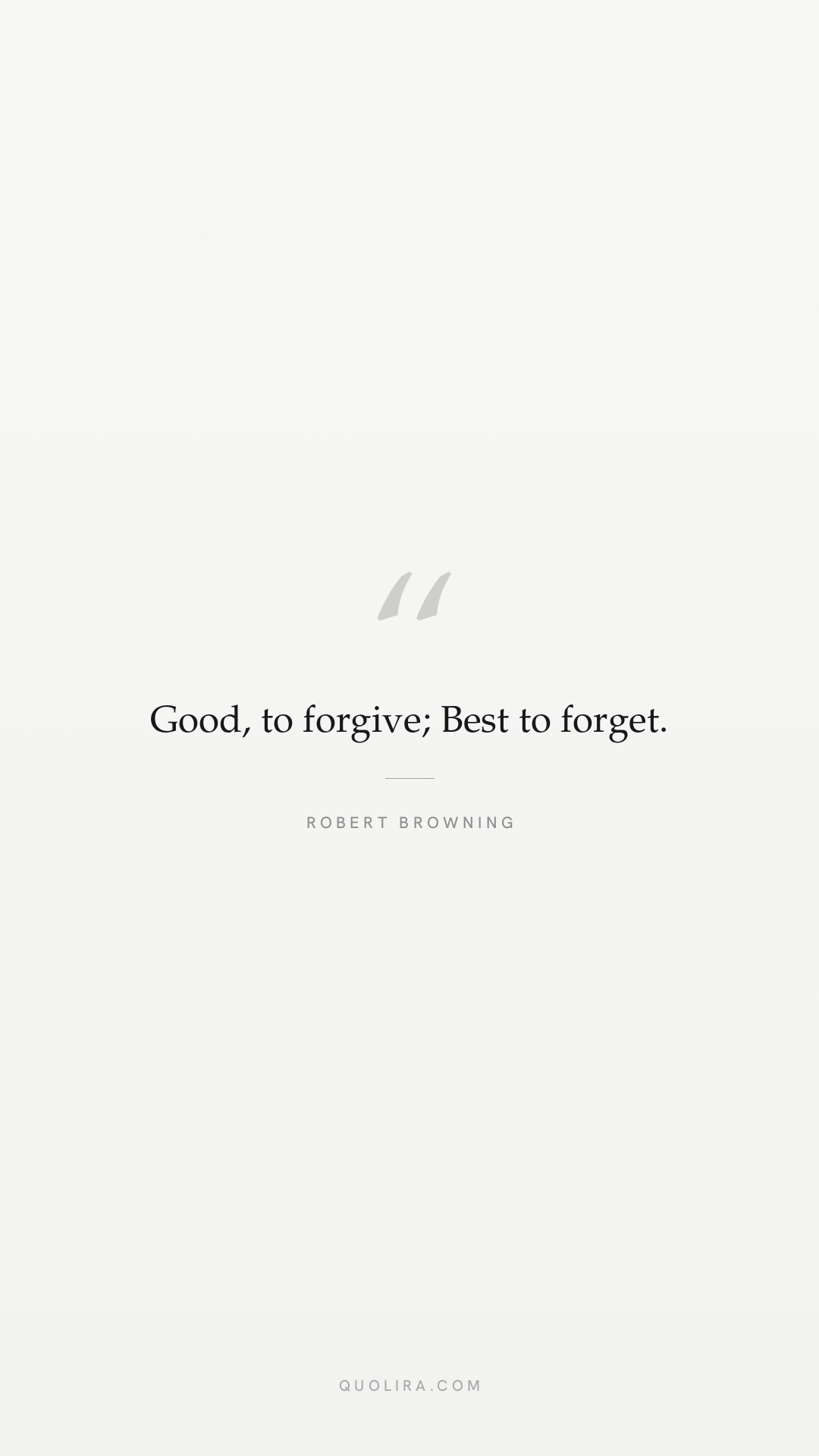
Robert Browning said it, in La Saisiaz, Prologue.
Browning's line is almost rude in how short it is. Forgiving is the first step, he says, and forgetting is the part most of us quietly fail. He has a point, since the old hurt keeps coming back when we forget to let it go.
From the collection: 25 Quotes About Forgiveness: Famous Forgiveness Quotes That Free You · More Robert Browning quotes
The line means that forgiving a wrong is a good thing, but forgetting it entirely is the better and more complete form of peace. Forgiveness releases resentment, while forgetting removes the wound from memory altogether. The lines together suggest that the mind heals most fully when it no longer needs to return to the injury.
The line appears in the Prologue to La Saisiaz, a reflective poem by Robert Browning published in 1878. The Prologue is personal in tone, shaped by the death of a close friend, and it moves through questions about grief, the soul and what survives loss. The poem is written in a conversational, meditative manner rather than as a dramatic monologue. Within that framework, the remark about forgiving and forgetting serves as a quiet observation about how people carry sorrow and the ways they try to set it down, rather than as a general rule of conduct.
Robert Browning (1812 to 1889) was an English poet best known for his dramatic monologues, including pieces such as "My Last Duchess." He spent much of his adult life in Italy and was married to the poet Elizabeth Barrett Browning, whose work he admired and who was a central presence in his life and writing. Browning was known for probing psychological complexity and moral ambiguity, and his later work often returned to questions of faith, mortality and the inner life. La Saisiaz is one of his more personal and philosophical late poems.
“They who forgive most shall be most forgiven.”
Philip James Bailey · Festus
“A room without books is like a body without a soul.”
Marcus Tullius Cicero (attributed) · Widely attributed to Cicero; not confirmed in his surviving writings.
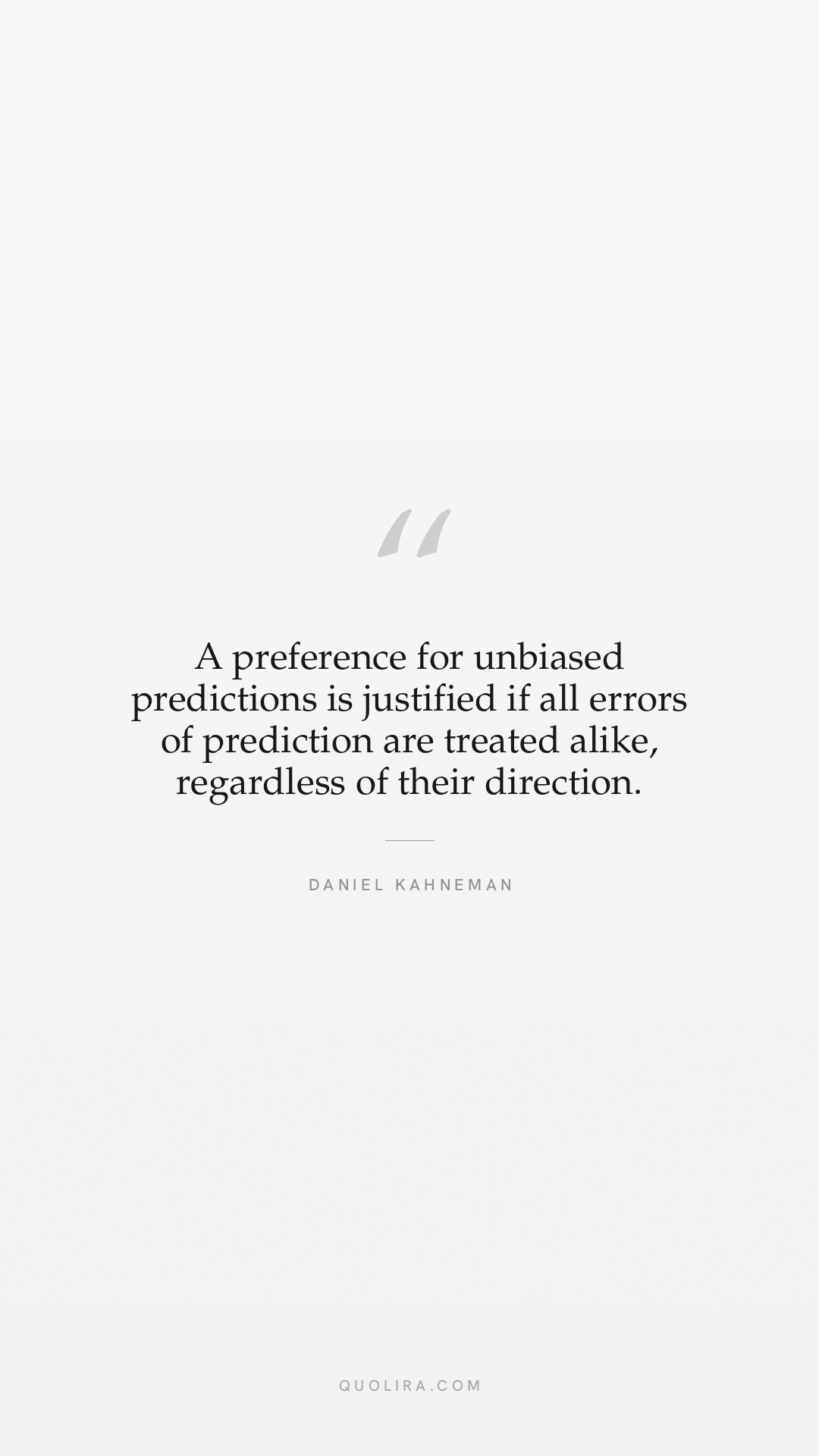
“A preference for unbiased predictions is justified if all errors of prediction are treated alike, regardless of their direction.”
Daniel Kahneman · Thinking, Fast and Slow, Chapter 18: Taming Intuitive Predictions
“Availability cascades are real and they undoubtedly distort priorities in the allocation of public resources.”
Daniel Kahneman · Thinking, Fast and Slow, Chapter 13: Availability, Emotion, and Risk
“Gruesome images, endlessly repeated in the media, cause everyone to be on edge.”
Daniel Kahneman · Thinking, Fast and Slow, Chapter 13: Availability, Emotion, and Risk
“More doubt is the last thing you want when you are in trouble.”
Daniel Kahneman · Thinking, Fast and Slow, Conclusion
“The voice of reason may be much fainter than the loud and clear voice of an erroneous intuition, and questioning your intuitions is unpleasant when you face the stress of a big decision.”
Daniel Kahneman · Thinking, Fast and Slow, Conclusion
“The best we can do is a compromise: learn to recognize situations in which mistakes are likely and try harder to avoid significant mistakes when the stakes are high.”
Daniel Kahneman · Thinking, Fast and Slow, Chapter 1: The Characters of the Story
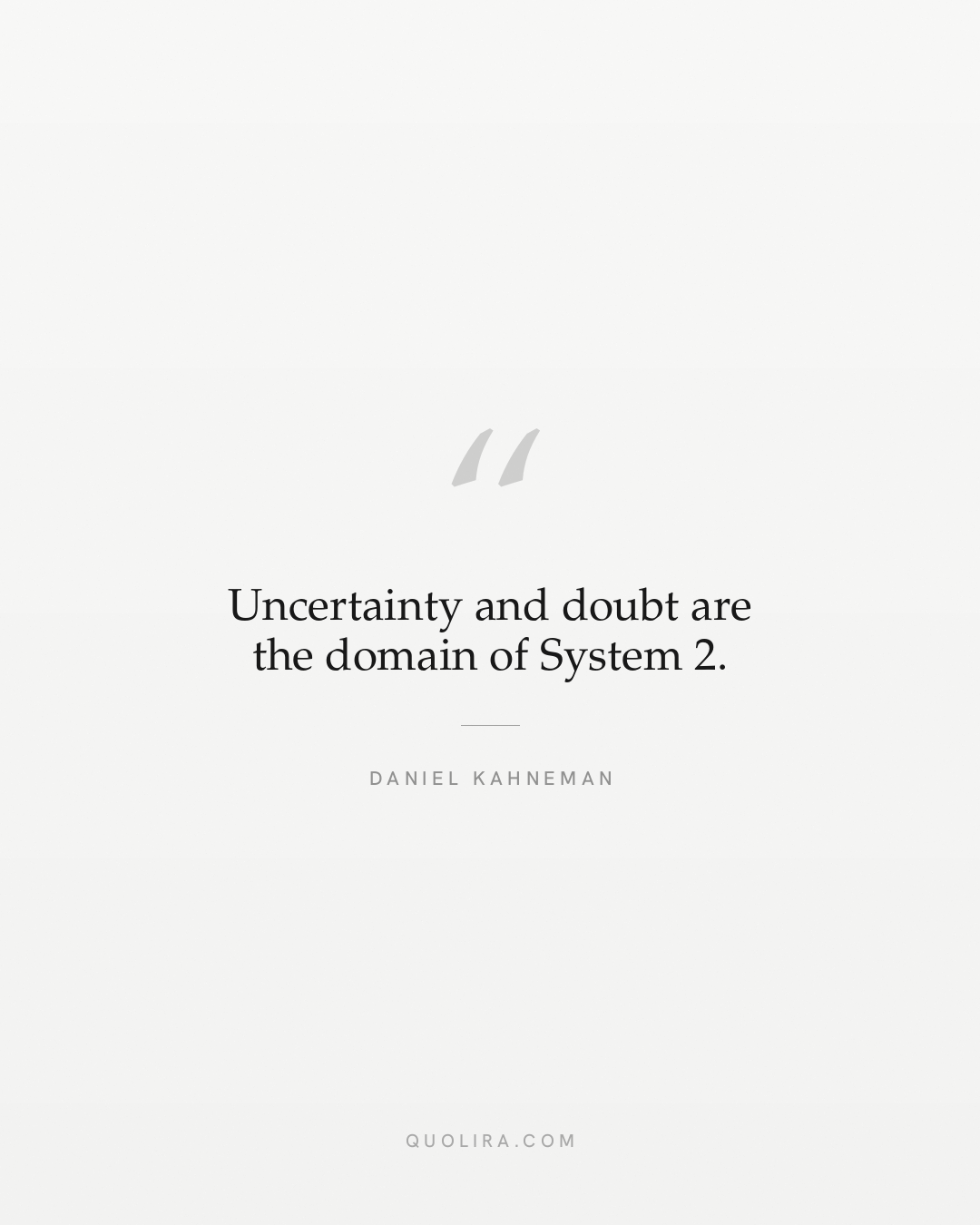
“Uncertainty and doubt are the domain of System 2.”
Daniel Kahneman · Thinking, Fast and Slow, Chapter 7: A Machine for Jumping to Conclusions
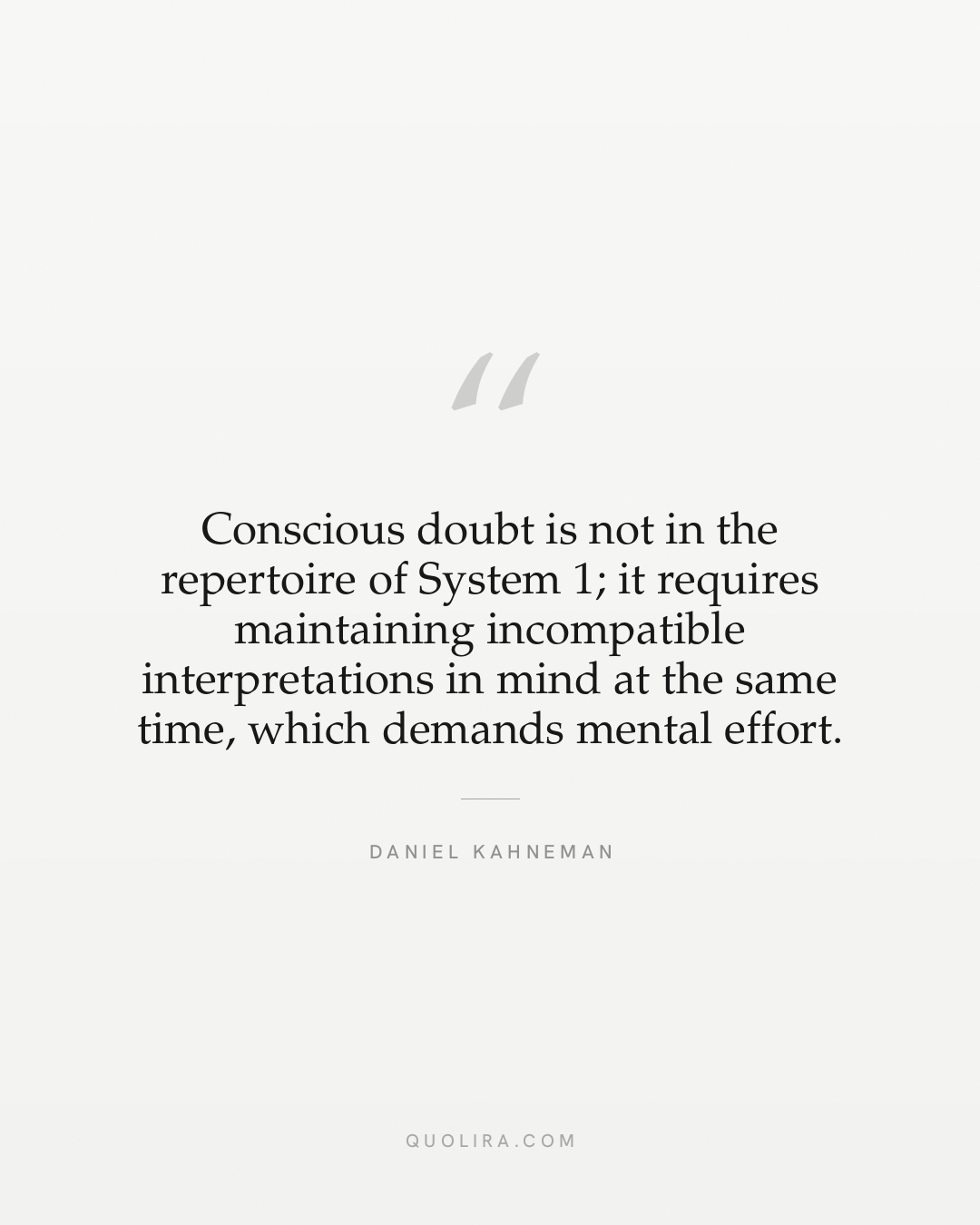
“Conscious doubt is not in the repertoire of System 1; it requires maintaining incompatible interpretations in mind at the same time, which demands mental effort.”
Daniel Kahneman · Thinking, Fast and Slow, Chapter 7: A Machine for Jumping to Conclusions
“The consistency I had enjoyed earlier was spurious; it produced a feeling of cognitive ease, and my System 2 was happy to lazily accept the final grade.”
Daniel Kahneman · Thinking, Fast and Slow, Chapter 7: A Machine for Jumping to Conclusions
“System 1 does not keep track of alternatives that it rejects, or even of the fact that there were alternatives.”
Daniel Kahneman · Thinking, Fast and Slow, Chapter 7: A Machine for Jumping to Conclusions