“Tears, idle tears, I know not what they mean.”
Alfred, Lord Tennyson · The Princess (1847)
 quolira
.com
Alfred, Lord Tennyson said it, in Break, Break, Break (1842).
This short poem is often linked to Tennyson's grief for Hallam. It names the two things you miss most, a touch and a voice, and it does so in fewer than twenty words.
From the collection: 22 Quotes About Grief and Missing Someone Who Has Died That Help You Carry the Loss · More Alfred, Lord Tennyson quotes
The quote expresses a longing to feel the physical presence and voice of someone who has died, knowing those signs of them will never return. Tennyson pairs two of the most intimate senses, touch and hearing, to show how grief often centers on small, bodily memories. The word "O" at the start signals a cry rather than a calm reflection, which makes the sorrow feel immediate.
The lines come from "Break, Break, Break," published in 1842 as part of Tennyson's collected poems. The poem is widely linked to the death of his close friend Arthur Henry Hallam in 1833, although the poem never names him. Its restrained structure and repeated images of the sea and the shore give the grief a quiet, almost rhythmic quality, as though the speaker is caught in a loop of memory and loss.
Alfred, Lord Tennyson (1809 to 1892) was an English poet who became one of the most celebrated writers of the Victorian era. He was named Poet Laureate in 1850 and held the position for decades, producing work that ranged from lyric poems to long narrative pieces. His poetry often explored faith, doubt, memory and mourning, and his grief for Hallam shaped many of his most personal verses. Readers still turn to his work for its precise musical language and its honest portrayal of loss.
“Tears, idle tears, I know not what they mean.”
Alfred, Lord Tennyson · The Princess (1847)
“Any man's death diminishes me, because I am involved in mankind.”
John Donne · Devotions upon Emergent Occasions, Meditation XVII (1624)
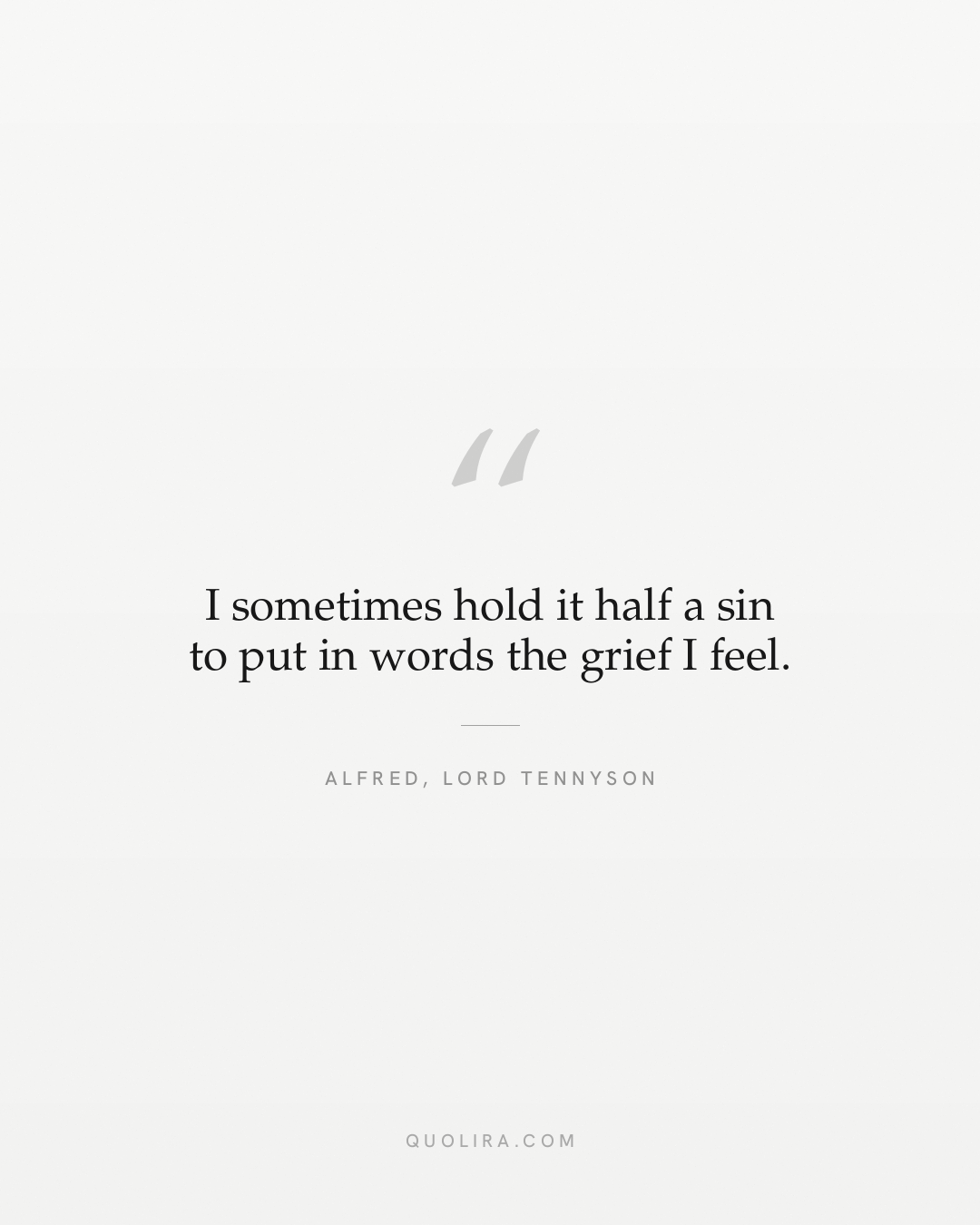
“I sometimes hold it half a sin to put in words the grief I feel.”
Alfred, Lord Tennyson · In Memoriam A.H.H. (1850), section 5
“This thou perceiv'st, which makes thy love more strong, to love that well which thou must leave ere long.”
William Shakespeare · Sonnets, Sonnet 73 (1609)
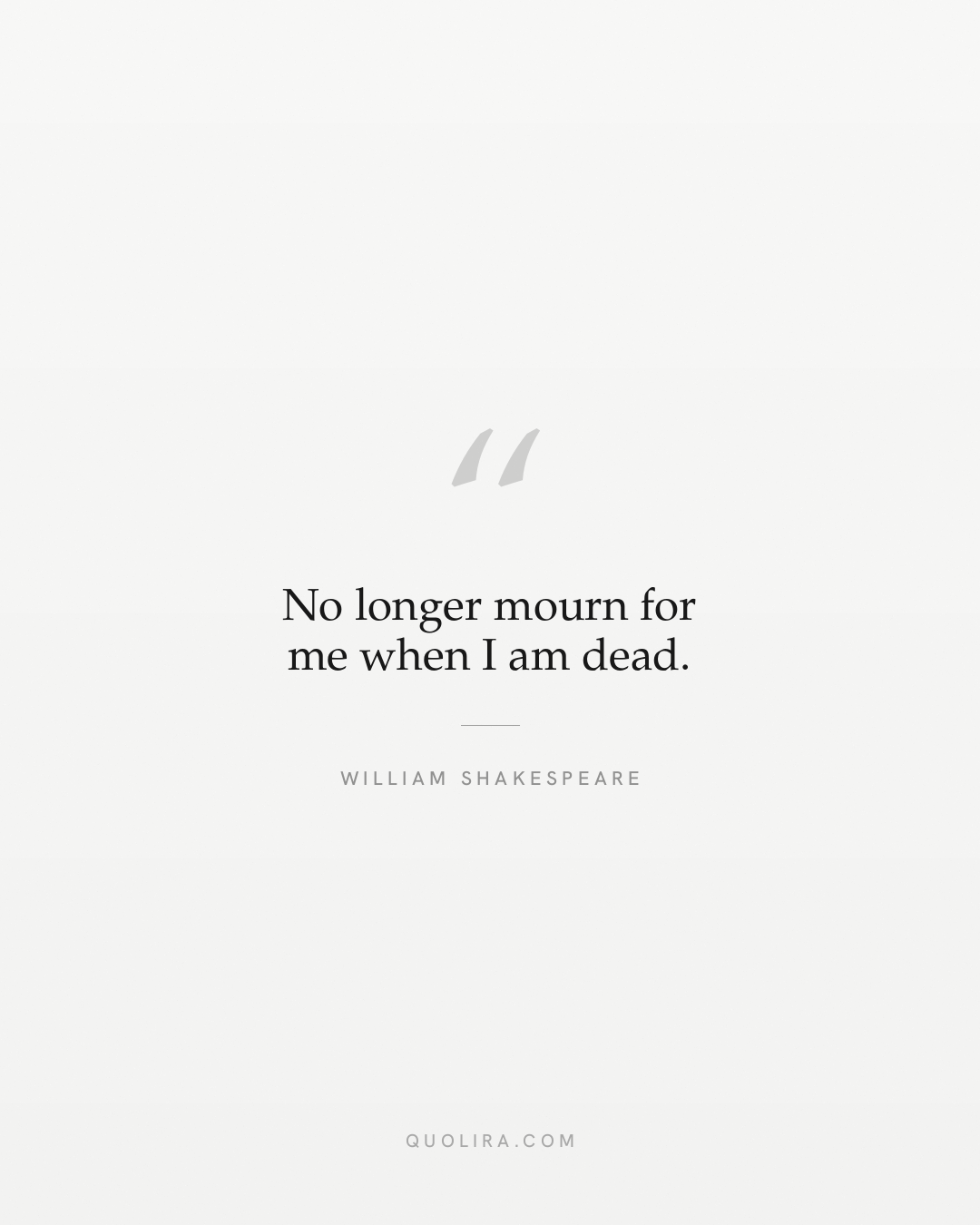
“No longer mourn for me when I am dead.”
William Shakespeare · Sonnets, Sonnet 71 (1609)
“But if the while I think on thee, dear friend, all losses are restored and sorrows end.”
William Shakespeare · Sonnets, Sonnet 30 (1609)
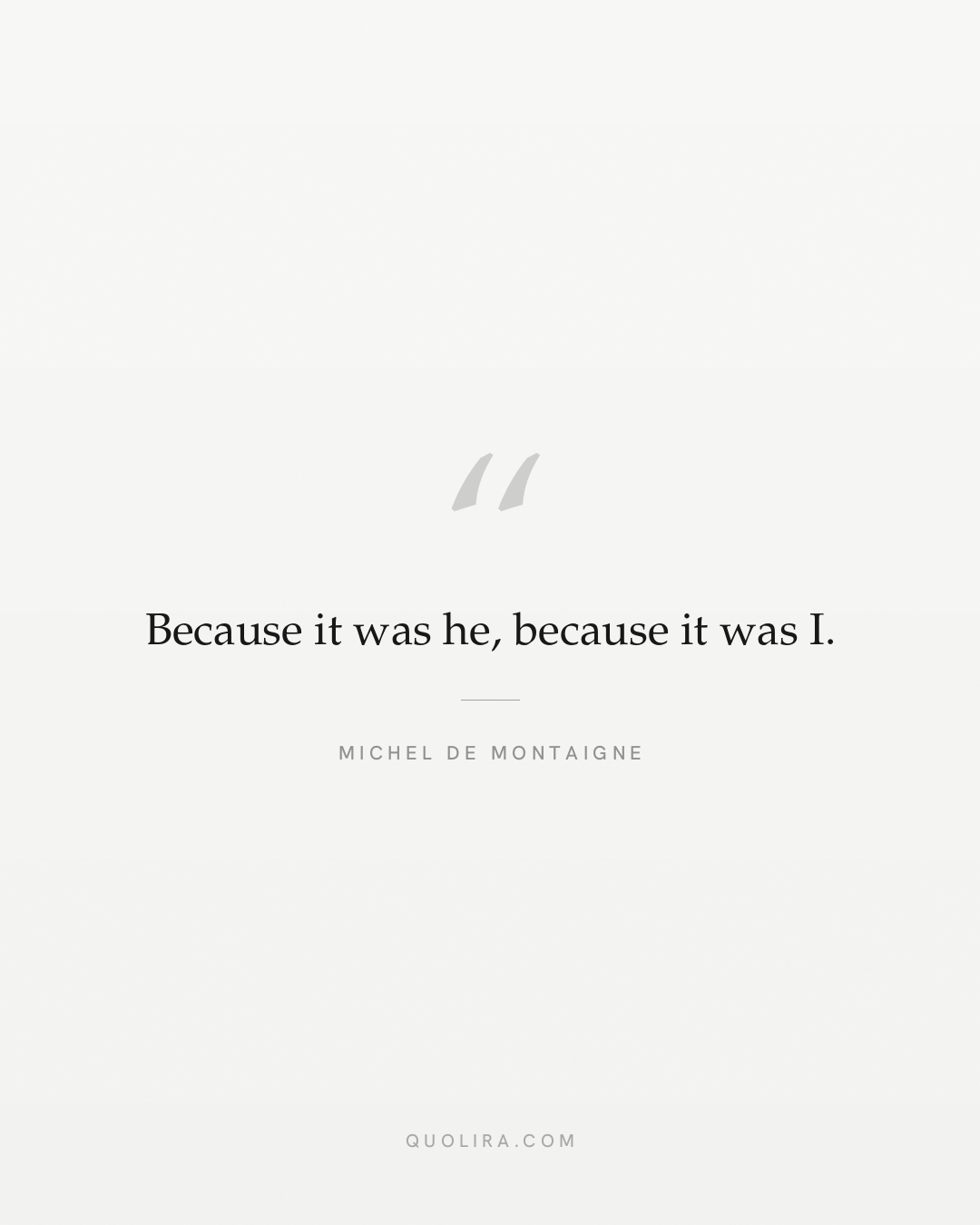
“Because it was he, because it was I.”
Michel de Montaigne · Essays, "Of Friendship" (1580)
“Grief is like a long valley, a winding valley where any bend may reveal a totally new landscape.”
C.S. Lewis · A Grief Observed (1961)
“Give sorrow words: the grief that does not speak whispers the o'er-fraught heart and bids it break.”
William Shakespeare · Macbeth, Act 4, Scene 3
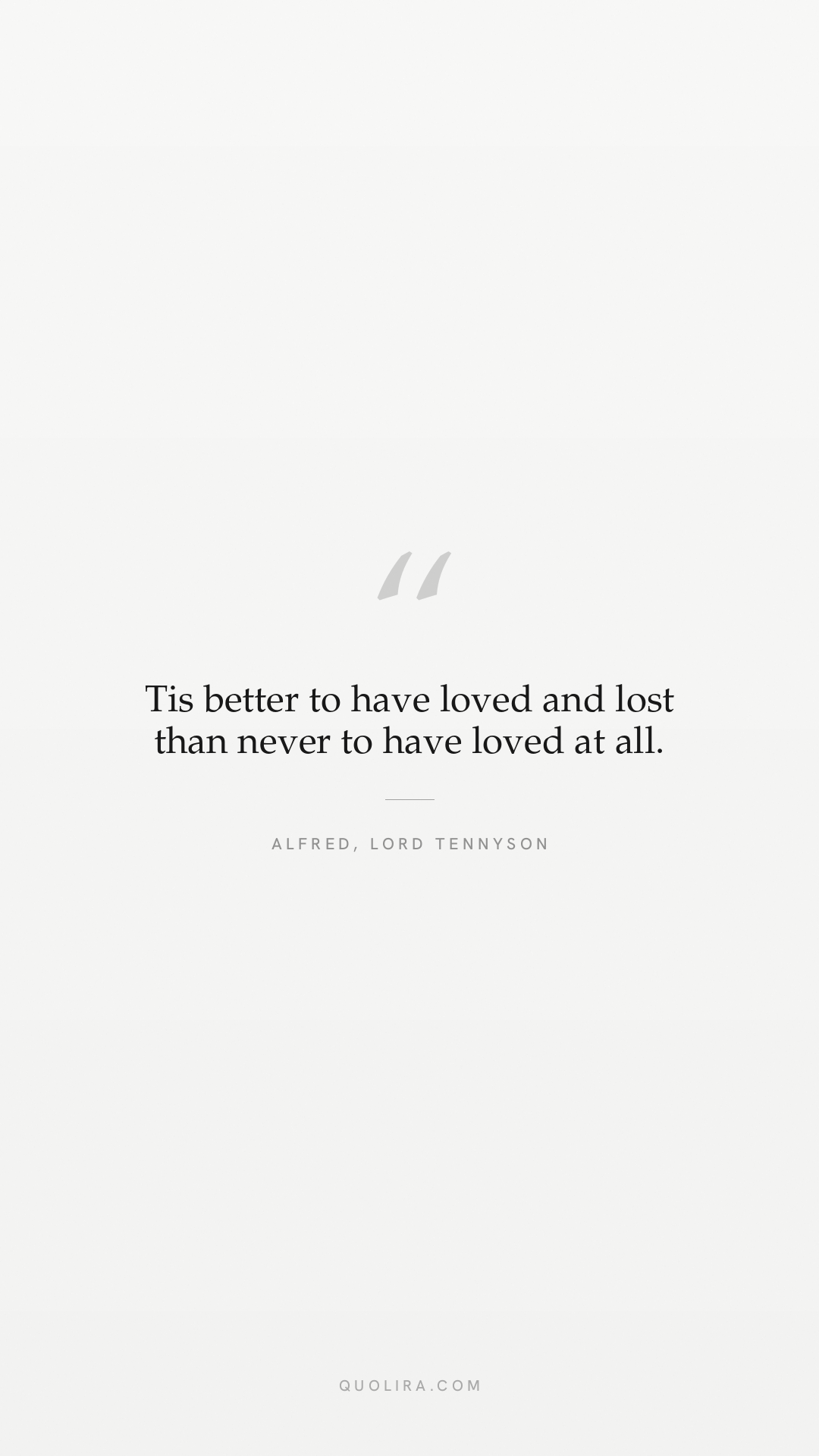
“'Tis better to have loved and lost than never to have loved at all.”
Alfred, Lord Tennyson · In Memoriam A.H.H. (1850)
“Life changes fast. Life changes in the instant. You sit down to dinner and life as you know it ends.”
Joan Didion · The Year of Magical Thinking (2005)
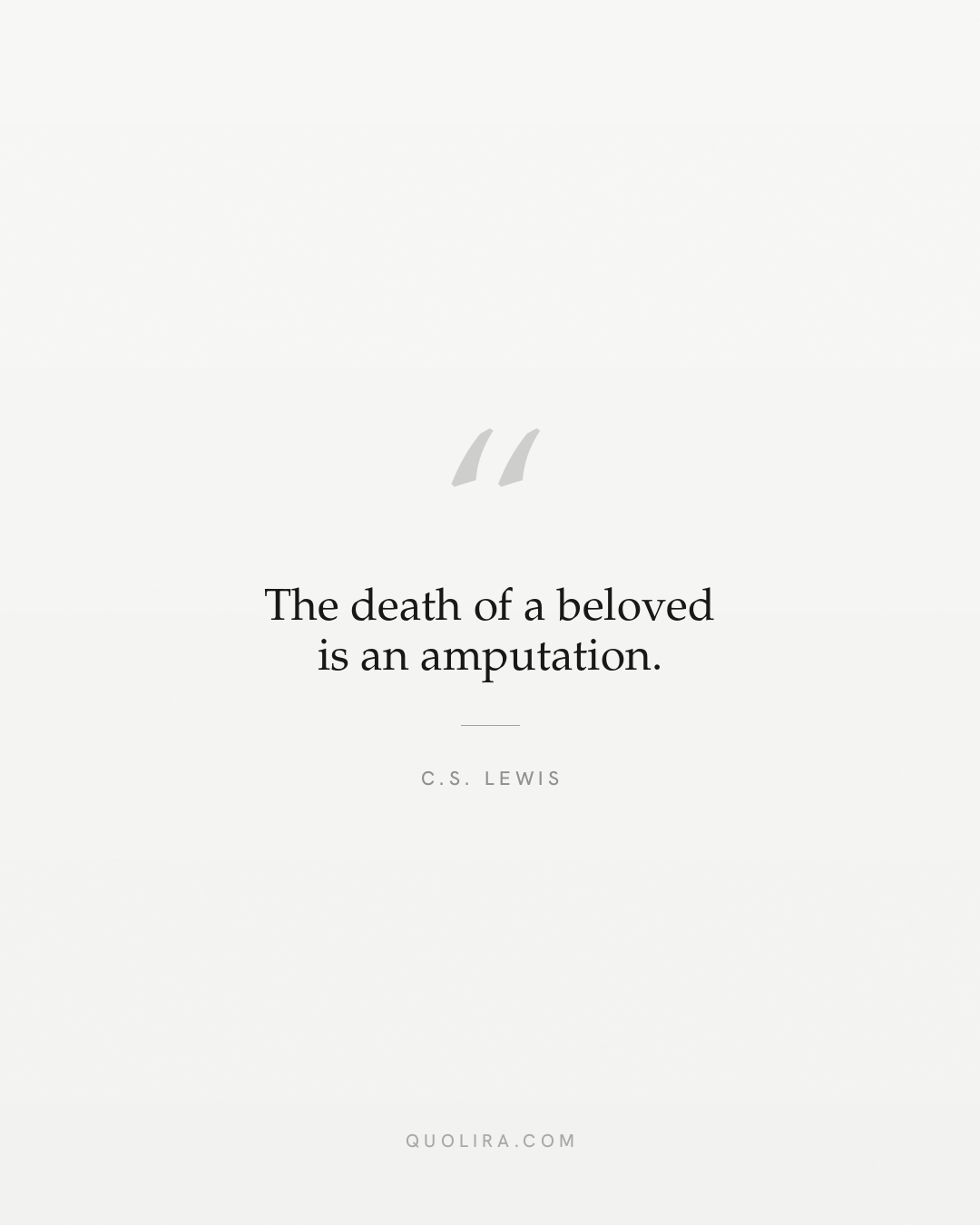
“The death of a beloved is an amputation.”
C.S. Lewis · A Grief Observed (1961)