“I sometimes hold it half a sin to put in words the grief I feel.”
Alfred, Lord Tennyson · In Memoriam A.H.H. (1850), section 5
 quolira
.com
John Donne said it, in Devotions upon Emergent Occasions, Meditation XVII (1624).
Donne argues that every death is a loss to everyone. That idea makes the grief of strangers feel connected to your own, which can be oddly steadying when you feel alone.
From the collection: 22 Quotes About Grief and Missing Someone Who Has Died That Help You Carry the Loss · More John Donne quotes
This line says that every person's death affects the whole human community, so no death is entirely separate from our own lives. Because people are connected to one another, the loss of any one of them makes all of us a little smaller. The statement is both a sorrow and an argument for shared responsibility.
The line comes from Meditation XVII in Devotions upon Emergent Occasions, a prose work published in 1624. Donne wrote these meditations while recovering from a serious illness, reflecting on sickness, mortality, and the bonds that unite people. The passage uses the image of a bell tolling for a death and urges the reader to hear it as a summons to consider their own connection to others. The idea is grounded in a belief in common humanity rather than in private grief alone.
John Donne (1572 to 1631) was an English poet and cleric who served as Dean of St Paul's Cathedral in London from 1621. Before entering the church, he wrote love poems, satires, and religious verse that are often grouped with the Metaphysical poets for their wit and argumentative energy. His sermons and devotional prose were widely read in his lifetime and remain important in the study of seventeenth century English. Donne's meditations on death and community continue to be quoted in discussions of loss.
“I sometimes hold it half a sin to put in words the grief I feel.”
Alfred, Lord Tennyson · In Memoriam A.H.H. (1850), section 5
“This thou perceiv'st, which makes thy love more strong, to love that well which thou must leave ere long.”
William Shakespeare · Sonnets, Sonnet 73 (1609)
“No longer mourn for me when I am dead.”
William Shakespeare · Sonnets, Sonnet 71 (1609)
“But if the while I think on thee, dear friend, all losses are restored and sorrows end.”
William Shakespeare · Sonnets, Sonnet 30 (1609)
“Because it was he, because it was I.”
Michel de Montaigne · Essays, "Of Friendship" (1580)
“Grief is like a long valley, a winding valley where any bend may reveal a totally new landscape.”
C.S. Lewis · A Grief Observed (1961)
“Give sorrow words: the grief that does not speak whispers the o'er-fraught heart and bids it break.”
William Shakespeare · Macbeth, Act 4, Scene 3
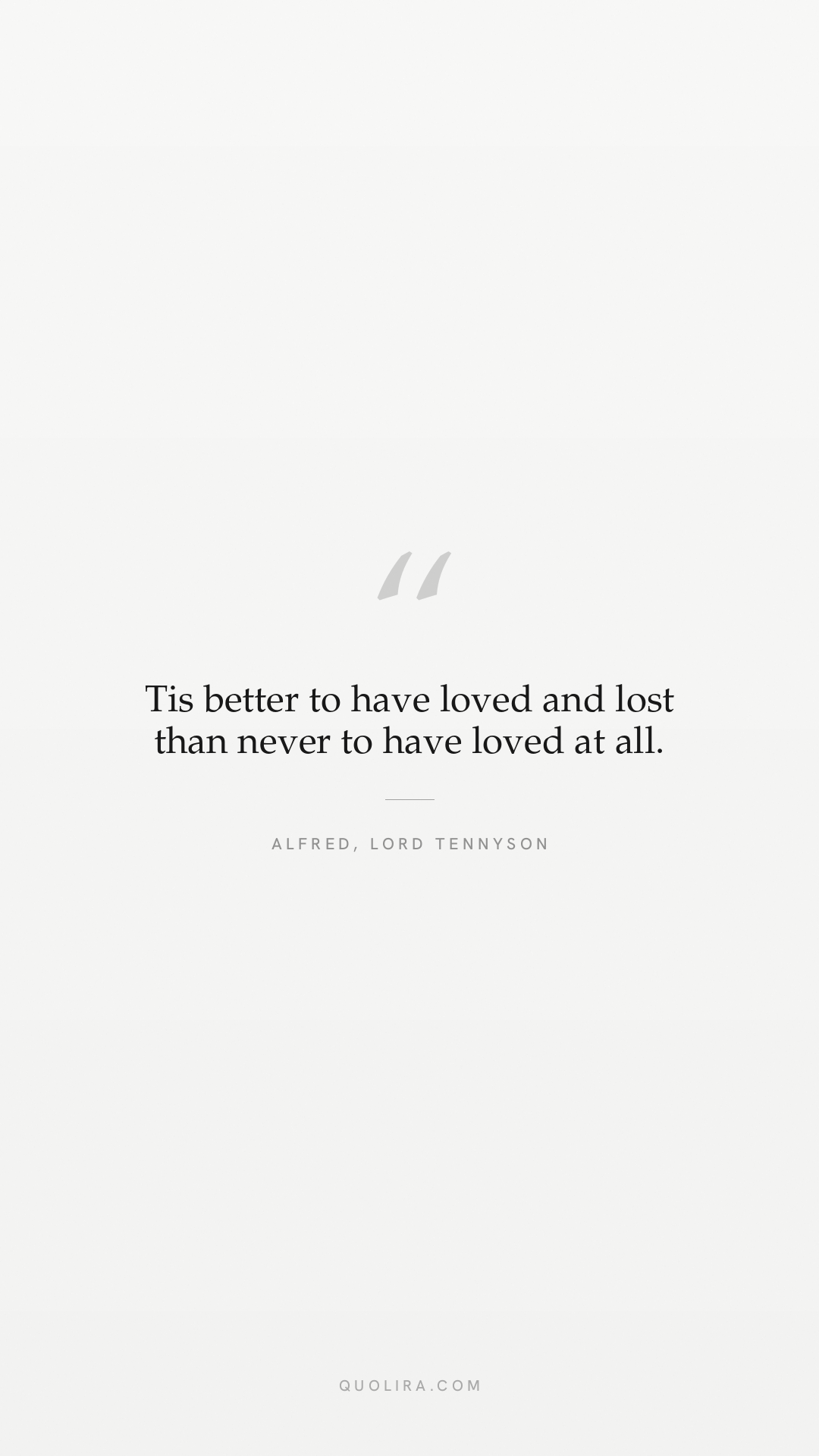
“'Tis better to have loved and lost than never to have loved at all.”
Alfred, Lord Tennyson · In Memoriam A.H.H. (1850)
“Life changes fast. Life changes in the instant. You sit down to dinner and life as you know it ends.”
Joan Didion · The Year of Magical Thinking (2005)
“The death of a beloved is an amputation.”
C.S. Lewis · A Grief Observed (1961)
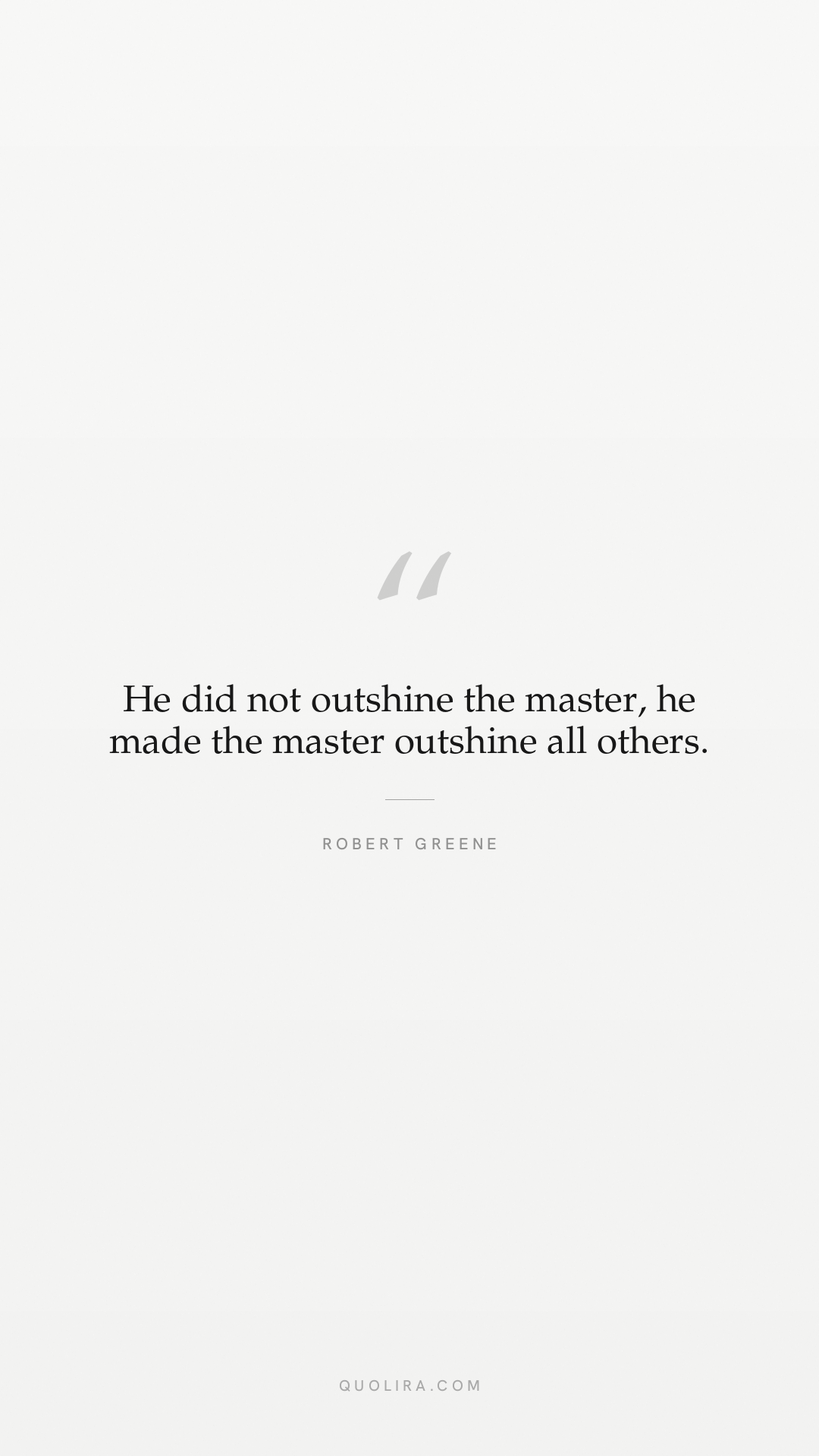
“He did not outshine the master, he made the master outshine all others.”
Robert Greene · The 48 Laws of Power, Law 1: Never Outshine the Master
“A round man cannot be expected to fit in a square hole right away. He must have time to modify his shape.”
Mark Twain · More Tramps Abroad (1897)