“Patience is to faith what the head is to the body.”
Imam Ali ibn Abi Talib · attributed, Nahj al-Balagha tradition
 quolira
.com
quolira
quolira.com
The saying works in two directions at once. The first half warns against complacency: even if you have cultivated many friendships, each one is precious and none can be treated as expendable. The second half carries a more sobering weight: a single genuine enemy is not a minor inconvenience but a persistent presence that tends to surface in unexpected moments and places. Together the two lines press home the importance of how we treat people, since both goodwill and hostility have long reach.
This aphorism is widely attributed to Imam Ali ibn Abi Talib and belongs to a tradition of concise moral wisdom associated with him. It has also circulated in later literary contexts across different cultures and languages, sometimes appearing in modified form attributed to various writers, which reflects how powerfully the underlying insight travels. The observation about enemies appearing everywhere echoes a practical understanding of social life: grievances are remembered, and those who hold them tend to find opportunities. The counsel is ultimately one of care, humility, and attention in all relationships.
Imam Ali ibn Abi Talib was a seventh-century figure central to early Islamic history. As cousin and son-in-law to Prophet Muhammad, he grew up within the prophetic household and is regarded as one of the most knowledgeable of the companions. He served as caliph from 656 to 661 CE and is venerated especially in Shia Islam as the rightful successor to the Prophet. The large body of sayings attributed to him addresses governance, ethics, friendship, self-knowledge, and the interior life, and they continue to be studied and quoted widely today.
“Patience is to faith what the head is to the body.”
Imam Ali ibn Abi Talib · attributed, Nahj al-Balagha tradition
“People are slaves to the world, and religion is just a lip-service from them.”
Imam Hussain ibn Ali · attributed
“If you do not have a religion and you do not fear the Day of Resurrection, then at least be free in this world.”
Imam Hussain ibn Ali · attributed, addressed at Karbala
“Death with dignity is better than a life of humiliation.”
Imam Hussain ibn Ali · attributed, Karbala
“My father used to play with my brother and me in the yard. Mother would come out and say, You're tearing up the grass. We're not raising grass, Dad would reply. We're raising boys.”
Harmon Killebrew
“The quality of a father can be seen in the goals, dreams and aspirations he sets not only for himself, but for his family.”
Reed Markham
“There's something like a line of gold thread running through a man's words when he talks to his daughter, and gradually over the years it gets to be long enough for you to pick up in your hands and weave into a cloth that feels like love itself.”
John Gregory Brown · Decorations in a Ruined Cemetery
“A girl's father is the first man in her life, and probably the most influential.”
David Jeremiah
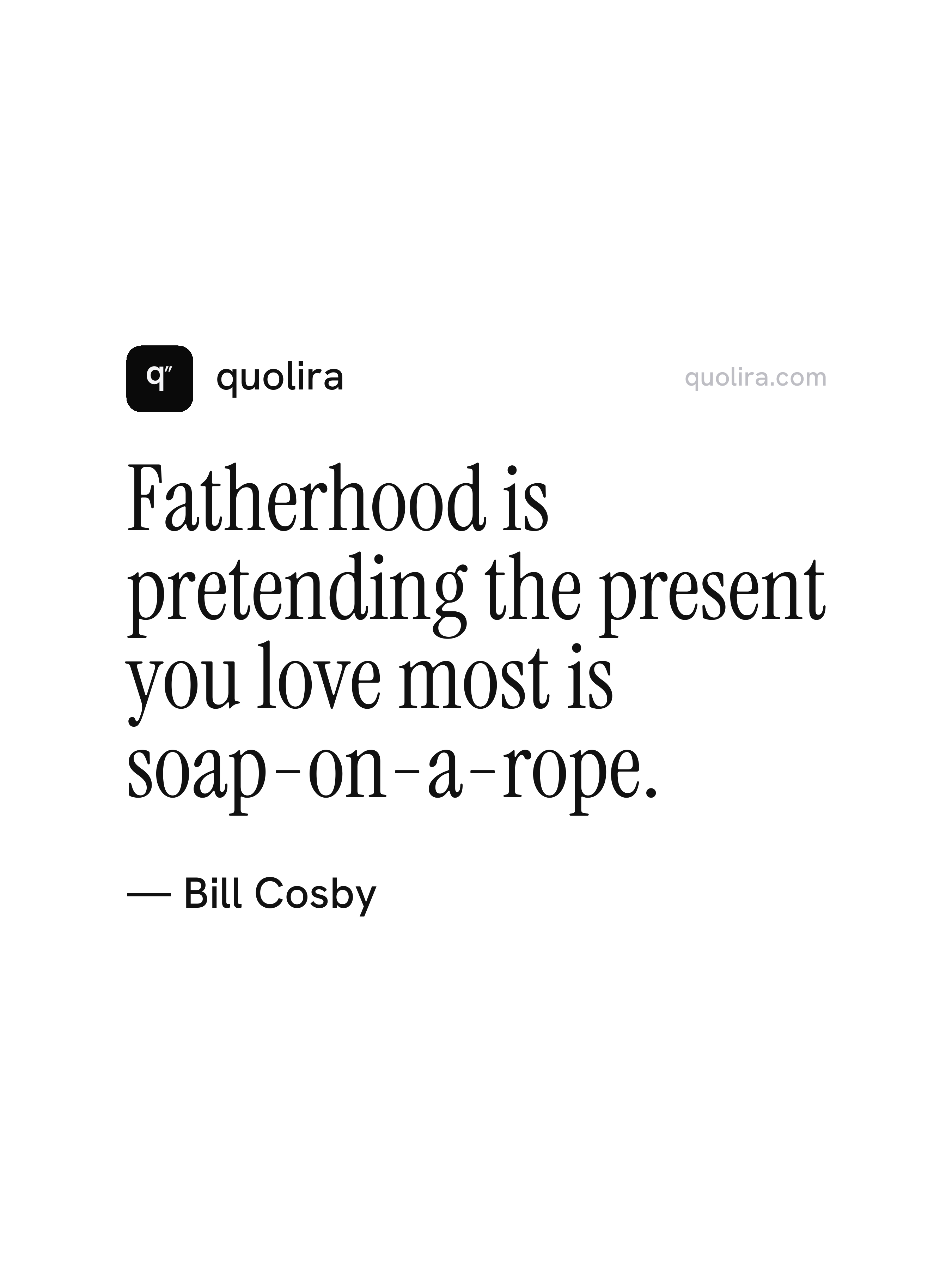
“Fatherhood is pretending the present you love most is soap-on-a-rope.”
Bill Cosby · Fatherhood, 1986
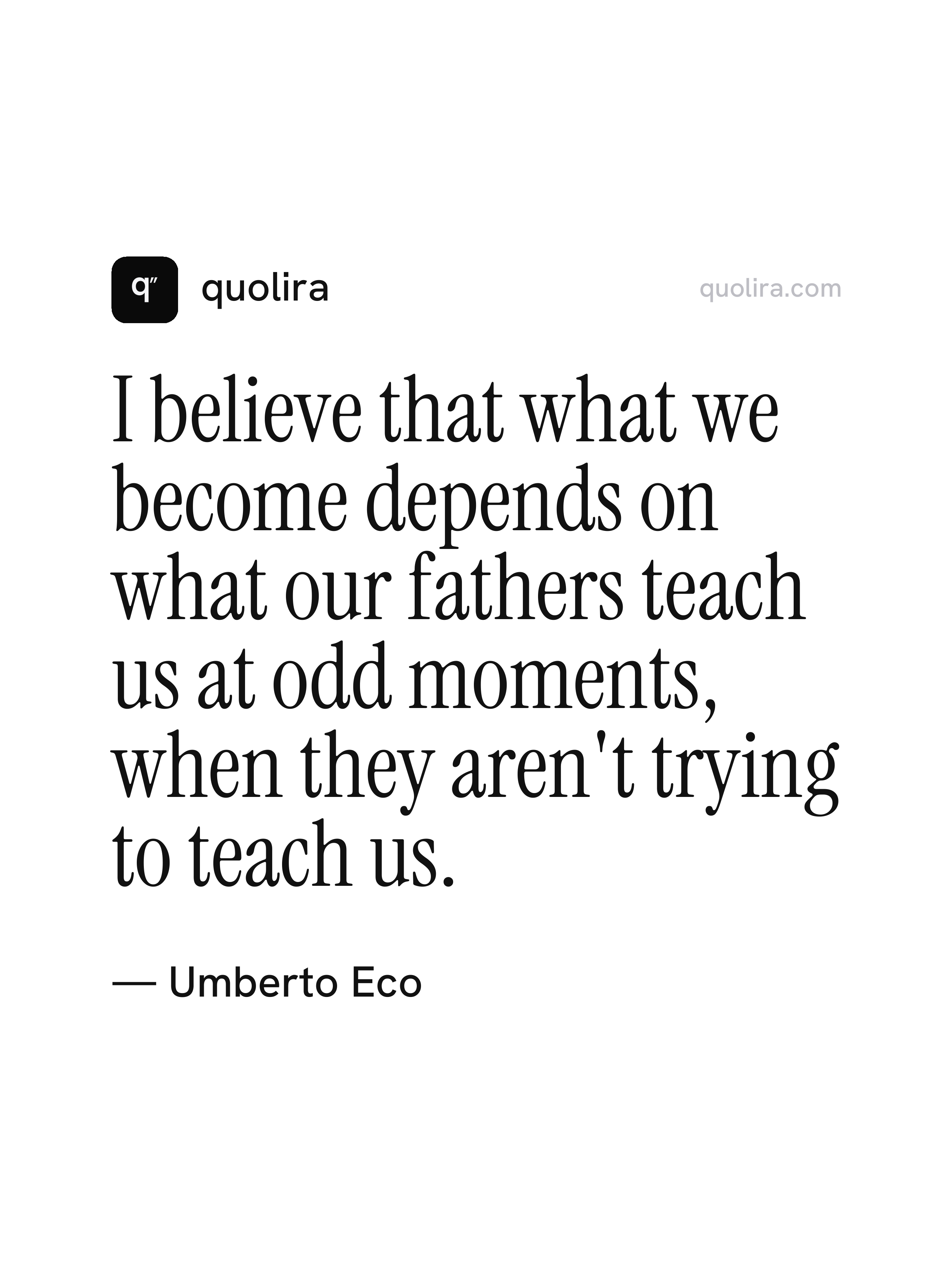
“I believe that what we become depends on what our fathers teach us at odd moments, when they aren't trying to teach us.”
Umberto Eco · Foucault's Pendulum
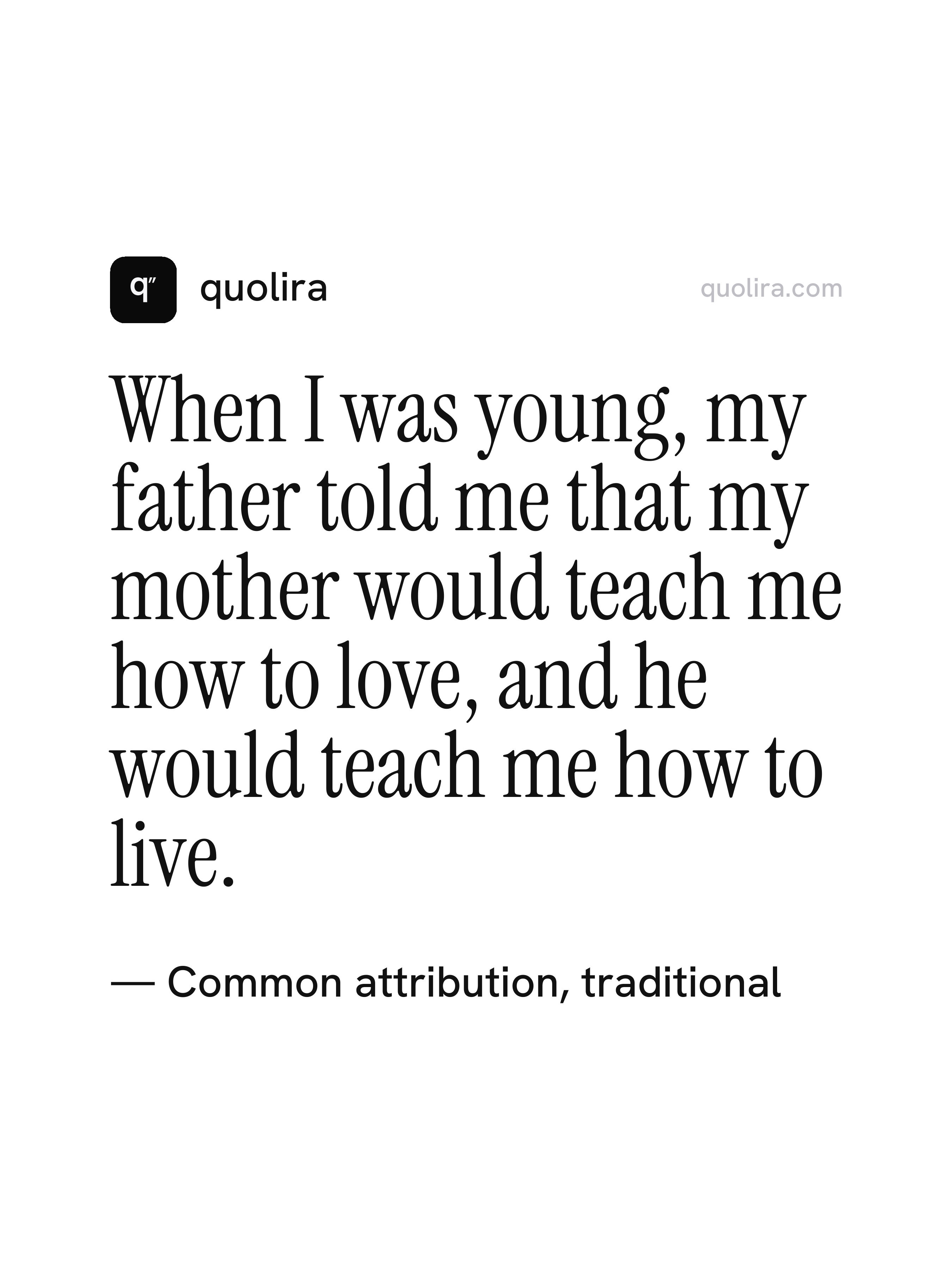
“When I was young, my father told me that my mother would teach me how to love, and he would teach me how to live.”
Common attribution, traditional
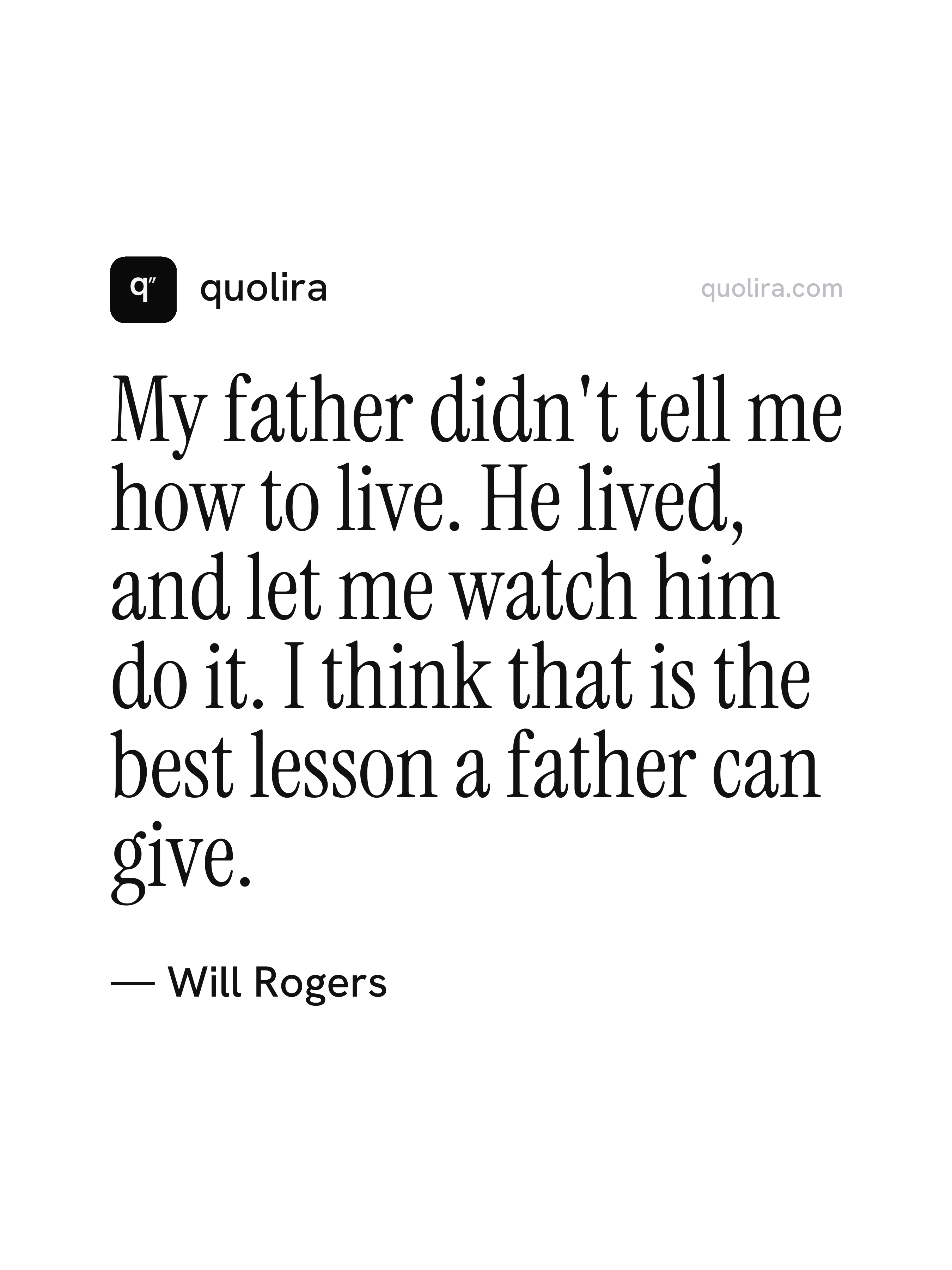
“My father didn't tell me how to live. He lived, and let me watch him do it. I think that is the best lesson a father can give.”
Will Rogers