“The best way out is always through.”
Robert Frost · A Servant to Servants, 1914
 quolira
.com
quolira
quolira.com
On its surface the speaker is acknowledging duties and a long journey still ahead before rest is possible. But the lines carry a weight that goes beyond a literal evening ride: they suggest the whole of a life's obligations, the commitments that keep a person going even when rest or escape is tempting. Sleep, in this reading, can imply both ordinary rest and the final rest of death, giving the lines a layered resonance.
The lines close one of Frost's most famous and most analyzed poems. In it, a traveler pauses his horse beside a darkened, snowy wood on a winter evening and lingers over the beautiful stillness before pulling himself away. The tension between the pull of that quiet, dark scene and the reminder of duties still to fulfill gives the poem much of its power. Published in 1923, it became one of the most memorized and quoted poems in the English language, appearing in countless anthologies, graduation speeches, and moments of personal reflection.
Robert Frost was one of the most celebrated American poets of the twentieth century. Born in 1874, he spent much of his life in New England, and its seasons and solitudes gave his work much of its atmosphere. He won the Pulitzer Prize for Poetry four times and became a beloved national figure, reading at a presidential inauguration in 1961. His poems are admired for combining accessible, conversational language with deep emotional and philosophical undertones. He died in 1963.
“The best way out is always through.”
Robert Frost · A Servant to Servants, 1914
“Education is the ability to listen to almost anything without losing your temper or your self-confidence.”
Robert Frost
“No tears in the writer, no tears in the reader.”
Robert Frost · The Figure a Poem Makes, 1939
“The figure a poem makes. It begins in delight and ends in wisdom.”
Robert Frost · The Figure a Poem Makes, 1939
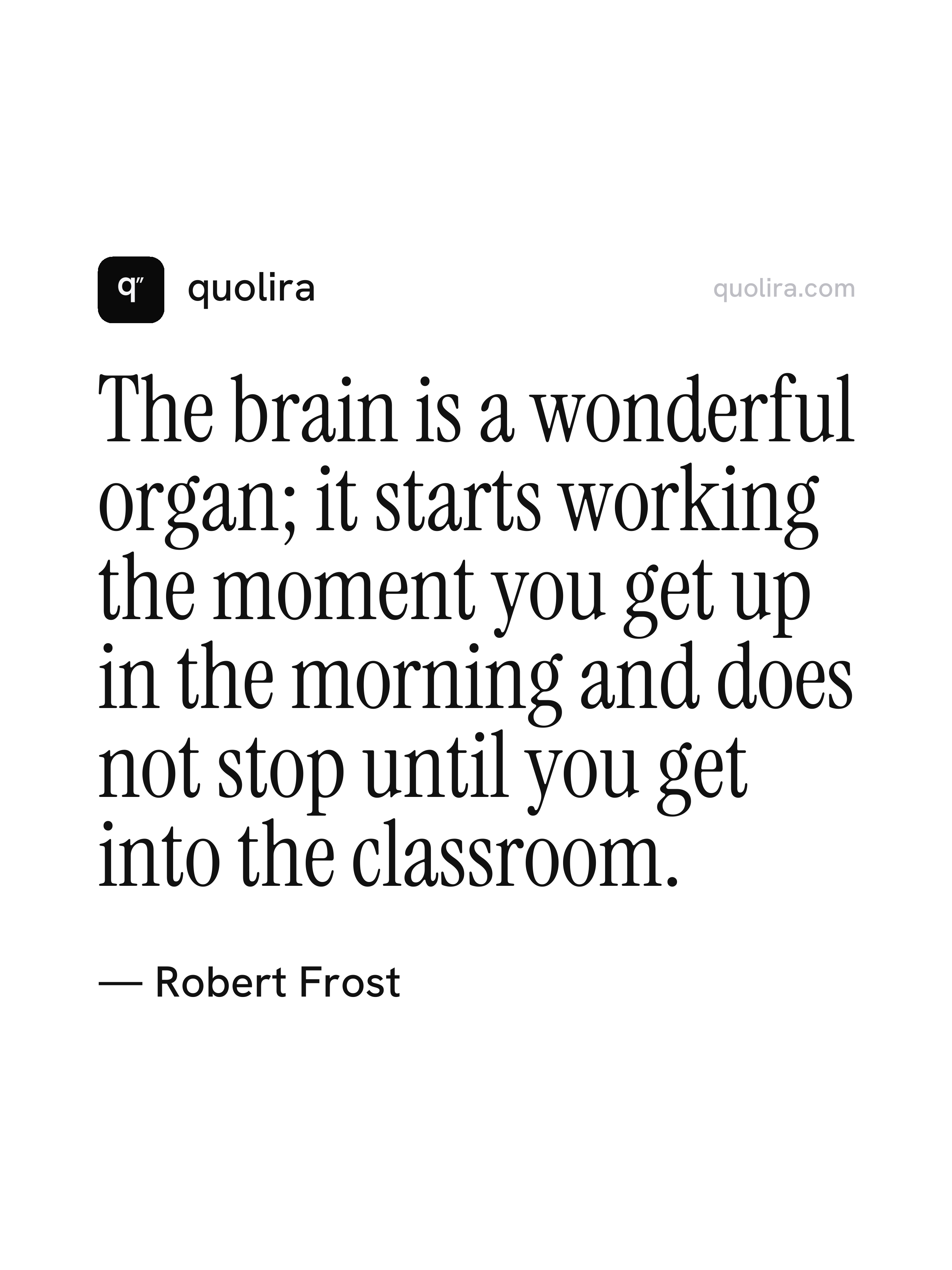
“The brain is a wonderful organ; it starts working the moment you get up in the morning and does not stop until you get into the classroom.”
Robert Frost
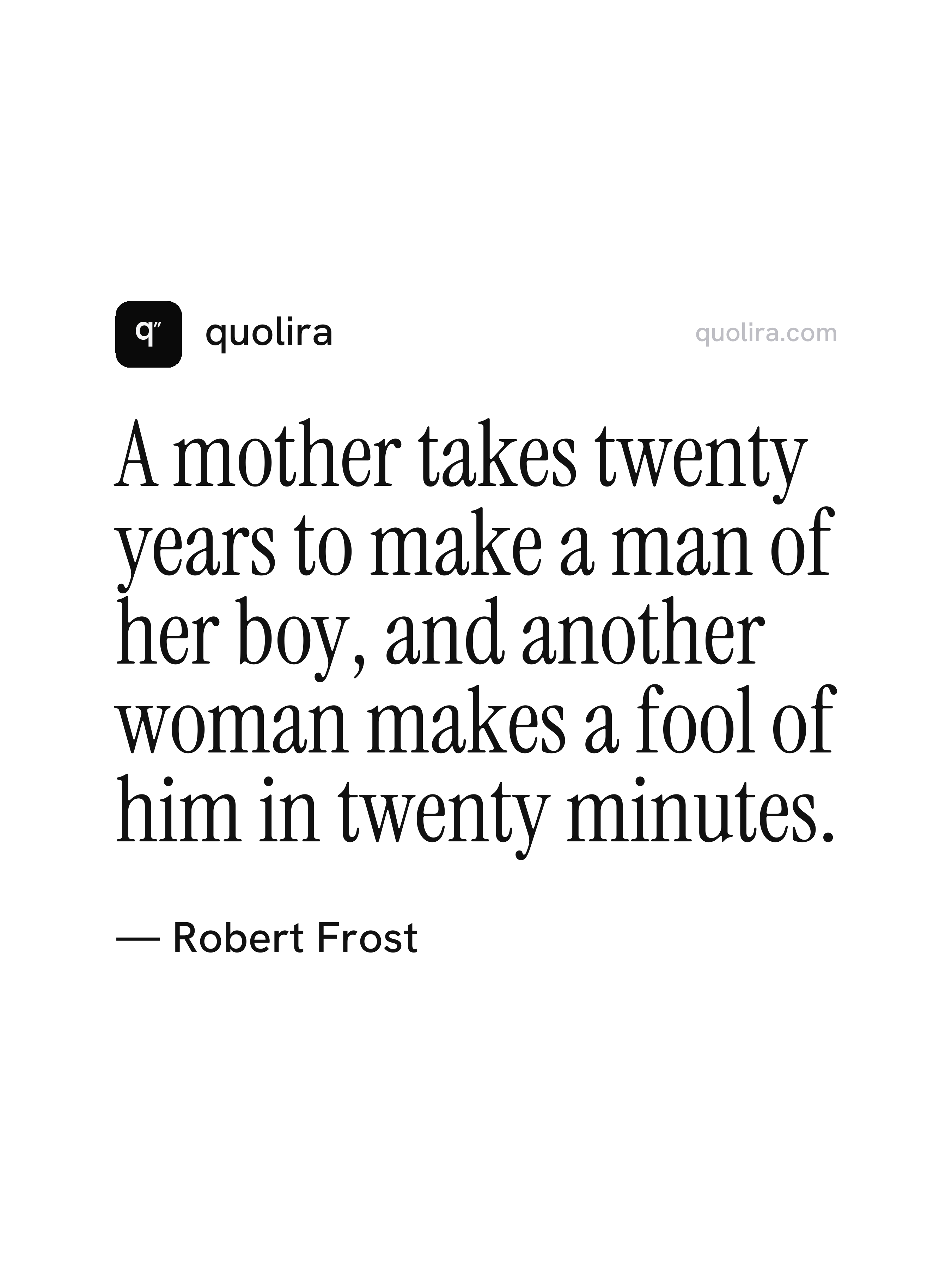
“A mother takes twenty years to make a man of her boy, and another woman makes a fool of him in twenty minutes.”
Robert Frost
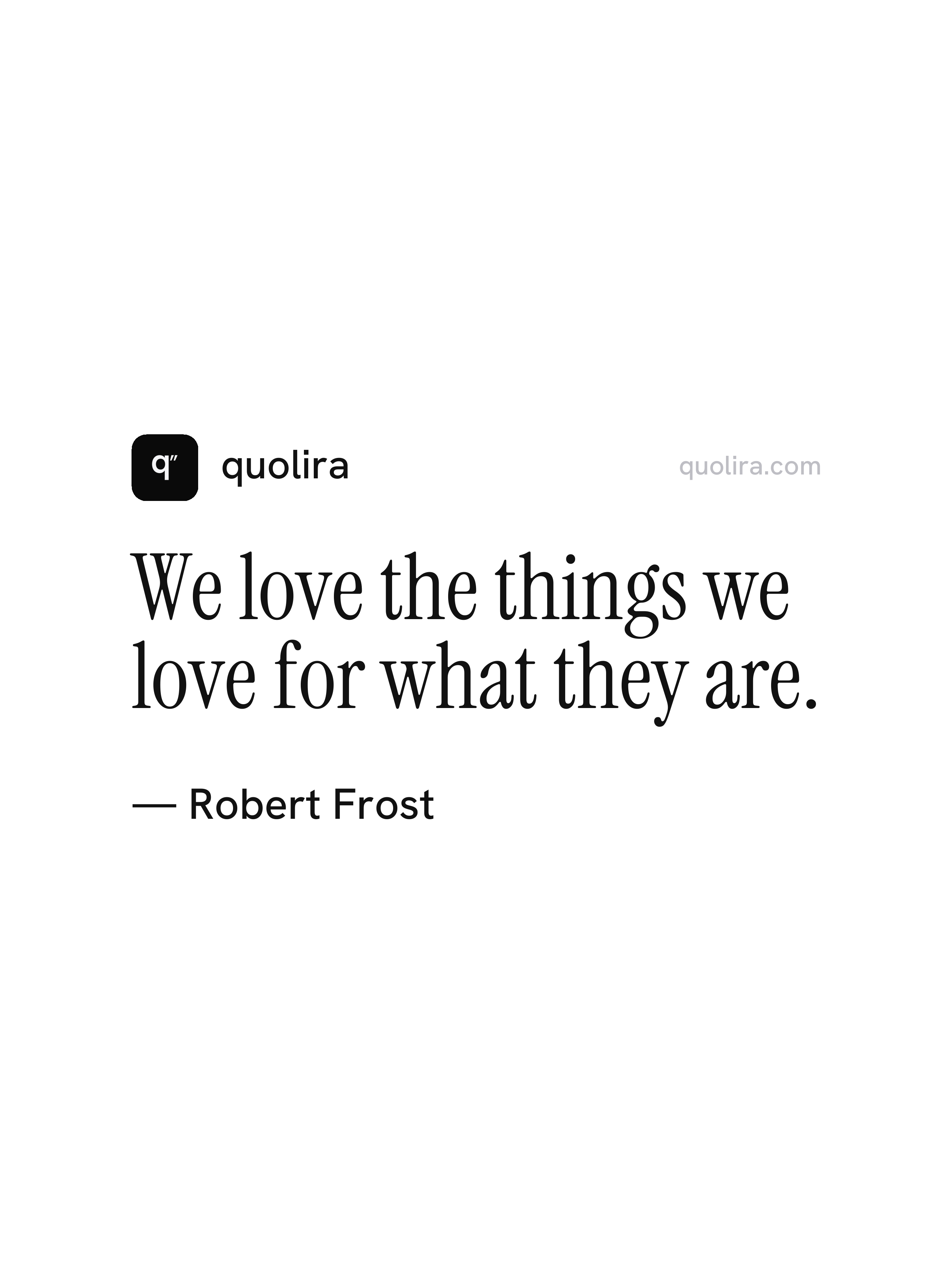
“We love the things we love for what they are.”
Robert Frost · Hyla Brook, 1916
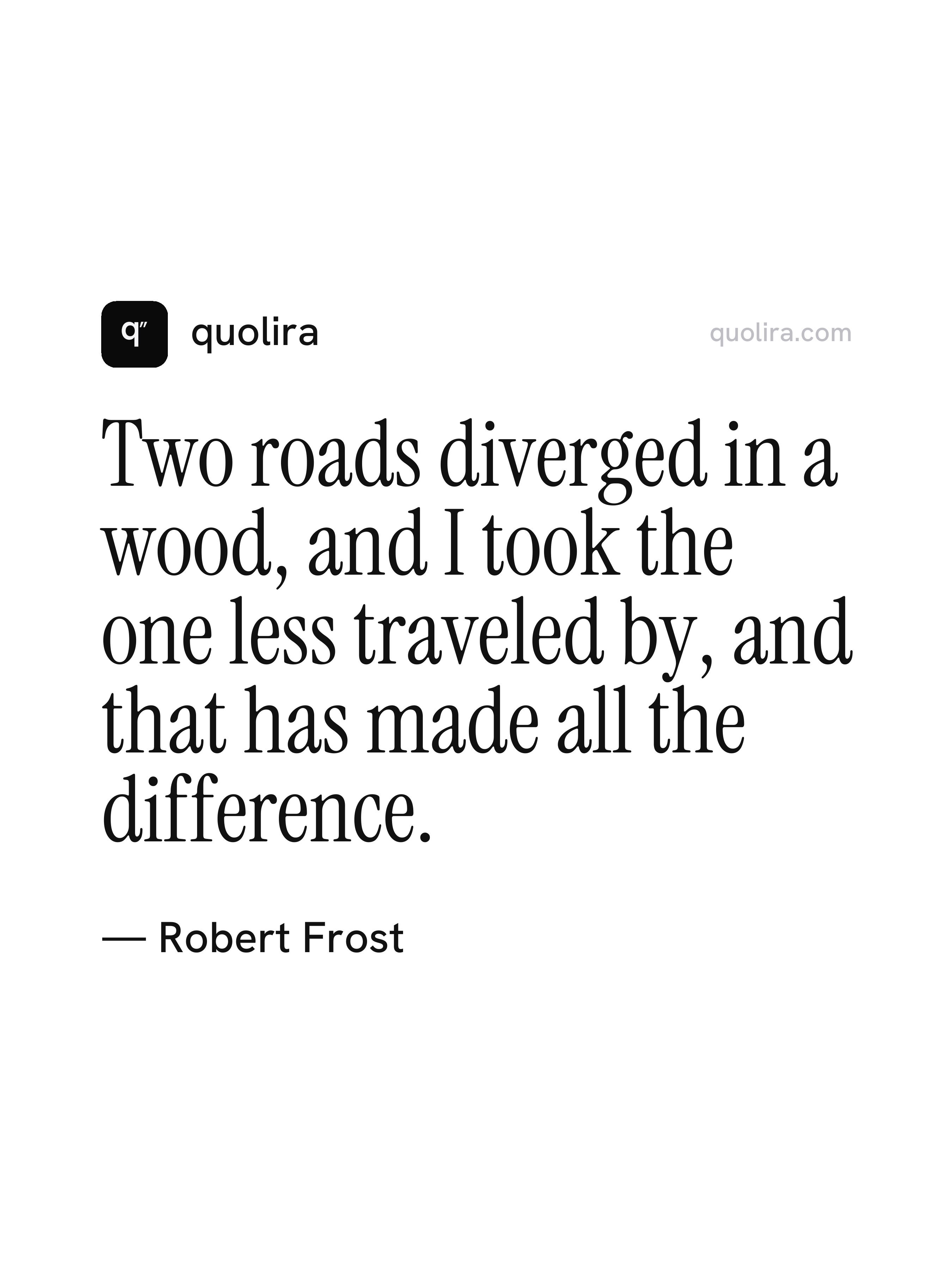
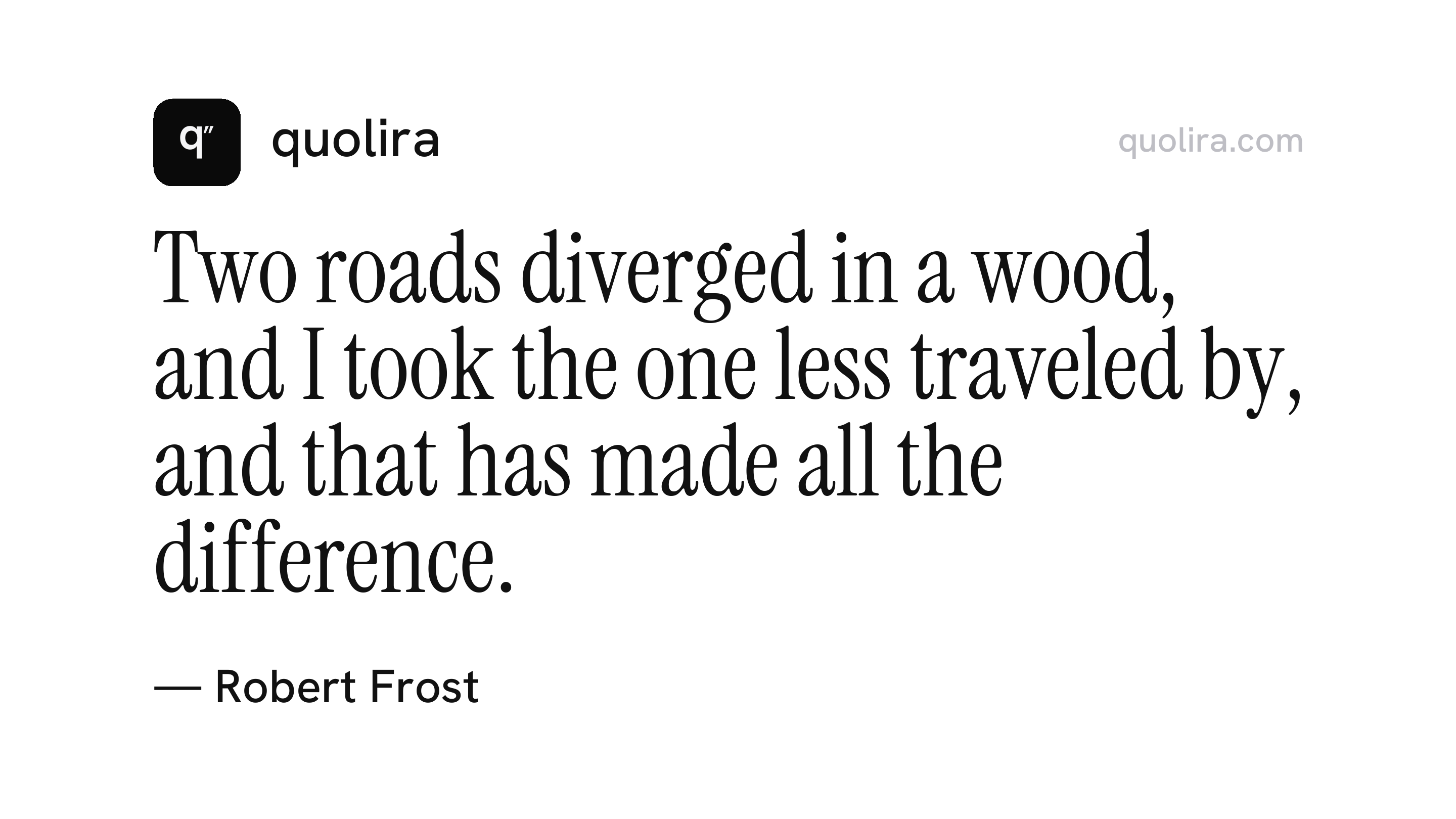
“Two roads diverged in a wood, and I took the one less traveled by, and that has made all the difference.”
Robert Frost · The Road Not Taken, 1916
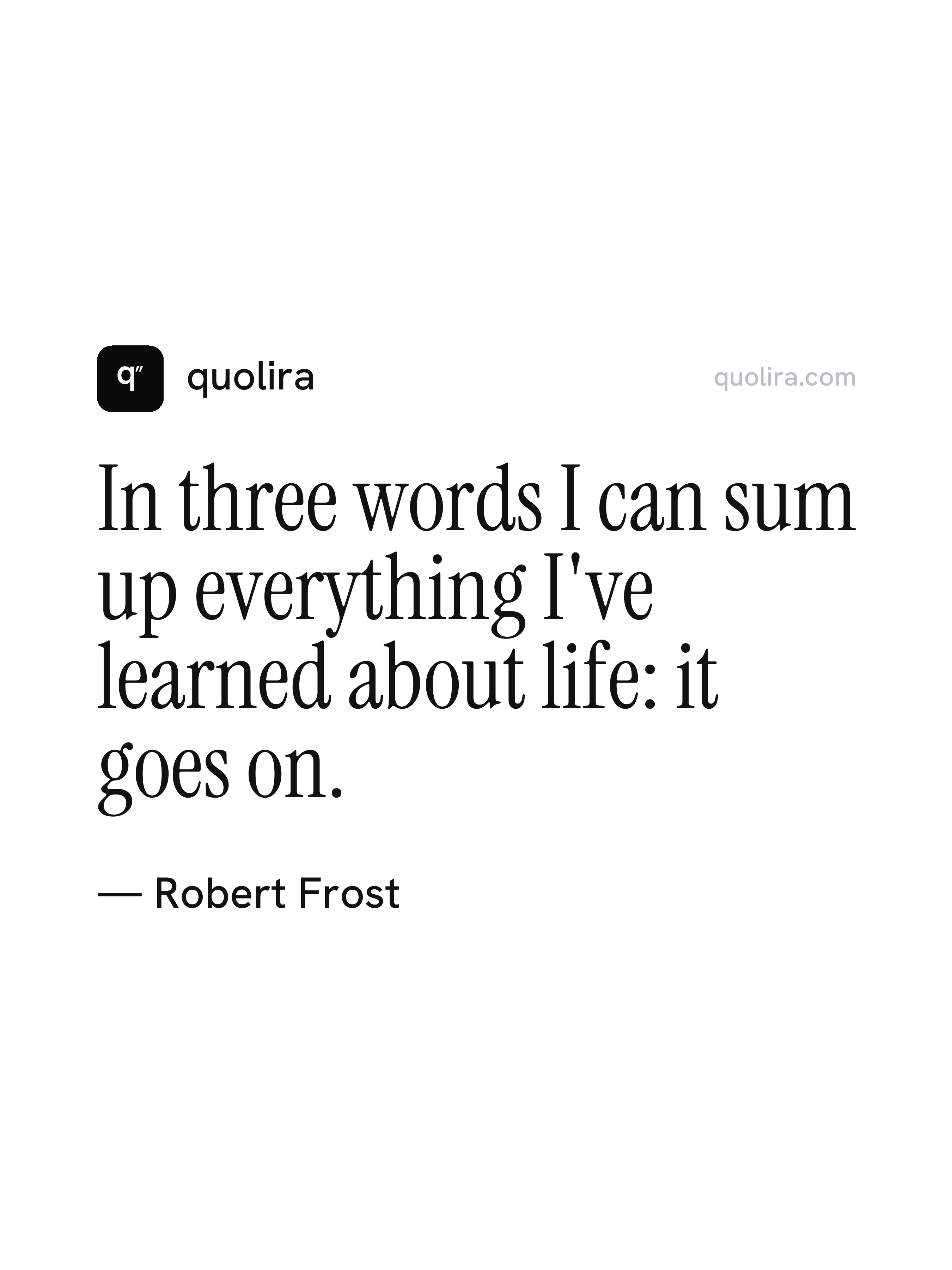
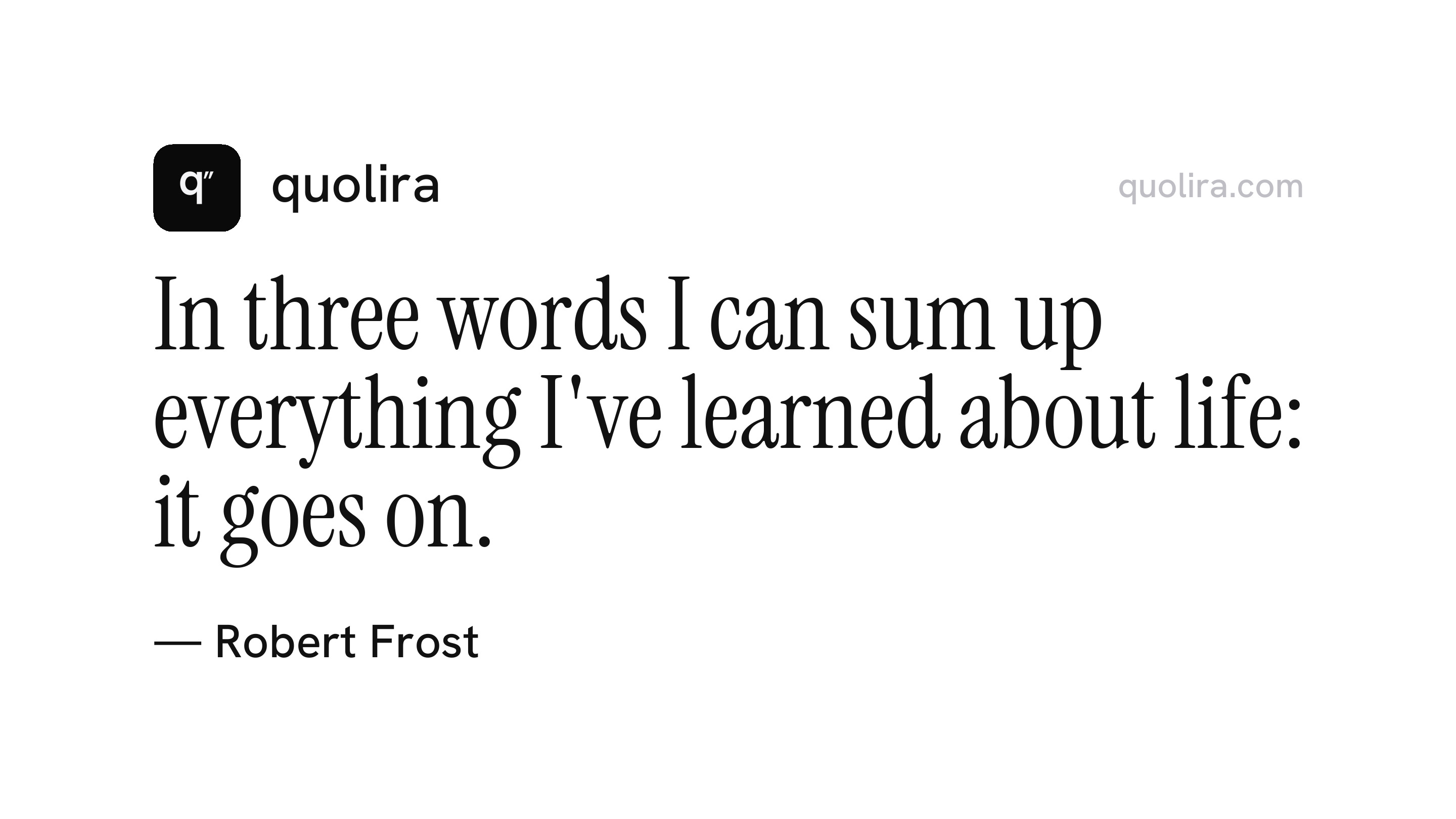
“In three words I can sum up everything I've learned about life: it goes on.”
Robert Frost
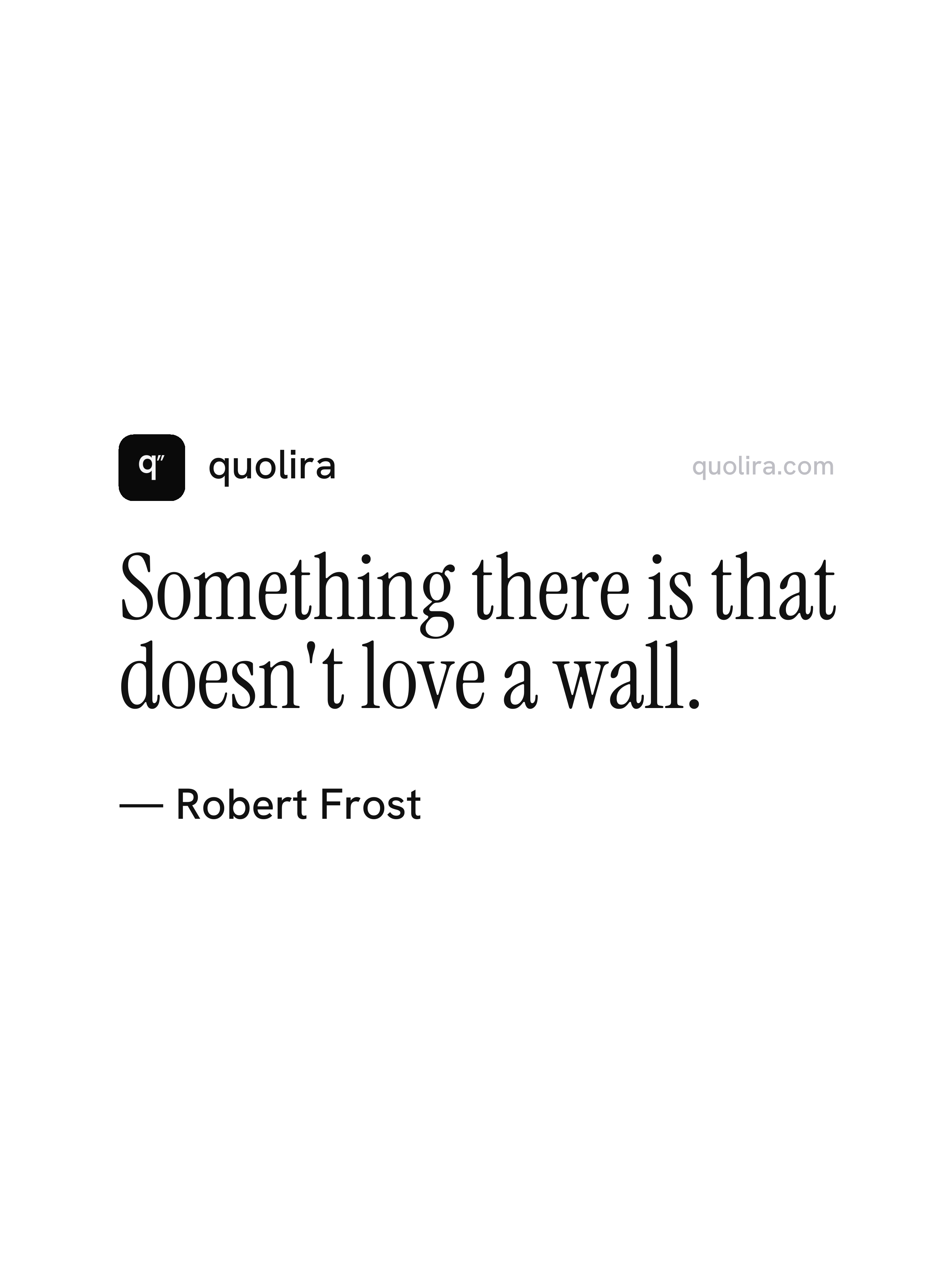
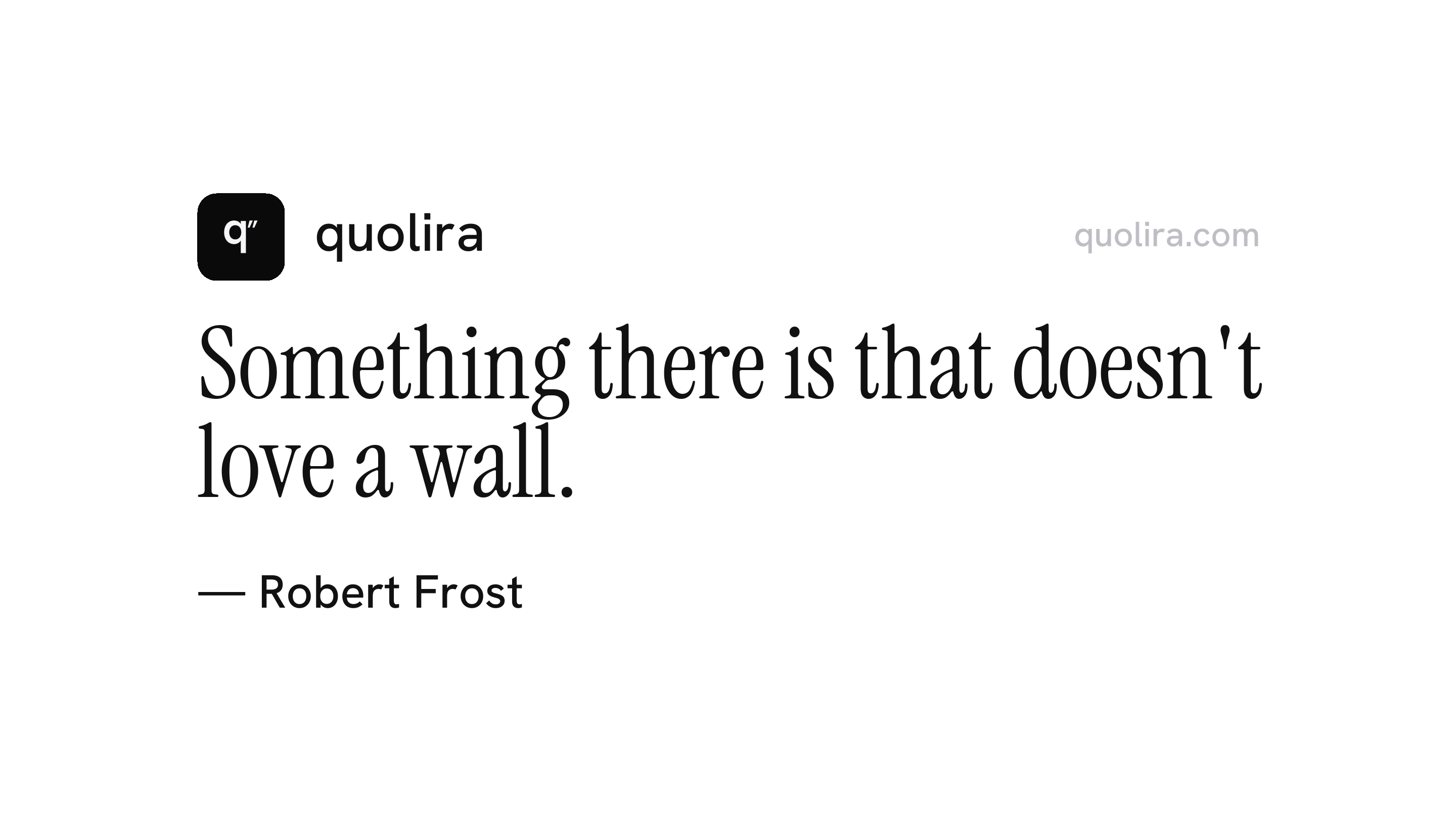
“Something there is that doesn't love a wall.”
Robert Frost · Mending Wall, 1914
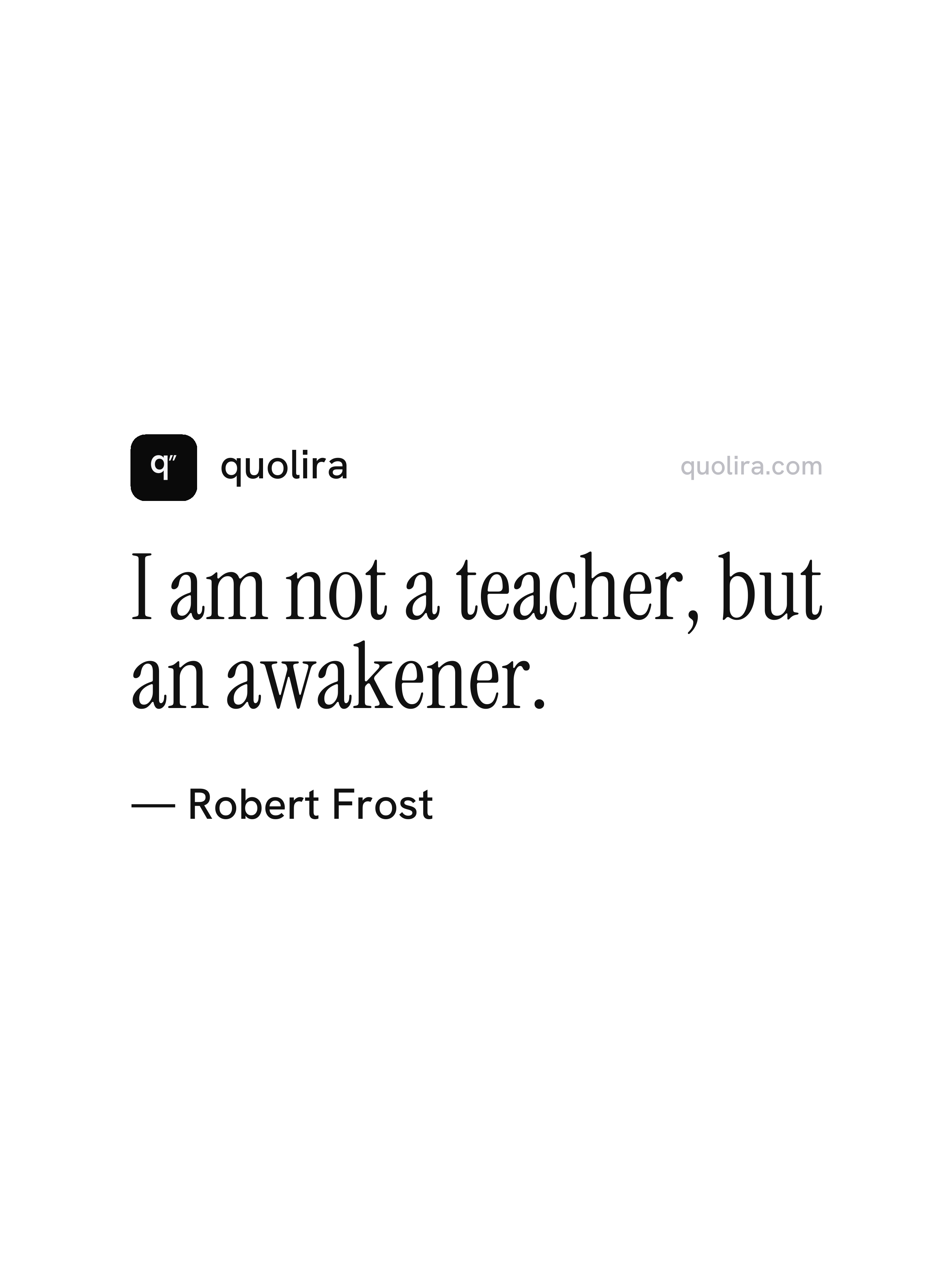
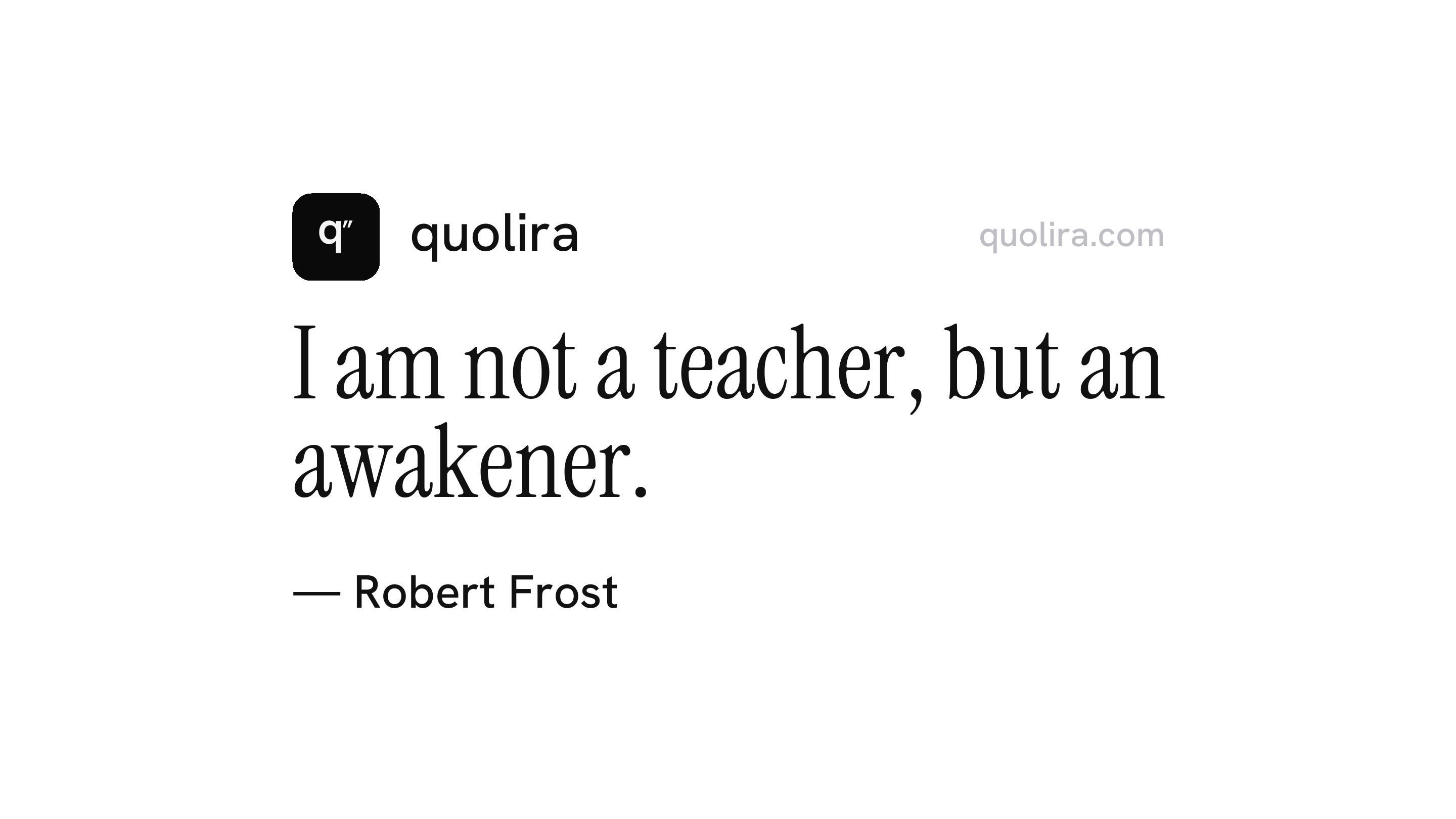
“I am not a teacher, but an awakener.”
Robert Frost
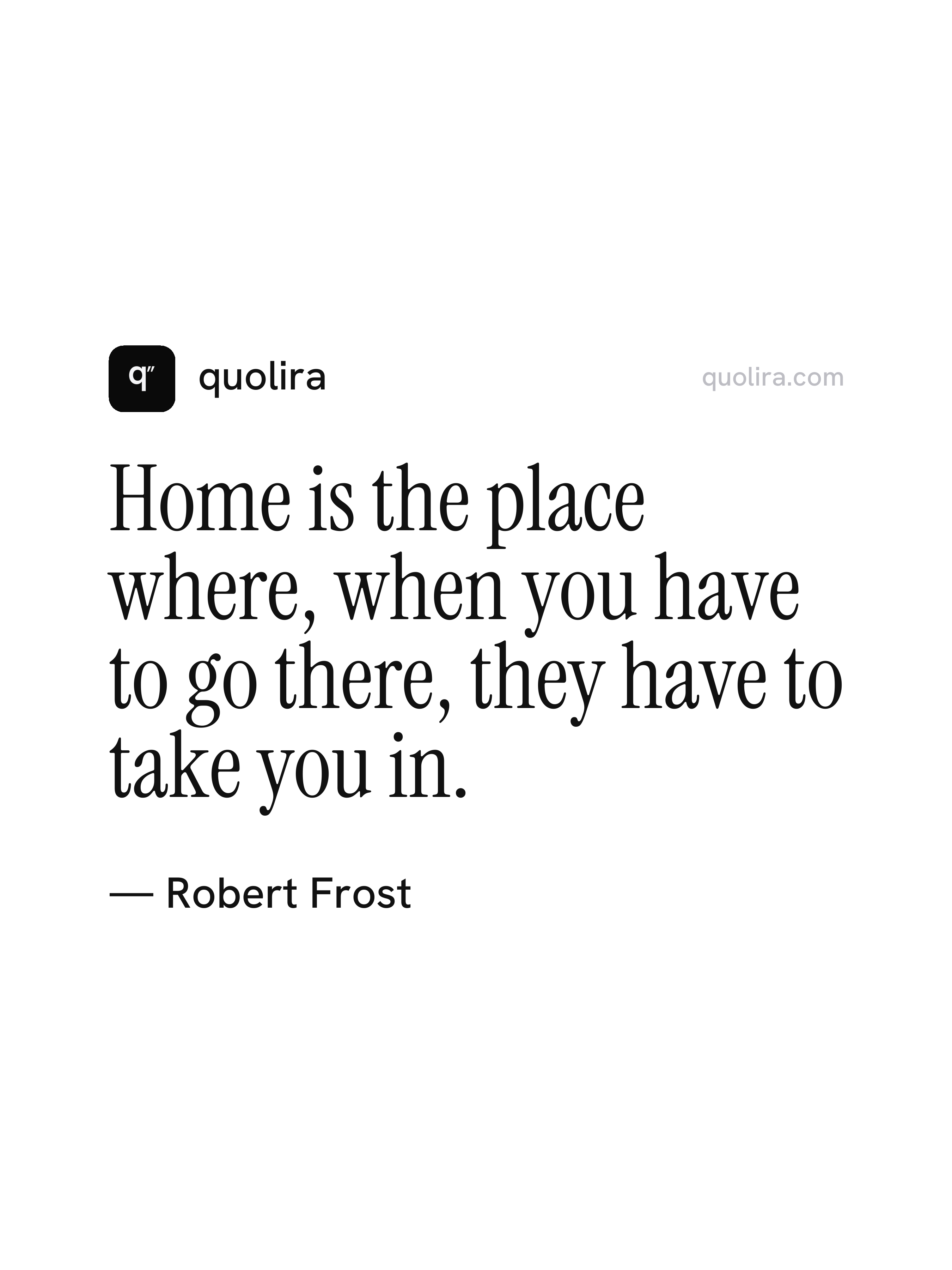
“Home is the place where, when you have to go there, they have to take you in.”
Robert Frost · The Death of the Hired Man, 1914