“Tears are words that need to be written.”
Paulo Coelho
 quolira
.com
quolira
quolira.com
Jung is making a point about the structure of human experience: happiness is not a state that can be separated from its opposite and still mean anything. Without contrast, without knowing what it feels like to be sad, lost, or heavy with difficulty, the word happy becomes empty. The claim is not that suffering is good in itself but that it is necessary as a reference point. Darkness does not cancel happiness; it gives it shape and makes it recognizable as something real and earned rather than simply a default condition.
This idea is consistent with Jung's broader thinking about the psyche, which emphasized balance, the coexistence of opposites, and the danger of repressing or denying any part of human experience. Jung argued throughout his career that wholeness, not perfection, should be the goal of psychological life. The shadow, a concept central to his work, referred to those parts of the self that a person prefers not to acknowledge. His view was that integrating rather than avoiding the darker aspects of experience leads to genuine maturity and depth.
Carl Jung was a Swiss psychiatrist and founder of analytical psychology. He began his career in close collaboration with Sigmund Freud before developing his own distinct theoretical framework. His ideas introduced concepts that have become part of general culture, including the collective unconscious, archetypes, introversion and extraversion, and the shadow. He wrote extensively across his long career, and his work has influenced not only psychology but also literature, philosophy, religious studies, and the arts. He remains one of the most widely referenced thinkers in the field of depth psychology.
“Tears are words that need to be written.”
Paulo Coelho
“Heavy hearts, like heavy clouds in the sky, are best relieved by the letting go of a little water.”
Antoine Rivarol
“The saddest summary of a life contains three descriptions: could have, might have, and should have.”
Louis E. Boone
“No one ever told me that grief felt so like fear.”
C.S. Lewis · A Grief Observed, 1961
“The risk of love is loss, and the price of loss is grief. But the pain of grief is only a shadow when compared with the pain of never risking love.”
Hilary Stanton Zunin
“The loveliness of the day is almost unbearable.”
Anne Frank · The Diary of a Young Girl
“Summer doesn't care what you choose to do with it.”
Richard Ford · The Sportswriter
“There is a day in summer when the long nights begin, and they begin because the sun has swung as far north as it will go.”
Rachel Carson · The Edge of the Sea
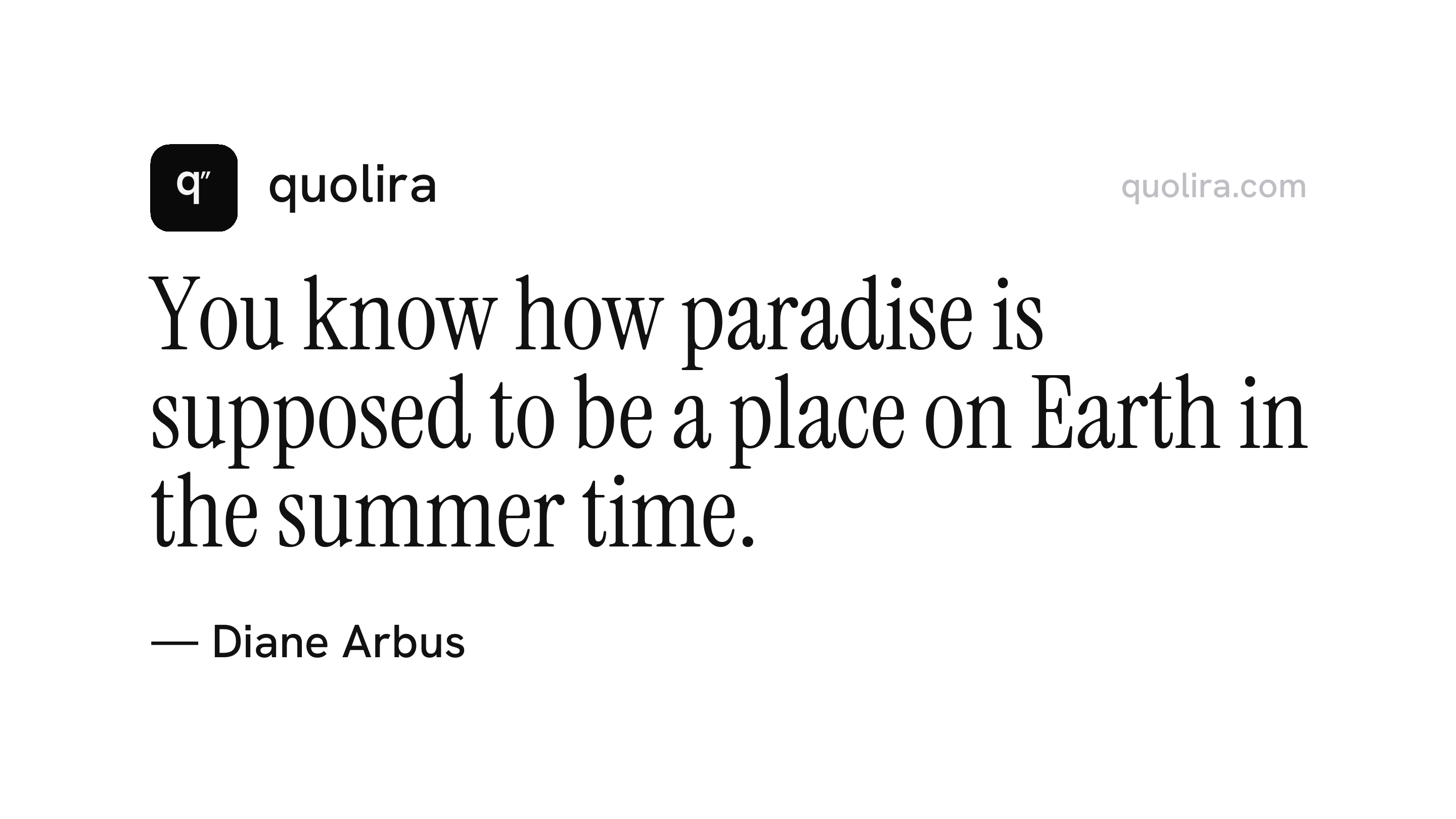
“You know how paradise is supposed to be a place on Earth in the summer time.”
Diane Arbus · Photographic essay and interviews
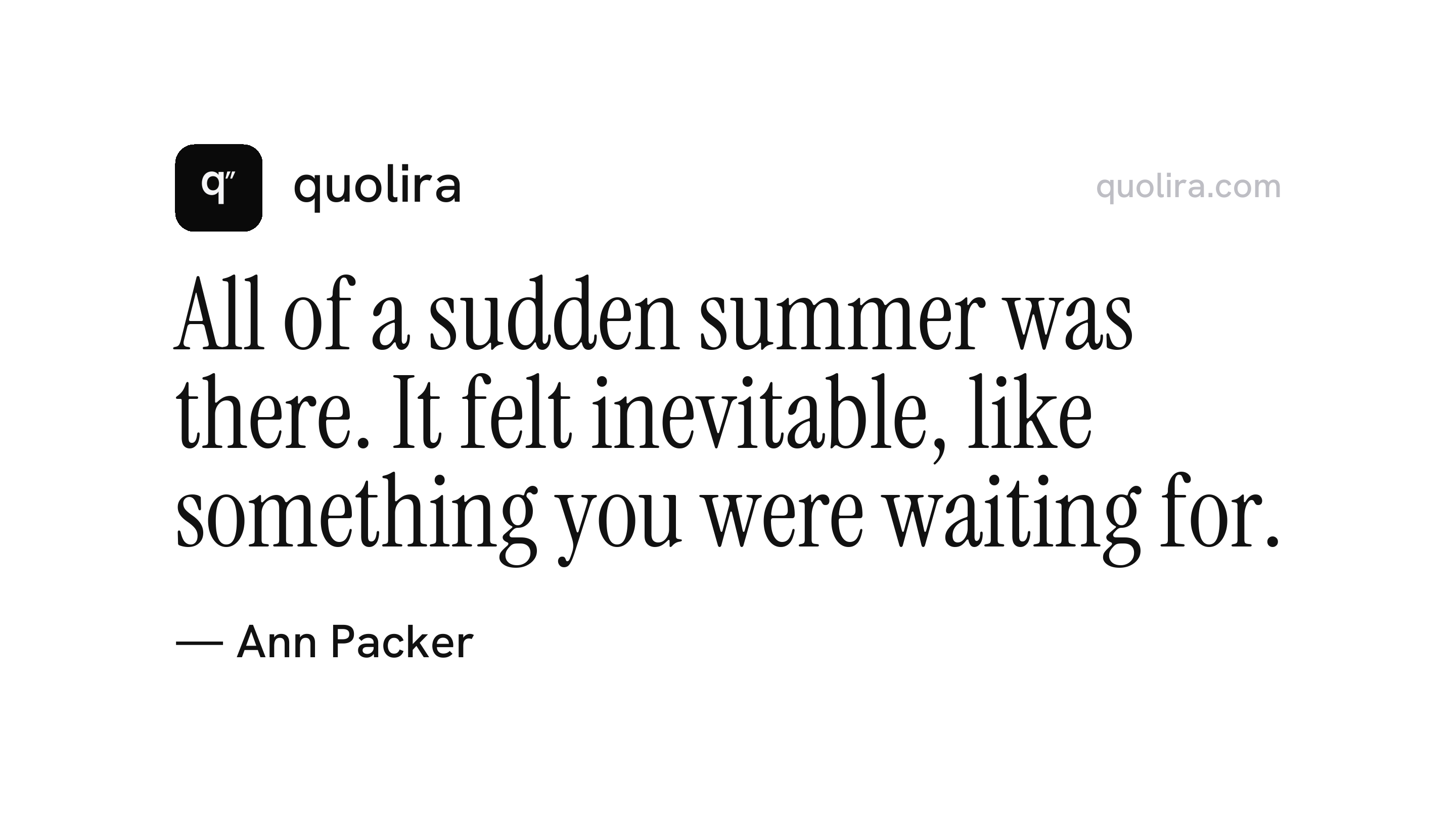
“All of a sudden summer was there. It felt inevitable, like something you were waiting for.”
Ann Packer · The Dive from Clausen's Pier
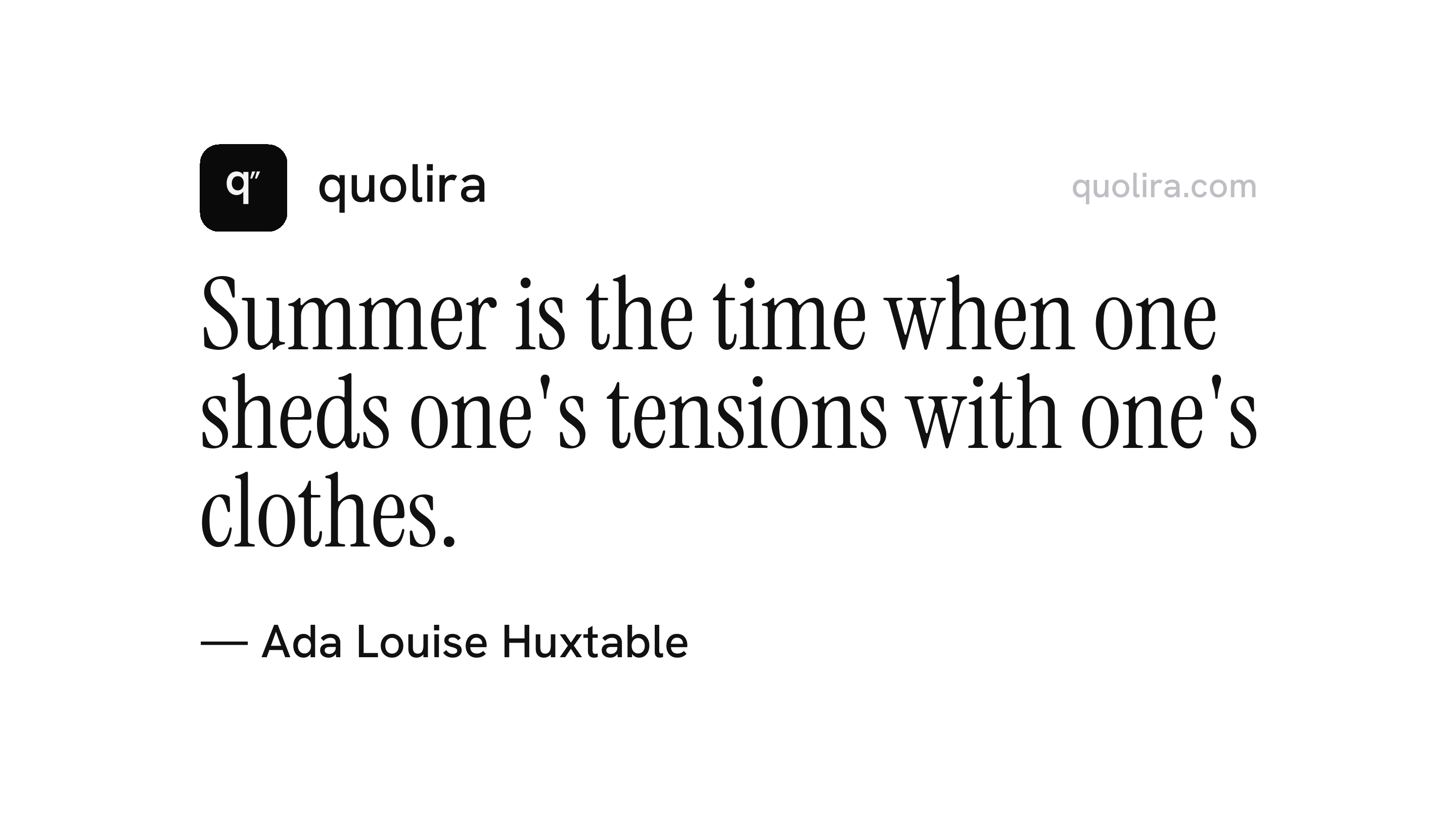
“Summer is the time when one sheds one's tensions with one's clothes.”
Ada Louise Huxtable · Various essays on design and living
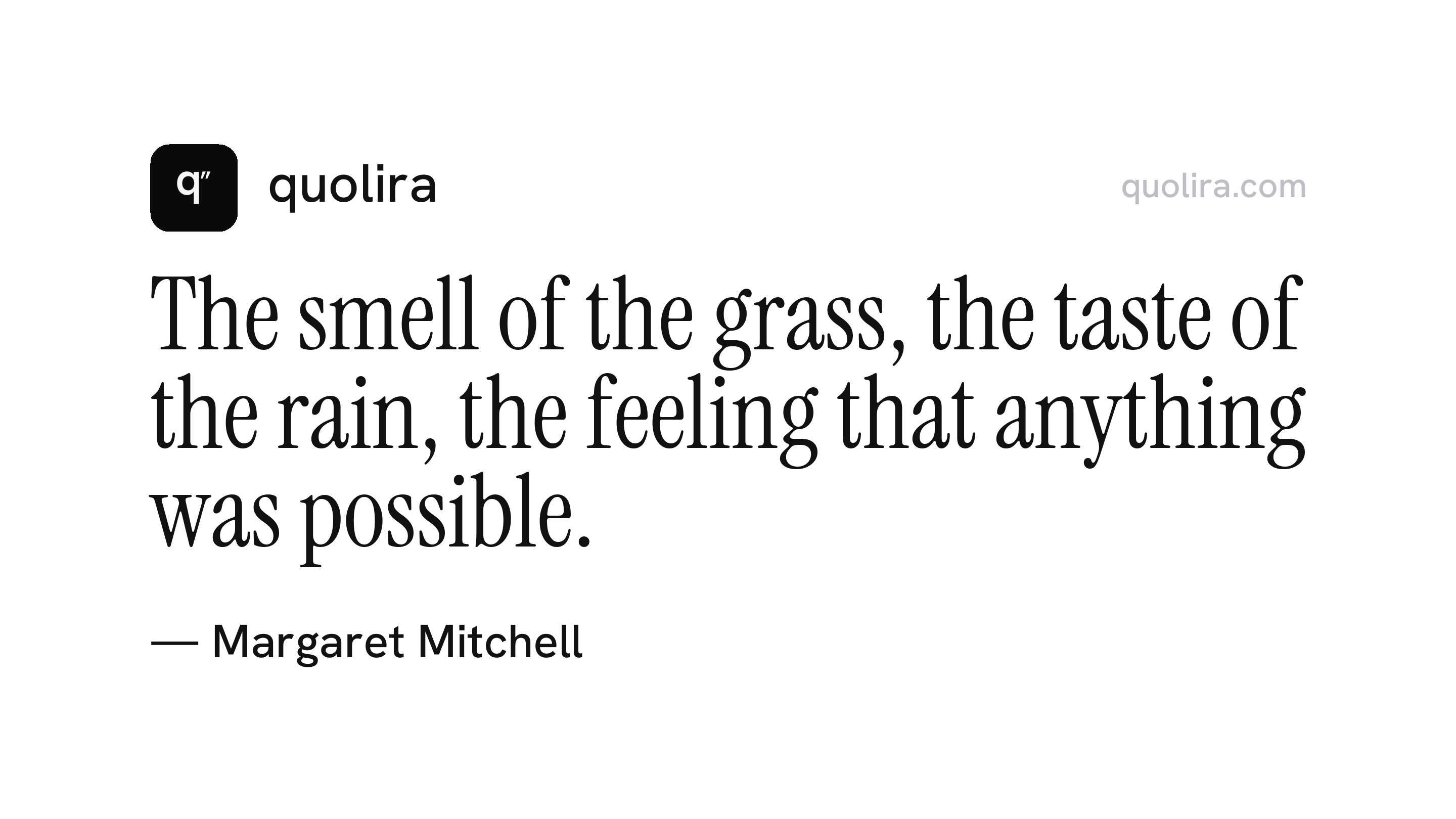
“The smell of the grass, the taste of the rain, the feeling that anything was possible.”
Margaret Mitchell · Gone with the Wind