“Bees do have a smell, you know, and if they don't they should, for their feet are dusted with spices from a million flowers.”
Ray Bradbury · Dandelion Wine, 1957
 quolira
.com
quolira
quolira.com
Emerson is offering a practice as much as a philosophy: he wants the reader to make a conscious, repeated choice to treat each day as a gift rather than a burden or a routine. The phrase "write it on your heart" signals that this is not a casual suggestion. It asks for genuine internalization, not just intellectual agreement. The underlying idea is that how we frame our experience shapes what we get from it, and that gratitude and presence are habits that can be deliberately cultivated.
Emerson's writing consistently returned to themes of self-reliance, optimism, and the possibilities available to any person willing to think clearly and live deliberately. This line reflects his broader belief that attitude and inner life are more determinative of human happiness than outward circumstances. It belongs to a tradition in his work of offering practical moral instruction wrapped in memorable, almost scriptural language, designed to be carried around and returned to rather than merely read once.
Ralph Waldo Emerson (1803 to 1882) was an American essayist, lecturer, and poet who was a central figure in the Transcendentalist movement in New England. His essays and lectures argued for the primacy of individual intuition, the importance of nature, and the possibility of a deeply lived life. Works such as "Self-Reliance" and "Nature" had a profound influence on American literature and thought, and his ideas continued to shape writers and thinkers well beyond his own lifetime.
“Bees do have a smell, you know, and if they don't they should, for their feet are dusted with spices from a million flowers.”
Ray Bradbury · Dandelion Wine, 1957
“It is not the language of painters but the language of nature which one should listen to.”
Vincent van Gogh · Letter to Theo van Gogh, 1885
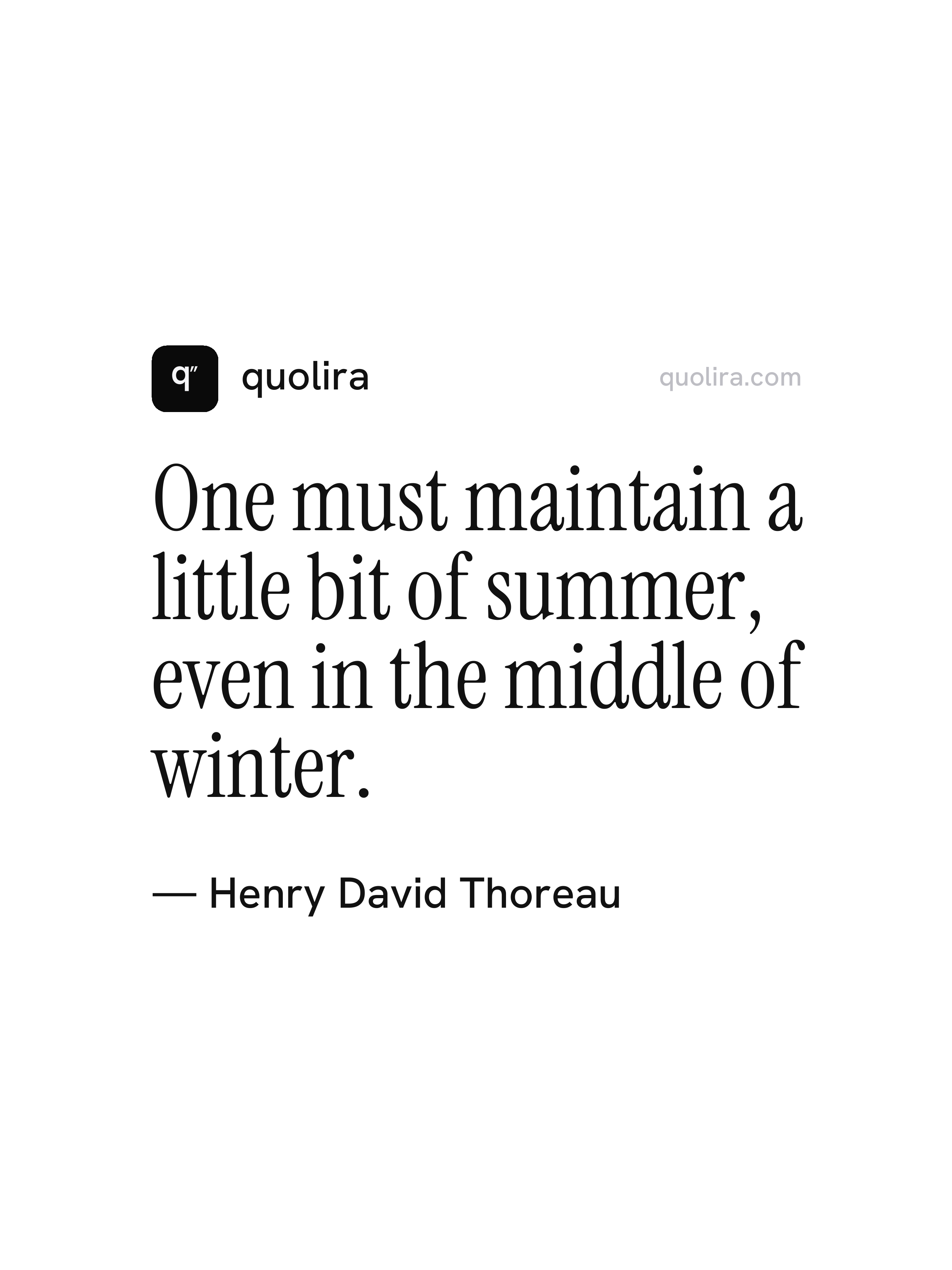
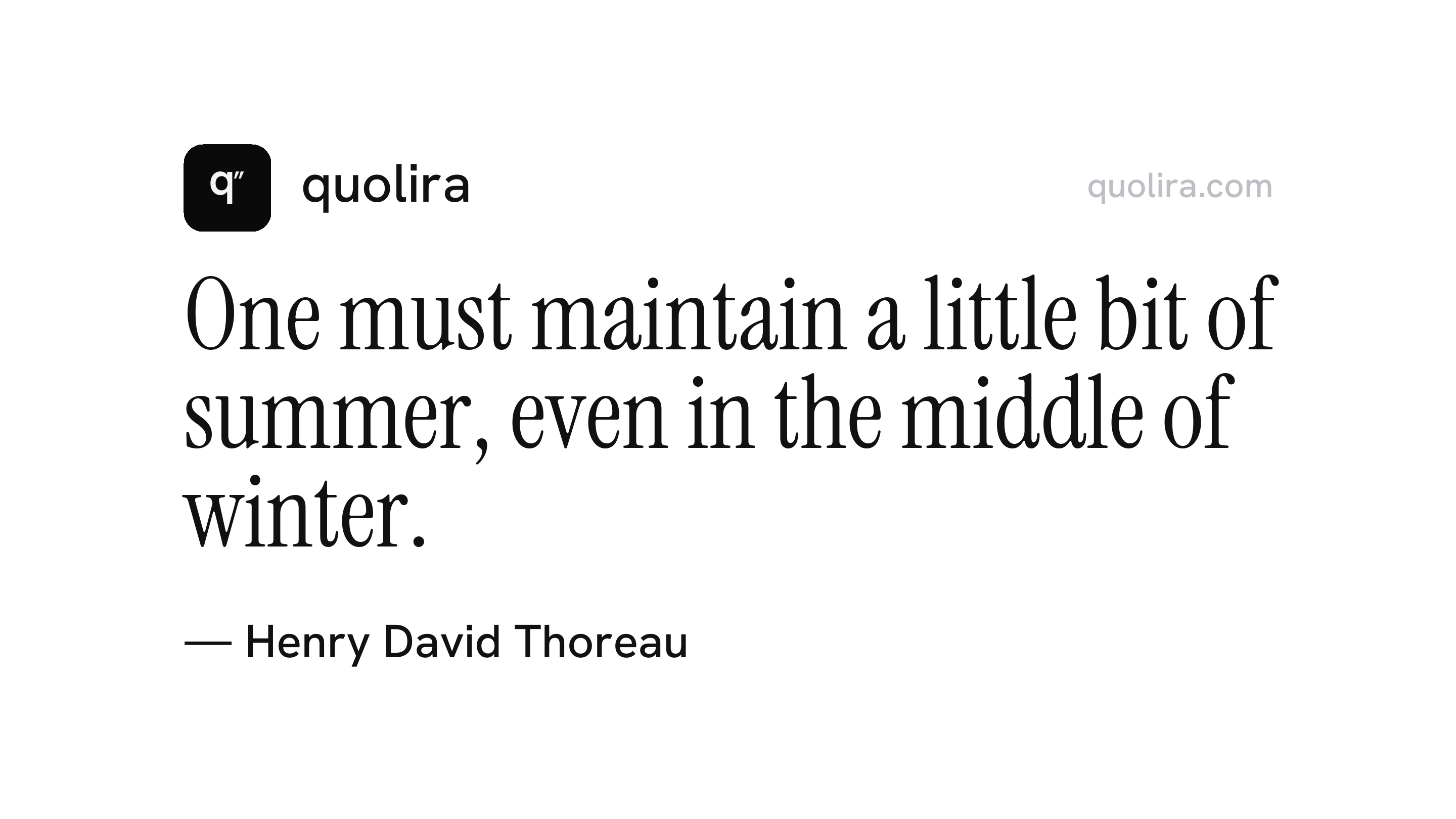
“One must maintain a little bit of summer, even in the middle of winter.”
Henry David Thoreau · Journal, January 1852
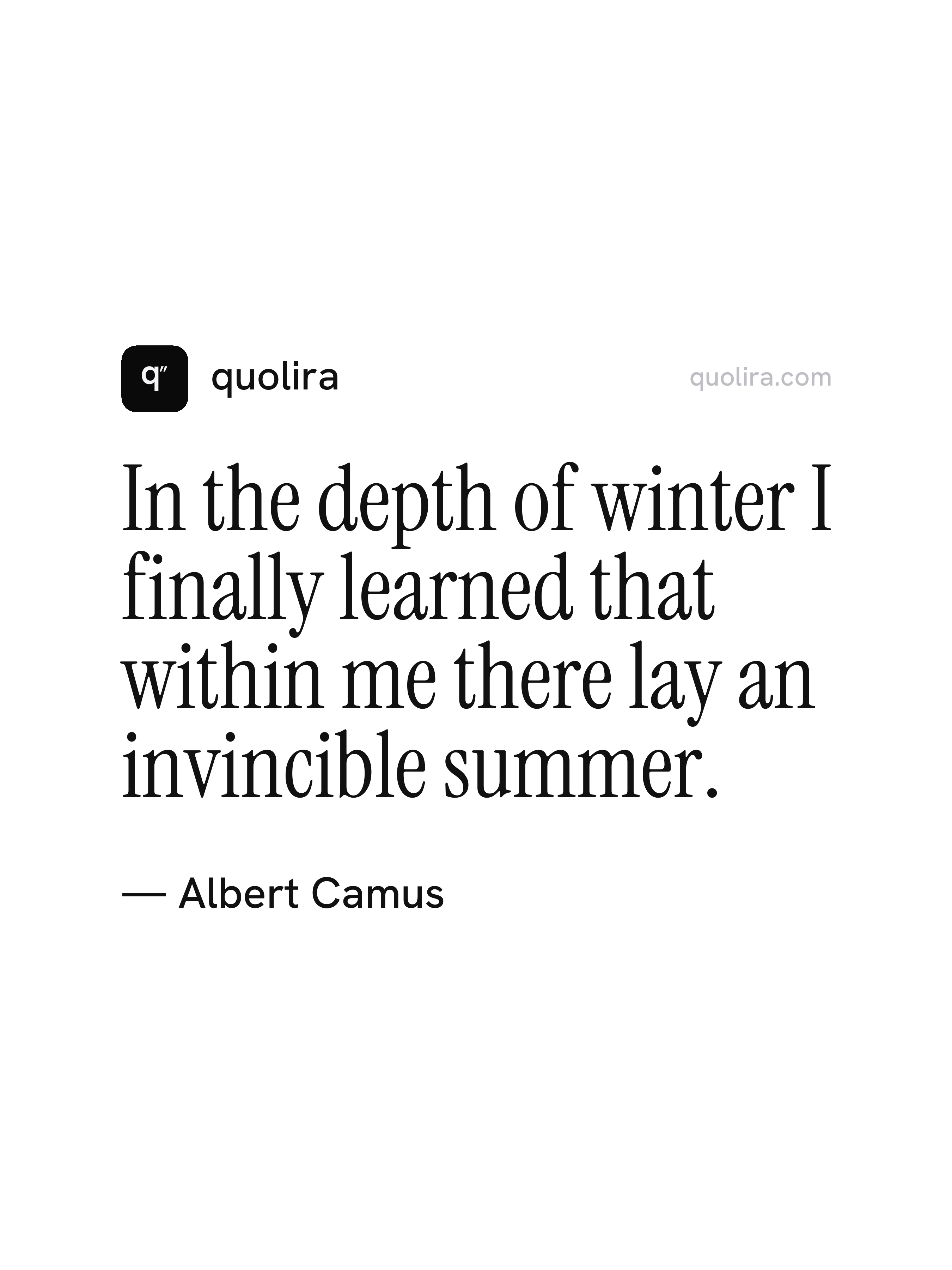
“In the depth of winter I finally learned that within me there lay an invincible summer.”
Albert Camus · Return to Tipasa, 1954
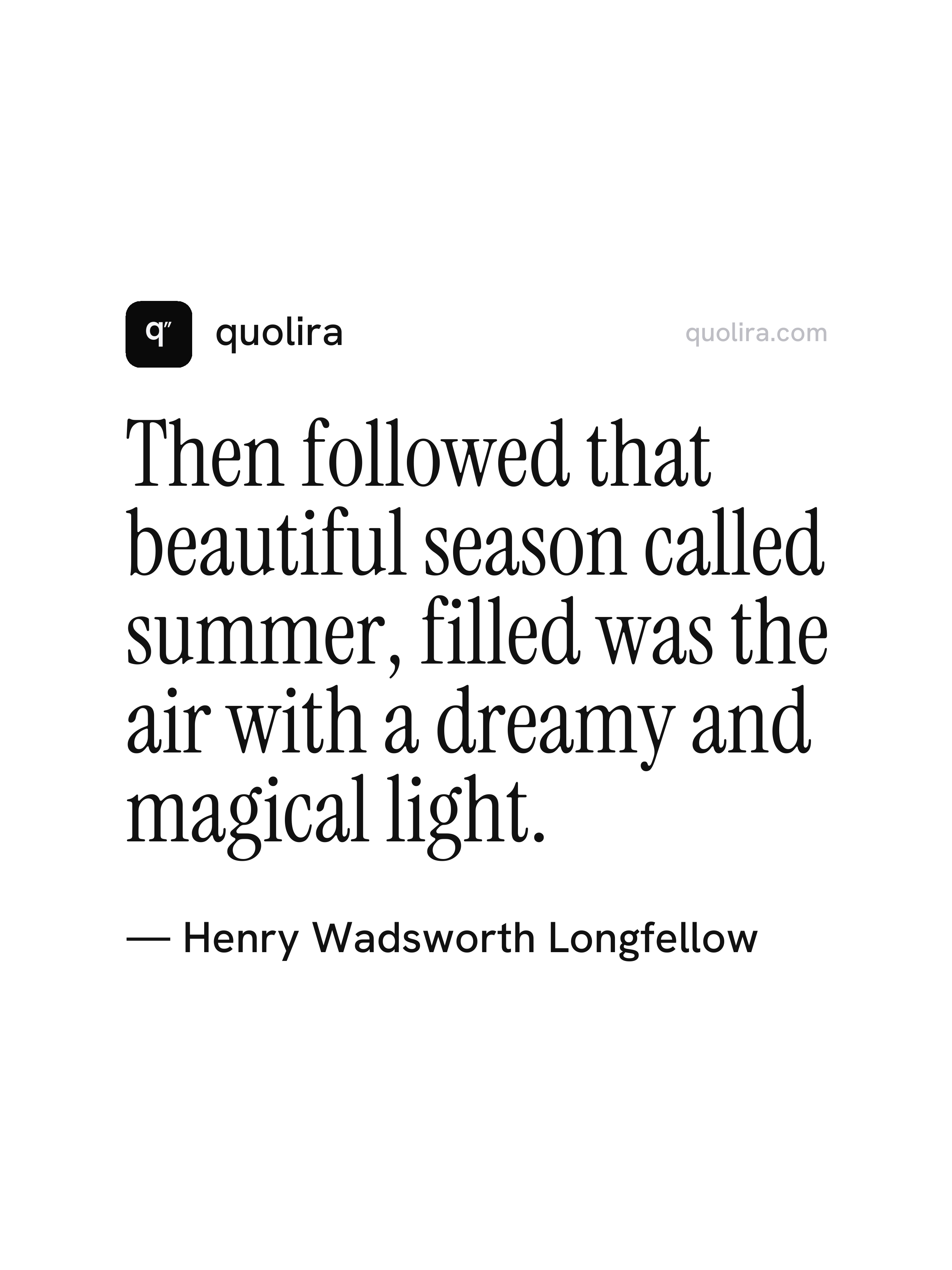
“Then followed that beautiful season called summer, filled was the air with a dreamy and magical light.”
Henry Wadsworth Longfellow · Evangeline, 1847
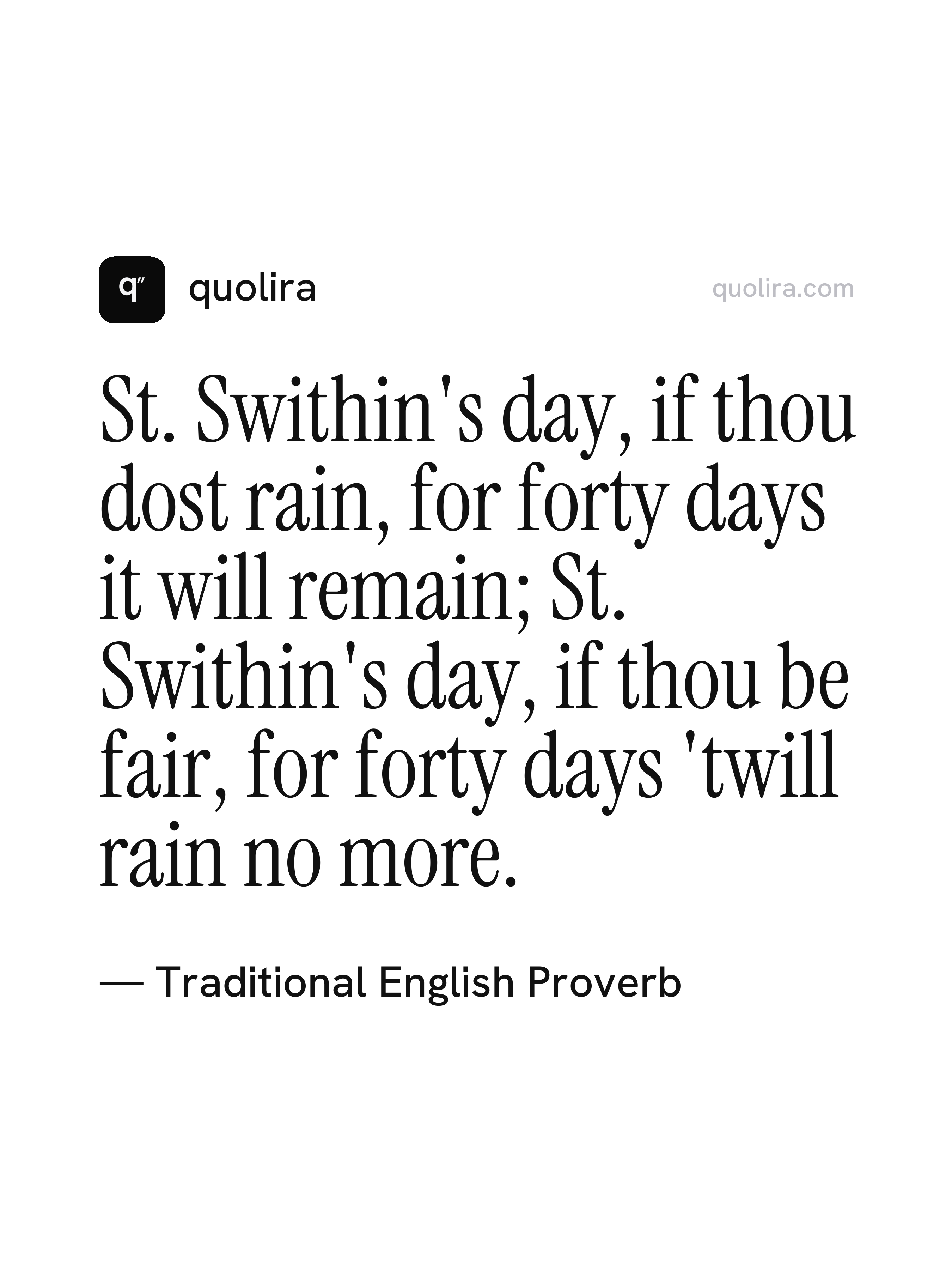
“St. Swithin's day, if thou dost rain, for forty days it will remain; St. Swithin's day, if thou be fair, for forty days 'twill rain no more.”
Traditional English Proverb · July 15 folk saying, documented widely before 1800
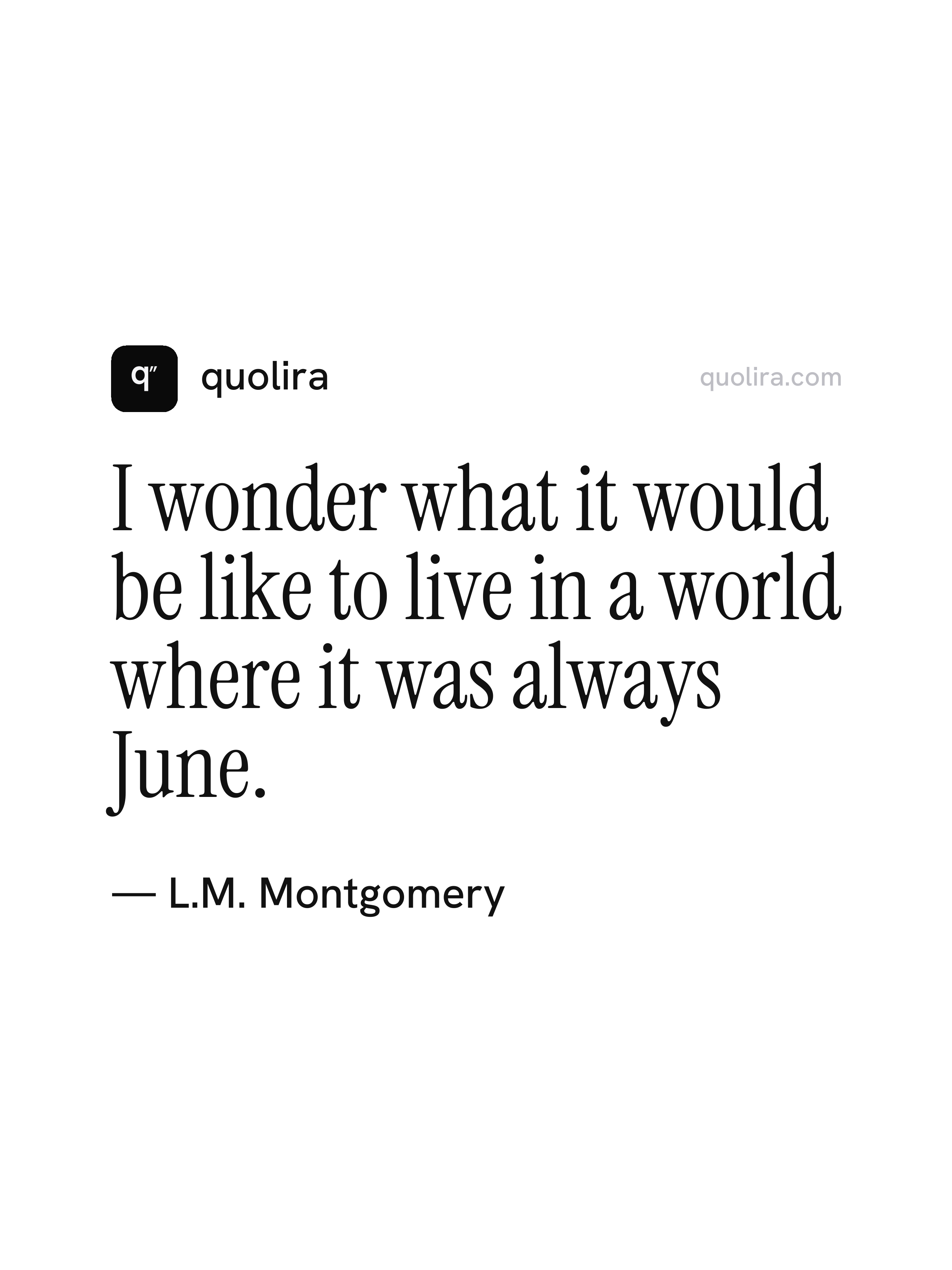
“I wonder what it would be like to live in a world where it was always June.”
L.M. Montgomery · Anne of Green Gables, 1908
“A kind word is like a spring day.”
Russian Proverb
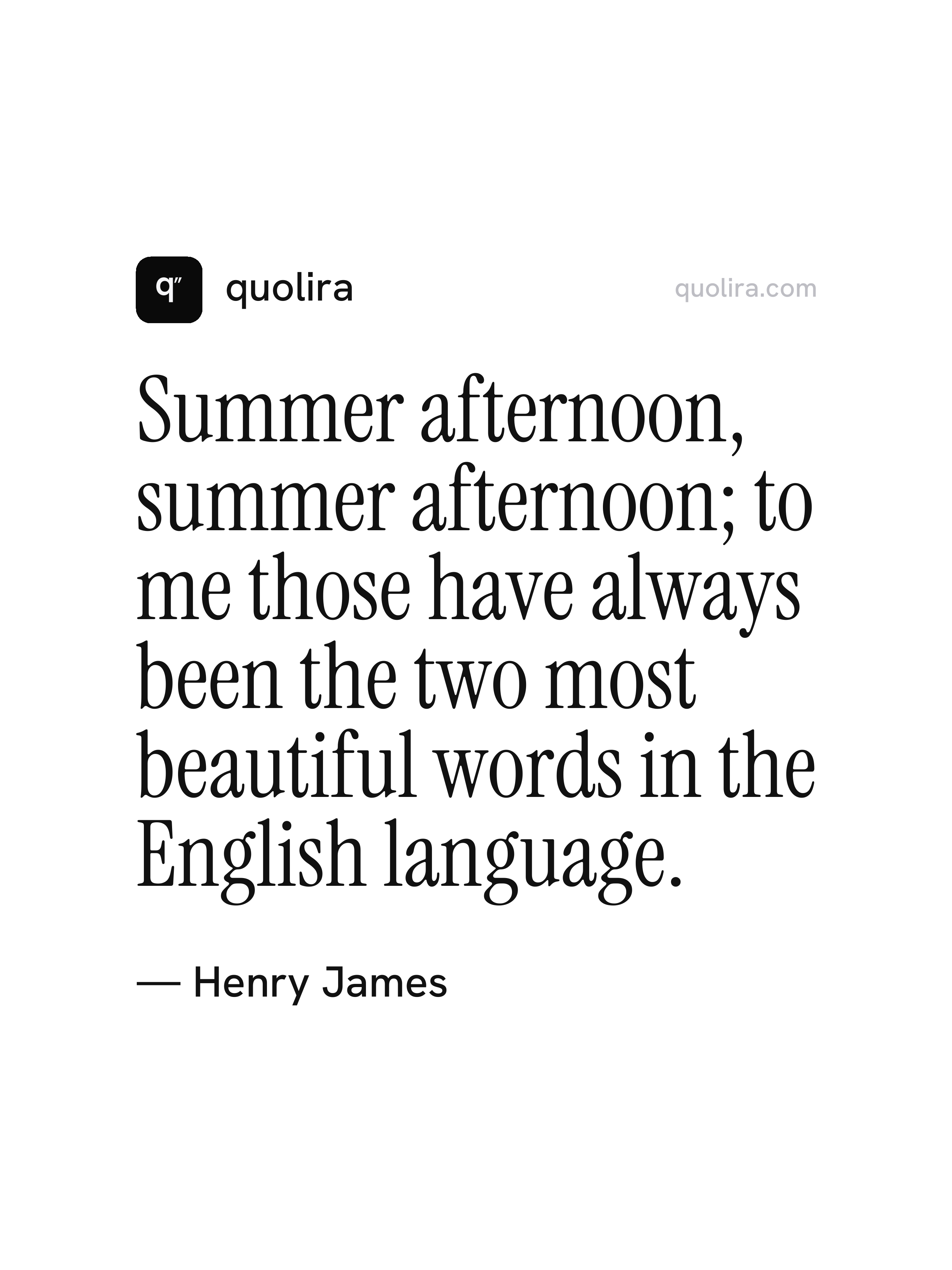
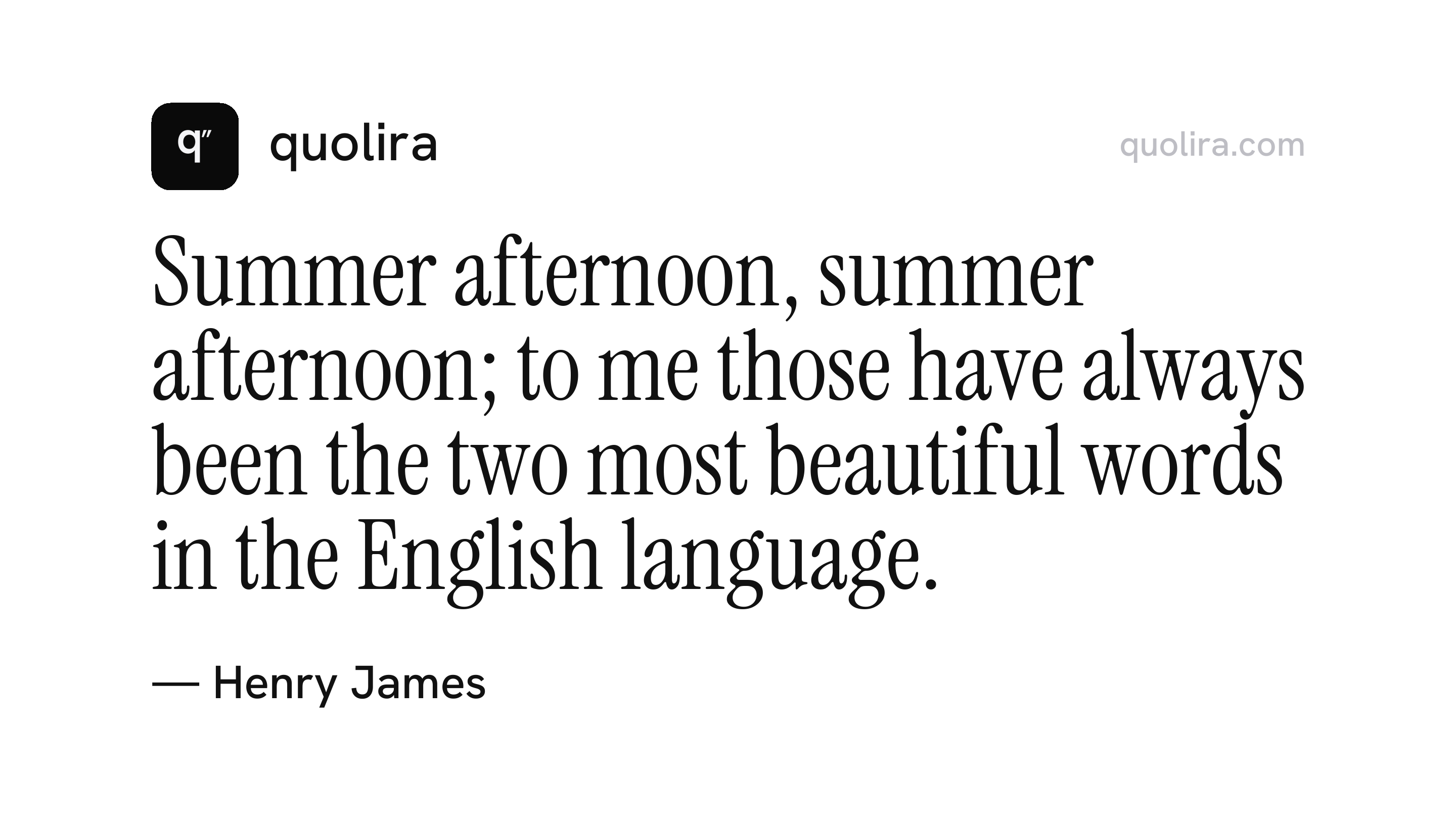
“Summer afternoon, summer afternoon; to me those have always been the two most beautiful words in the English language.”
Henry James · As quoted by Edith Wharton in A Backward Glance, 1934
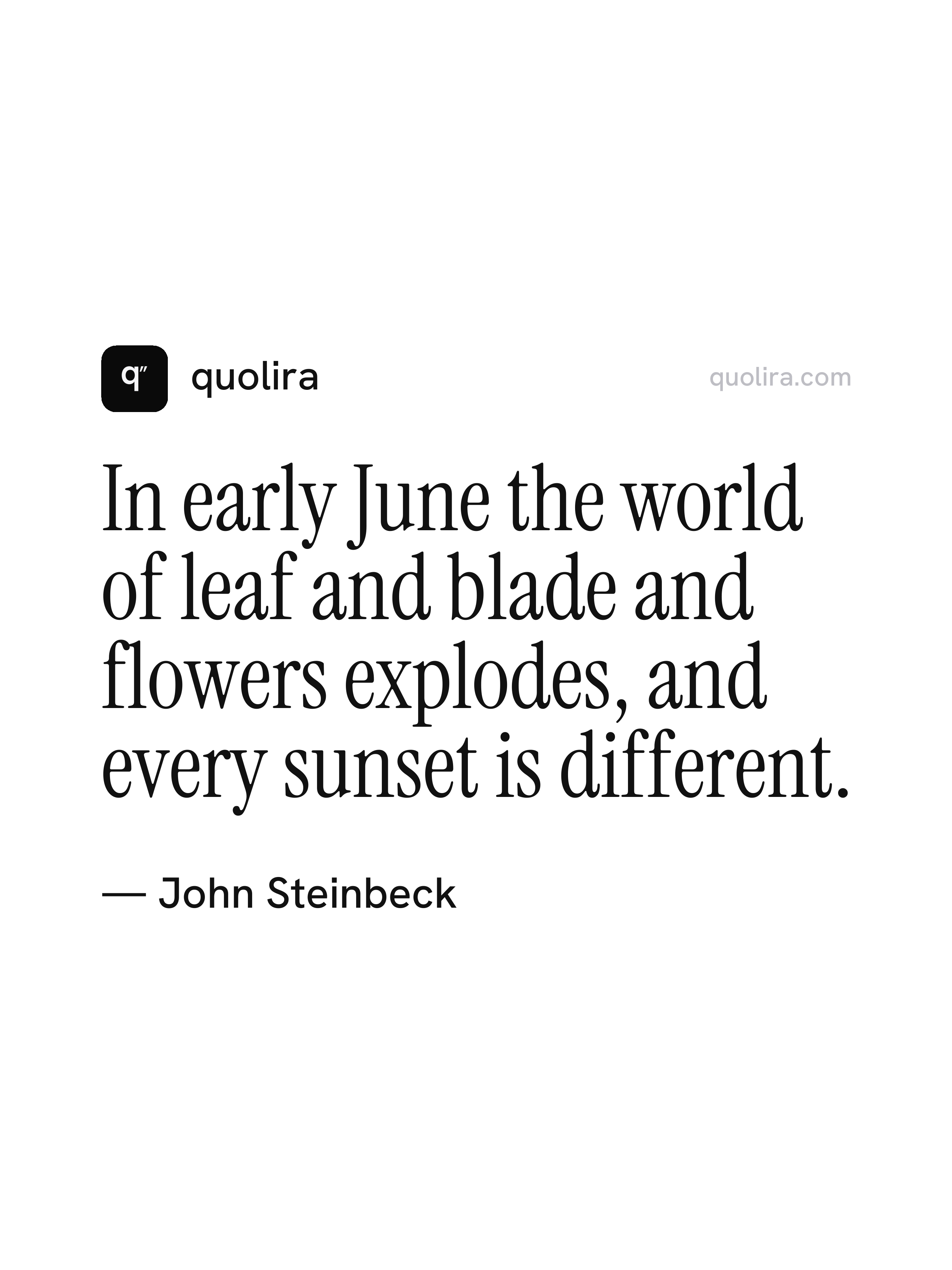
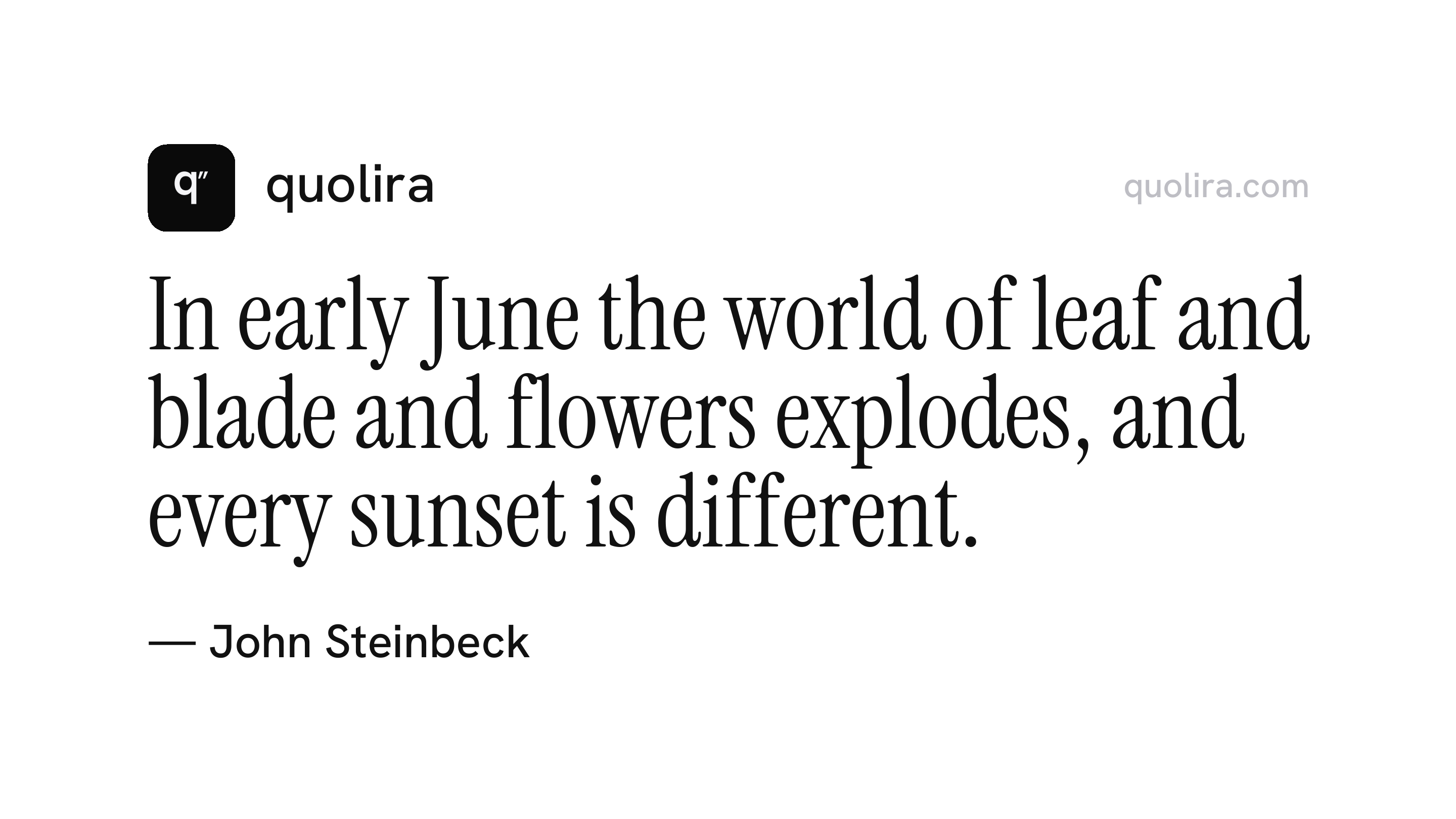
“In early June the world of leaf and blade and flowers explodes, and every sunset is different.”
John Steinbeck · Travels with Charley, 1962
“Deep summer is when laziness finds respectability.”
Sam Keen
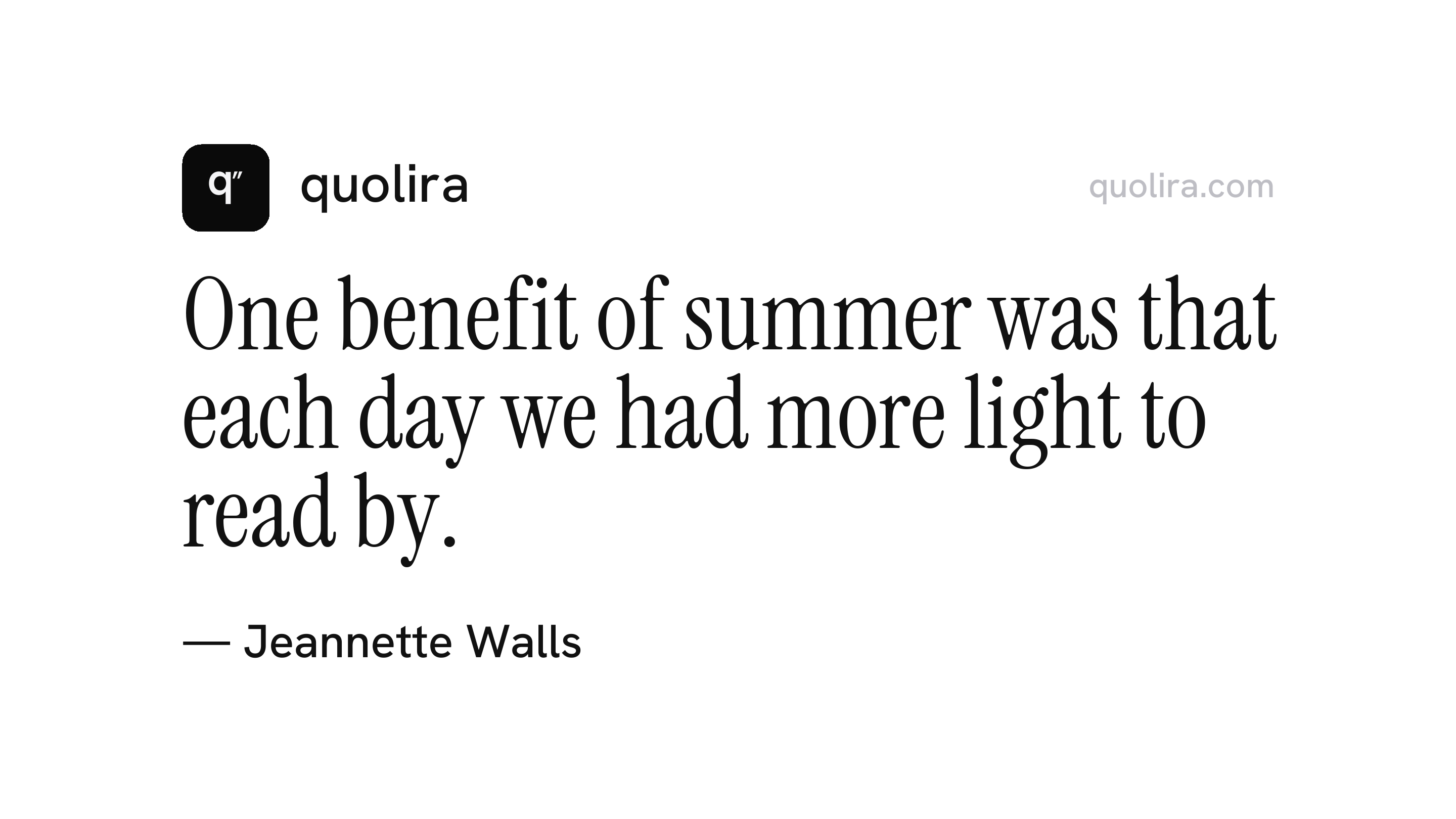
“One benefit of summer was that each day we had more light to read by.”
Jeannette Walls · The Glass Castle, 2005