“One must maintain a little bit of summer, even in the middle of winter.”
Henry David Thoreau · Journal, January 1852
 quolira
.com
quolira
quolira.com
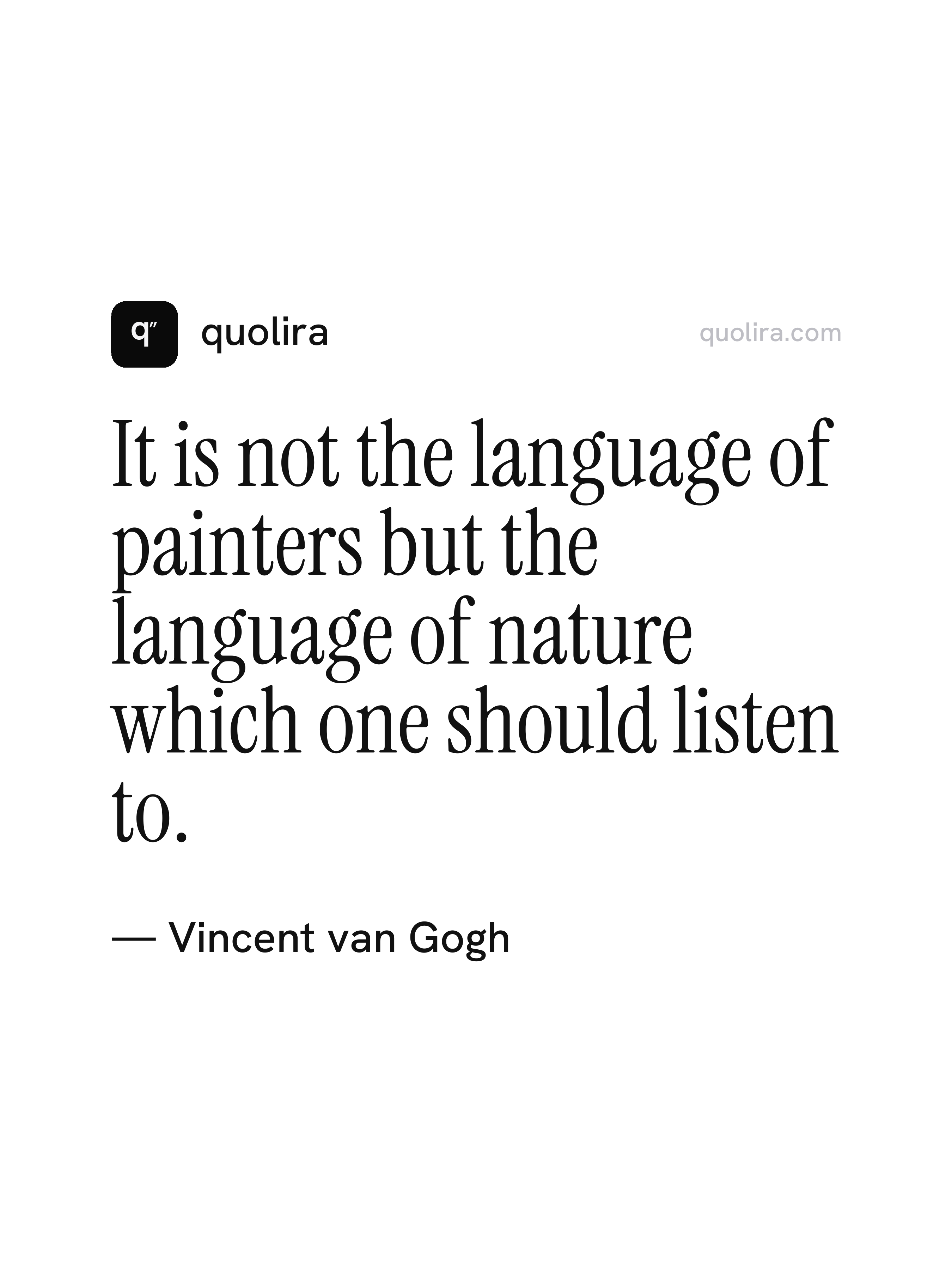
Van Gogh is arguing that the most important teacher for any painter is not received artistic tradition or the advice of fellow artists, but direct, honest looking at the world itself. By placing nature above the language of painters, he is pushing back against the idea that art is mainly learned by studying other art. True vision, he suggests, comes from setting aside inherited frameworks and paying attention to what is actually there.
Van Gogh wrote this in a letter to his brother Theo in 1885, a period when he was working intensively in the Netherlands and developing his approach to color, light, and form. His correspondence with Theo was enormous and remarkably candid, functioning as a running artistic diary. During this period he was thinking hard about how to paint truthfully, and his letters frequently wrestle with the tension between learning from masters and trusting one's own direct perception of the world.
Vincent van Gogh (1853 to 1890) was a Dutch Post-Impressionist painter whose work became enormously influential in the development of modern art, though he received little recognition during his lifetime. He produced a large body of paintings and drawings in roughly a decade of serious work, exploring color and emotion with unusual intensity. The letters he exchanged with his brother Theo survive as a deeply personal record of his artistic thinking and inner life.
“One must maintain a little bit of summer, even in the middle of winter.”
Henry David Thoreau · Journal, January 1852
“In the depth of winter I finally learned that within me there lay an invincible summer.”
Albert Camus · Return to Tipasa, 1954
“Then followed that beautiful season called summer, filled was the air with a dreamy and magical light.”
Henry Wadsworth Longfellow · Evangeline, 1847
“St. Swithin's day, if thou dost rain, for forty days it will remain; St. Swithin's day, if thou be fair, for forty days 'twill rain no more.”
Traditional English Proverb · July 15 folk saying, documented widely before 1800
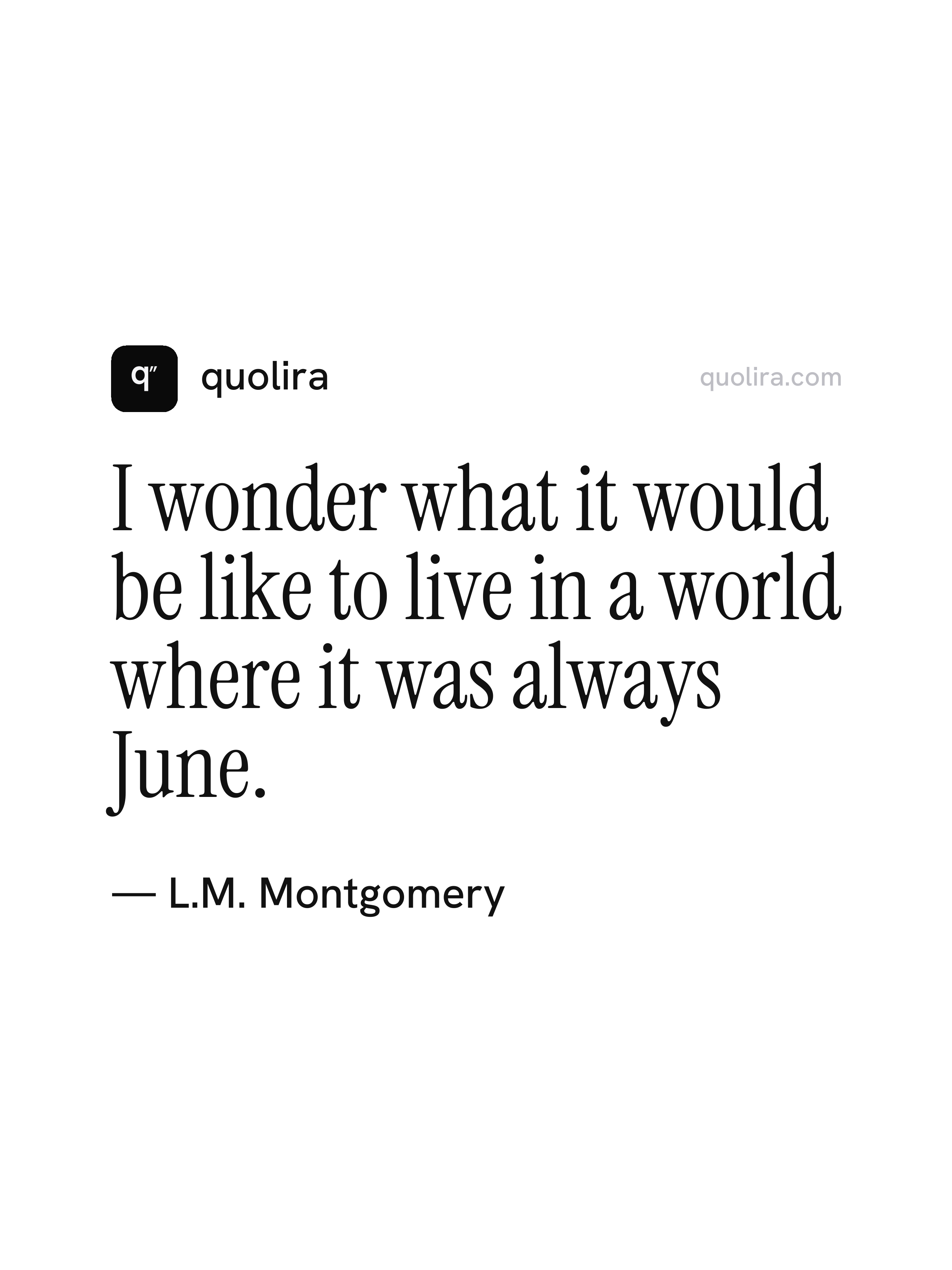
“I wonder what it would be like to live in a world where it was always June.”
L.M. Montgomery · Anne of Green Gables, 1908
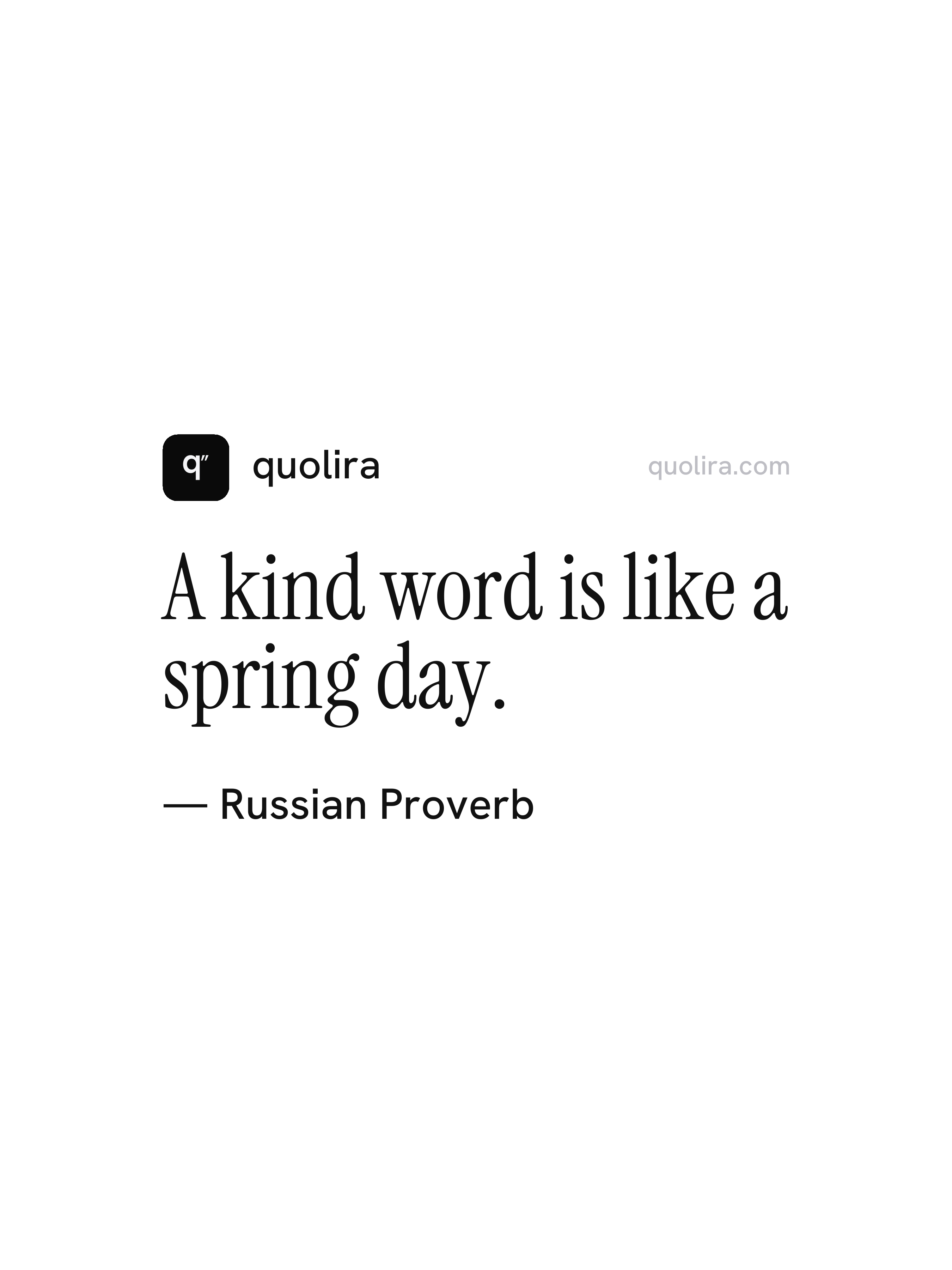
“A kind word is like a spring day.”
Russian Proverb
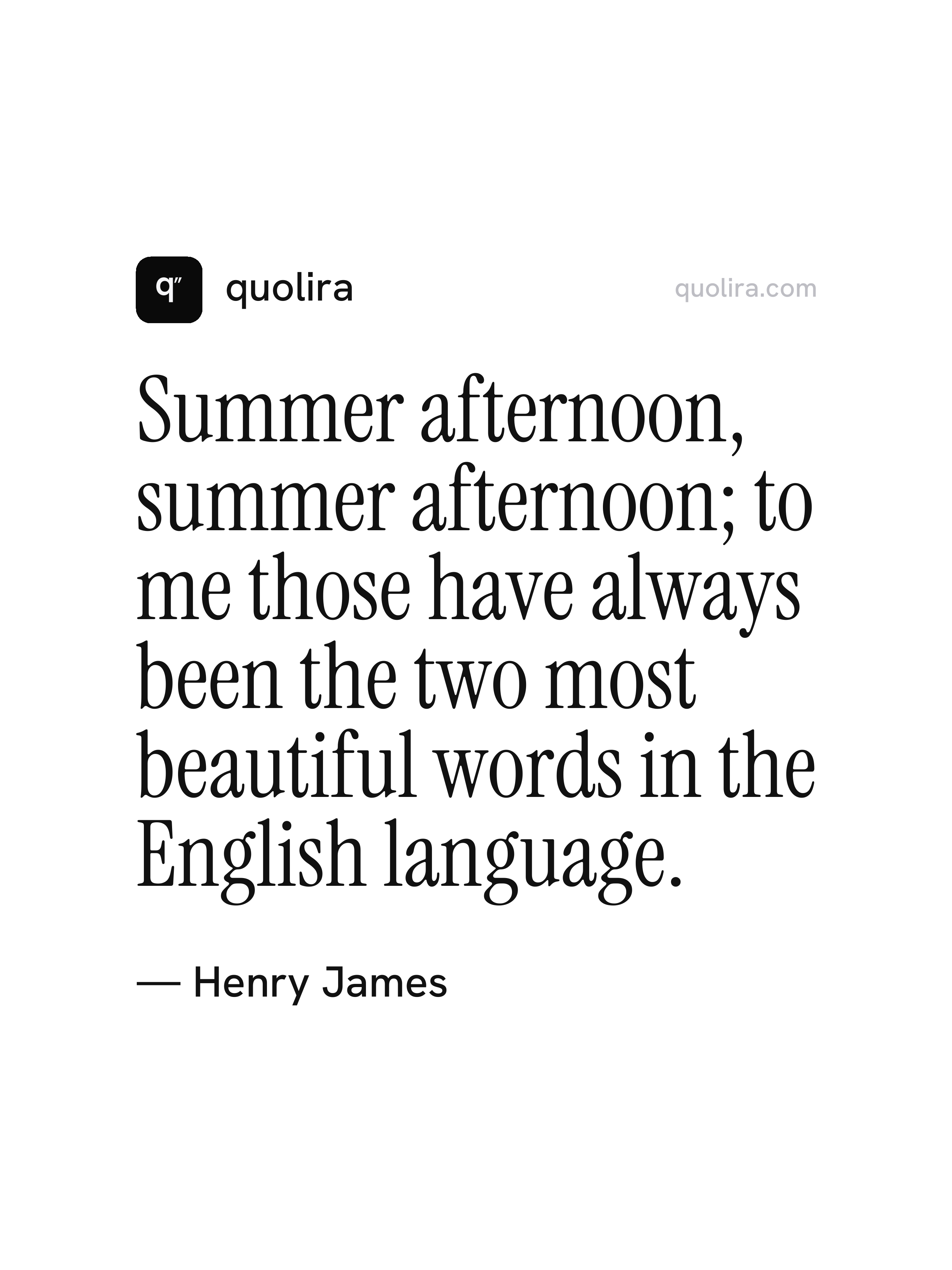
“Summer afternoon, summer afternoon; to me those have always been the two most beautiful words in the English language.”
Henry James · As quoted by Edith Wharton in A Backward Glance, 1934
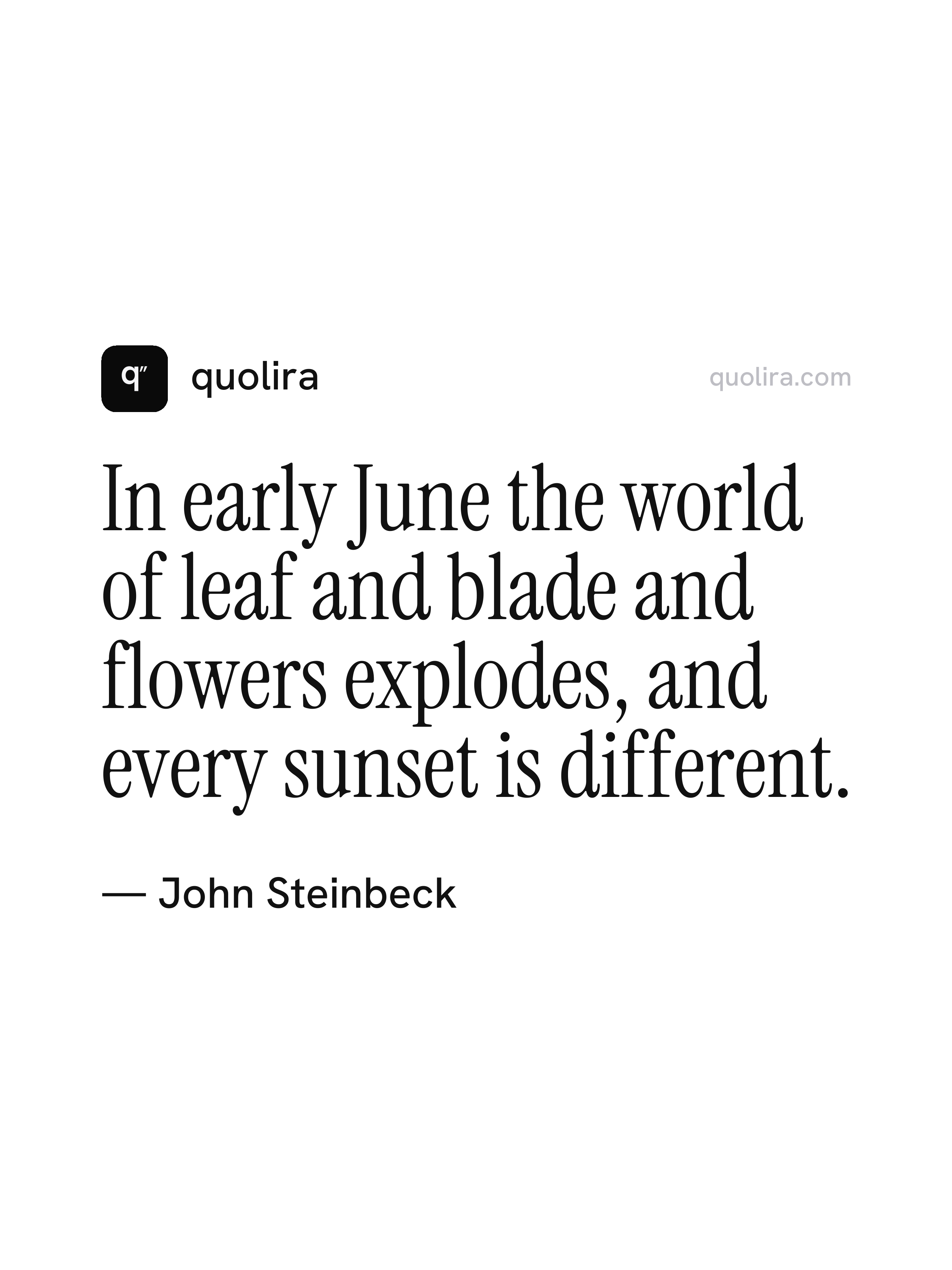
“In early June the world of leaf and blade and flowers explodes, and every sunset is different.”
John Steinbeck · Travels with Charley, 1962
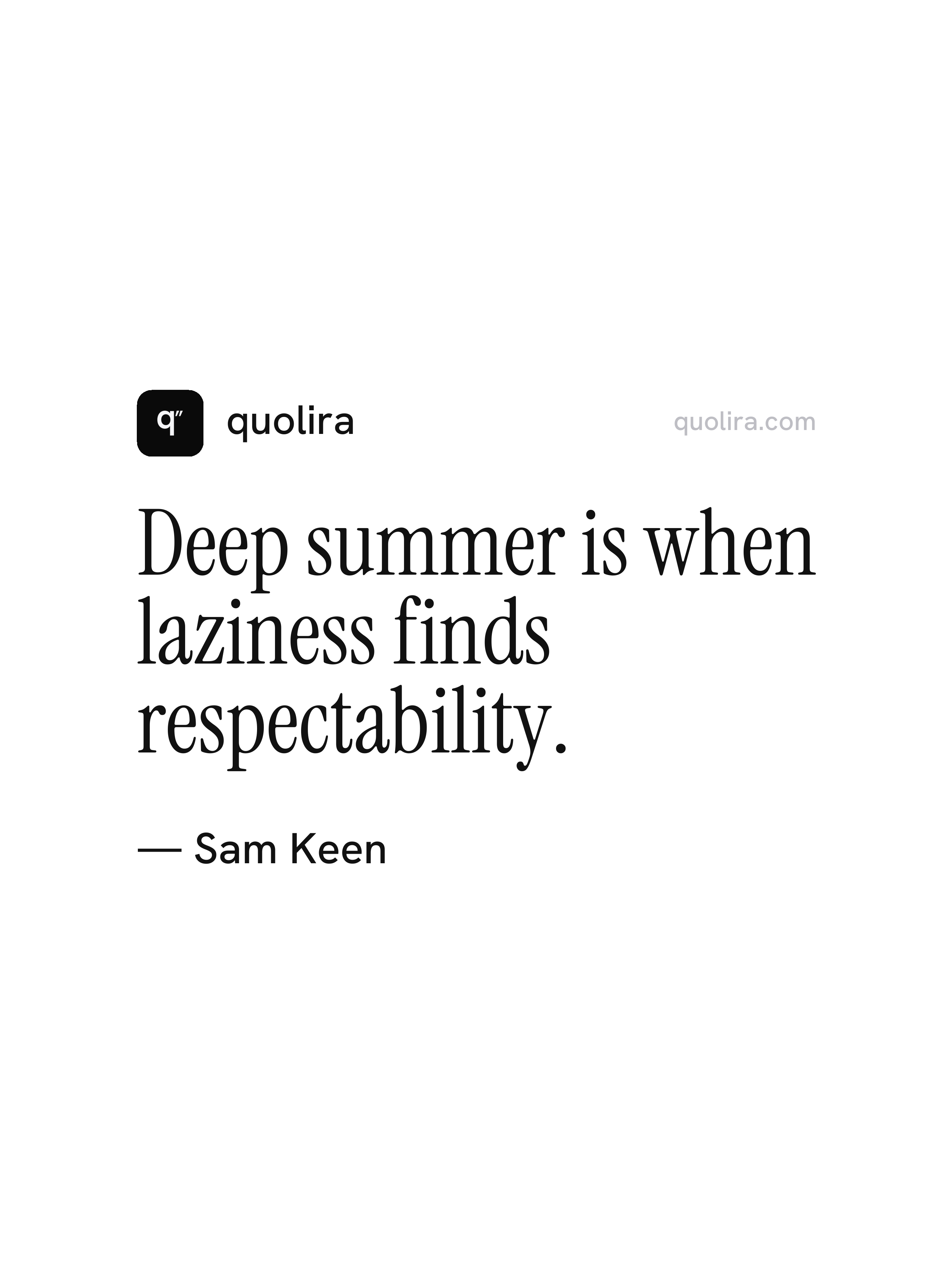
“Deep summer is when laziness finds respectability.”
Sam Keen
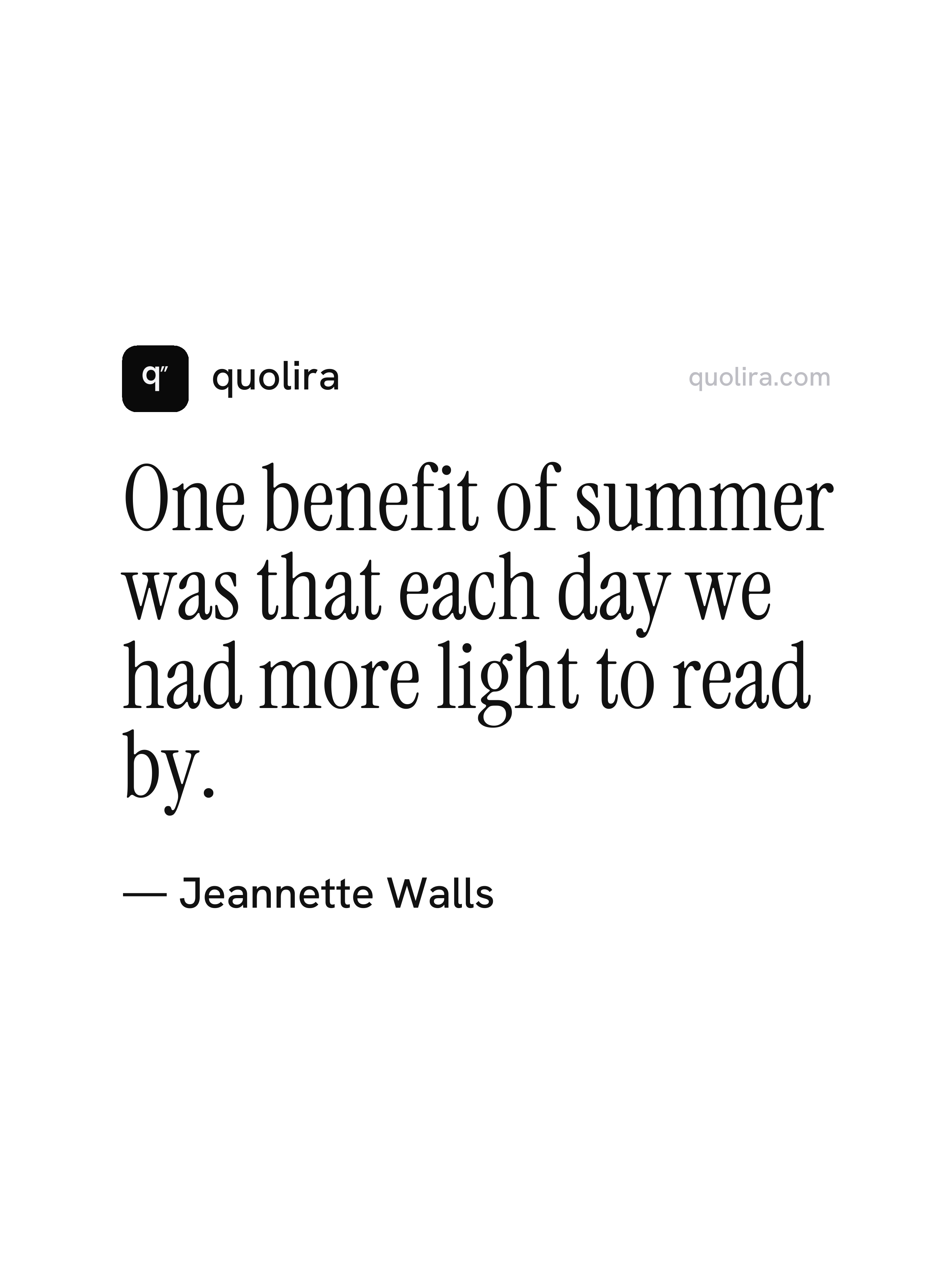
“One benefit of summer was that each day we had more light to read by.”
Jeannette Walls · The Glass Castle, 2005
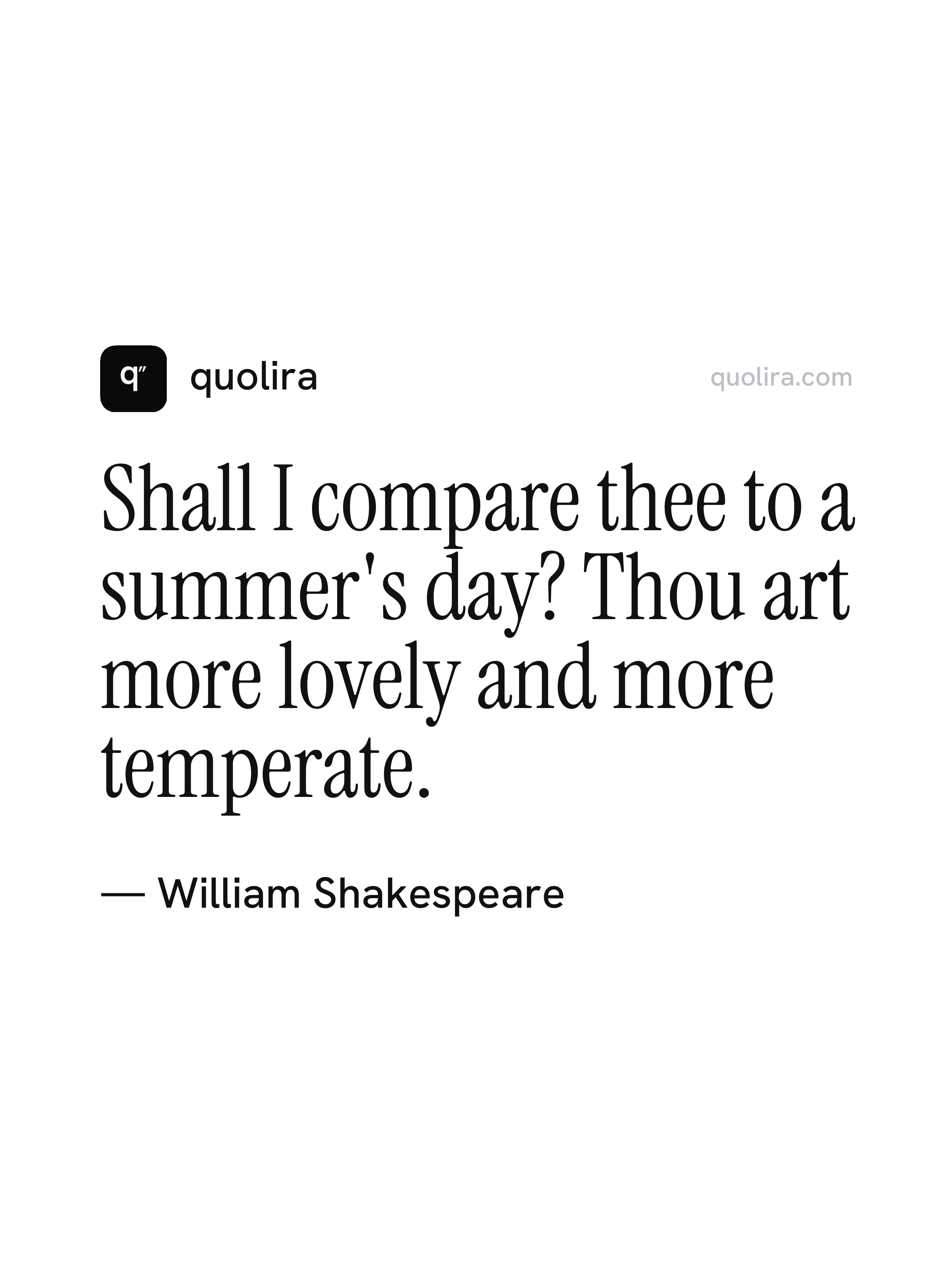
“Shall I compare thee to a summer's day? Thou art more lovely and more temperate.”
William Shakespeare · Sonnet 18, c. 1609
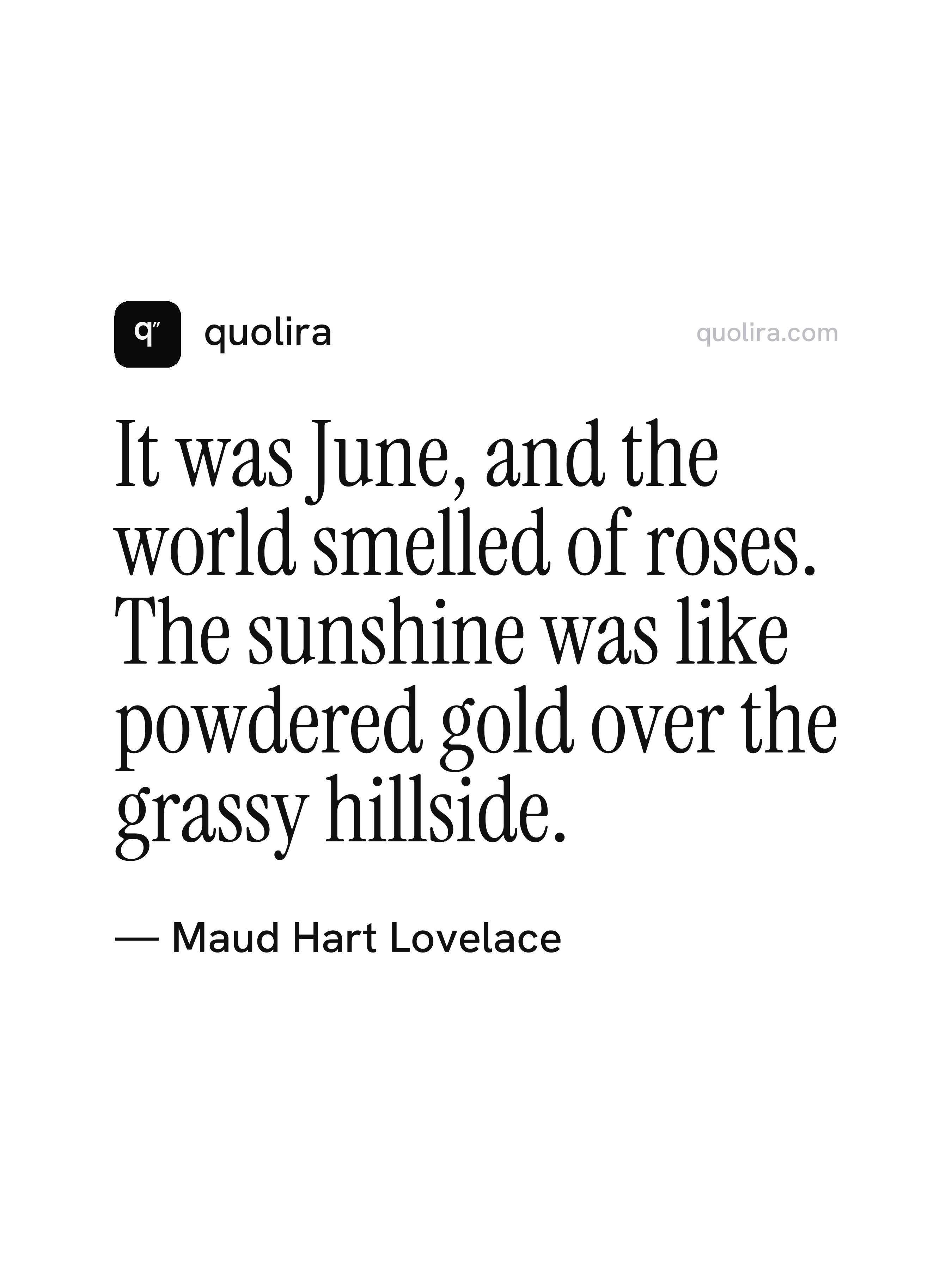
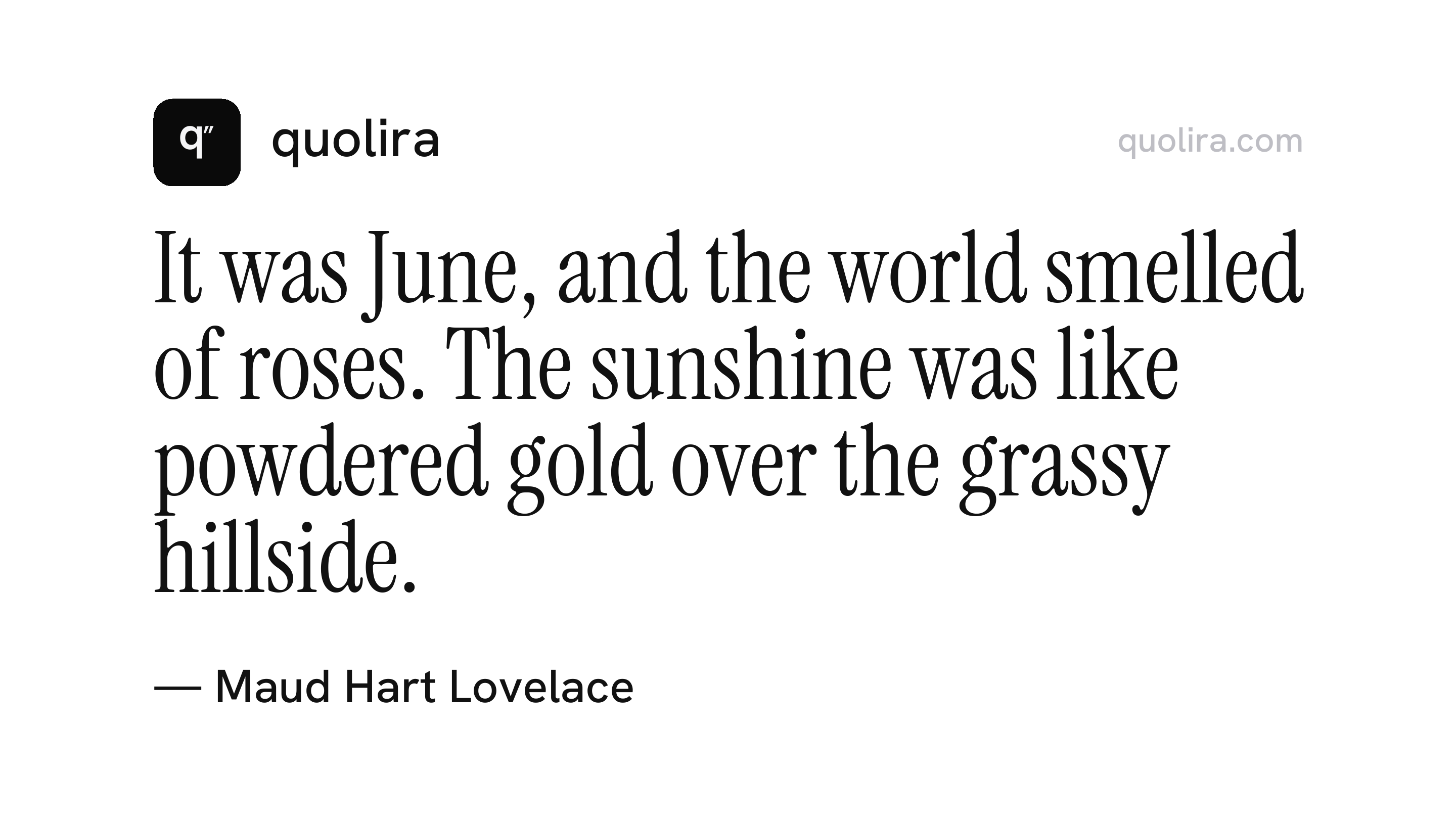
“It was June, and the world smelled of roses. The sunshine was like powdered gold over the grassy hillside.”
Maud Hart Lovelace · Betsy-Tacy, 1940