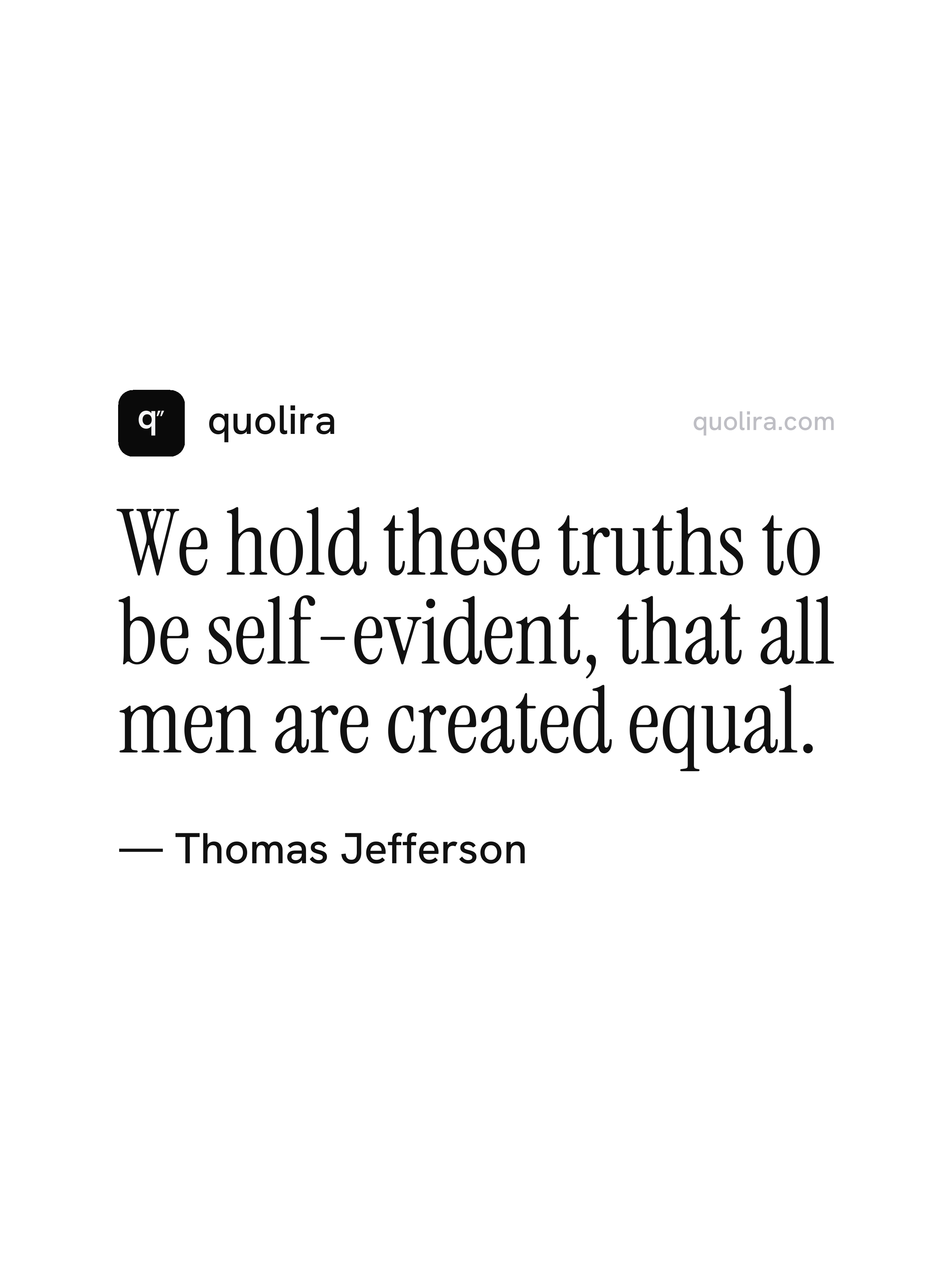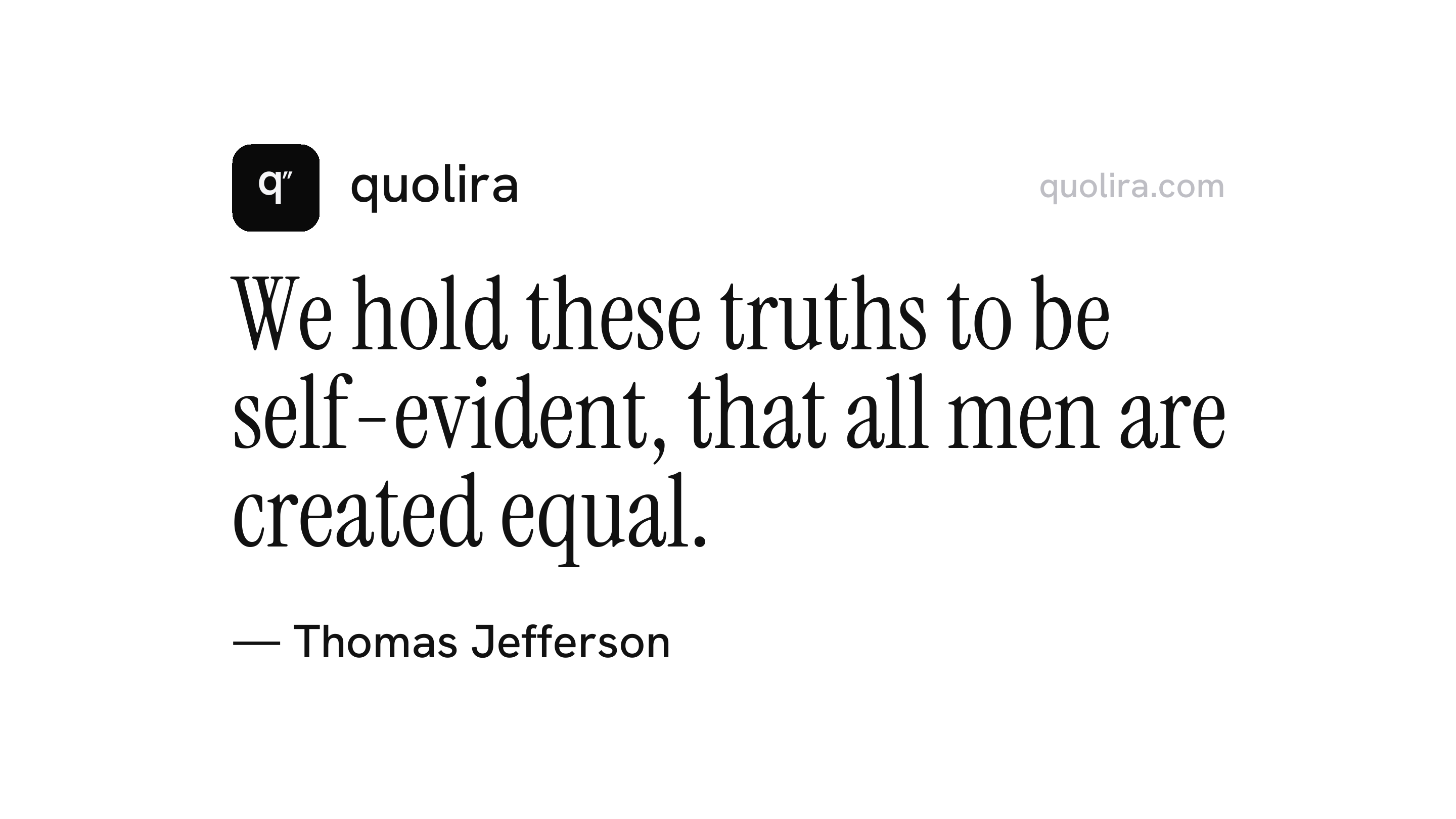
“We hold these truths to be self-evident, that all men are created equal.”
Thomas Jefferson · Declaration of Independence, 1776
 quolira
.com
quolira
quolira.com
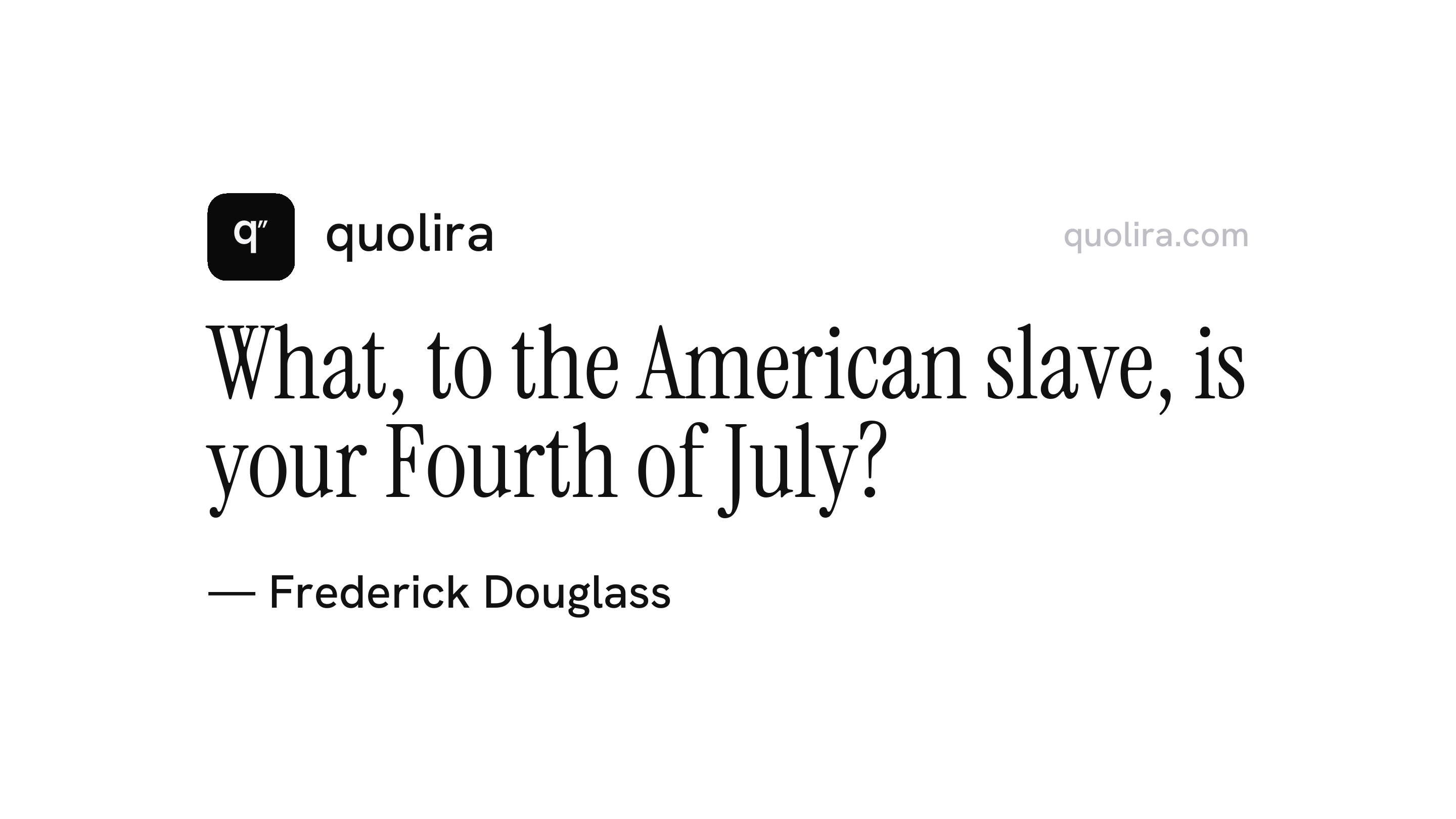
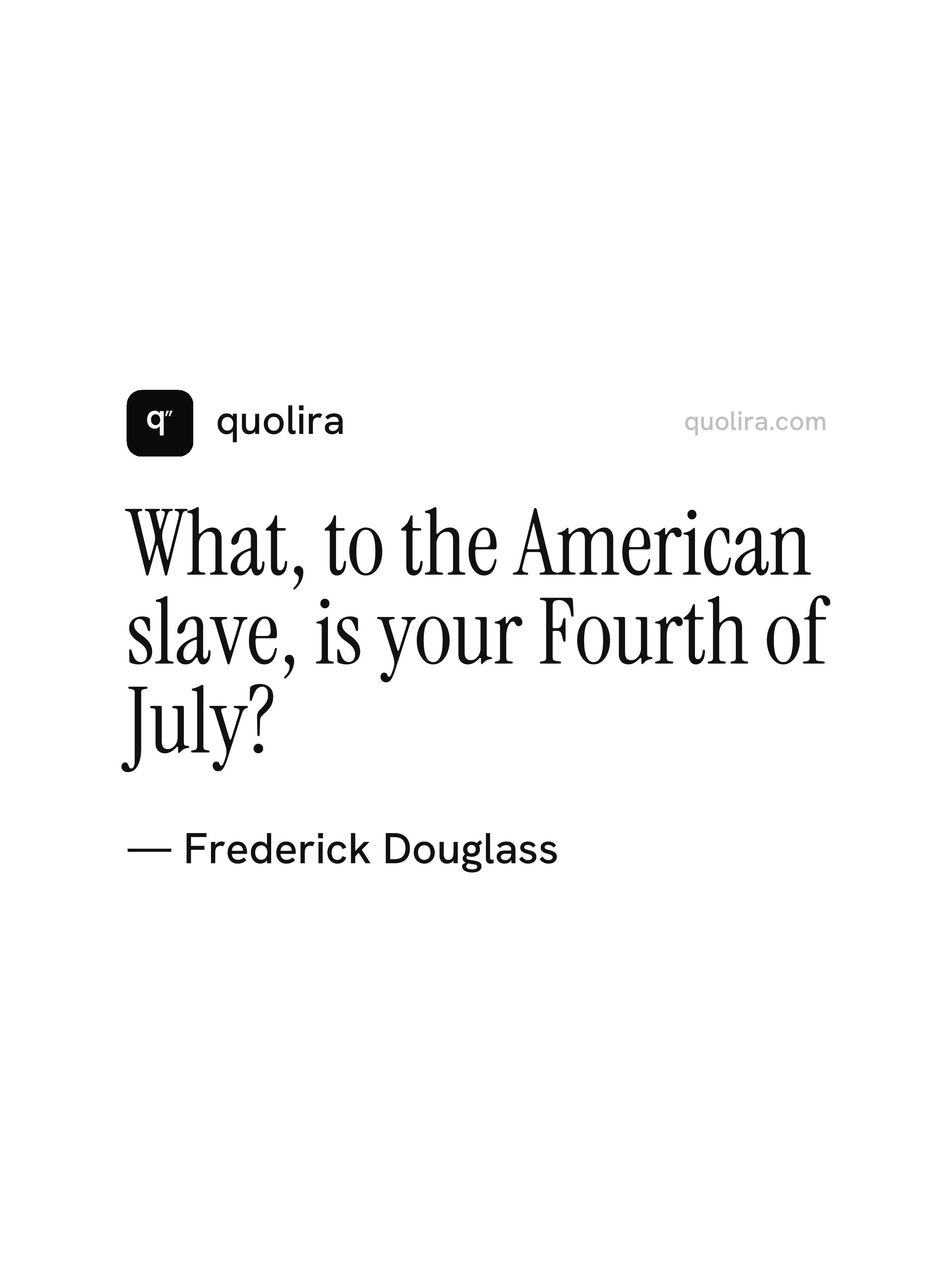
Frederick Douglass uses this question to expose a painful contradiction at the heart of American civic life. The Fourth of July celebrates liberty and equality as founding principles, yet millions of enslaved people in America had no share in either. By framing his challenge as a question rather than a statement, Douglass forces his audience to sit with the discomfort of their own ideals turned back on them. The line is not a rejection of those ideals but a demand that they be made real for everyone.
Douglass delivered this speech on July 5, 1852, in Rochester, New York, at an event organized to mark Independence Day. He was invited as the keynote speaker and used the occasion to deliver one of the most searing critiques of American slavery ever put into words. Choosing to speak on the fifth rather than the fourth was itself a pointed gesture. The speech is long and carefully structured, moving from acknowledgment of the founders' genuine achievements to a relentless examination of how those achievements excluded enslaved people entirely.
Frederick Douglass was born into slavery and escaped to freedom in 1838, going on to become the most prominent African American abolitionist of the nineteenth century. He was a powerful writer and orator, and his autobiographical works gave the wider public an unflinching account of what slavery actually meant in practice. He worked as a newspaper editor, advised presidents, and held several public offices. His life and career were built on the insistence that the promises of American democracy had to be extended to all people without exception.
“We hold these truths to be self-evident, that all men are created equal.”
Thomas Jefferson · Declaration of Independence, 1776
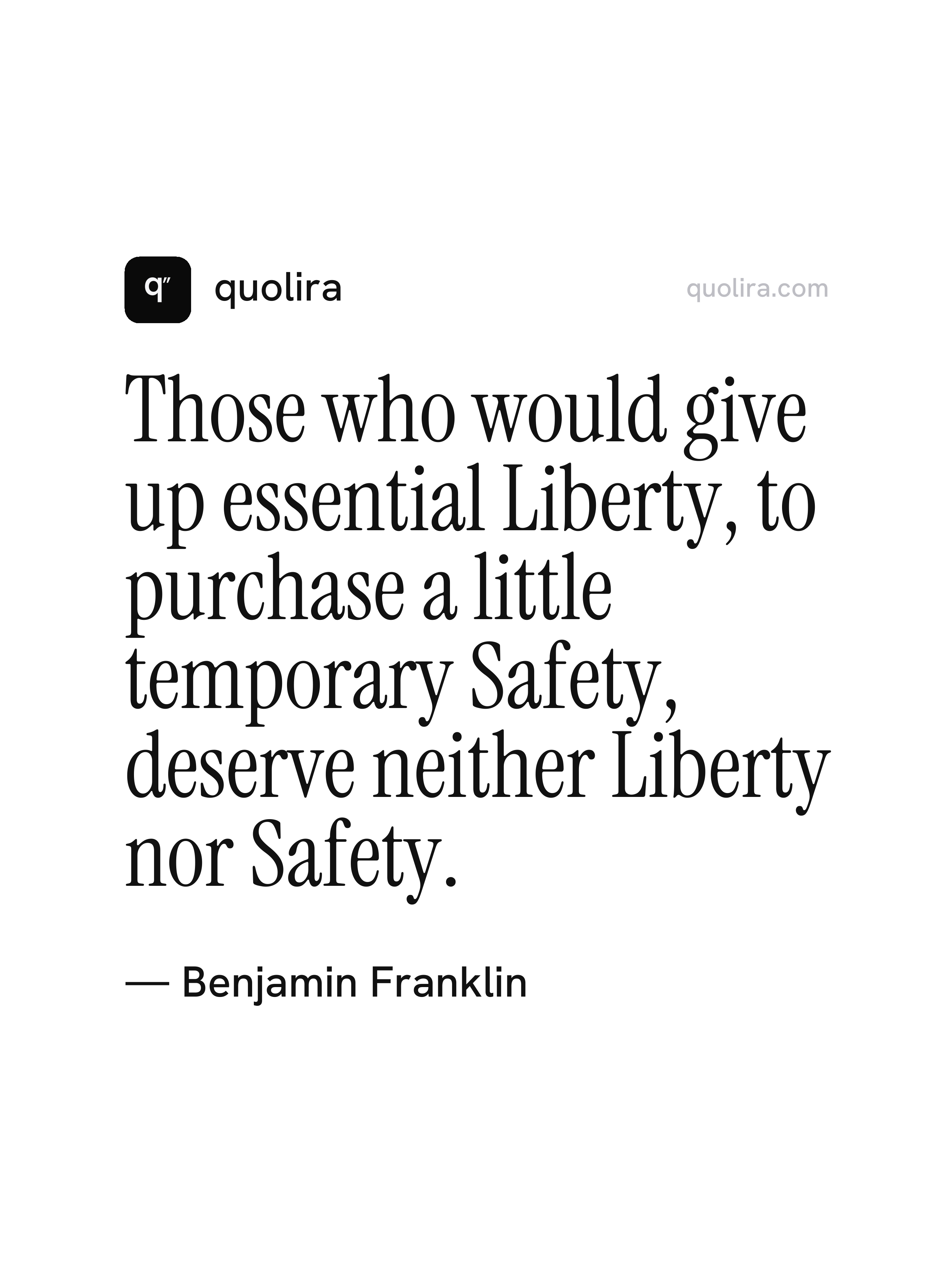
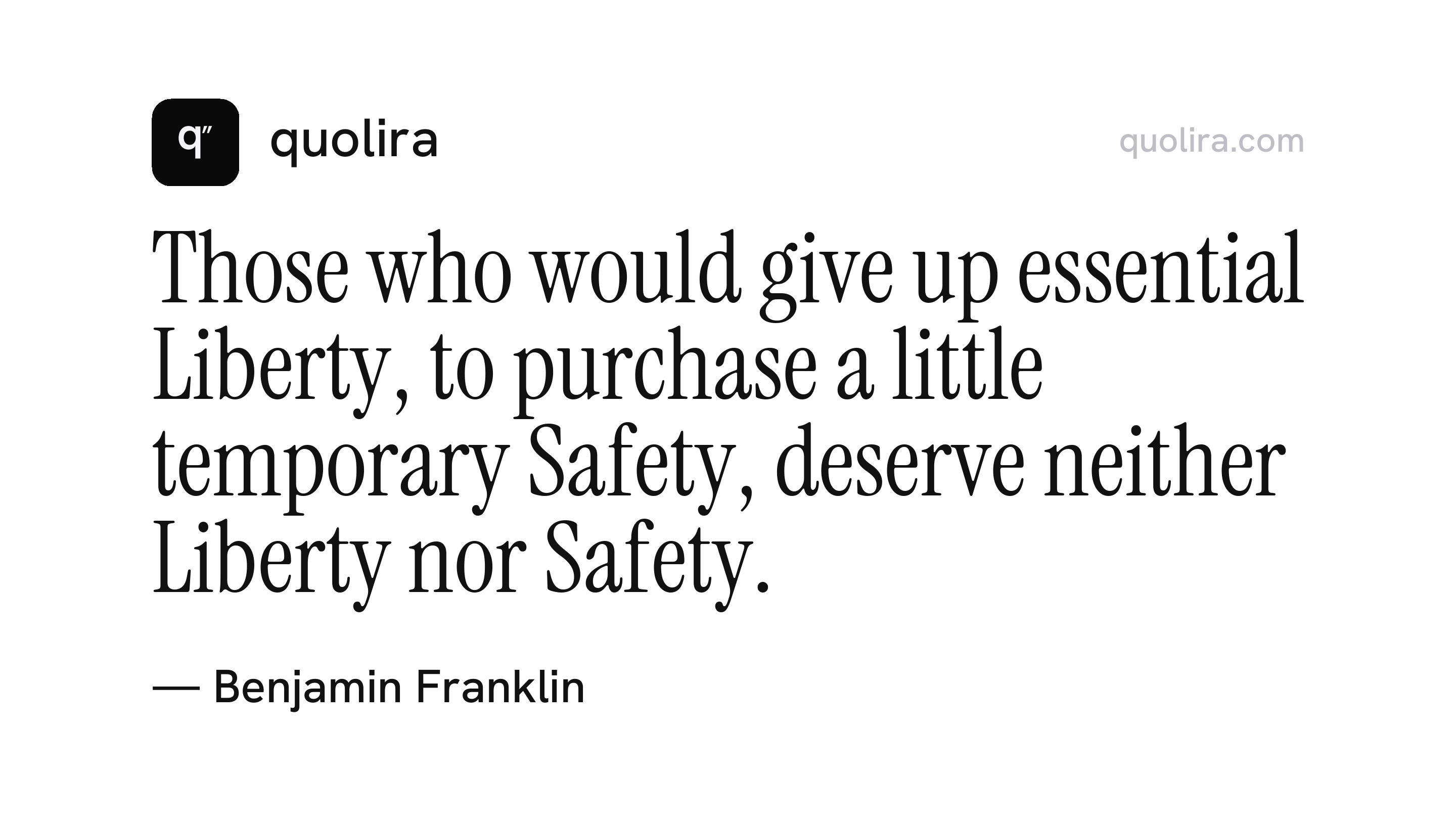
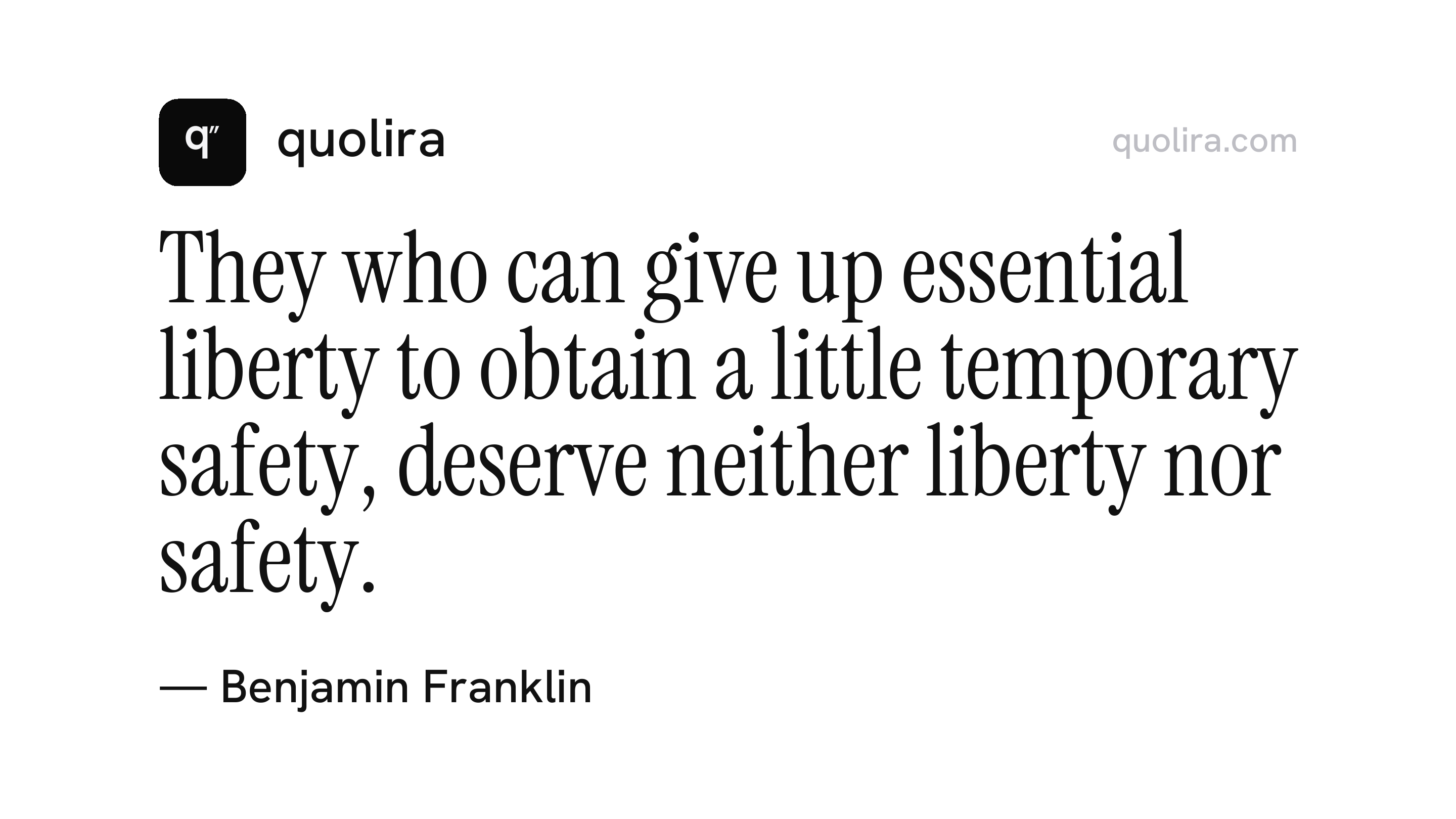
“Those who would give up essential Liberty, to purchase a little temporary Safety, deserve neither Liberty nor Safety.”
Benjamin Franklin · 1755
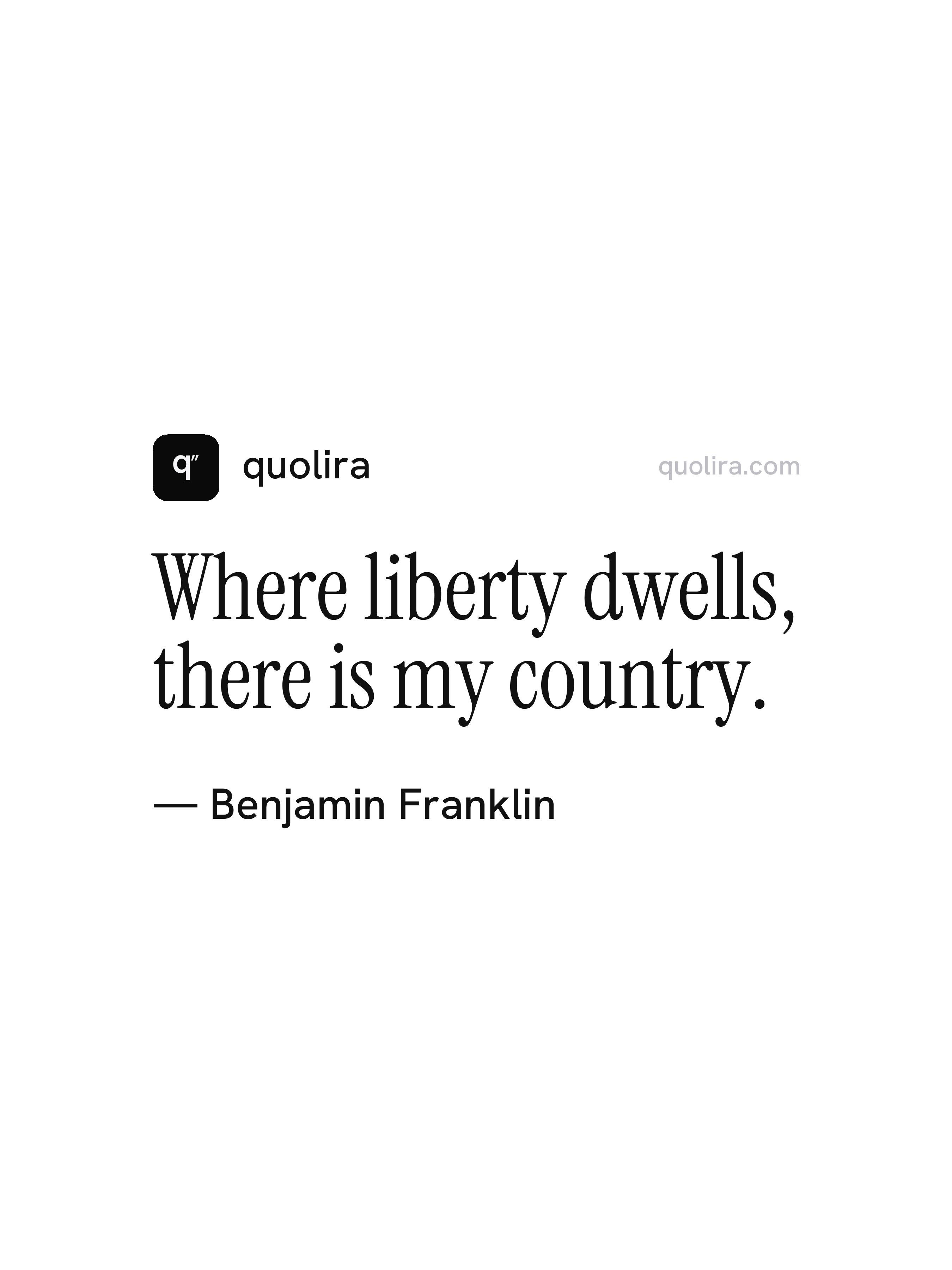
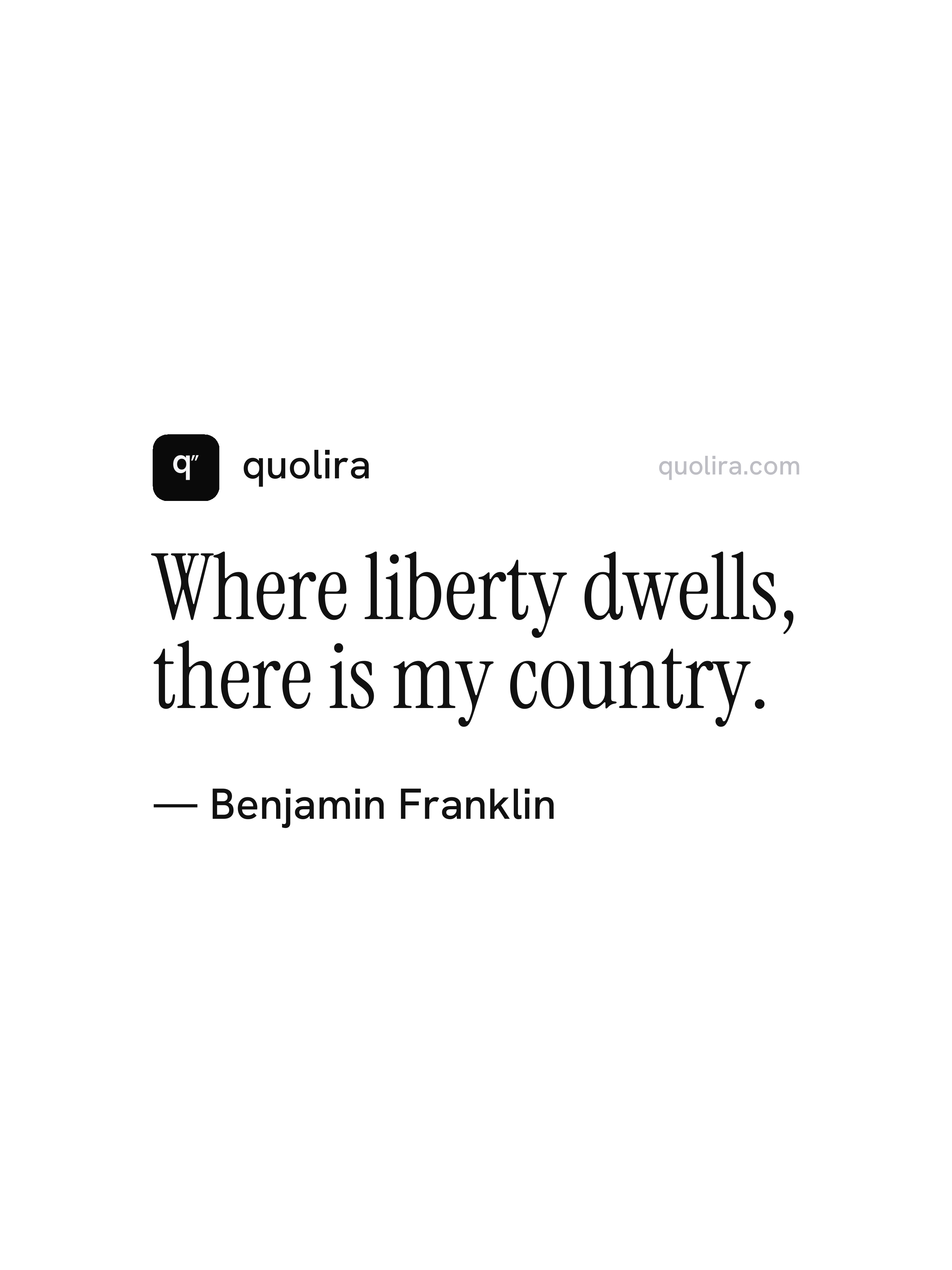
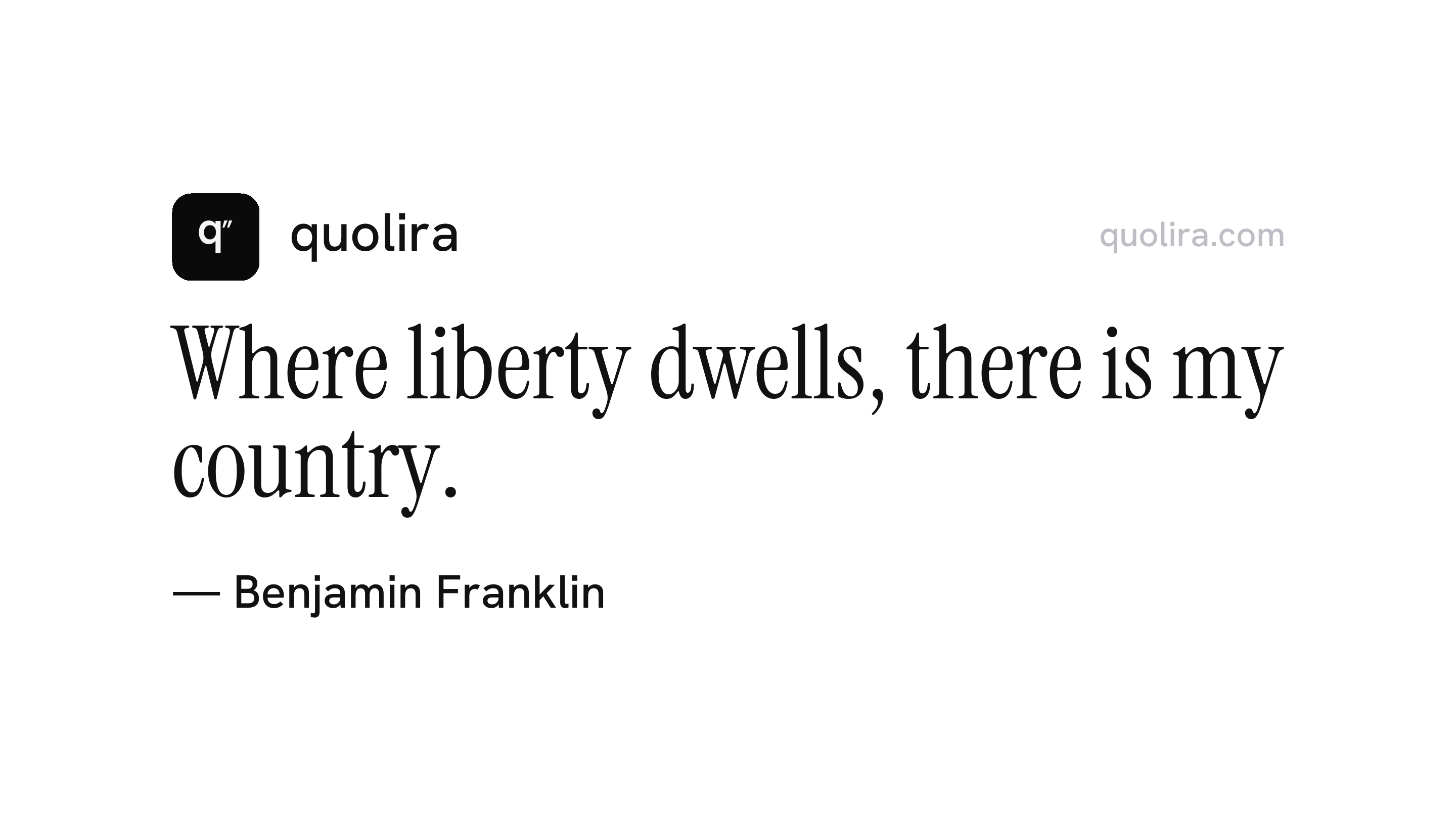
“Where liberty dwells, there is my country.”
Benjamin Franklin
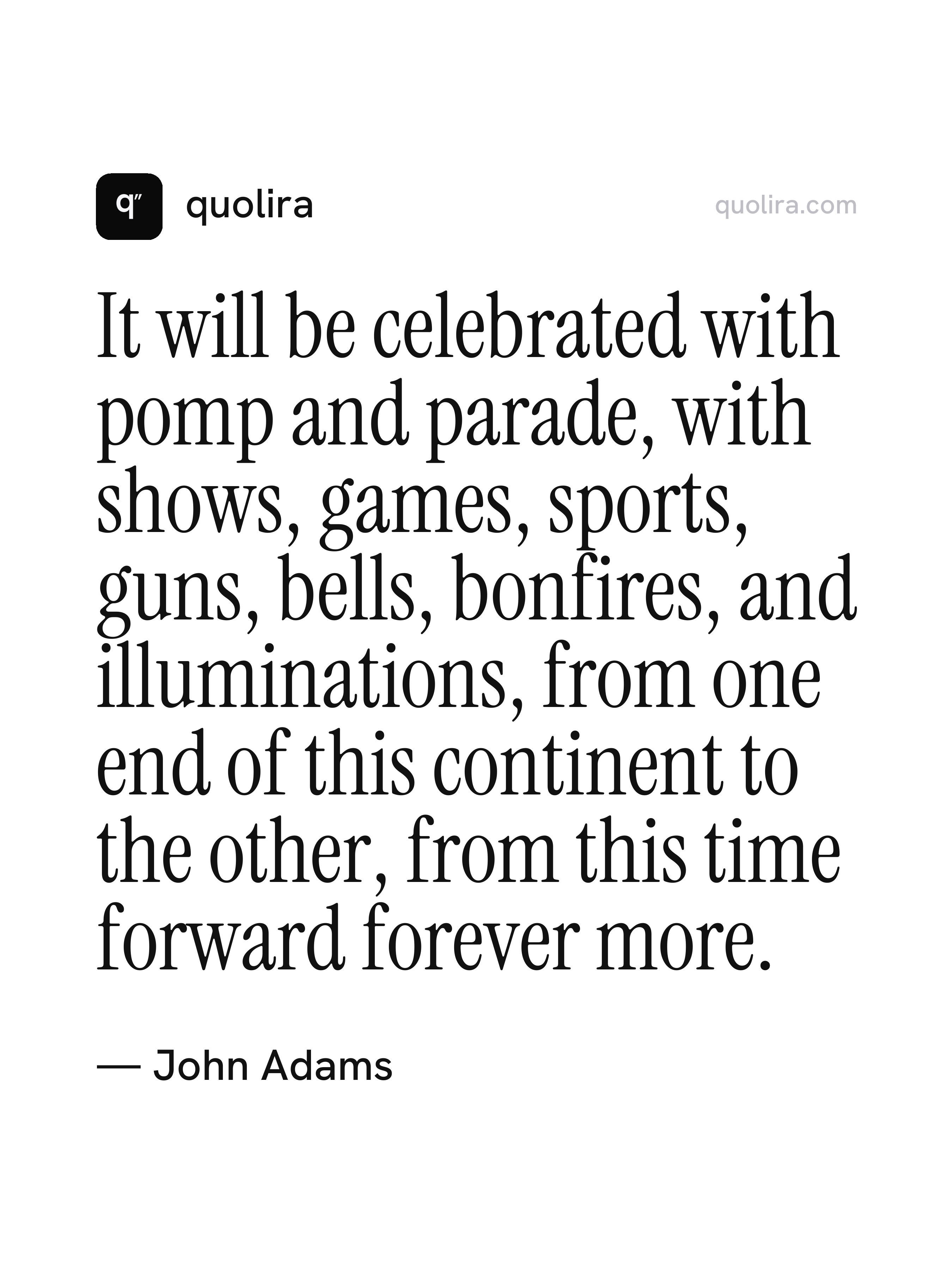
“It will be celebrated with pomp and parade, with shows, games, sports, guns, bells, bonfires, and illuminations, from one end of this continent to the other, from this time forward forever more.”
John Adams · Letter to Abigail Adams, July 3, 1776
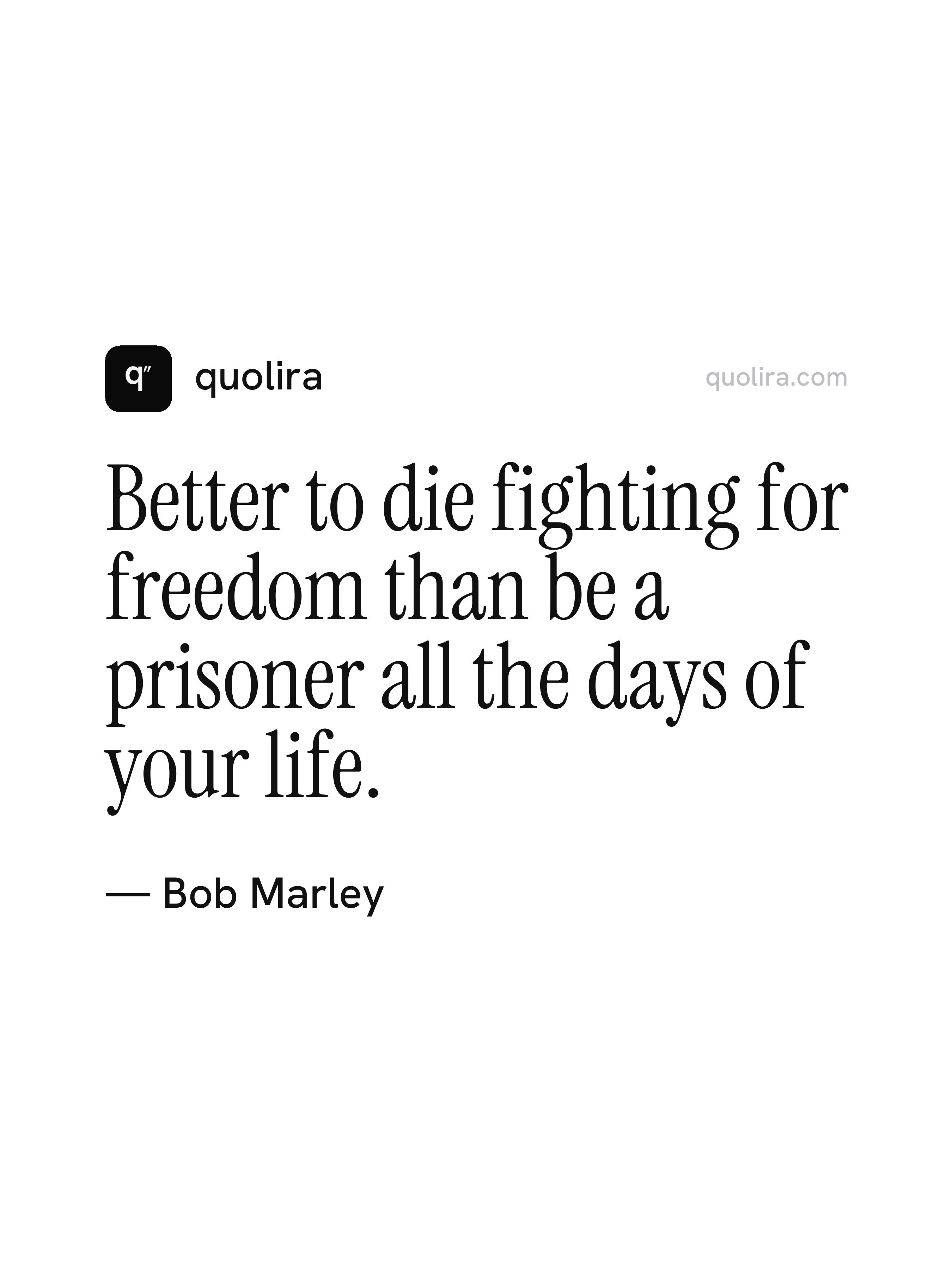
“Better to die fighting for freedom than be a prisoner all the days of your life.”
Bob Marley
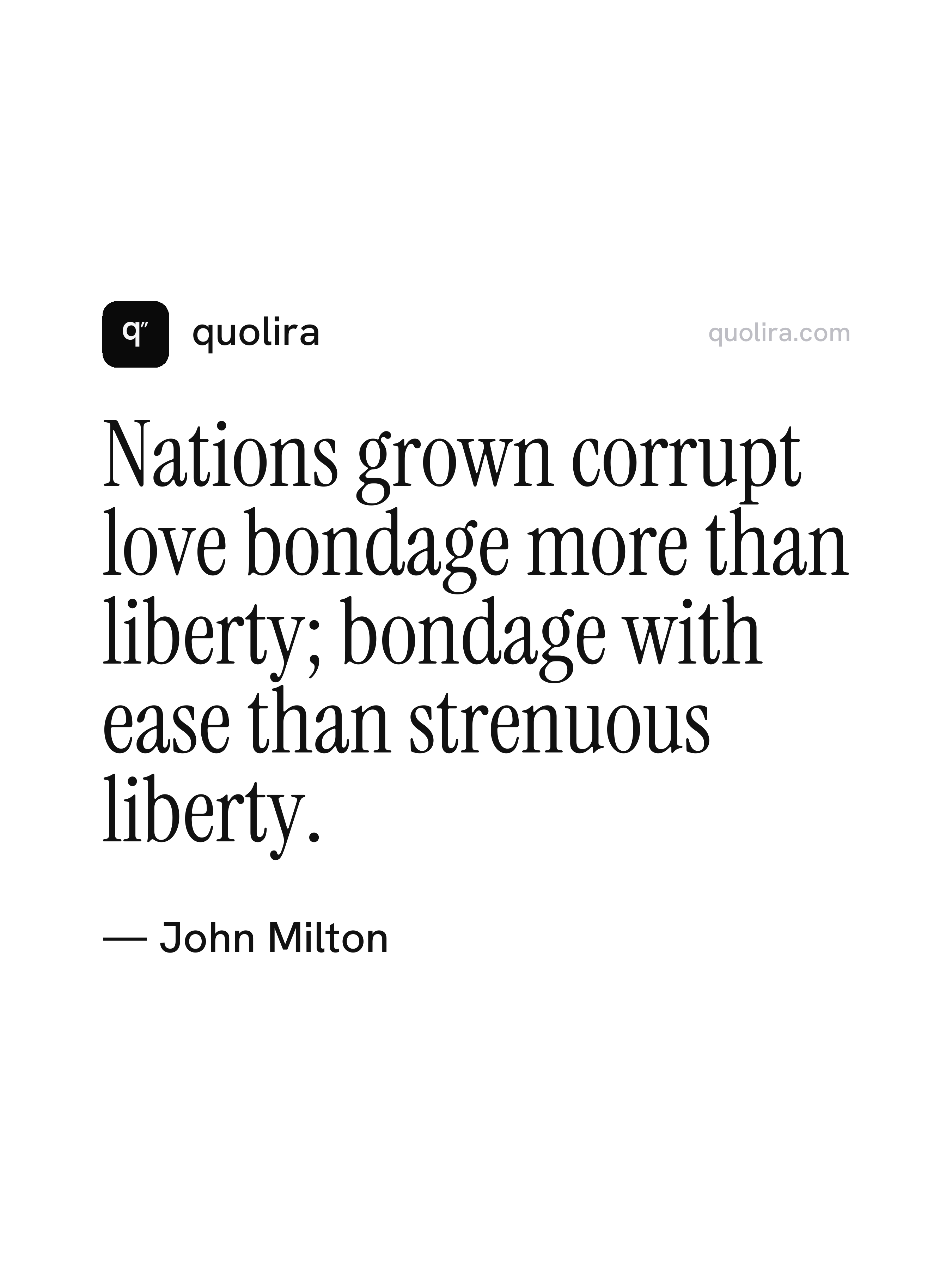
“Nations grown corrupt love bondage more than liberty; bondage with ease than strenuous liberty.”
John Milton · The Ready and Easy Way, 1660
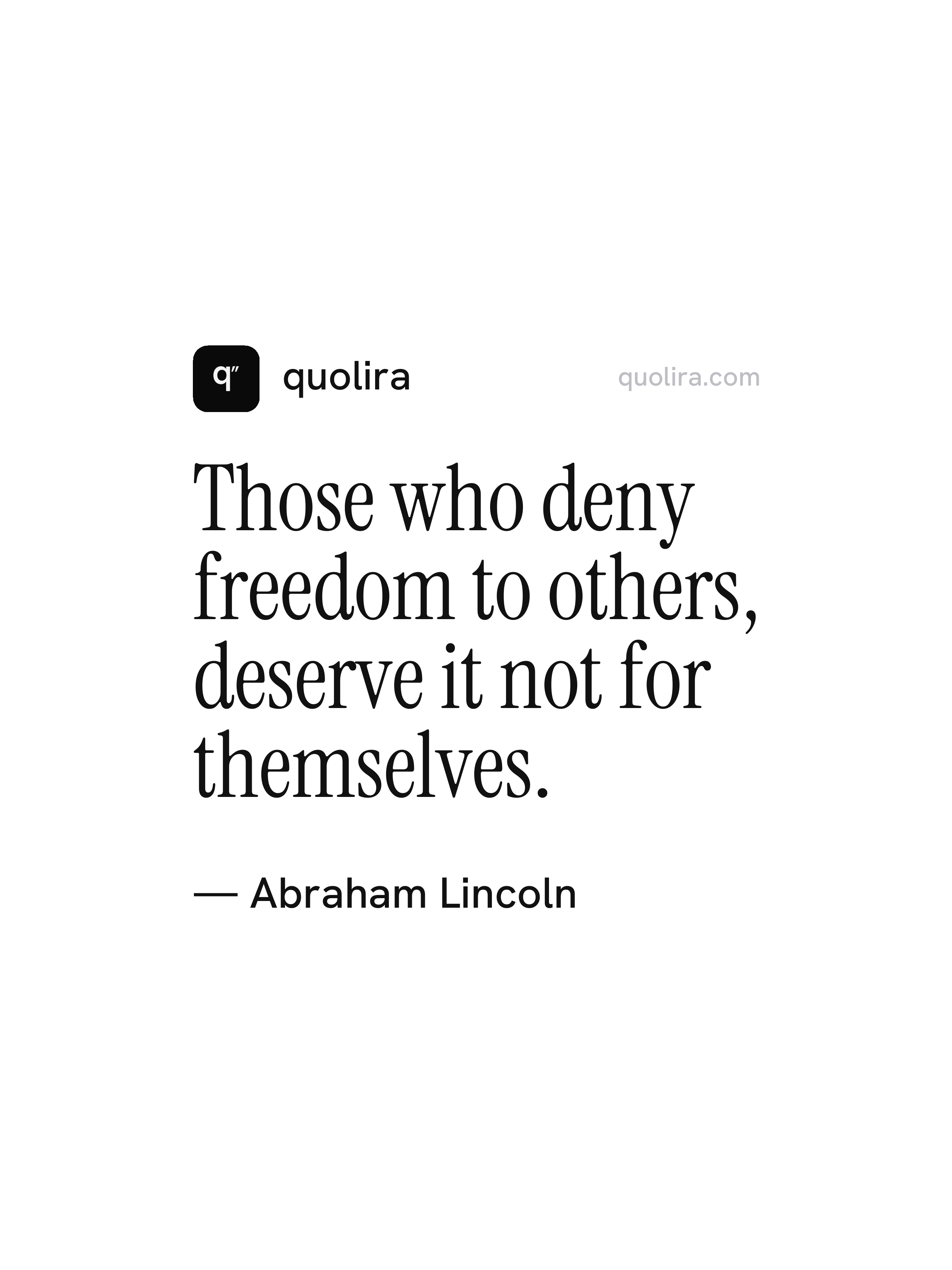
“Those who deny freedom to others, deserve it not for themselves.”
Abraham Lincoln · Letter to Henry L. Pierce, 1859
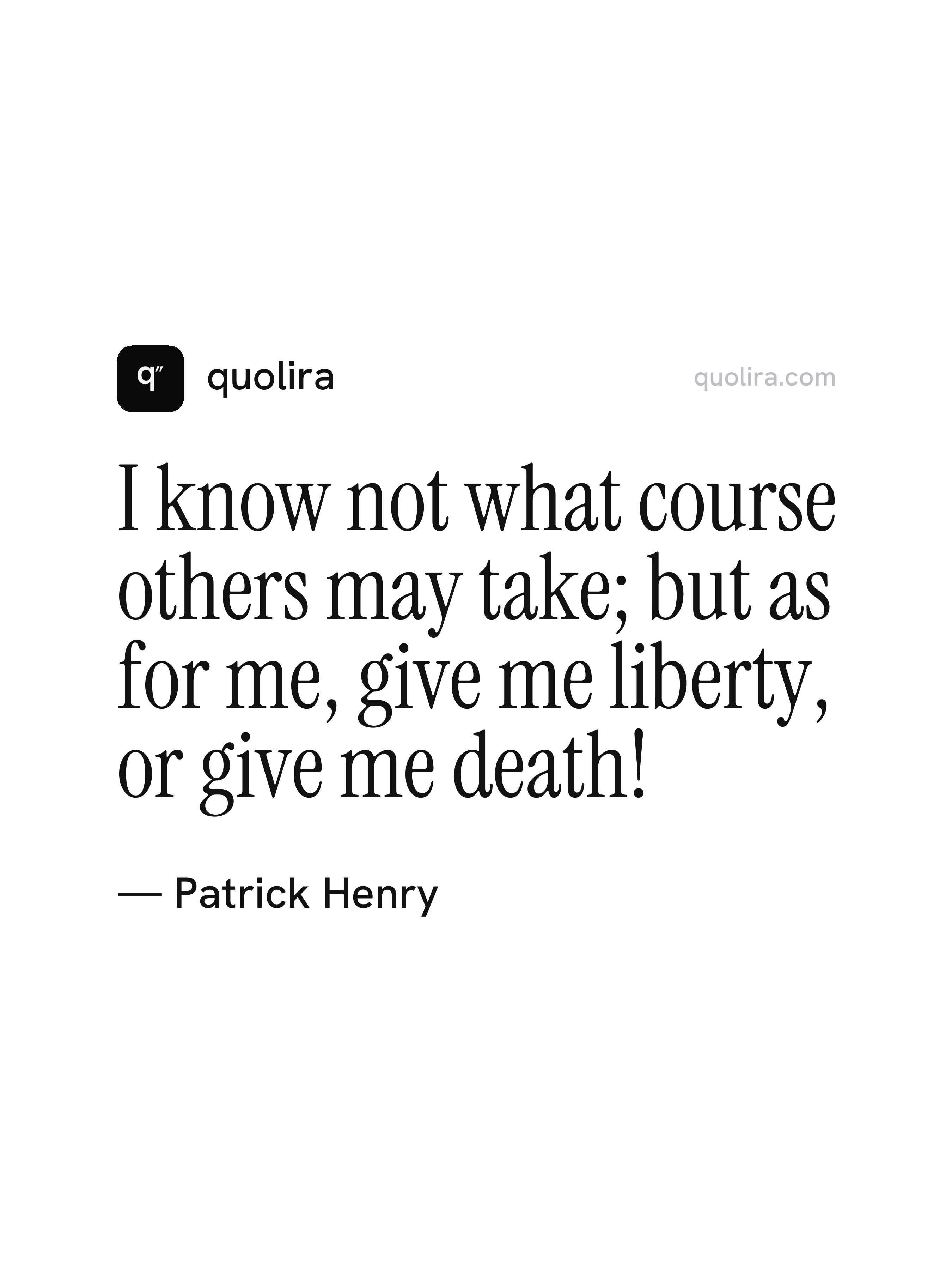
“I know not what course others may take; but as for me, give me liberty, or give me death!”
Patrick Henry · Speech to the Virginia Convention, 1775
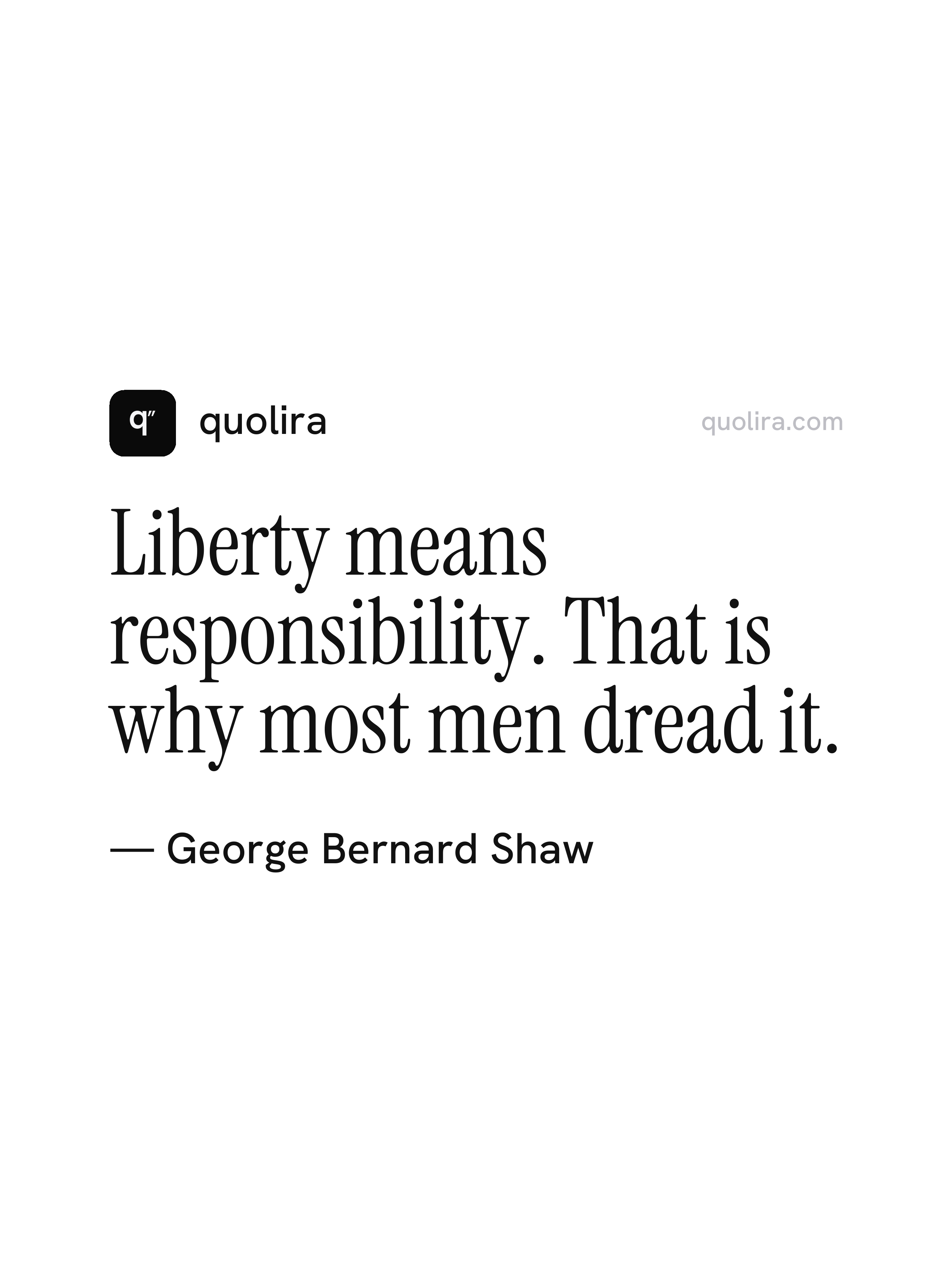
“Liberty means responsibility. That is why most men dread it.”
George Bernard Shaw · Man and Superman, 1903
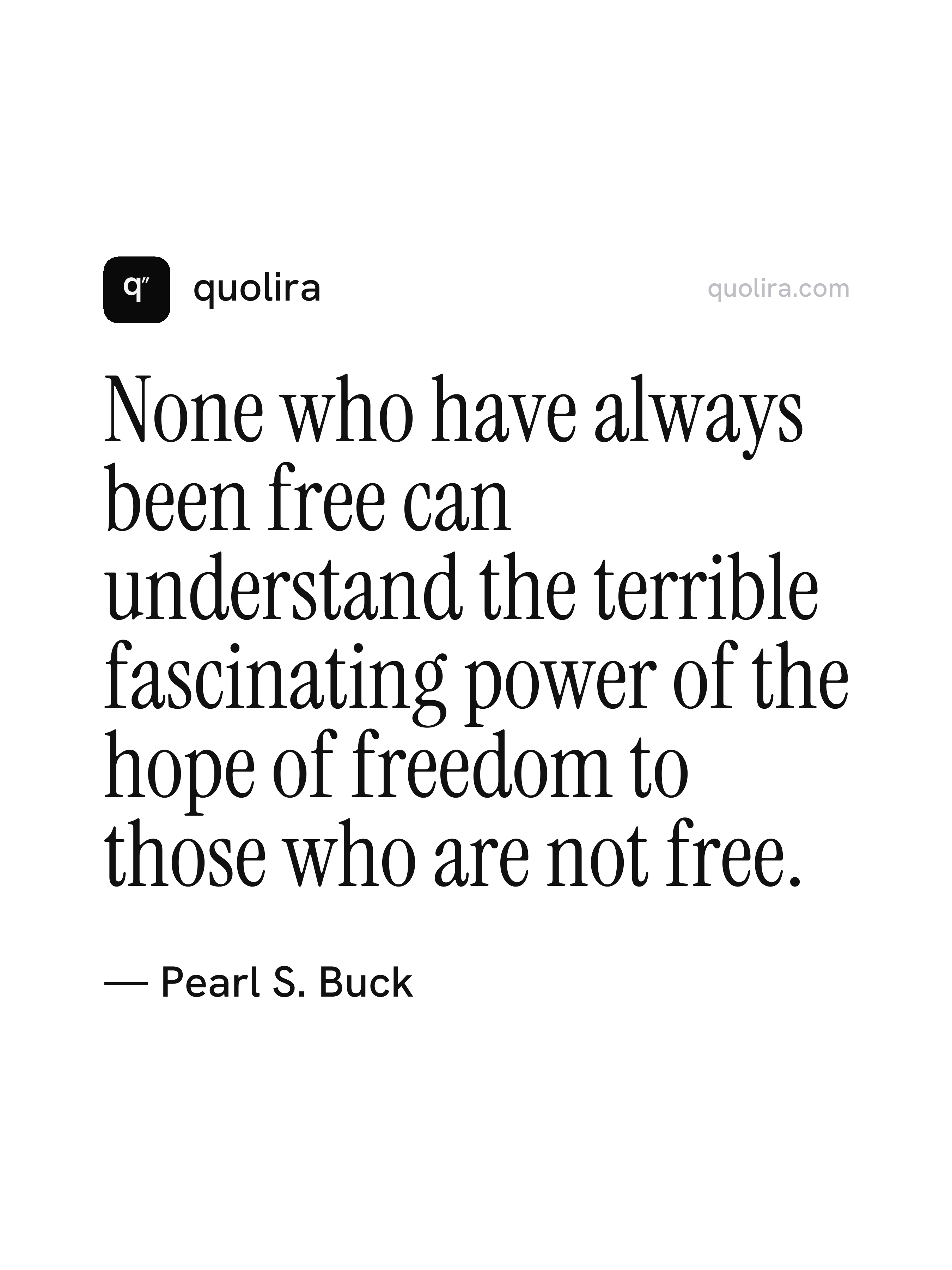
“None who have always been free can understand the terrible fascinating power of the hope of freedom to those who are not free.”
Pearl S. Buck
“Where liberty dwells, there is my country.”
Benjamin Franklin
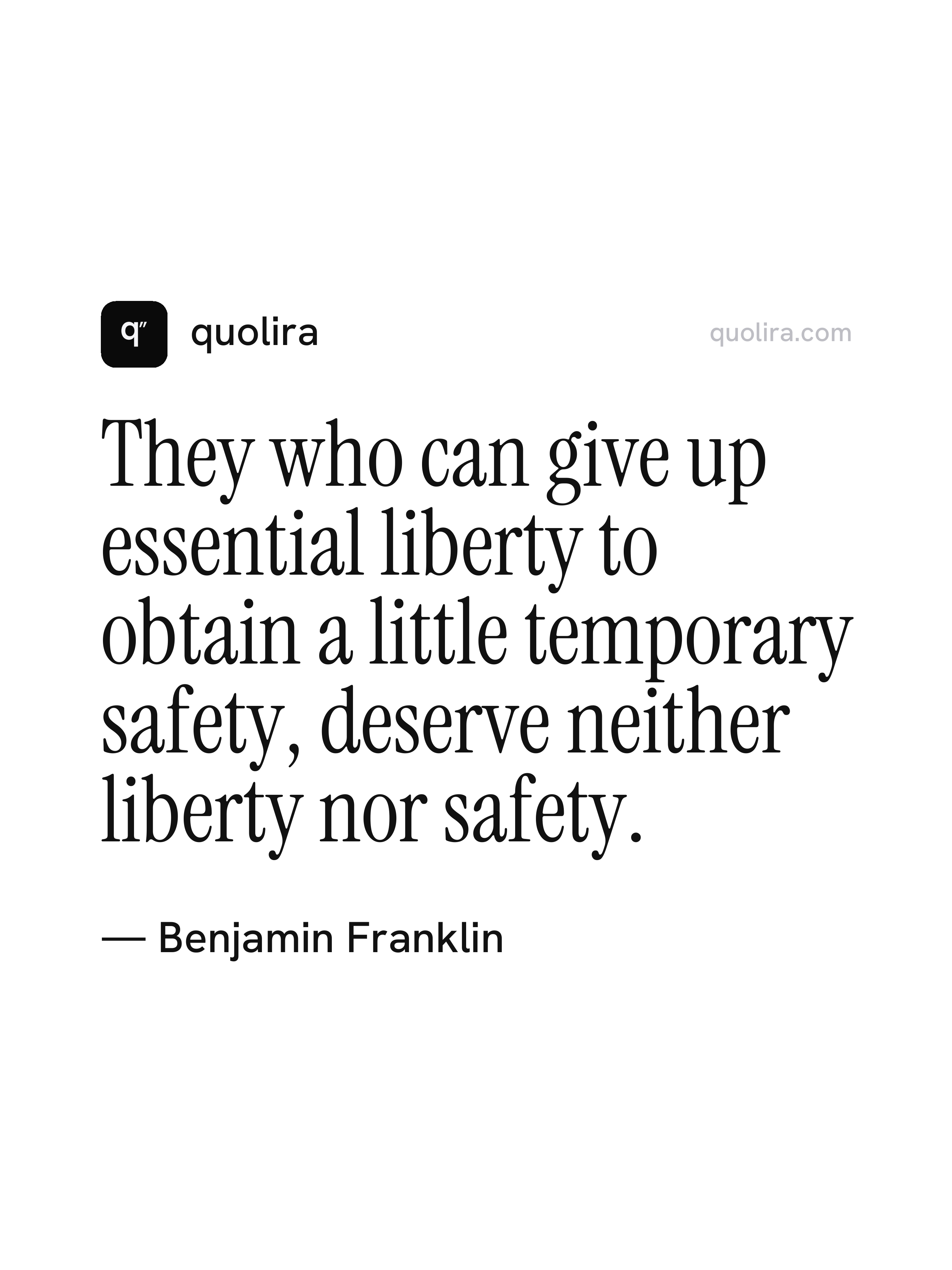
“They who can give up essential liberty to obtain a little temporary safety, deserve neither liberty nor safety.”
Benjamin Franklin · Pennsylvania Assembly reply to the Governor, 1755