“All types of knowledge, ultimately mean self knowledge.”
Bruce Lee · Bruce Lee: The Lost Interview (1971)
 quolira
.com
Bruce Lee said it, in Striking Thoughts (2000), edited by John Little, p. 176.
This is Lee's rule for borrowing from others. Take what works, drop what doesn't, and add something of your own. It is more work than copying, but it leaves you with a method you can actually use.
From the collection: 25 Bruce Lee Quotes on Discipline, Faith, and Self · More Bruce Lee quotes
Lee is advising people to learn from their own experience and to be selective about what they keep. They should keep what proves useful, drop what does not, and then add something that comes from their own understanding. The aim is personal ownership of skill rather than dependence on a fixed system.
This passage appears in Striking Thoughts (2000), a collection of Lee's writings and notes edited by John Little. Lee wrote often about martial arts as a practice that should change with the individual. He criticized students who memorized forms without understanding why they worked. The statement reflects his broader view that training is a process of testing, refining, and personalizing methods, which he believed was necessary for real effectiveness.
Bruce Lee (1940 to 1973) was an American-born martial artist who trained in Hong Kong and became a major figure in film and in the wider public understanding of martial arts. He founded Jeet Kune Do as a philosophy of direct, adaptable combat. Beyond his films, he left behind many notes and writings. Those writings, gathered in later books, are the main way readers encounter his thinking on learning, discipline, and self-development.
“All types of knowledge, ultimately mean self knowledge.”
Bruce Lee · Bruce Lee: The Lost Interview (1971)
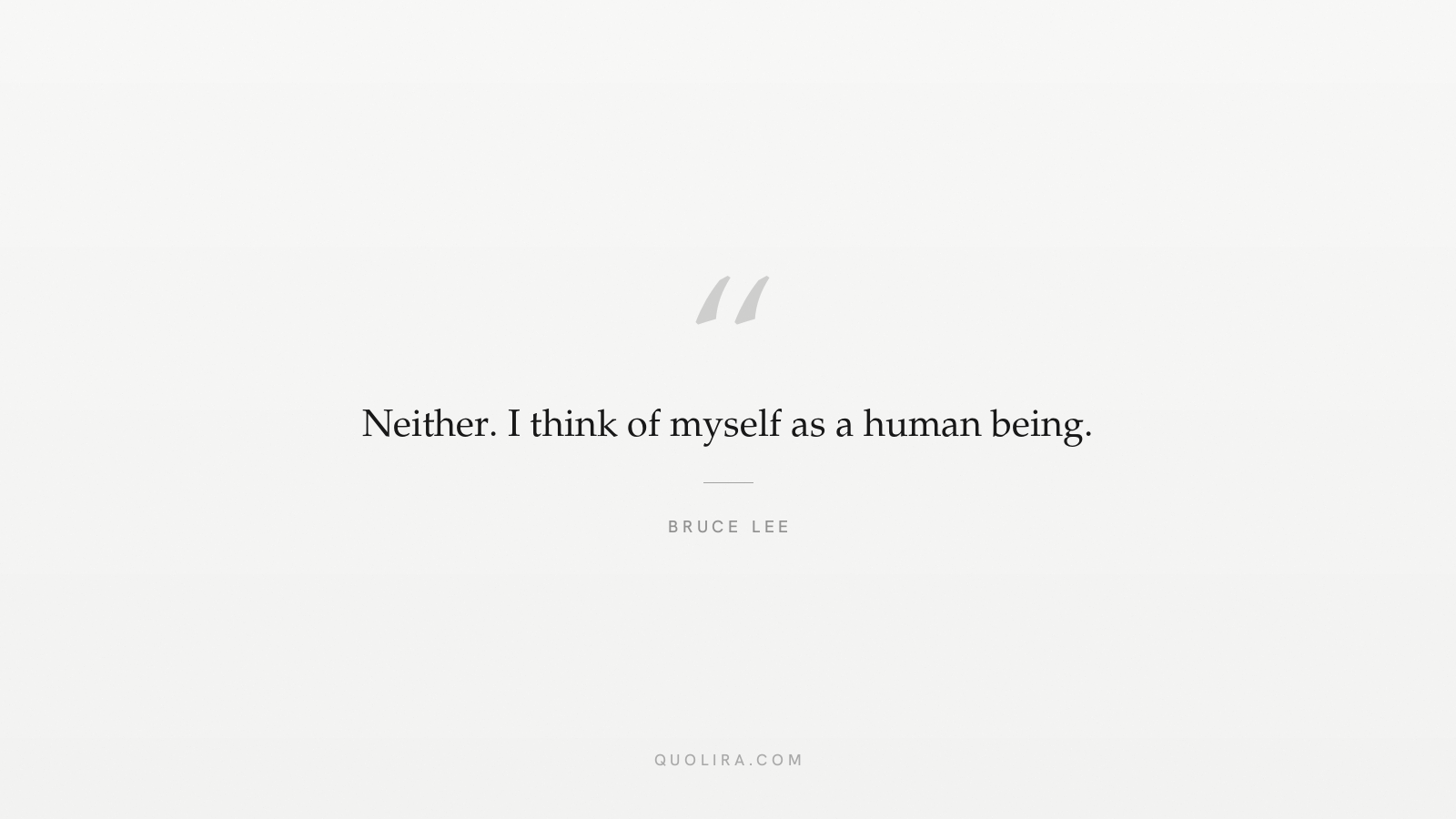
“Neither. I think of myself as a human being.”
Bruce Lee · The Warrior Within (1996), answering whether he thought of himself as Chinese or American
“When I look around, I always learn something: to be always yourself, and to express yourself, to have faith in yourself.”
Bruce Lee · Radio interview with Ted Thomas (1972)
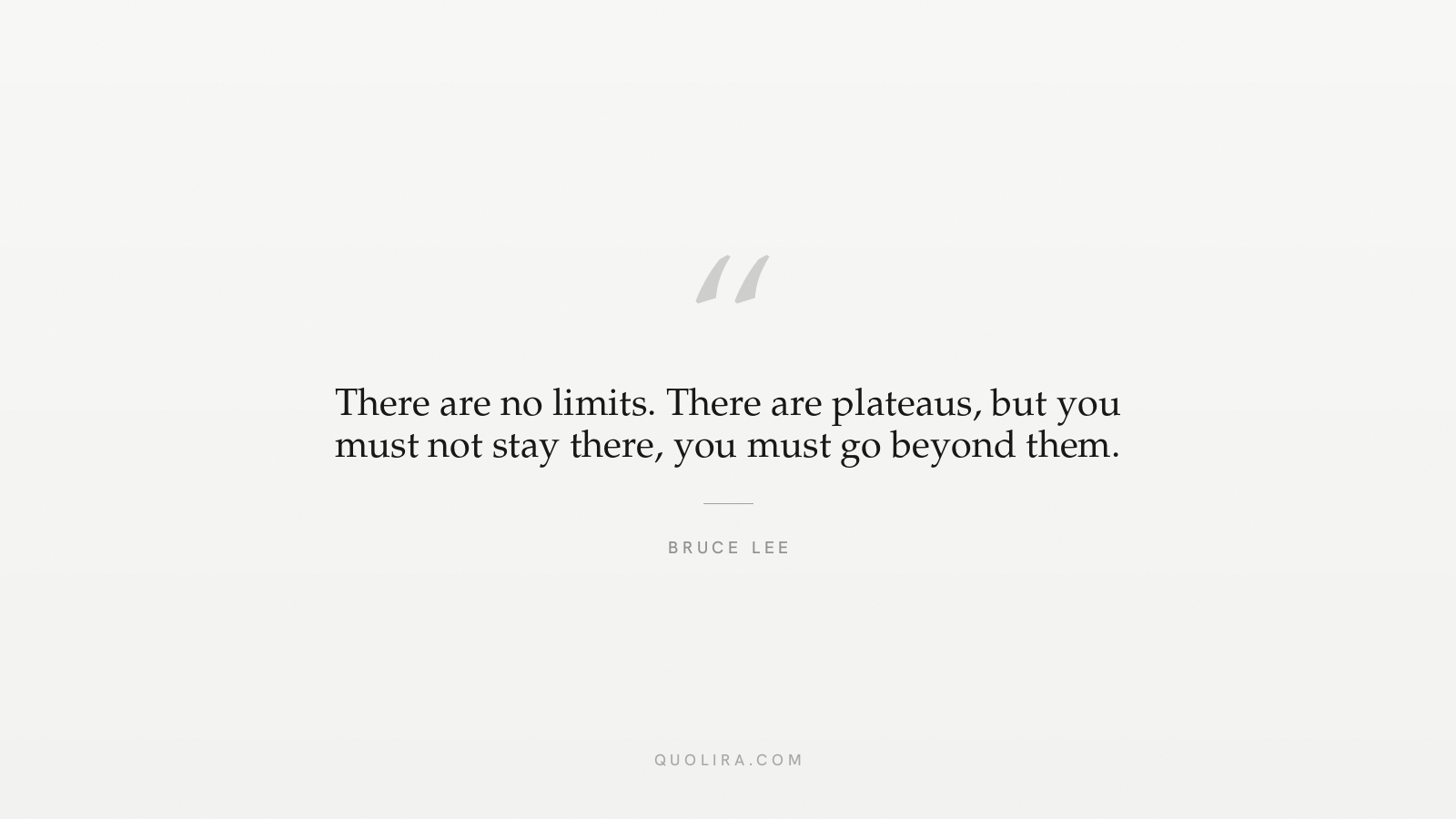
“There are no limits. There are plateaus, but you must not stay there, you must go beyond them.”
Bruce Lee · The Art of Expressing the Human Body (1998), edited by John R. Little
“A good martial artist does not become tense, but ready.”
Bruce Lee · Enter the Dragon (1973)
“Don't think, feel. It is like a finger pointing a way to the moon.”
Bruce Lee · Enter the Dragon (1973)
“Boards don't hit back.”
Bruce Lee · Enter the Dragon (1973)
“Be water, my friend.”
Bruce Lee · Lines from his role on the TV series Longstreet, recited in A Warrior's Journey (2000)
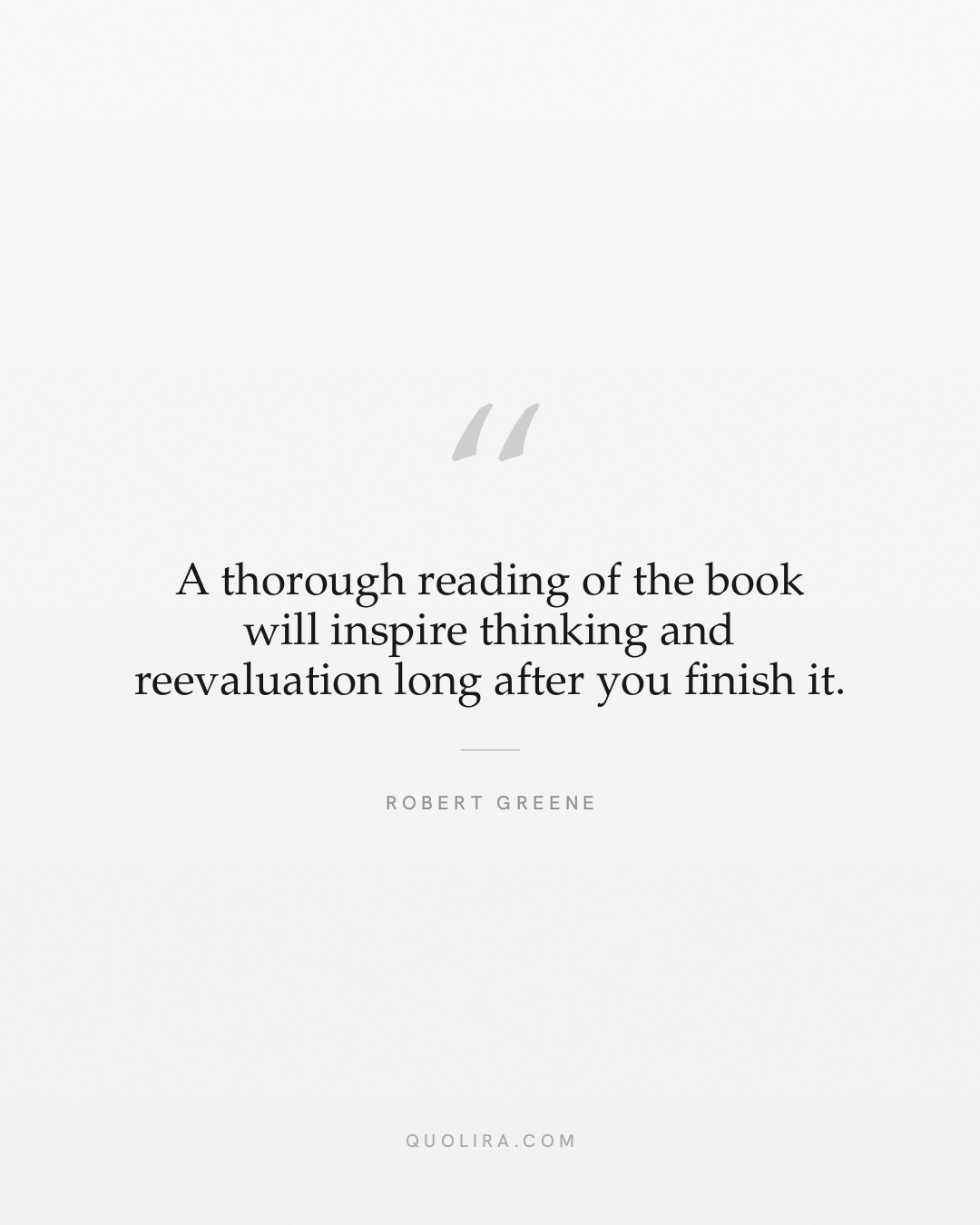
“A thorough reading of the book will inspire thinking and reevaluation long after you finish it.”
Robert Greene · The 48 Laws of Power, Preface
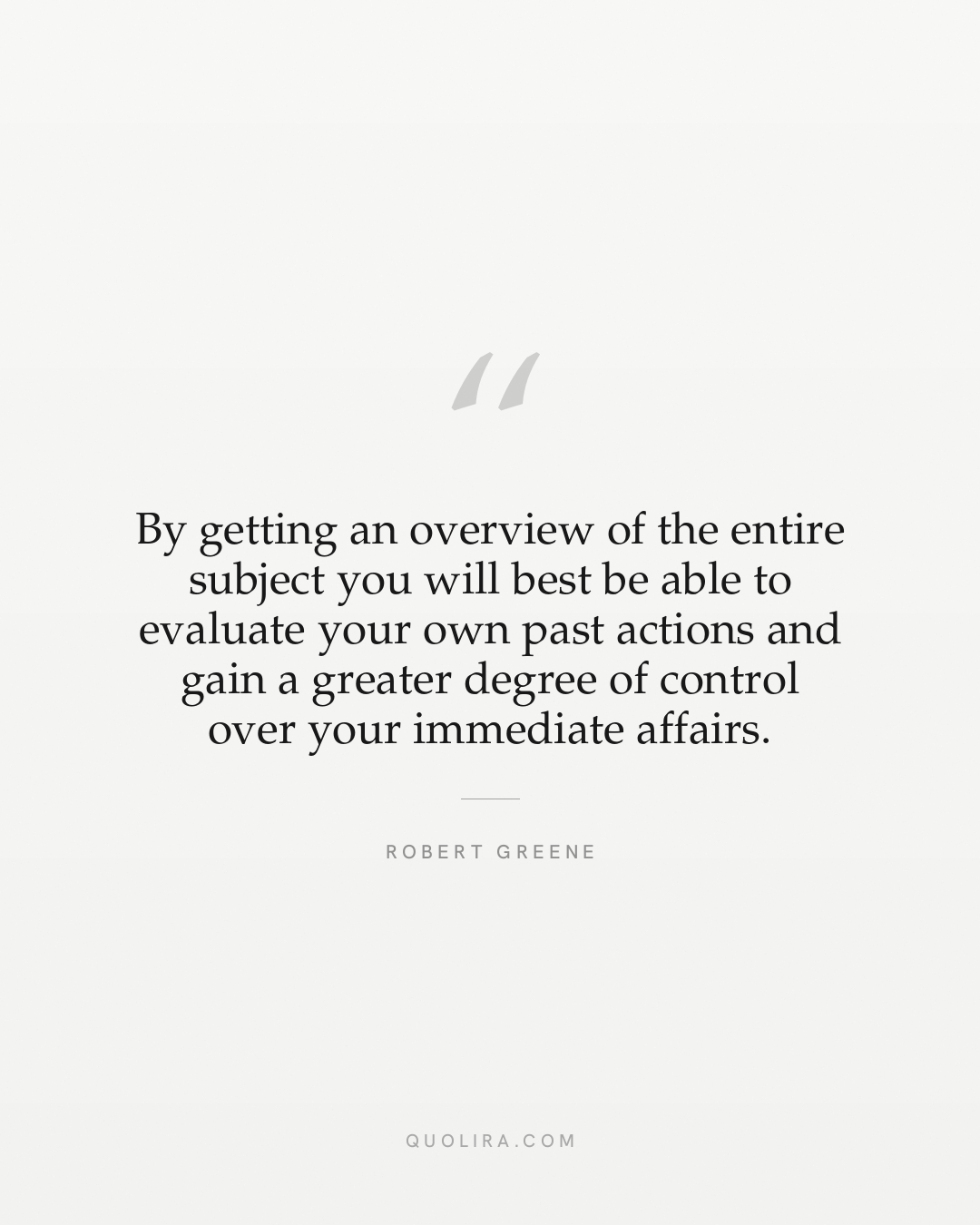
“By getting an overview of the entire subject you will best be able to evaluate your own past actions and gain a greater degree of control over your immediate affairs.”
Robert Greene · The 48 Laws of Power, Preface
“The laws are timeless and definitive.”
Robert Greene · The 48 Laws of Power, Preface
“The poorhouses of history are filled with people who have made such jokes at their master's expense.”
Robert Greene · The 48 Laws of Power, Law 24: Play the Perfect Courtier