“No act of kindness, no matter how small, is ever wasted.”
Aesop · Attributed to the fable The Lion and the Mouse; a later saying linked to Aesop
 quolira
.com
Dalai Lama said it, in Kindness, Clarity, and Insight (1984).
The Dalai Lama offers this as a practical rule, not a doctrine. You can practice it at the grocery store, in traffic, or in a group chat.
From the collection: 25 Famous Kindness Quotes That Prove Small Acts Matter · More Dalai Lama quotes
The Dalai Lama presents kindness as the core of his personal faith, meaning that compassion matters more to him than any particular religious institution or doctrine.
This line is associated with Kindness, Clarity, and Insight, a 1984 book drawn from his teachings and presented with translation and commentary by Jeffrey Hopkins. The sentence is widely quoted in shortened form, so readers who want the exact wording should check that book directly. The emphasis reflects a central idea in Buddhist teaching, that compassion for all beings is a practice to be lived daily rather than a belief to be only professed. His remarks on the subject often stress actions, such as patience and care for others, over ritual.
The Dalai Lama is the spiritual leader of Tibetan Buddhists and is recognized as the fourteenth in a line of Dalai Lamas. He left Tibet in 1959 and has lived in exile in India since then. He has written and spoken widely on peace, ethics, and compassion, and he was awarded the Nobel Peace Prize in 1989. His public teachings have reached readers and listeners across many countries and faiths.
“No act of kindness, no matter how small, is ever wasted.”
Aesop · Attributed to the fable The Lion and the Mouse; a later saying linked to Aesop
“Wabi-sabi is a beauty of things imperfect, impermanent, and incomplete.”
Leonard Koren · Wabi-Sabi for Artists, Designers, Poets & Philosophers (1994)
“None should be more liberally rewarded. In no other business should greater secrecy be preserved.”
Sun Tzu · The Art of War, XIII. The Use Of Spies
“Spies cannot be usefully employed without a certain intuitive sagacity.”
Sun Tzu · The Art of War, XIII. The Use Of Spies
“If you are anxious to fight, you should not go to meet the invader near a river which he has to cross.”
Sun Tzu · The Art of War, IX. The Army On The March
“While we keep away from such places, we should get the enemy to approach them; while we face them, we should let the enemy have them on his rear.”
Sun Tzu · The Art of War, IX. The Army On The March
“When an invading force crosses a river in its onward march, do not advance to meet it in mid-stream.”
Sun Tzu · The Art of War, IX. The Army On The March
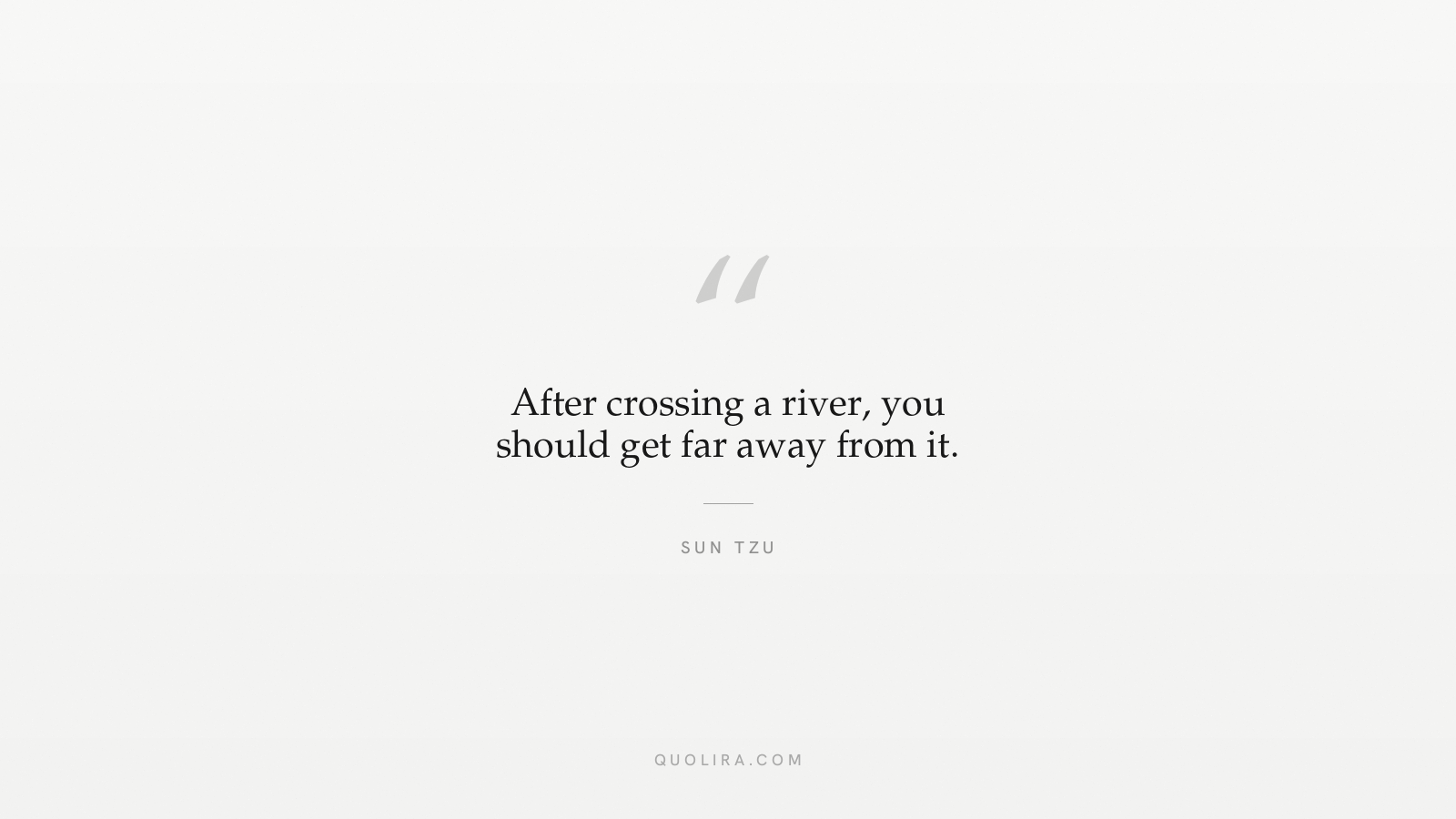
“After crossing a river, you should get far away from it.”
Sun Tzu · The Art of War, IX. The Army On The March
“When the enemy is close at hand and remains quiet, he is relying on the natural strength of his position.”
Sun Tzu · The Art of War, IX. The Army On The March
“On desperate ground, I would proclaim to my soldiers the hopelessness of saving their lives.”
Sun Tzu · The Art of War, XI. The Nine Situations
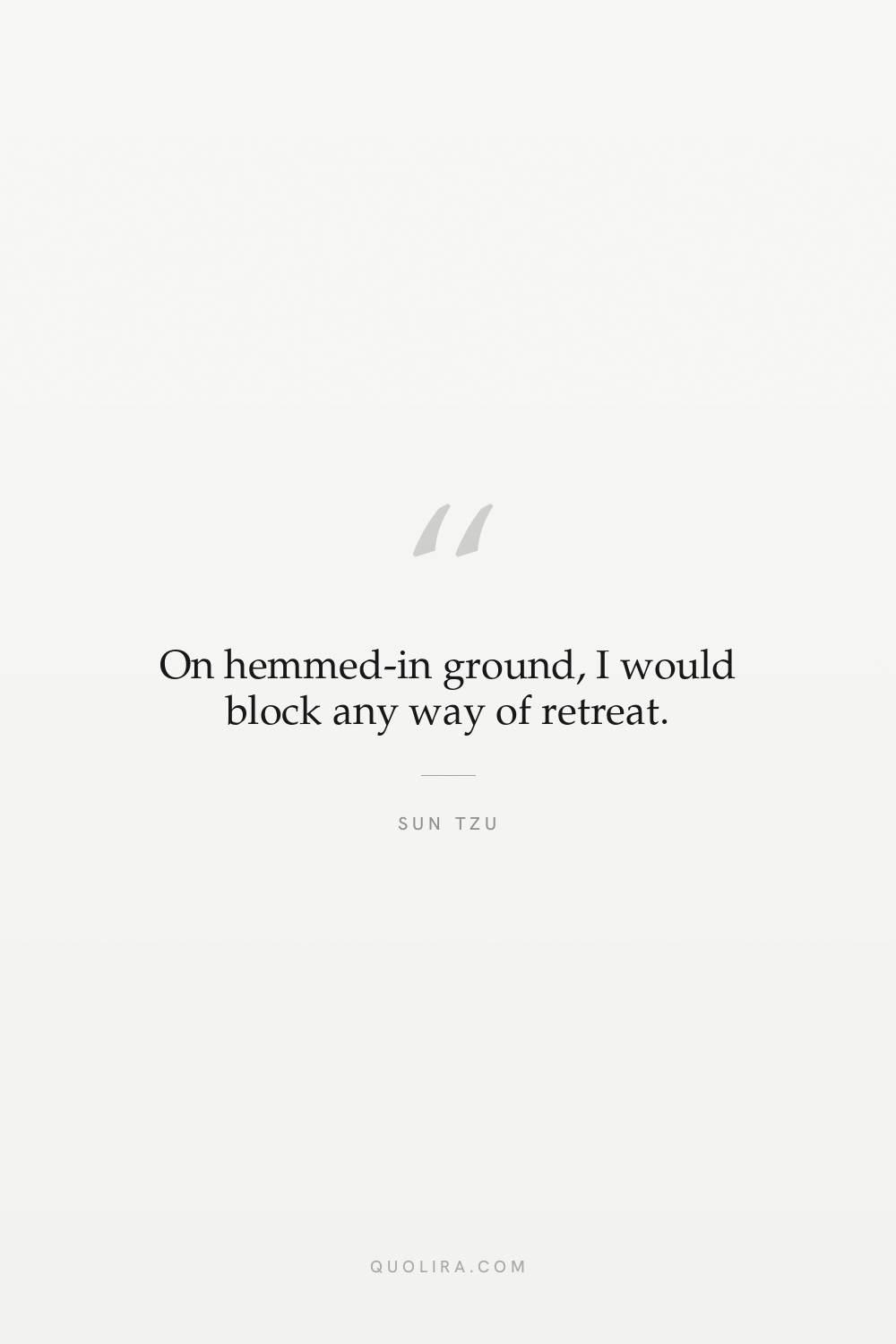
“On hemmed-in ground, I would block any way of retreat.”
Sun Tzu · The Art of War, XI. The Nine Situations
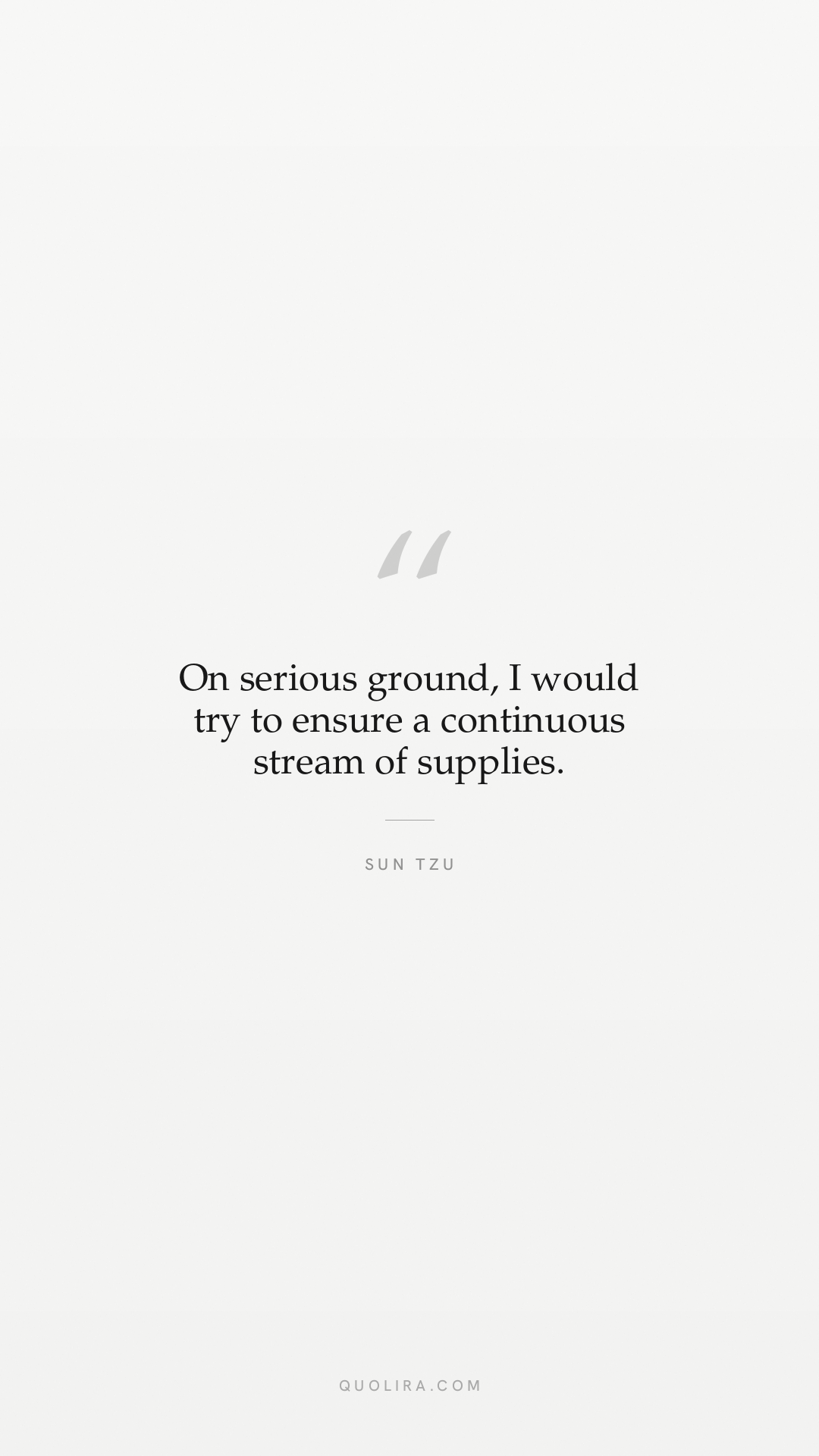
“On serious ground, I would try to ensure a continuous stream of supplies.”
Sun Tzu · The Art of War, XI. The Nine Situations