“In the beginner's mind there are many possibilities, but in the expert's there are few.”
Shunryu Suzuki · Zen Mind, Beginner's Mind (1970)
 quolira
.com
John Milton said it, in When I Consider How My Light Is Spent (c. 1652).
Milton wrote this sonnet after going blind, so the line carries real weight. For anyone stuck on the sidelines, it says that holding still with purpose still counts as service. I find that steadying on a slow week.
From the collection: 25 Quotes on Patience That Teach You to Wait · More John Milton quotes
The line means that people who cannot act or work can still serve a purpose by enduring their circumstances with faith and patience. It suggests that waiting is not the same as idleness, and that submission can be a form of worth.
The line comes from the sonnet "When I Consider How My Light Is Spent," which is commonly dated to around 1652. In the poem, the speaker reflects on his loss of sight and worries that his blindness makes him useless to God. A personified Patience answers that God does not need human labor, and that those who bear their condition calmly also serve him. The sonnet was published in Milton's 1673 collection of poems, and its quiet tone contrasts with the grand style of his longer epics.
John Milton was an English poet and prose writer, best known for the epic poem *Paradise Lost*, published in 1667. He served in a government post during the period of the English Commonwealth, writing official letters in Latin. He became blind in his later years, and that personal experience shaped several of his most reflective poems, including this sonnet. His work is central to English literature and remains widely studied.
“In the beginner's mind there are many possibilities, but in the expert's there are few.”
Shunryu Suzuki · Zen Mind, Beginner's Mind (1970)
“It's not so much something you have to create as it is something you have to return to.”
Brianna Wiest · The Mountain Is You, Chapter 7: From Self-Sabotage To Self-Mastery
“Powerful people are not the most aggressive; aggression is usually a self-defense mechanism.”
Brianna Wiest · The Mountain Is You, Chapter 6: Building A New Future
“Most of the problems that exist in our lives are distractions from the real problem, which is that we are not comfortable in the present moment, as we are, here and now.”
Brianna Wiest · The Mountain Is You, Chapter 5: Releasing The Past
“You change your life when you start doing the truly scary thing, which is showing up exactly as you are.”
Brianna Wiest · The Mountain Is You, Chapter 5: Releasing The Past
“We don't reach a breaking point because one or two things go wrong.”
Brianna Wiest · The Mountain Is You, Chapter 1: The Mountain Is You
“Rock bottom isn't a bad day. It doesn't happen by chance.”
Brianna Wiest · The Mountain Is You, Chapter 1: The Mountain Is You
“Taking action builds momentum and creates motivation.”
Brianna Wiest · The Mountain Is You, Chapter 2: There’s No Such Thing As Self-Sabotage
“It is essential that you learn to take action before you feel like doing it.”
Brianna Wiest · The Mountain Is You, Chapter 2: There’s No Such Thing As Self-Sabotage
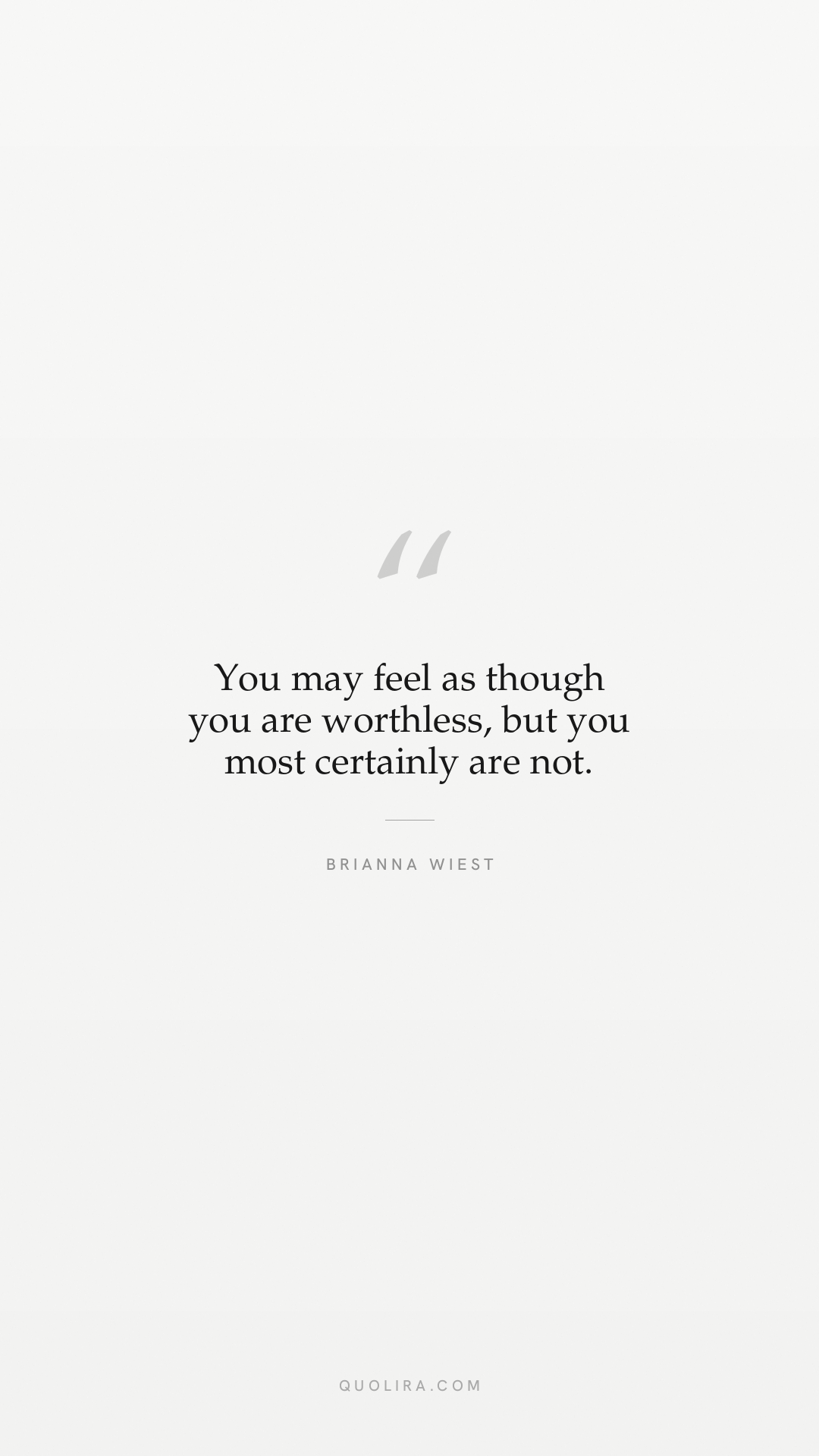
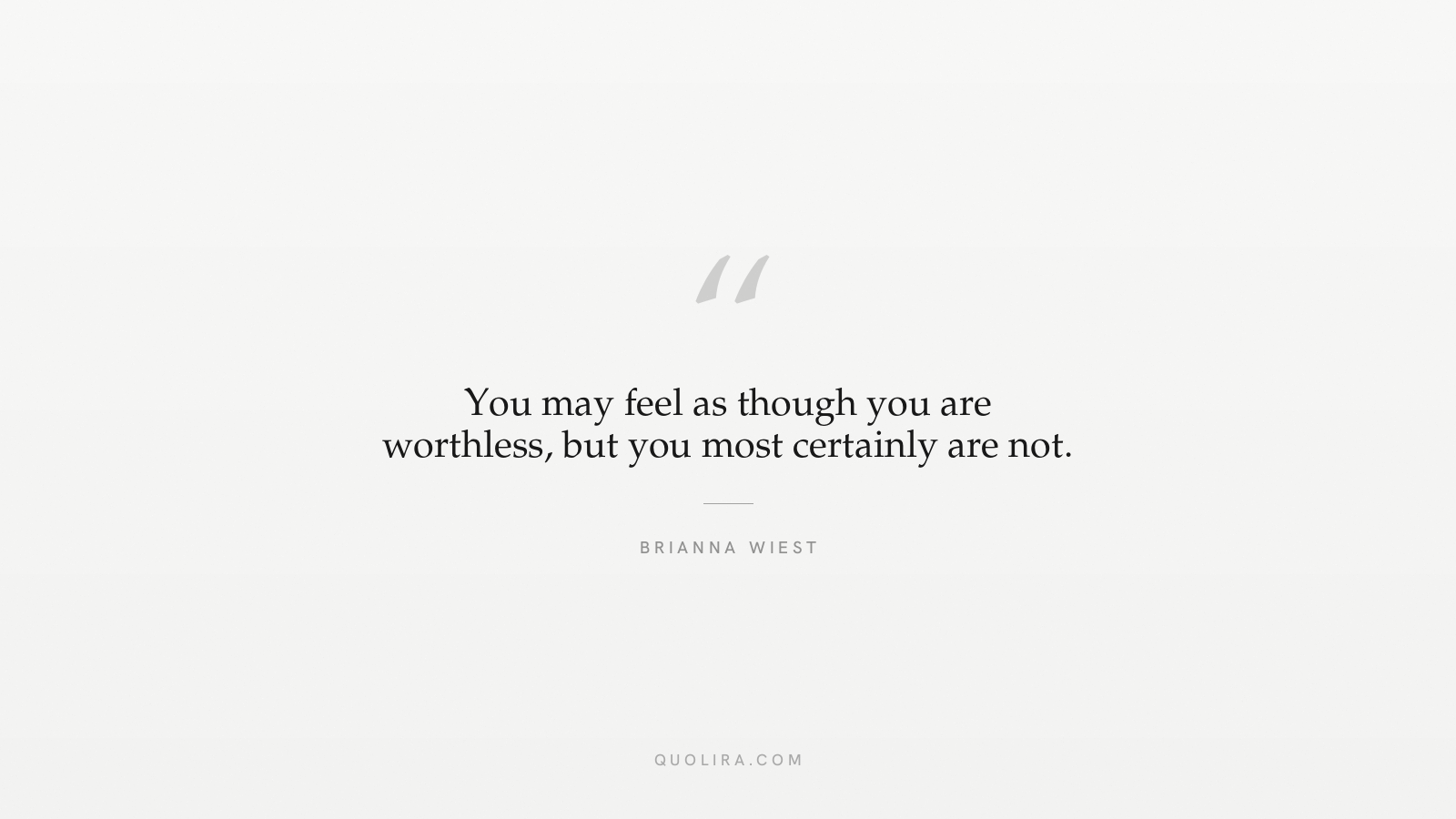
“You may feel as though you are worthless, but you most certainly are not.”
Brianna Wiest · The Mountain Is You, Chapter 2: There’s No Such Thing As Self-Sabotage
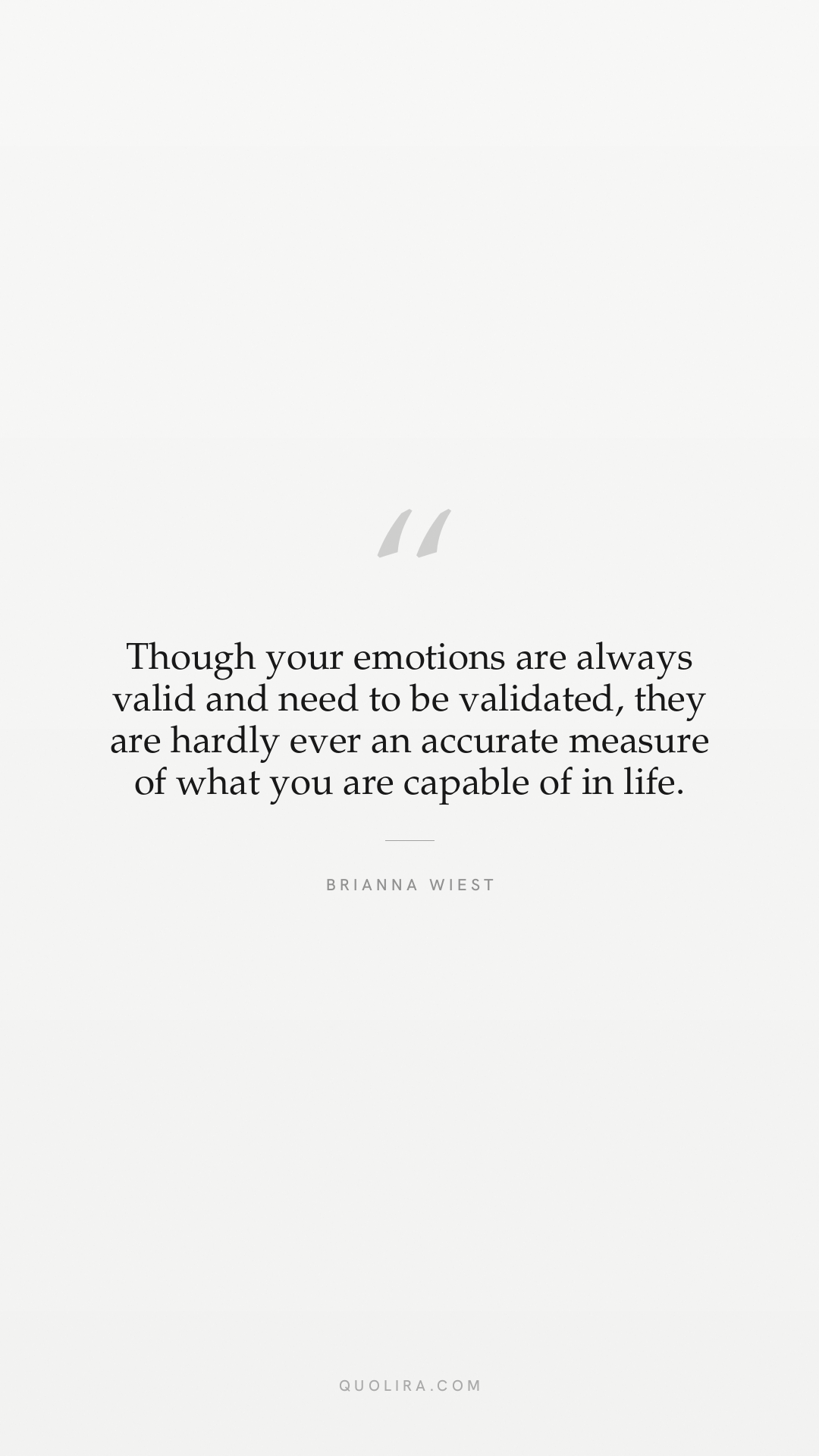
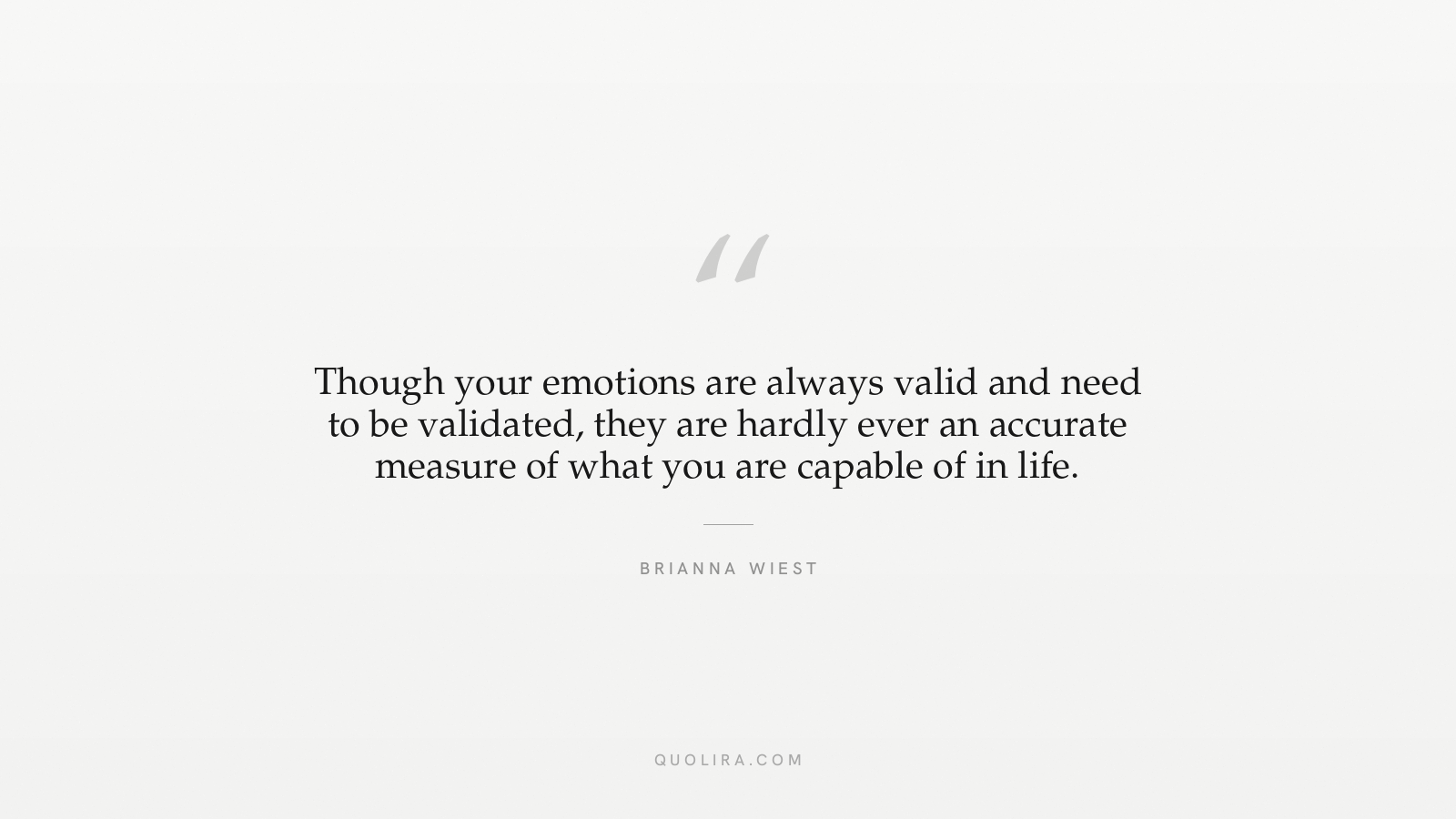
“Though your emotions are always valid and need to be validated, they are hardly ever an accurate measure of what you are capable of in life.”
Brianna Wiest · The Mountain Is You, Chapter 2: There’s No Such Thing As Self-Sabotage
“Once you begin to really question and observe these preexisting beliefs, you begin to see how warped and illogical they were all along.”
Brianna Wiest · The Mountain Is You, Chapter 1: The Mountain Is You