“Anger begins in folly, and ends in repentance.”
Pythagoras
 quolira
.com
quolira
quolira.com
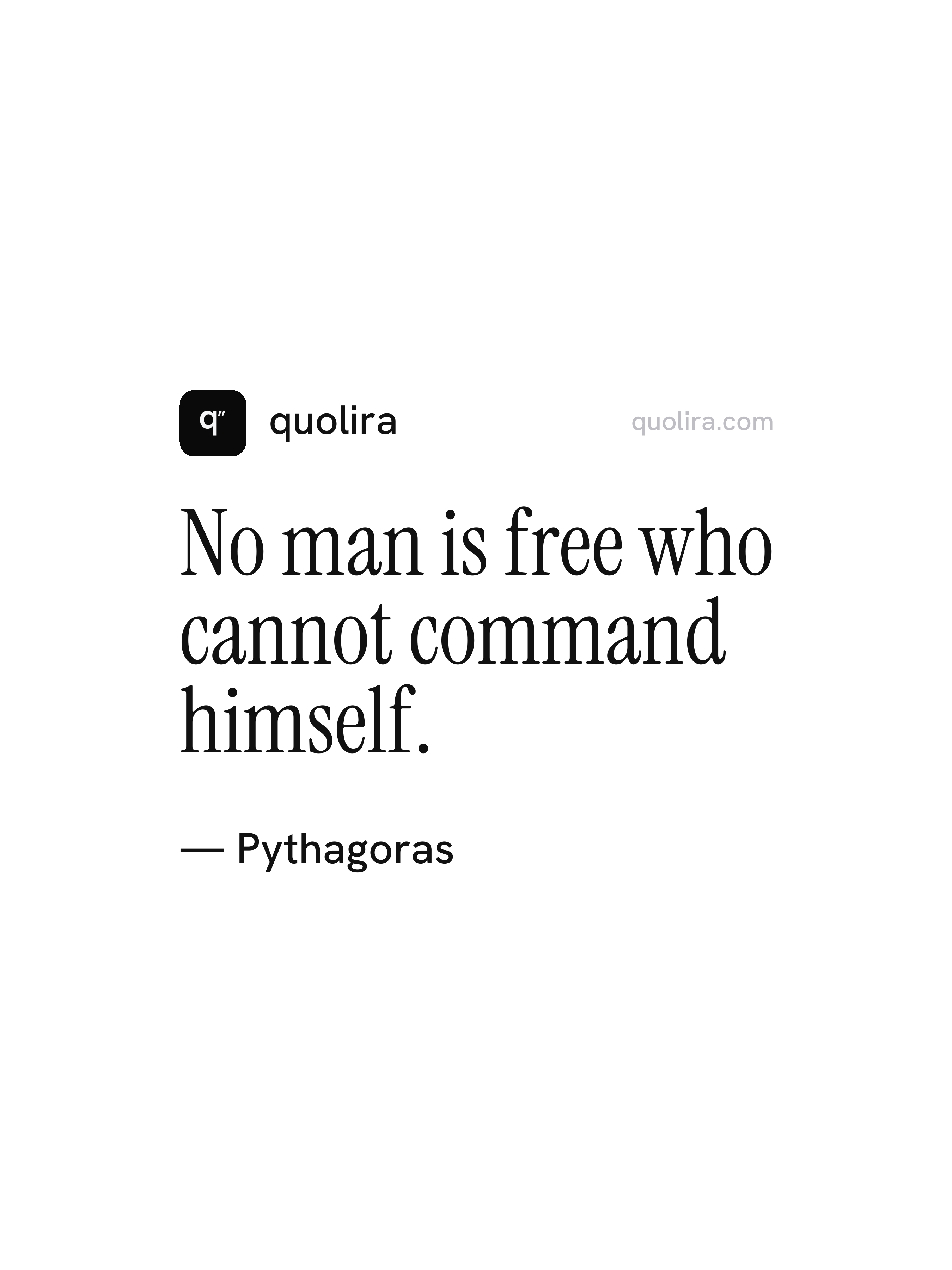
This short statement makes a direct connection between freedom and self-discipline. True freedom, it suggests, is not simply the absence of external restriction. A person who is controlled by their own impulses, habits, or passions is not free in any meaningful sense, even if no one else is giving them orders. Real liberty begins with the ability to govern your own thoughts and actions, to choose deliberately rather than react automatically.
This idea was central to ancient Greek ethical thought, which held that the highest human goal was to live according to reason rather than appetite. Many philosophers of the period drew a clear line between people who appeared free because they faced no outward constraint and those who were genuinely free because they had cultivated inner discipline. The sentiment attributed to Pythagoras fits that tradition well, expressing in a single line what longer philosophical arguments labored to explain.
Pythagoras was an ancient Greek philosopher and mathematician who lived in the sixth century BCE. He is best known today for the geometric theorem that bears his name, but in his own time he was also a significant moral and spiritual teacher. He founded a community of followers devoted to a particular way of life, one that combined mathematical inquiry with ethical discipline and religious practice. Many sayings attributed to him were likely gathered and transmitted by his followers over generations.
“Anger begins in folly, and ends in repentance.”
Pythagoras
“Do not indulge in dreams of what you have not, but count the blessings actually present.”
Marcus Aurelius · Meditations
“Perfection of character is this: to live each day as if it were your last, without frenzy, without apathy, without pretense.”
Marcus Aurelius · Meditations
“Very little is needed to make a happy life; it is all within yourself, in your way of thinking.”
Marcus Aurelius · Meditations
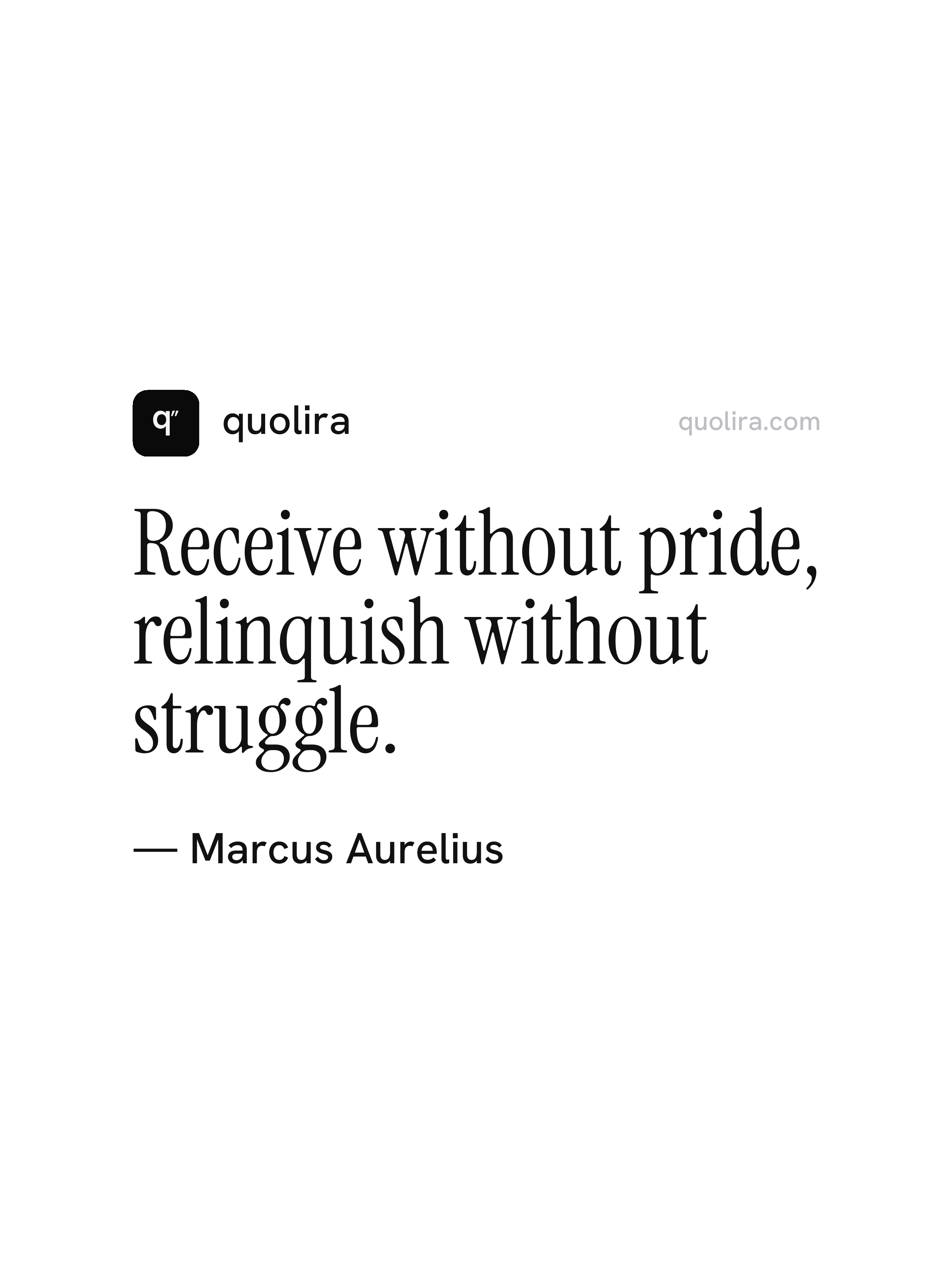
“Receive without pride, relinquish without struggle.”
Marcus Aurelius · Meditations
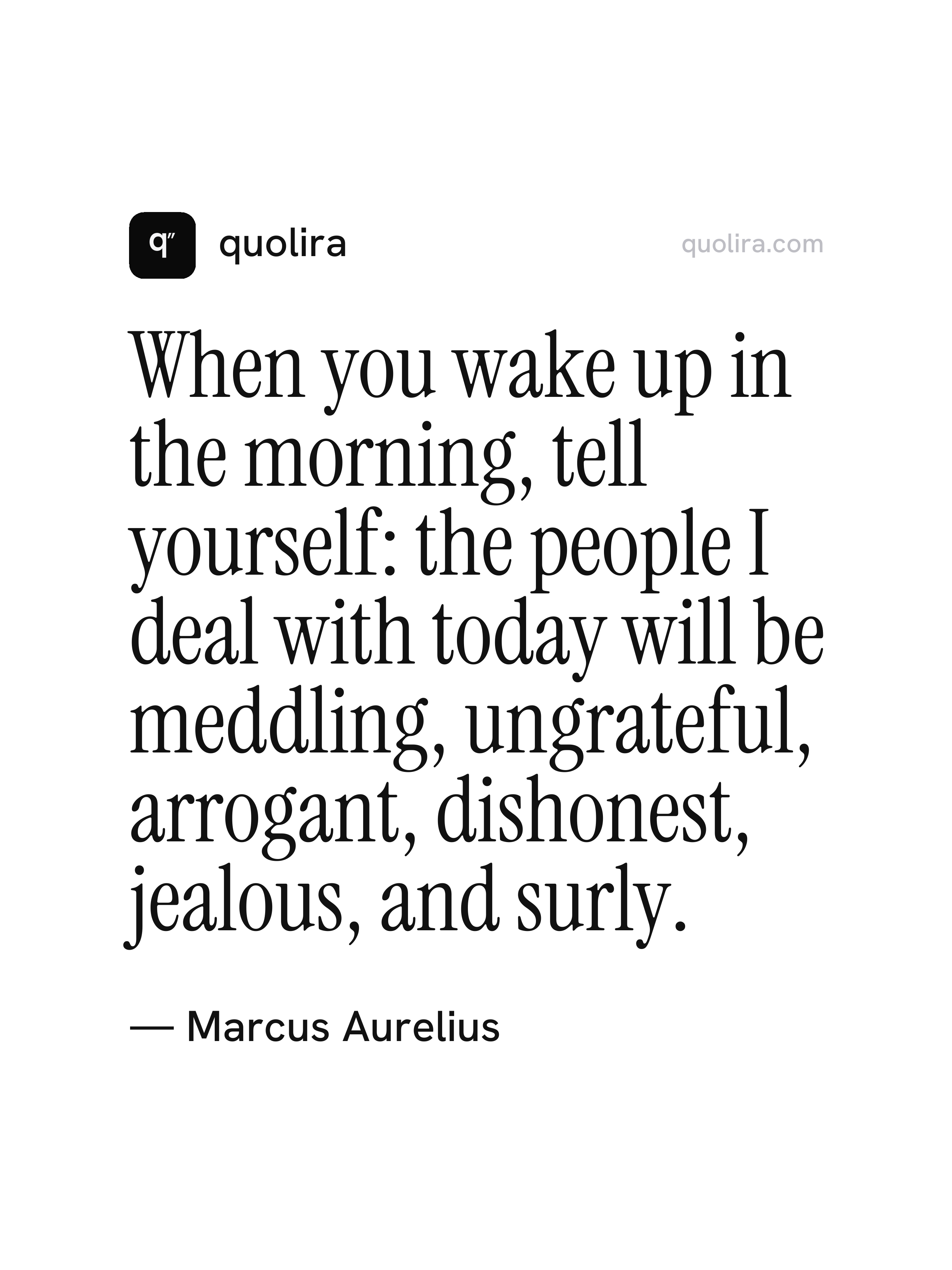
“When you wake up in the morning, tell yourself: the people I deal with today will be meddling, ungrateful, arrogant, dishonest, jealous, and surly.”
Marcus Aurelius · Meditations, Book 2
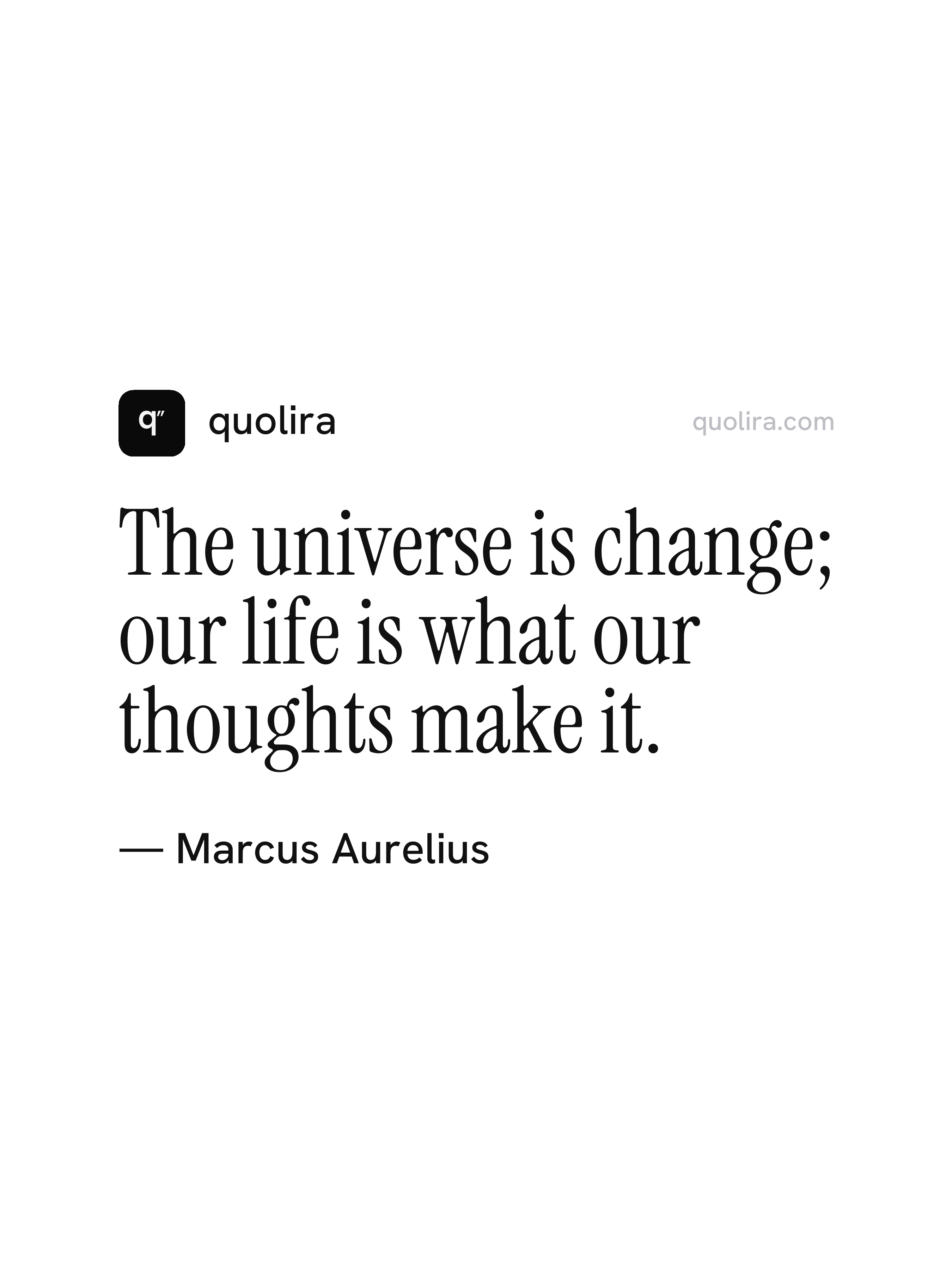
“The universe is change; our life is what our thoughts make it.”
Marcus Aurelius · Meditations, Book 4
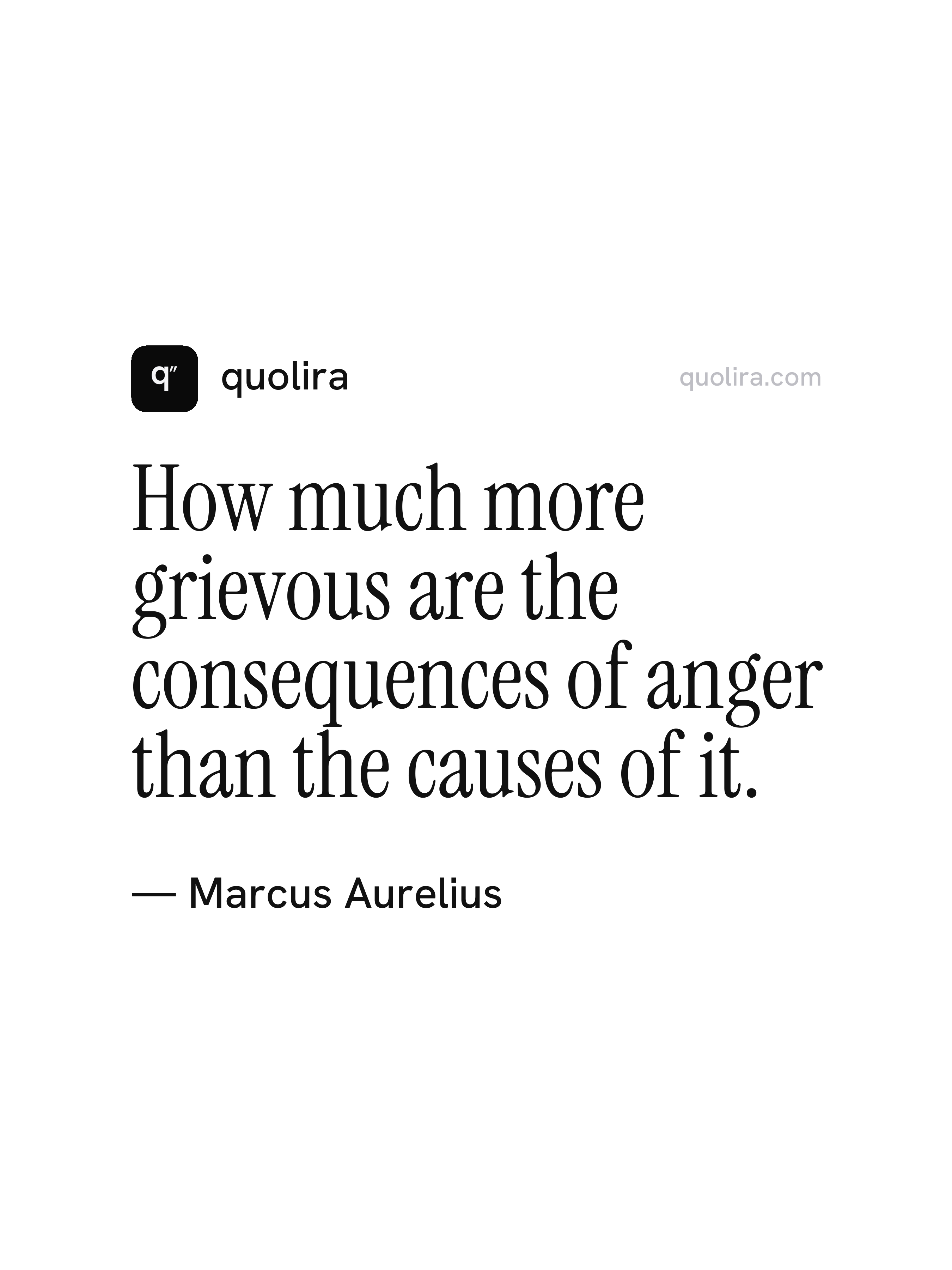
“How much more grievous are the consequences of anger than the causes of it.”
Marcus Aurelius · Meditations
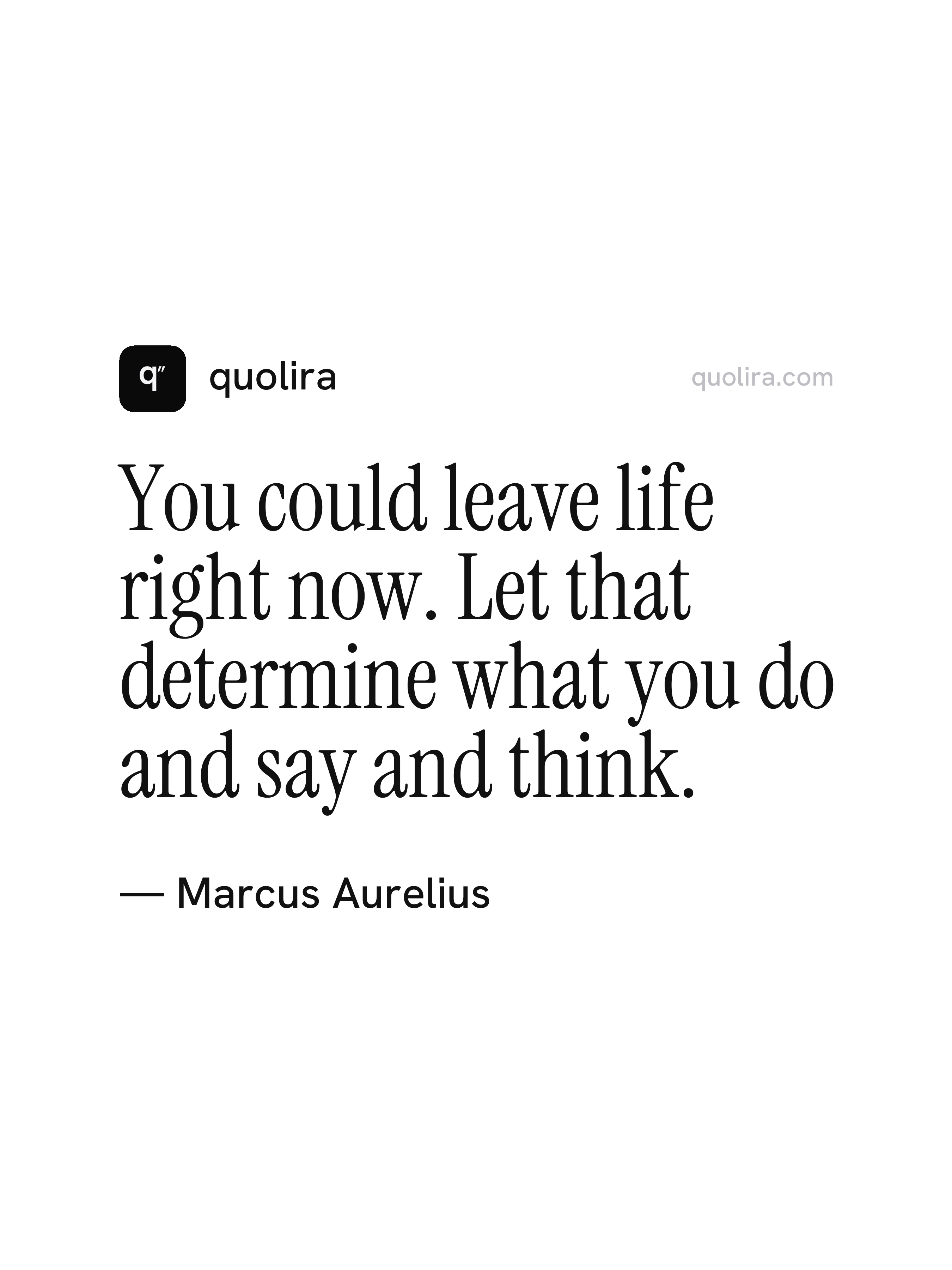
“You could leave life right now. Let that determine what you do and say and think.”
Marcus Aurelius · Meditations
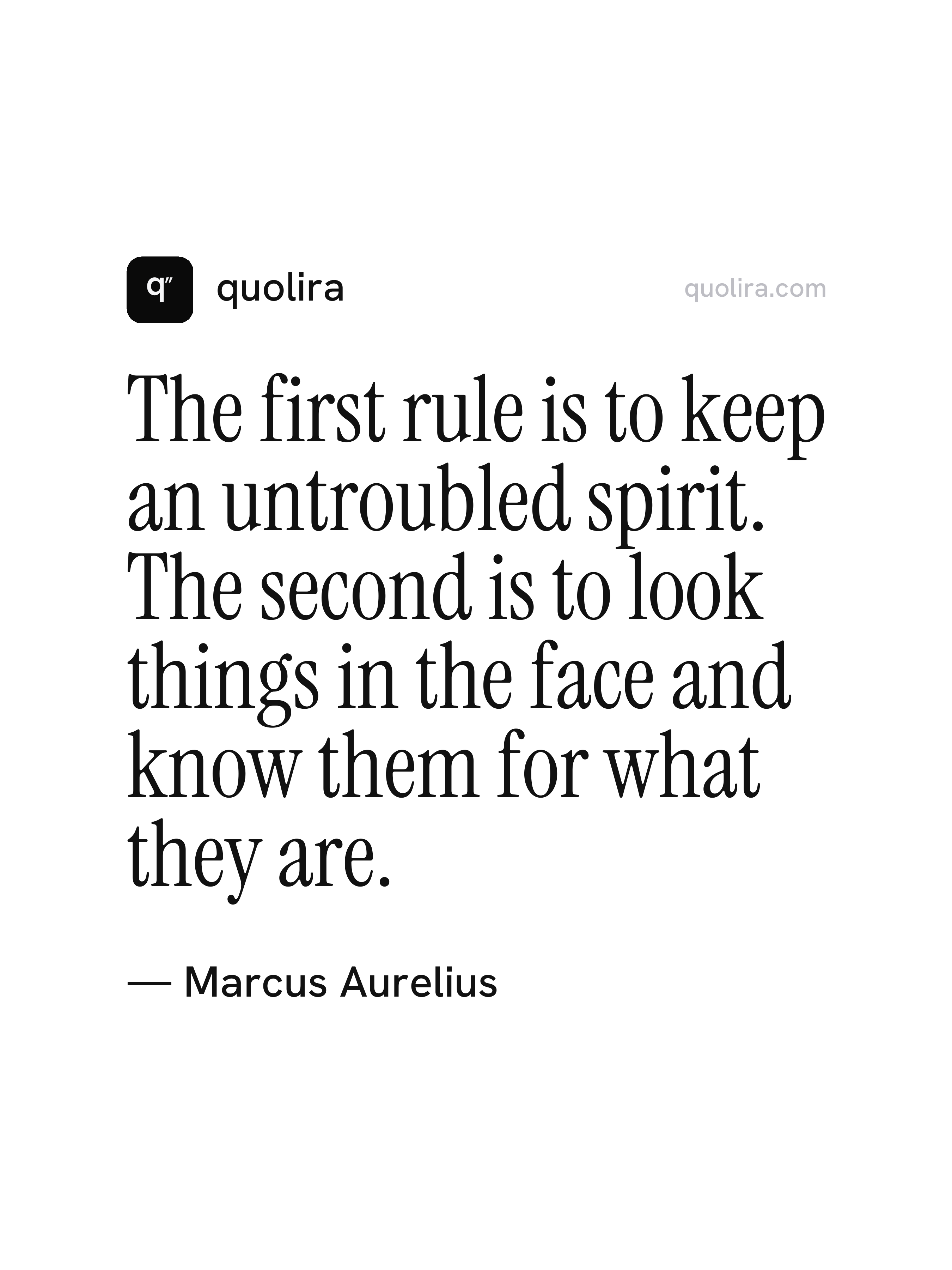
“The first rule is to keep an untroubled spirit. The second is to look things in the face and know them for what they are.”
Marcus Aurelius · Meditations
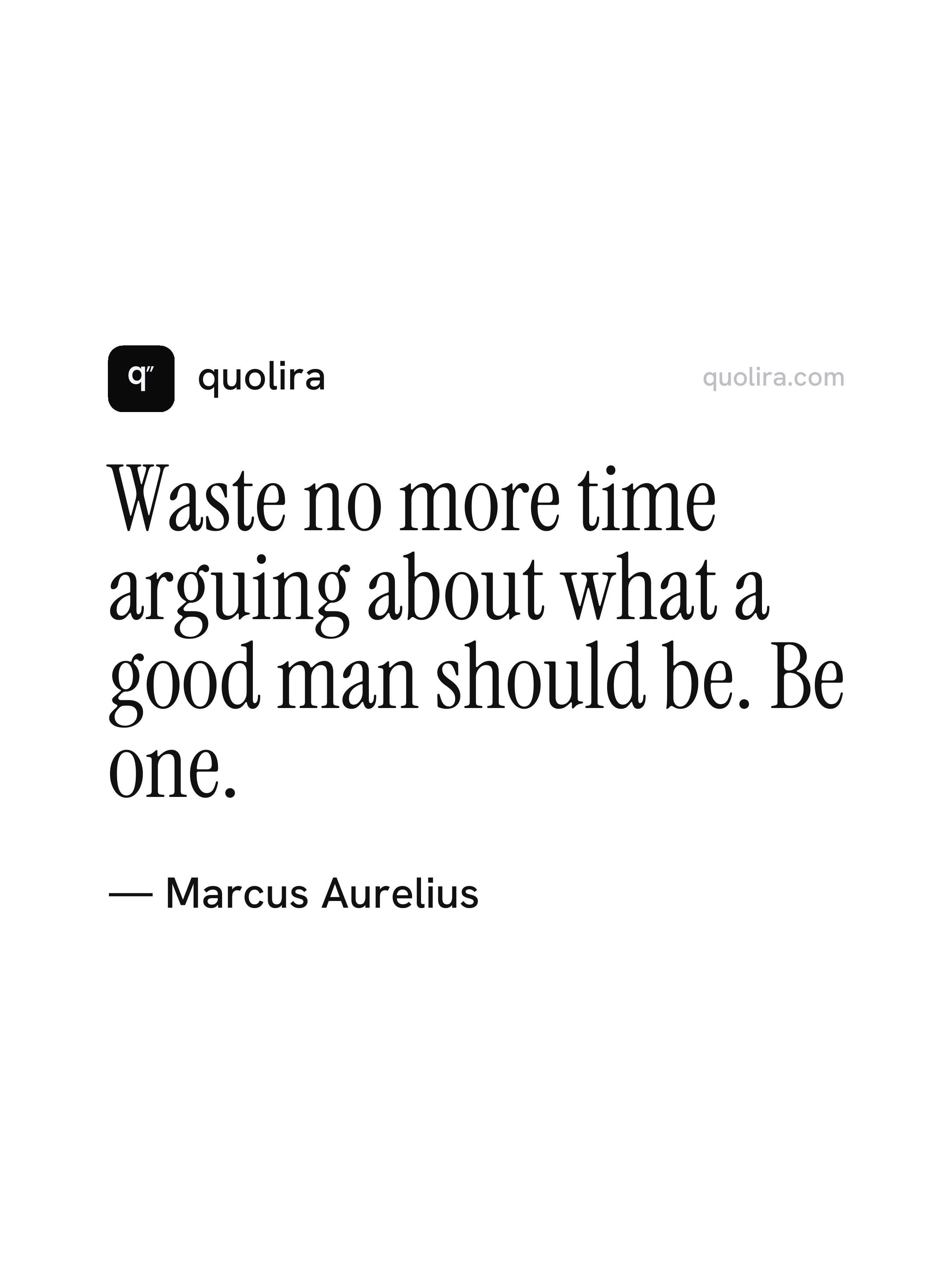
“Waste no more time arguing about what a good man should be. Be one.”
Marcus Aurelius · Meditations
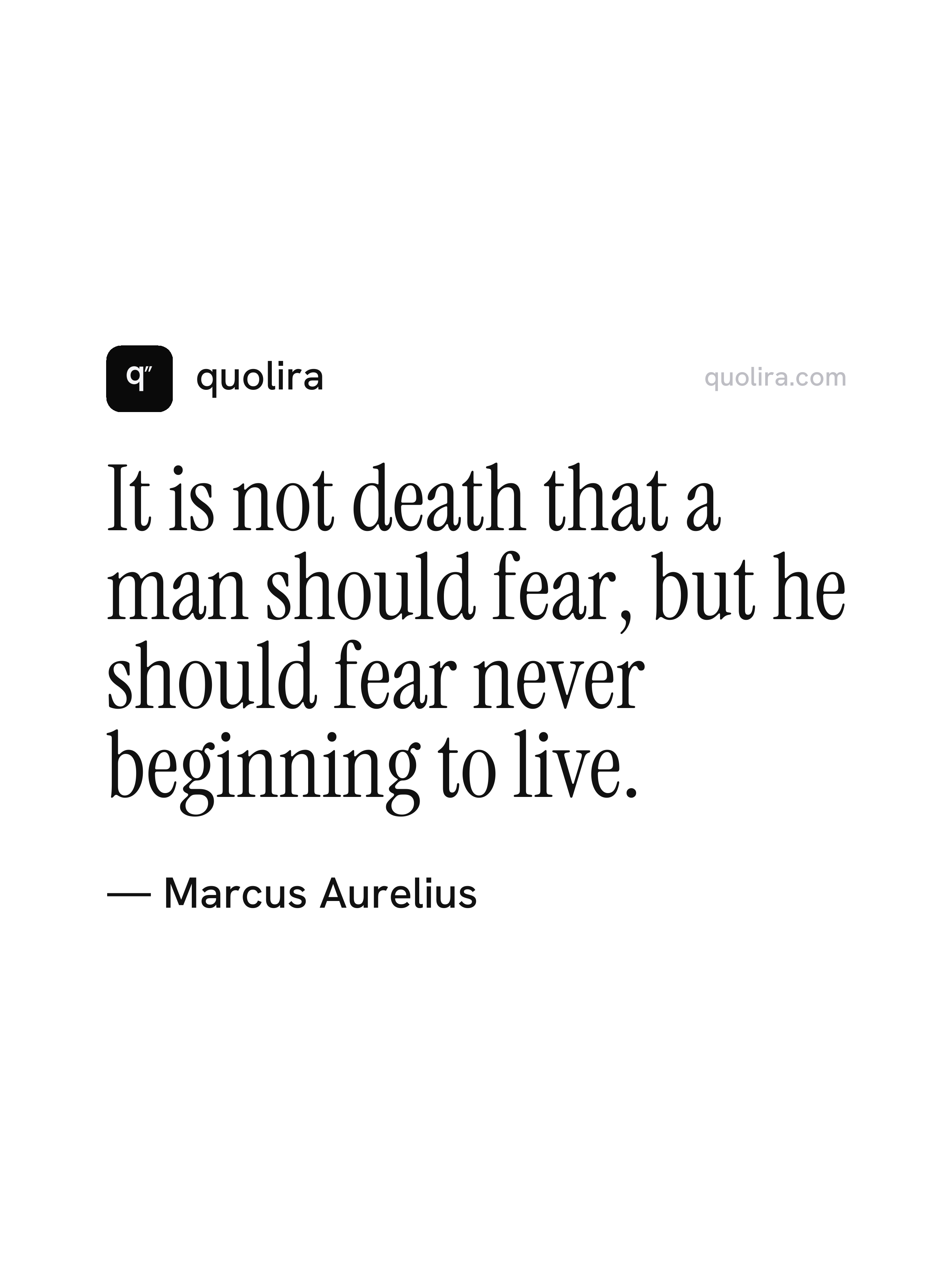
“It is not death that a man should fear, but he should fear never beginning to live.”
Marcus Aurelius · Meditations